Which States Have No Standard Deduction?
Navigating state income taxes can feel like deciphering a secret code, especially when you're trying to figure out what you can and can't deduct. One common question that pops up is about the "standard deduction" – we're all familiar with it on our federal returns, but what about the states? It can be incredibly confusing to realize that not every state plays by the same rules, and some states approach deductions so differently that it might feel like they don't offer one at all. This comprehensive guide is here to untangle that knot, clarifying which states truly operate without a standard deduction and helping you understand the nuances of state-specific tax laws.
States That Truly Have No Income Tax (And Therefore No Standard Deduction)
Let's cut right to the chase with the most straightforward answer: if a state doesn't have a broad-based income tax, then the concept of a standard deduction for state income tax purposes is simply irrelevant. There's no income tax from which to deduct anything! This is a huge draw for many individuals and businesses looking to minimize their tax burden, though it's important to remember these states often make up for it with other types of taxes.
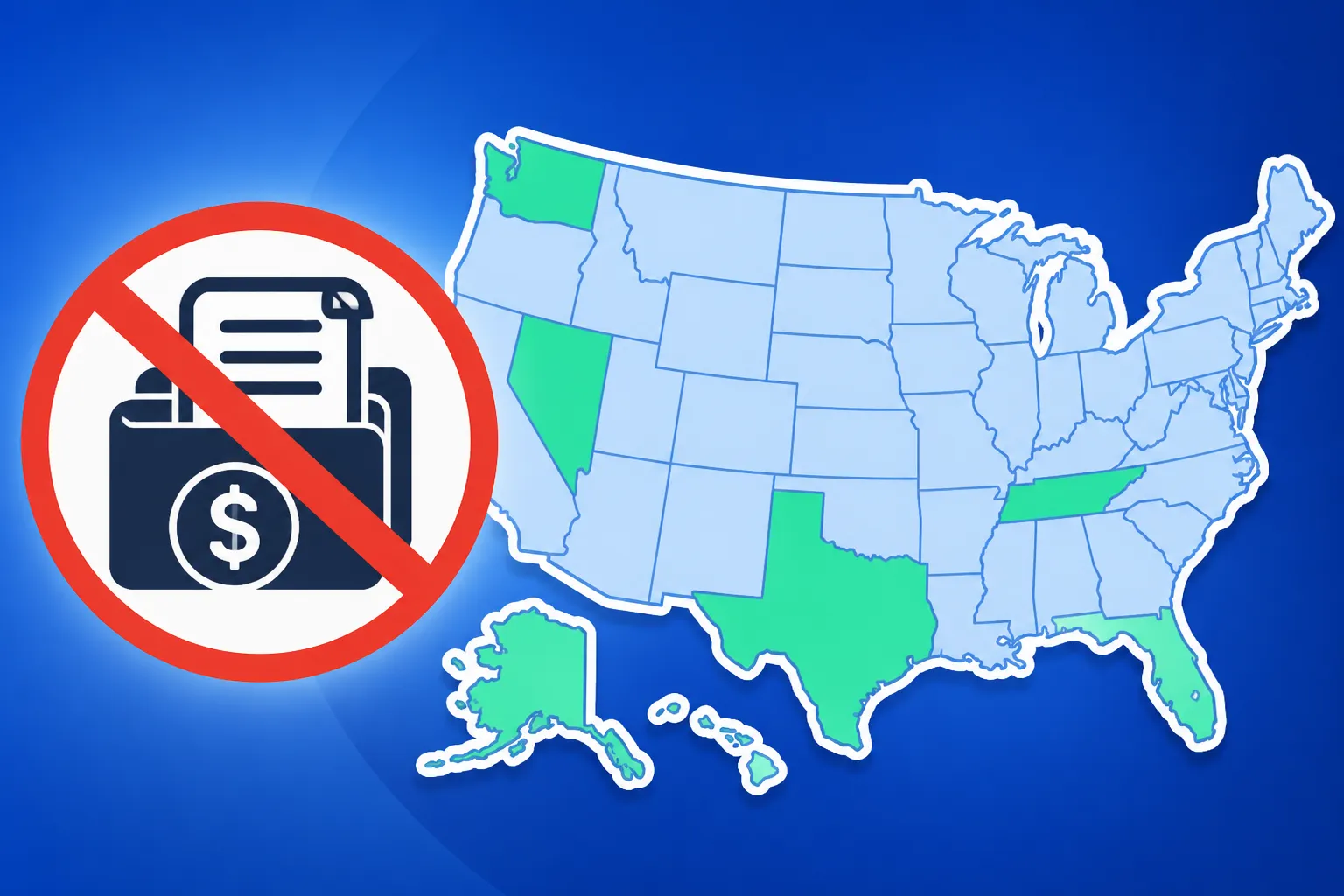
These are the states that currently fall into this category, meaning they have no general state income tax on wages and salaries:
- Alaska: Alaska is well-known for not having a state income tax. Instead, the Last Frontier relies heavily on oil and gas revenues, as well as property and sales taxes, to fund its state services. For residents here, the federal standard deduction is the only one you'll be thinking about when it comes to income.
- Florida: The Sunshine State is another popular destination for those looking to escape state income taxes. This is a big reason why Florida often ranks high as a tax-friendly state, especially for retirees. They largely fund their government through sales taxes and property taxes. If you're wondering, "Does Florida Have State Income Tax?", the answer for general wages and salaries is a resounding no.
- Nevada: What happens in Vegas stays in Vegas, and so does your full paycheck from a state income tax perspective. Nevada also boasts no state income tax, making it attractive for residents. Like Florida, it leverages sales taxes and various other industry-specific taxes, particularly from its robust tourism and gaming sectors. You won't find a state standard deduction form here.
- South Dakota: Nestled in the heartland, South Dakota is another state that gives its residents a break on income taxes. Without a state income tax, South Dakota primarily relies on sales and property taxes to generate revenue. This makes understanding their tax landscape relatively simpler, as there's no state standard deduction to consider.
- Texas: The Lone Star State is a massive economic powerhouse, and part of its appeal is its lack of a state income tax. Many moving to Texas from high-tax states find this a significant financial advantage. For Texans, like those in other no-income-tax states, the focus shifts to property and sales taxes. If your question is, "Does Texas Have State Income Tax?", the answer is no for personal income.
- Washington: While Washington State doesn't have a traditional income tax on wages, it did recently implement a capital gains tax. This is an important distinction. For your regular earned income, there's no state income tax, and therefore no standard deduction. However, certain high-value capital gains might be subject to the special 7% tax. Even with this, the vast majority of income remains untaxed at the state level. People often ask, "Does Washington Have State Income Tax?", and the answer is usually qualified: no for wages, yes for certain capital gains.
- Wyoming: The Cowboy State keeps things simple with no state income tax. Its revenue comes from property taxes, sales taxes, and severance taxes on natural resources. If you're earning a living in Wyoming, you won't be dealing with state income tax forms or worrying about state standard deductions.
Now, a quick note on two other states that historically had very limited income taxes, which are now largely gone:
- New Hampshire: For many years, New Hampshire famously had no earned income tax, but it did tax interest and dividends (often called the "Interest and Dividends Tax"). However, this tax is being phased out, with full repeal expected by 2027. So, for all intents and purposes, New Hampshire is moving towards being a full no-income-tax state. Consequently, there's no standard deduction to speak of for general income. Curious if "Does New Hampshire Have Income Tax?" – for most, the answer is increasingly no.
- Tennessee: Similar to New Hampshire, Tennessee also had a limited tax on interest and dividends, known as the "Hall Tax." This tax was fully repealed for tax years beginning on or after January 1, 2021. So, when people ask, "Does Tennessee Have State Income Tax?", the answer is now no for almost all income types.
For residents of these nine states, the good news is you won't need to factor in a state standard deduction because there's simply no broad-based income tax to apply it to.
Understanding the State Standard Deduction for Income Tax States
Now, for the vast majority of states that do impose an income tax, it's crucial to understand how standard deductions work. It's a common misconception to assume that state standard deductions perfectly mirror their federal counterparts. In reality, while nearly all states with an income tax offer some form of standard deduction, the amounts, rules, and how they interact with federal deductions can vary wildly. This is where things get a bit more complex.
The fundamental purpose of a standard deduction remains the same: it's a fixed dollar amount that taxpayers can subtract from their adjusted gross income (AGI) if they choose not to itemize specific deductions like mortgage interest, state and local taxes (SALT), or charitable contributions. It's designed to simplify tax filing and provide a baseline deduction for most taxpayers. However, the path each state takes to implement this can be quite distinct.
Federal vs. State Standard Deductions: The Key Differences
The biggest difference often lies in the actual dollar amount. The federal standard deduction, which is quite generous, has been significantly increased in recent years. Many states, however, set their own, often much lower, standard deduction amounts. This means that while taking the federal standard deduction might be the best option for you on your IRS return, you might find that itemizing actually saves you more money on your state return, especially if your state's standard deduction is quite modest.
Here’s a breakdown of common ways states approach standard deductions:
- States with Their Own Unique Standard Deductions: Many states, like California or New York, set their own specific standard deduction amounts that are entirely independent of the federal figures. These amounts can be substantially lower than the federal standard deduction. For instance, while the federal standard deduction for a single filer might be over $13,000, a state's standard deduction for the same filer could be just a few thousand dollars. This variation is a critical aspect when understanding your overall tax burden, and platforms like SmartAsset often publish state-by-state comparisons.
- States That Tie to Federal Amounts (or a Percentage): Some states try to simplify things by linking their standard deduction to the federal one, sometimes as a percentage, or by allowing you to take the federal amount directly. However, even these states can have caveats or limitations.
- States with Independent Itemizing Rules: This is where it gets really interesting. Some states allow you to itemize on your state return even if you took the standard deduction on your federal return. This provides fantastic flexibility, letting you choose the optimal strategy for each level of government. For example, if your federal itemized deductions don't quite push you over the federal standard deduction threshold, you might still have enough state-specific deductions (like property taxes beyond the federal SALT cap or certain medical expenses) to make itemizing worthwhile on your state return.
- States That Require Consistency: On the flip side, other states mandate that if you itemize on your federal return, you must itemize on your state return, and if you take the federal standard deduction, you must take the state standard deduction. This means your federal decision dictates your state strategy, potentially limiting your options for state-level tax savings.
Understanding these differences is crucial. For example, knowing the nuances of your state's approach to the standard deduction can significantly impact your taxable income. You can learn more about how different states handle these deductions in our detailed guide on State Standard Deduction vs Itemized (2026). We also have comprehensive breakdowns like State-by-State Standard Deductions 2026 that provide specific figures for most states.
The Importance of Knowing Your State's Rules
Ignoring your state's specific deduction rules and assuming they mirror the federal system is a common and costly mistake. This oversight can lead to overpaying your state taxes or even filing an incorrect return. It's not just about the standard deduction amount; it's also about understanding state tax brackets and how various income levels are taxed. Delving into guides like How State Tax Brackets Work: Marginal vs Effective can provide a deeper insight into your overall state tax picture.
Tax software like TurboTax can be incredibly helpful here, as it's designed to guide you through both federal and state tax filings, automatically applying the correct rules and deductions for your specific situation. However, even with software, it's wise to have a basic understanding of your state's tax landscape. Knowing the answer to questions like What Is the State Standard Deduction for 2026? for your state can empower you to make more informed decisions about your tax planning.
States Where the Standard Deduction Might Feel "Non-Existent" (But Isn't Always)
Beyond the states with no income tax at all, there are a few states where the concept of a standard deduction for income tax purposes is either structured very differently or is so minimal that it might feel like it doesn't exist to many taxpayers. This is where the spirit of the question, "Which states have no standard deduction?", really comes into play for states that do have an income tax.
The prime example here is Pennsylvania.
Pennsylvania's Flat Tax and Deduction System
Pennsylvania stands out because it operates on a flat income tax rate. However, the crucial detail is how that flat tax is applied. Pennsylvania's income tax is levied on eight specific categories of income, and it's generally applied to the gross income within those categories.
What does this mean for deductions? Unlike the federal system or most other states, Pennsylvania does not offer a broad standard deduction or allow for itemized deductions in the traditional sense for its state income tax. This is a significant distinction. While there are some very limited and specific deductions or exclusions for certain types of income or expenses (like contributions to 529 plans, or some unreimbursed employee business expenses for specific occupations), there isn't a general amount you can subtract from your income just for being a taxpayer, as you would with a standard deduction.
For instance, if you earn $60,000 in wages in Pennsylvania, your state income tax is primarily calculated on that gross income, with very few broad deductions to reduce it. This can be a shock for individuals moving from states with more generous standard or itemized deductions. It means that nearly every dollar of taxable income in Pennsylvania is subject to their flat tax rate, making the tax burden quite direct and less adjustable through deductions.
Other States with Restrictive Deduction Regimes
While Pennsylvania is the most prominent example of an income tax state without a traditional standard deduction, other states might have standard deductions that are so low or rules so restrictive that they offer minimal tax relief compared to the federal system.
For example, states like Massachusetts also have a flat income tax, but they do offer personal exemptions and deductions that can reduce taxable income, albeit differently from a standard deduction. Some states have income thresholds below which no tax is owed, which functions similarly to a standard deduction but is structured as an exemption rather than a deduction amount. The key is that these are not the broad, straightforward standard deductions many taxpayers are accustomed to.
The impact of these varied approaches means that two individuals earning the same amount of money in different states could have vastly different taxable incomes after deductions, even before considering the tax rate itself. It underscores the importance of digging into the specifics of your state's tax code, or utilizing tax software that can automatically calculate the most advantageous deductions for you.
Here’s a table summarizing the different approaches to standard deductions across the states:
| State Type | Examples | Standard Deduction for State Income Tax | Key Characteristics |
|---|---|---|---|
| No Broad-Based Income Tax | Alaska, Florida, Nevada, South Dakota, Texas, Washington, Wyoming | None (N/A) | These states do not impose a general income tax on wages or salaries, so the concept of a standard deduction for state income tax doesn't apply. They rely on other taxes like sales and property. |
| Limited Income Tax (Phasing Out/Repealed) | New Hampshire, Tennessee | None (N/A) | Historically taxed only interest and dividends. New Hampshire's tax on interest & dividends is phasing out. Tennessee's was fully repealed for 2021+. No broad income tax, so no standard deduction for general income. |
| Income Tax with No "Standard" Deduction (in traditional sense) | Pennsylvania | Effectively None | Pennsylvania has a flat income tax on specific types of gross income. It does not offer a broad standard deduction or itemized deductions in the federal sense for its state income tax. Very limited specific deductions apply. |
| Income Tax with State-Specific Standard Deduction | California, New York, Illinois, etc. | Varies widely by state | Most states with an income tax offer a standard deduction, but the amount and rules can differ significantly from federal. Some allow itemizing even if you took the federal standard, others require consistency. |
This table highlights the significant variations and clarifies that while "no standard deduction" usually refers to states without an income tax, the tax structure in states like Pennsylvania means the practical effect is quite similar to not having one at all.
Navigating Your State Tax Landscape
Understanding these distinctions is incredibly important for effective financial planning, whether you're considering a move, trying to optimize your tax liability, or just filing your annual return. The landscape of state income taxes and deductions is anything but uniform, and what might be a tax-saving strategy in one state could be completely irrelevant in another.
Remember, every dollar saved on taxes is a dollar that stays in your pocket. Always consult your state's official tax resources or a qualified tax professional for personalized advice. Tools like TurboTax and information from financial platforms like SmartAsset can be invaluable resources as you navigate the complexities of state and federal tax laws.
Disclaimer
Please note that tax laws are subject to change, and the information provided here is for general informational purposes only and not tax advice. You should consult with a qualified tax professional or refer to your state's official tax agency for the most accurate and up-to-date information regarding your specific tax situation.