New York Income Tax Brackets 2026
Living in the Empire State offers unparalleled energy, world-class dining, and a career landscape that is second to none, but it also comes with a tax bill that can leave even the most seasoned New Yorkers scratching their heads. Whether you are living in a walk-up in Manhattan or a suburban home in Westchester, understanding the New York income tax brackets is essential for your financial sanity. This guide breaks down exactly how much you owe, the local taxes that might surprise you, and the credits you cannot afford to miss.
Deciphering the 2026 New York State Tax Structure
New York utilizes a progressive income tax system, which essentially means the more you earn, the higher the percentage you pay on your top dollars. While this is a common approach across the United States, New York is known for having some of the highest top-tier rates in the country. This creates a significant "tax bite" for high earners, but even middle-income families often find themselves navigating complex calculations when it comes time to file. Understanding how these rates interact with your federal obligations is the first step, and many people start by looking at State Income Tax vs Federal Income Tax to see how the two systems diverge in their definitions of taxable income.
One of the most frustrating aspects for residents is that the brackets are not just about the state level. If you live within the five boroughs, you are also subject to a separate city tax. This layering effect is what often leads people to search for tools like SmartAsset to model their take-home pay before accepting a new job offer or relocating. It is not just about the 4% or 6% state rate; it is about the cumulative burden of state, local, and federal levies all hitting the same paycheck.
The Progressive Rate Reality
The progressive nature of the New York tax code means that you aren't taxed at one flat rate for your entire income. Instead, your earnings are divided into "buckets." For example, your first few thousand dollars are taxed at the lowest rate, and only the income falling into the next bracket is taxed at that higher percentage. However, New York adds a unique twist known as "tax benefit recapture." For very high earners, the state essentially "claws back" the benefit of those lower tax brackets, effectively taxing their entire income at the top marginal rate. This is a nuance often missed in a basic Marginal vs Effective Tax Rate Calculator Guide because it is specific to New York’s aggressive revenue collection strategy.
For 2026, these brackets remain a moving target influenced by legislative changes and inflation adjustments. When you are planning your budget, it is vital to look at the specific dollar thresholds. A small raise could technically push a portion of your income into a higher bracket, but because it is a marginal system, it rarely results in less take-home pay overall—unless you hit those specific "recapture" thresholds that New York is famous for.
The Impact of Local Income Taxes
New York is one of the few states where local municipalities have significant power to levy their own income taxes. If you are a resident of the Big Apple, you are likely already familiar with the additional line item on your paystub. We have a detailed breakdown in our NYC Income Tax Explained (2026 Rates) guide, but the short version is that city residents can expect to pay between 3.078% and 3.876% on top of their state taxes. This is why a $100,000 salary in New York City feels vastly different from the same salary in Syracuse or Albany.
Yonkers also has its own resident income tax surcharge, which is currently set at 16.75% of your net state tax. For someone living in Yonkers but working elsewhere, this hidden cost can be a major source of frustration. When comparing your options, using a comprehensive resource like SmartAsset can help you visualize how these local taxes impact your long-term savings goals, especially if you are choosing between living in the city or commuting from a lower-tax jurisdiction.
Breakdown of New York Income Tax Brackets 2026
To help you visualize where your money is going, we have compiled the expected brackets for 2026. Please note that these figures are based on current state projections and are subject to minor adjustments for inflation by the New York Department of Taxation and Finance. The brackets differ based on your filing status: Single, Married Filing Jointly, or Head of Household.
| Taxable Income Range (Single Filers) | 2026 Tax Rate |
|---|---|
| $0 – $8,500 | 4.00% |
| $8,501 – $11,700 | 4.50% |
| $11,701 – $13,900 | 5.25% |
| $13,901 – $21,400 | 5.50% |
| $21,401 – $80,650 | 5.85% |
| $80,651 – $215,400 | 6.25% |
| $215,401 – $1,077,550 | 6.85% |
| $1,077,551 – $5,000,000 | 9.65% |
| $5,000,001 – $25,000,000 | 10.30% |
| Over $25,000,000 | 10.90% |
Single Filers and Married Filing Separately
For those who are single or filing separately, the brackets hit the higher rates relatively quickly compared to other states. If you are an early-career professional earning $85,000, you are already well into the 6.25% bracket for your top dollars. This is a common point of frustration for young New Yorkers who are trying to balance the high cost of rent with a tax system that seems to penalize moderate success. When you look at the State Income Tax Rates 2026: All 50 States Ranked, you will see that New York consistently stays in the top tier of tax burdens for this demographic.
Filing as "Married Filing Separately" in New York is often a strategic choice, but it rarely results in lower total taxes unless one spouse has significant student loan payments on an income-driven plan or very high medical expenses. In most cases, the brackets for separate filers mirror the single brackets, which can lead to a "marriage penalty" if both spouses are high earners. It is always wise to run the numbers through a platform like SmartAsset to see if the separate filing status truly offers any relief or if it just complicates your return.
Married Filing Jointly and Head of Household
Married couples filing jointly and those qualifying as Head of Household enjoy wider brackets, meaning they can earn more before being pushed into the higher percentage tiers. For instance, while a single person hits the 6.85% bracket at roughly $215,400, a married couple doesn't hit that same rate until their combined income exceeds $323,200. This provides some relief for families, but in a high-cost area like Long Island or the Hudson Valley, that combined income often disappears quickly into property taxes and childcare.
The Head of Household status is particularly valuable for single parents. It offers a middle ground between the single and joint brackets, acknowledging the higher costs associated with maintaining a household for dependents. If you are unsure which status you qualify for, checking the New York Residency Requirements for Taxes can help clarify how your living situation affects your filing options. New York is notoriously strict about residency and filing status, so getting this right is the first step to avoiding a costly audit.
The New York Residency Challenge
One of the most complex areas of New York tax law involves who actually qualifies as a resident. This isn't just about where you receive your mail; it is about where you are "domiciled" and how many days you spend within state lines. New York is famous for its "residency audits," where the state investigates everything from your cell phone records to your dog's vet bills to prove you owe them money. This is a significant pain point for "snowbirds" or remote workers who think they have successfully moved to a tax-free state like Florida.
If you are a remote worker or maintain a second home, you need to be deeply familiar with The 183-Day Rule for State Taxes. New York's rules are some of the most aggressive in the nation. If you maintain a "permanent place of abode" in the state and spend more than 183 days there, the state considers you a statutory resident, meaning they want a piece of your entire global income, not just the money you earned while physically sitting in a New York office.
Understanding the 183-Day Rule
The 183-day rule sounds simple: spend more than half the year outside of New York, and you aren't a resident, right? Wrong. New York defines a "day" as any part of a day. If you land at JFK at 11:45 PM on a Tuesday, that counts as a full day in New York. If you drive through the state to get to a vacation home in Vermont, that counts too. The burden of proof is entirely on the taxpayer to show they were elsewhere.
For those who have moved, the frustration often stems from the "Convenience of the Employer" rule. If you work for a New York-based company but live in a different state for your own convenience (not because the employer requires you to be there), New York will still try to tax your income. This has led to numerous legal battles and is a major reason why people consult professionals or use SmartAsset to calculate the true cost of a remote New York job while living in a place with a lower tax burden.
Domicile vs. Statutory Residency
There is a legal distinction between where you live (residency) and where your true, permanent home is (domicile). You can only have one domicile. If you grew up in Buffalo, have a New York driver's license, and are registered to vote there, New York considers you domiciled there even if you are traveling the world as a digital nomad. To change your domicile, you must demonstrate a clear intent to leave New York and never return.
Establishing a new domicile requires "clear and convincing evidence." This includes moving your "near and dear" items—family heirlooms, pets, and even your primary bank accounts. If you are making a big move, perhaps looking at New York vs Florida Taxes Compared, you need to be prepared for the New York Department of Taxation and Finance to challenge your move. They don't let go of their taxpayers easily, and many people find themselves paying taxes to two states until they can legally prove their new status.
Maximizing Deductions and Credits in New York
While the rates are high, New York does offer several ways to chip away at that total bill. The state has its own set of deductions and credits that often differ significantly from federal rules. For many, the simplest way to reduce taxable income is by taking the standard deduction. For the 2026 tax year, the New York Standard Deduction 2026 is expected to be around $8,000 for single filers and $16,050 for married couples filing jointly. While this is lower than the federal standard deduction, it still provides a baseline of tax-free income.
If your expenses are high enough, itemizing might be the better route. New York allows you to itemize on your state return even if you took the standard deduction on your federal return. This is particularly helpful for New Yorkers who have high medical expenses or significant charitable contributions. However, keep in mind that the federal SALT (State and Local Tax) cap doesn't apply the same way at the state level, but New York has its own limitations on how much high earners can deduct.
The New York 529 Plan Tax Deduction
For parents and grandparents, the New York 529 Plan Tax Deduction is one of the best "gifts" in the state tax code. You can deduct up to $5,000 in contributions to a New York 529 College Savings Program account per year ($10,000 if married filing jointly). This isn't just a deferral; it is a direct reduction of your New York taxable income.
Given the skyrocketing cost of tuition, this deduction serves a dual purpose: helping you save for the future and providing immediate tax relief. Many savvy investors use SmartAsset to model how these annual contributions can grow over 18 years while simultaneously lowering their annual state tax liability. Just remember that the funds must be used for qualified education expenses to maintain the tax-free status of the withdrawals later on.
Earned Income Tax Credit (EITC) and Family Credits
New York is also known for being relatively generous to low-to-moderate-income families through its Earned Income Tax Credit. The state EITC is worth 30% of the federal credit, and better yet, it is fully refundable. This means that if the credit reduces your tax bill to zero, the state will actually send you a check for the remaining balance. This can be a lifeline for families struggling with the high cost of living in areas like Rochester or Yonkers.
In addition to the EITC, the Empire State Child Credit provides a credit for children under the age of 17. While the federal child tax credit often dominates the headlines, the state-level version is a critical component of the New York tax landscape. For families navigating the 2026 tax year, keeping track of these refundable credits is essential. They act as a direct offset to the high income tax brackets and can significantly lower your effective tax rate.
Comparing New York to Other States
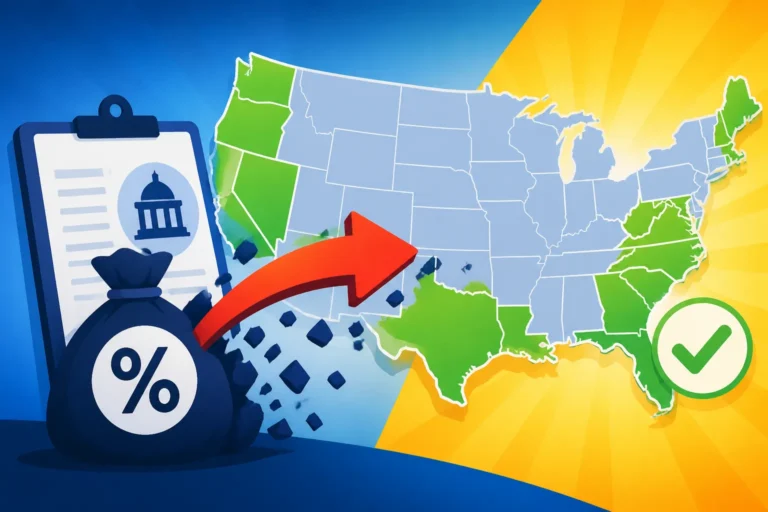
It is no secret that New York is often compared to states like Texas or Florida, especially as remote work becomes more prevalent. When you look at the State Income Tax Rates 2026: All 50 States Ranked, New York consistently sits near the bottom in terms of "tax friendliness." However, comparing states based solely on income tax is a mistake. New York provides a high level of public services, world-class infrastructure in some areas, and a robust social safety net that states with no income tax often lack.
The "sticker shock" of the New York brackets leads many to consider moving, but it is important to look at the total tax burden. A state might have no income tax but significantly higher sales or property taxes. For instance, many people moving from New York to Texas find that their property tax bill doubles, eating up much of the savings they gained from the lack of a state income tax. Using a tool like SmartAsset to perform a "side-by-side" comparison of your specific financial situation is the only way to get a true picture of the potential savings.
New York vs. High-Tax Neighbors
New York isn't the only state in the Northeast with a high tax burden. New Jersey and Connecticut also feature progressive systems with high top rates. However, New York’s "Convenience of the Employer" rule often makes it the most difficult state for commuters to deal with. If you live in Jersey City but work for a firm in Manhattan, you will likely owe New York taxes on all your income, though you will generally receive a credit on your New Jersey return for taxes paid to New York.
This interplay between neighboring states is a constant source of stress during tax season. It requires filing multiple returns and carefully tracking where your work was actually performed. Many taxpayers find that after the credits are applied, they aren't being "double taxed," but they are still paying the higher of the two states' rates. It is an expensive neighborhood to live in, and the 2026 brackets only reinforce that reality for high earners.
Why New York Taxes Are Unique
Ultimately, New York’s tax system reflects its complex economy. From the financial powerhouses of Wall Street to the agricultural hubs of Upstate, the state attempts to balance a massive budget through a highly progressive system. The 2026 rates continue this trend, focusing on collecting revenue from top earners while providing targeted relief through credits for families and students.
While the numbers on the page can be intimidating, being proactive is your best defense. Whether it is maximizing your 529 contributions, carefully documenting your days out of the state, or using platforms like SmartAsset to stay ahead of your estimated payments, you have more control than you might think. New York is an expensive place to call home, but for many, the opportunities found here make the tax bill a price worth paying.
Disclaimer
This guide is provided for informational purposes only and does not constitute professional tax, legal, or financial advice. Tax laws, including New York state income tax brackets and local surcharges, are subject to frequent legislative changes and inflation adjustments. Always consult with a qualified tax professional or CPA to discuss your specific financial situation and ensure compliance with all state and federal regulations.