Ohio Flat Tax 2026 (2.75%) Explained
If you have spent any time staring at a W-2 in the Buckeye State lately, you have probably felt that familiar sting of confusion. Ohio has spent the last few years aggressively overhaulng its tax code, moving away from a complex multi-bracket system toward a streamlined model. This guide breaks down exactly how the 2.75% flat tax works for 2026, helping you navigate state obligations, local municipal filings, and the credits that keep more money in your pocket.
The Evolution of Ohio's Tax Landscape
For decades, Ohio operated like most other progressive tax states, featuring a ladder of rates that climbed as your income grew. If you lived in a place like Shaker Heights or Upper Arlington, you were likely paying a significant percentage of your top-tier earnings to the Department of Taxation. However, recent legislative shifts, specifically those solidified in the last biennial budget, have fundamentally changed the game. The state has effectively collapsed its tax brackets to create what is now widely recognized as a flat tax for the vast majority of earners.
Moving from Brackets to Simplicity
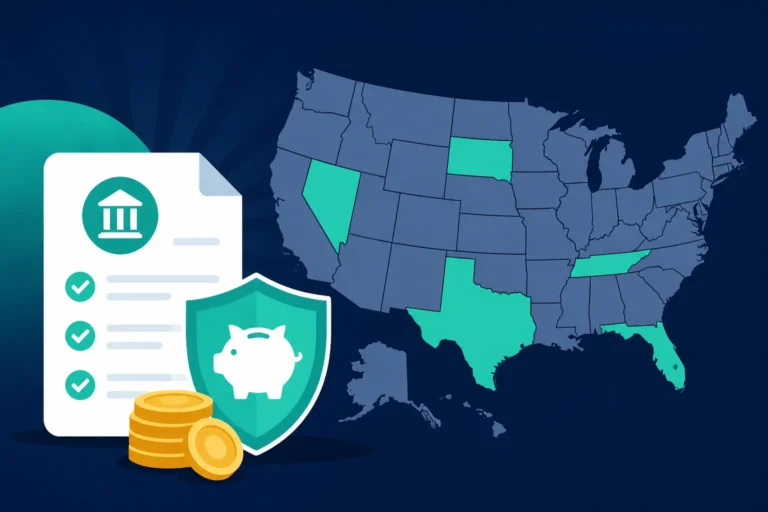
The transition wasn't an overnight flip of the switch. It was a calculated phase-out designed to make the state more competitive with neighbors. Historically, Ohio had as many as nine tax brackets. By the time we reached 2024 and 2025, that number was whittled down to just two. As we look at the requirements, the state has stabilized this "flat-ish" approach. When people ask about What States Are Going to Flat Tax?, Ohio is frequently the lead example of a successful transition. By consolidating the rates, the state government aims to reduce the administrative burden on residents while positioning Ohio as a more attractive destination for remote workers and growing families.
Why 2.75% is the Magic Number
The 2.75% rate is the cornerstone of the current policy. For anyone earning over the base threshold, this is the marginal rate that applies to every dollar earned above that floor. While it might seem higher than the zero-percent rate found in places like Tennessee or Florida, it is remarkably low compared to the 5% or 6% rates seen in other Midwestern hubs. When you use tools like SmartAsset to compare your take-home pay in Columbus versus Chicago, the impact of this 2.75% becomes immediately apparent. It offers a level of predictability that was missing from the old system, allowing residents to forecast their annual tax liability with much greater accuracy.
The Impact on High vs. Low Earners
In a progressive system, high earners bear a disproportionate load. In a flat system, the "fairness" debate often shifts. For a family in Dayton making $50,000, the tax burden feels manageable. For an executive in Cincinnati making $500,000, the 2.75% rate represents a massive tax cut compared to the rates of a decade ago. This shift is a core part of the state's strategy to retain high-net-worth individuals who might otherwise flee to no-tax jurisdictions. It’s worth looking at States With a Flat Income Tax (2026) to see how Ohio's specific percentage stacks up against others like Indiana or North Carolina.
Calculating Your Liability in 2026
Calculating your state tax in Ohio used to require a degree in mathematics and a lot of patience. Today, it is much more straightforward, though there is still a "floor" that you need to be aware of. Not every single dollar you earn is taxed at the 2.75% rate; the state provides a significant buffer for lower-income residents to ensure that the flat tax doesn't become a regressive burden on those struggling to make ends meet.
The $26,050 Threshold Explained
For the 2026 tax year, Ohio maintains a "zero bracket." If your Ohio Adjusted Gross Income (OAGI) is $26,050 or less, your tax liability is effectively zero. You may still need to file a return to claim a refund of any taxes withheld by your employer, but you won't actually owe the state anything. This threshold is adjusted periodically for inflation, but it serves as a vital safeguard. For students working part-time in Athens or retirees with modest income in Sandusky, this means the state stays out of your wallet entirely. Understanding How State Tax Brackets Work: Marginal vs Effective is key here because while the state rate is flat, your effective rate remains lower due to this initial $26,050 exemption.
Marginal vs. Effective Rates in a Flat System
Let’s look at a realistic scenario. Suppose you are a mid-career professional in Westerville earning $80,000 a year. You don't pay 2.75% on the full $80,000. You pay 0% on the first $26,050 and 2.75% on the remaining $53,950.
- Total Tax Owed: $1,483.63
- Effective Tax Rate: ~1.85%
As you can see, the "flat tax" of 2.75% is actually your marginal rate. Your effective rate—the actual percentage of your total income that goes to the state—will always be lower than 2.75% because of that bottom-tier exemption. This nuance is something many people miss when comparing Ohio Tax Brackets 2026 to other states. Using a calculator from SmartAsset can help you run these numbers for your specific salary to see exactly where you land.
Common Adjustments to Ohio Adjusted Gross Income
Before you apply that 2.75% rate, you have to determine your OAGI. This starts with your Federal Adjusted Gross Income and then adds or subtracts specific Ohio-only items. For example, if you have interest from out-of-state municipal bonds, you might have to add that back in. Conversely, if you have certain types of retirement income or disability benefits, you might be able to subtract them. This step is where most mistakes happen. If you are a business owner, you might also benefit from the Business Income Deduction, which allows you to deduct the first $250,000 of business income entirely.
Local Taxes: The Hidden Layer of Ohio Filing
If the state tax was the only thing Ohioans had to worry about, life would be simple. Unfortunately, Ohio has one of the most complex local tax systems in the country. This is the part that usually catches new residents off guard. You might be thrilled with your 2.75% state rate, only to realize that your city and your school district both want a piece of the pie as well.
RITA and CCA Explained
Most cities in Ohio delegate their tax collection to third-party agencies. The most common is the Regional Income Tax Agency (RITA), while others use the Central Collection Agency (CCA). If you live in a "RITA municipality" like Beachwood or Brecksville, you have to file a separate local return. This is where the frustration peaks. These agencies often have different filing deadlines or requirements than the state. It is essential to check Which Ohio Cities Have Income Tax? to see if your specific zip code falls under one of these jurisdictions. RITA, in particular, is known for its diligent enforcement, so ignoring these notices is a recipe for heavy penalties and interest.
School District Income Taxes
In addition to city taxes, many Ohioans live in "taxing school districts." This is an additional percentage—usually between 0.25% and 1.5%—that goes directly to the local schools. Not every district has this; for example, many large urban districts rely solely on property taxes, while suburban and rural districts like Pickerington or Canal Winchester often utilize an income tax. You can find your school district number on your property tax bill or by using the state’s "The Finder" tool. When you add up a 2.75% state tax, a 2.25% city tax, and a 1% school district tax, your total income tax burden can climb toward 6%, which is why looking at the Ohio City Income Taxes (RITA vs CCA) is just as important as knowing the state rate.
The Credit for Taxes Paid to Other Municipalities
There is one saving grace in this local tax madness: the "Credit for Taxes Paid." If you live in one city (like Hilliard) but work in another (like Columbus), you generally owe taxes to both. However, most cities offer a credit to their residents for the taxes they paid to the city where they work. This prevents you from being double-taxed on the same dollar. The catch? The credit isn't always 100%. Some cities only give you a partial credit, meaning you might still owe a "village tax" or a small percentage to your home city. This is a common pain point for commuters across the state.
Deductions and Credits to Lower Your Bill
While the 2.75% rate is low, there is no reason to pay more than you legally owe. Ohio offers several specific deductions and credits that can significantly lower your final bill. These are designed to encourage certain behaviors, such as saving for college or supporting local businesses.
Ohio Standard Deduction 2026
Ohio provides a personal exemption for yourself, your spouse, and your dependents. For 2026, these amounts are indexed to inflation. For many families, this acts as an additional "shield" for their income. If you have a large family, these exemptions can add up quickly, reducing the portion of your income that is subject to the 2.75% rate. It is important to compare how this works with the Ohio Standard Deduction 2026 rules, as the state does not simply mirror the federal standard deduction. You have to follow the specific Ohio worksheets to get this right.
Leveraging the 529 Plan
One of the best tax breaks in Ohio is the deduction for contributions to a 529 College Savings Plan. Ohio allows you to deduct up to $4,000 per beneficiary, per year, from your taxable income. The best part? If you contribute more than $4,000, you can "carry forward" the excess to future years indefinitely. If you are a grandparent in Toledo putting money away for three grandkids, that is a $12,000 deduction right off the top. This is one of the most generous 529 breaks in the country. You can learn more about the mechanics in the Ohio 529 Plan Tax Deduction guide.
Credits for Families and Workers
Ohio also offers a variety of credits that act as a "dollar-for-dollar" reduction of your tax.
- Joint Filer Credit: If you and your spouse both earn at least $500, you may qualify for a credit that scales based on your income.
- Retirement Income Credit: For those receiving qualified pensions or distributions, there is a modest credit available to offset the tax on that income.
- Child and Dependent Care Credit: If you are paying for daycare so you can work, Ohio provides a credit that mirrors a portion of the federal version.
| Credit/Deduction Name | Benefit Type | Who Qualifies? |
|---|---|---|
| Personal Exemption | Deduction | Residents and part-year residents |
| 529 Contribution | Deduction | Anyone contributing to an Ohio 529 |
| Business Income Deduction | Deduction | S-Corp owners, LLC members, Sole props |
| Joint Filer Credit | Credit | Married couples both earning income |
| Senior Citizen Credit | Credit | Taxpayers age 65 or older |
Comparing Ohio to the Rest of the Midwest
Tax rates don't exist in a vacuum. To understand if the Ohio 2.75% rate is actually a "good deal," you have to look at what's happening across the state lines. The Midwest has become a battleground for tax reform, with several states racing to lower their rates to attract businesses.
Ohio vs. Indiana Flat Tax
Indiana has long been the "gold standard" for flat taxes in the Midwest. For a long time, Indiana’s rate was lower than Ohio’s. However, as Indiana has hovered around the 3% to 3.15% mark, Ohio’s drop to 2.75% has actually made the Buckeye State more competitive on a state-level basis. However, Indiana's local "county taxes" are often more uniform and easier to manage than Ohio's patchwork of city and school district taxes. If you are considering a move, comparing States With a Flat Income Tax (2026) will show you that while Ohio’s headline rate is lower, the total "out of pocket" might be closer than you think.
Michigan and Pennsylvania Comparisons
Michigan recently had a "trigger" mechanism that lowered its flat tax rate, but it remains higher than Ohio's 2.75%. Pennsylvania is another flat-tax state, sitting consistently at 3.07%. When you look at the region, Ohio has successfully undercut almost all of its immediate neighbors in terms of the state income tax rate. This is a significant talking point for economic development officials in cities like Youngstown or Steubenville, where residents can easily move across the border.
The Reciprocity Factor
One thing that makes living in the Midwest unique is the prevalence of reciprocity agreements. Ohio has agreements with Indiana, Kentucky, Michigan, Pennsylvania, and West Virginia. This means that if you live in Ohio but work in Detroit, you only pay Ohio income tax. Your employer will withhold Ohio tax instead of Michigan tax. This simplifies life for thousands of border-town residents. You can read more about how this works in the State Reciprocity Agreements Explained section. It’s a vital piece of the puzzle for anyone living near the state line.
Practical Tips for Ohio Taxpayers
Knowing the rate is one thing; staying organized is another. Because of the multi-layered nature of Ohio taxes (State + City + School District), it is very easy to miss a payment or a filing.
Quarterly Estimated Payments
If you are a freelancer, a small business owner, or someone with significant investment income, the state expects you to pay as you go. If you expect to owe more than $500 in Ohio tax (after withholdings), you are required to make quarterly estimated payments. Failure to do this results in an "underpayment of estimated tax" penalty. Many people use SmartAsset's tax planning tools to calculate these payments so they aren't hit with a massive bill—and a penalty—every April.
Using Financial Tools for Planning
In a flat tax system, your planning shifts from "how do I stay in a lower bracket?" to "how do I maximize my deductions?" Since every dollar over $26,050 is taxed at the same 2.75% rate, there is no "bracket creep" to worry about. This makes it easier to decide whether to take a bonus in December or January. However, you should still be diligent about tracking your local taxes. Many high-earners in Ohio use professional software or CPAs because the RITA and CCA filings are notoriously easy to mess up.
Filing for Free in Ohio
If your income is below a certain level, don't pay to file your state taxes. The Ohio Department of Taxation offers "I-File," a free, secure online portal that allows you to file your state and school district returns directly. It’s often faster than the big-box tax software and ensures that you are using the most up-to-date state forms. While it won't handle your RITA or CCA local forms, it takes the sting out of the state filing process.
Summary of the 2026 Ohio Tax Outlook
As we move forward, the Ohio tax story is one of aggressive simplicity. The move to a 2.75% flat rate for income above $26,050 represents a clear "open for business" sign from the state legislature. While the local tax system remains a complex hurdle for many, the state-level burden has never been lower in modern history. By understanding the interaction between your state liability, your local obligations, and the available 529 and family credits, you can navigate the Buckeye State’s tax season with confidence. Whether you are a lifelong resident of Lakewood or a newcomer to the Silicon Heartland in New Albany, staying informed is the best way to ensure your financial health remains as strong as a Buckeye.
Disclaimer
This guide is provided for informational purposes only and does not constitute professional tax, legal, or financial advice. Tax laws, including rates, exemptions, and local filing requirements in Ohio, are subject to change by legislative action or administrative ruling. While every effort has been made to ensure accuracy for the 2026 tax year, you should consult with a qualified tax professional or the Ohio Department of Taxation regarding your specific financial situation and any local municipal tax obligations.