Remote Worker Living in No-Tax State
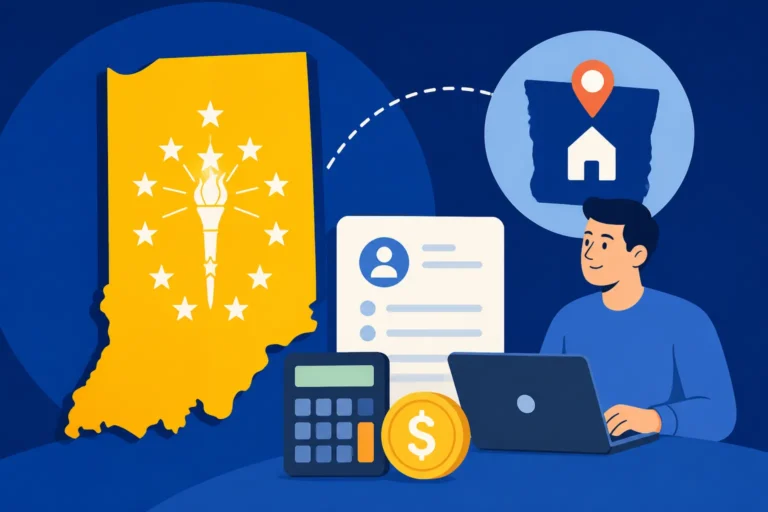
Many remote workers dream of a life where they can keep more of their hard-earned money, and for a lot of folks, that dream looks like packing up and moving to a state with no income tax. The appeal is huge: imagine seeing less of your paycheck disappear before it even hits your bank account. But here's the kicker – the world of state tax residency, especially when your employer is based in a different state, is a maze of rules and potential pitfalls that can quickly turn that dream into a tax headache. This comprehensive guide is here to walk you through the complexities, bust some myths, and help you understand the real implications for remote workers who choose to live in a state free of income taxes, ensuring you can legally and confidently enjoy your financial freedom.
The Allure and Reality of No-Income-Tax States for Remote Workers
It’s completely understandable why the concept of a "no-income-tax state" holds such a powerful draw. Who wouldn't want to potentially boost their take-home pay without even asking for a raise? For many remote workers, the flexibility of their job opens up a world of possibilities, and moving to a state with a lower tax burden is often at the top of the list.
The Promise of Zero State Income Tax
Let's face it, seeing a chunk of your salary go towards state income tax can be a real drag. For professionals earning a good living, a few percentage points can add up to thousands of dollars over a year. That's why states like Florida, Texas, and Washington, which don't impose a general income tax on wages, become incredibly attractive. Imagine what you could do with that extra cash: pay down debt, save for a down payment, invest more, or simply enjoy a higher quality of life.
Currently, the states that generally do not tax earned income are Alaska, Florida, Nevada, South Dakota, Tennessee, Texas, Washington, and Wyoming. While New Hampshire doesn't tax earned wages, it does tax interest and dividends. If you're looking for a definitive breakdown, our guide on States With No Income Tax (2026 Full List) provides all the specifics. The savings can be substantial, especially for high earners, which is why so many consider making the move. It's not just about the numbers; it's about the feeling of greater financial control and the opportunities that come with it.
Understanding Other Tax Burdens
Here’s where a lot of people get tripped up. The phrase "no-income-tax state" sounds like a tax-free paradise, but that's rarely the full picture. States have to fund their services somehow, and if they're not collecting income tax, they often make up for it in other ways. This means higher sales taxes, higher property taxes, or various excise taxes on specific goods and services.
Take Texas, for instance. While you won't pay state income tax on your earnings, property taxes are among the highest in the nation. If you’re eyeing a move to the Lone Star State, especially to bustling areas like Dallas or Austin, you might find that the property tax bill eats into a significant portion of your income tax savings. Similarly, Florida boasts no state income tax, making it a popular choice for retirees and remote workers alike, but property taxes can still be quite steep in desirable coastal areas. Washington State, another income-tax-free haven, recently introduced a capital gains tax, which could affect those with significant investment income. So, while you might be thrilled to avoid state income tax, it's crucial to look at the whole picture to understand if it's truly Is It Cheaper to Live in a State With No Income Tax?. You’ll want to consider all your expenses, from housing to groceries, to get a realistic view of your overall tax burden.
Deciphering State Tax Residency: Domicile and Statutory Rules
This is perhaps the most critical section for any remote worker considering a move to a no-income-tax state. Simply changing your mailing address isn't enough to change your tax residency in the eyes of the law. States are very particular about who they consider a resident, and they have rules in place to prevent people from skirting their tax obligations.
Domicile vs. Statutory Residency
When it comes to state taxes, there are two main ways a state can claim you as a resident: through "domicile" or "statutory residency." Understanding the difference is paramount. Domicile is generally defined as your true, fixed, and permanent home, the place where you intend to return whenever you are absent. It's about your intent. You can only have one domicile at a time.
Statutory residency, on the other hand, is a more objective test, often based on how much time you physically spend in a state. Many states have a rule, often referred to as The 183-Day Rule for State Taxes, which states that if you spend more than half the year (183 days or more) in a particular state and maintain a permanent place of abode there, you might be considered a resident for tax purposes, regardless of where you claim your domicile. This is a key distinction covered in depth in our article on Domicile vs Statutory Residency. The legal definition of residency can vary significantly from one state to another, making it a tricky area for remote workers with ties to multiple locations.
Proving Your Domicile to a State
Establishing domicile isn't just a mental exercise; it requires a clear demonstration of intent through your actions. When a high-tax state suspects you haven't truly moved, they'll look for evidence. This means changing your driver's license and vehicle registration to your new state immediately. You should also update your voter registration, open new bank accounts in your new state, and close old ones in your former state. Update all your mailing addresses, including those for bills, subscriptions, and even your friends and family.
Consider the example of John, who lived in California (a high-income-tax state) and took a remote job, moving to Nevada (no income tax). To truly prove his domicile, John didn't just rent an apartment in Las Vegas. He got a Nevada driver's license, registered to vote there, opened new bank accounts, and updated his professional licenses. He even joined a local golf club and found a new primary care physician in Nevada. Selling his California home, or at least renting it out long-term, and buying or renting a new property in Nevada further solidified his claim. These concrete actions help show a state like California that he had a clear intention of How to Change Your State Residency for Taxes. Without this paper trail and clear change in lifestyle, even if you declare your intent, a state could challenge it.
The 183-Day Rule and Other Triggers
While domicile is about intent, statutory residency often boils down to physical presence. Many states, especially those with high income taxes, use a "183-day rule" as a bright-line test. If you spend 183 days or more within their borders, and you have a "permanent place of abode" there (which can be as simple as an apartment you rent), you could be deemed a resident and subject to their income taxes. This applies even if you genuinely consider your no-income-tax state your true domicile.
This rule is particularly tricky for remote workers who might travel back to their former high-tax state frequently to visit family, attend meetings, or simply enjoy their old stomping grounds. For instance, if you moved from New Jersey to Florida but still spend over half the year at your family's beach house in New Jersey, you could inadvertently trigger statutory residency in New Jersey. States have become very sophisticated in tracking physical presence, using everything from cell phone data to credit card transactions and toll booth records. These are the kinds of activities that could What Triggers a State Residency Audit? from your former state, and it’s a situation you absolutely want to avoid. The key is meticulous record-keeping of your travel and physical presence, especially if you plan to return to a high-tax state for any significant length of time.
The "Convenience of the Employer" Rule: A Remote Worker's Headache
Even if you successfully establish domicile in a no-income-tax state and manage your physical presence perfectly, there's another major hurdle that can catch remote workers off guard: the "convenience of the employer" rule. This is one of the trickiest aspects of multi-state taxation and can negate many of the benefits of living in a no-tax state.
How the Rule Operates
The "convenience of the employer" rule dictates that if you work remotely from a different state for an employer based in a state with this rule, your income may still be taxed by the employer's state. The logic behind it is that if you're working remotely for your own convenience rather than because your employer requires you to do so for a legitimate business reason, then your earnings are still sourced to the employer's state. In essence, your physical location doesn't matter for tax purposes if your choice to work remotely isn't a business necessity for your company. This directly addresses the question of Do Remote Workers Pay Taxes Where the Company Is? in certain circumstances.
This means that even if you live in Florida (a no-income-tax state) and never step foot in New York, if your employer is based in New York and allows you to work from Florida for your personal convenience, New York may still claim your income is taxable there. It's a challenging rule that often feels unfair to remote employees who genuinely live and work outside the employer's state.
Key States Applying the Rule
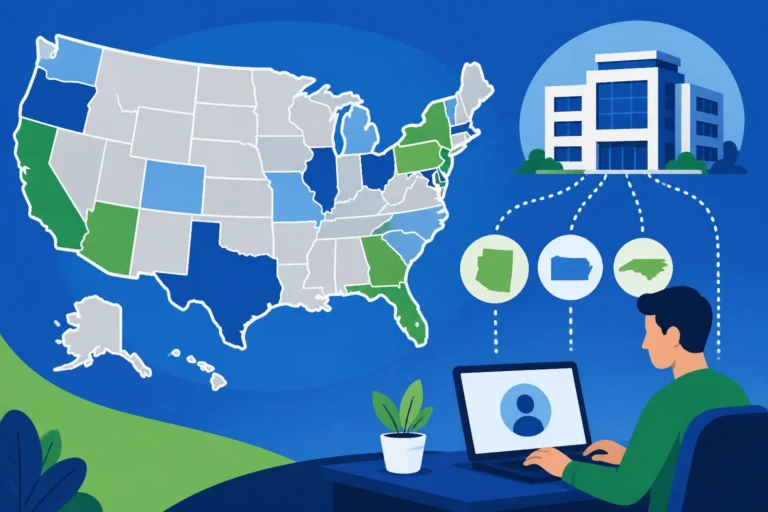
While the concept exists in a few states, New York is by far the most aggressive and well-known for enforcing the convenience of the employer rule. If your company is headquartered in New York, and you're working from your home in, say, Texas, New York will generally tax your income unless your employer can prove that your remote work is absolutely necessary for their business operations and not just for your personal preference. This isn't just a casual consideration; New York has a long history of pursuing former residents and remote workers over this rule, as explored in our guide on the New York Convenience Rule & Remote Work.
Other states like Delaware and Pennsylvania also have similar, though often less rigorously enforced, convenience rules. Nebraska also has a form of this rule. It's crucial to understand that if your employer is based in one of these states, your dream of completely avoiding state income tax might be shattered, even if you’ve meticulously established residency elsewhere. Our article on Convenience of the Employer Rule States provides a comprehensive list and explanation of where this rule applies.
Impact on Your Tax Liability
The impact of the convenience of the employer rule can be significant. Imagine you've moved to a no-income-tax state like Washington, feeling confident you've escaped high state taxes. But if your employer is in New York, you might still find yourself paying New York state income tax. This can feel like a bitter pill to swallow, as you're living in a state marketed as "tax-free" yet still cutting a check to another state.
In these situations, it's not uncommon for your employer to continue withholding taxes for their state. You might then need to file a non-resident return with the employer's state to report your income and potentially claim credits if you believe you shouldn't be taxed there. The complexity can be overwhelming, which is why tax preparation software like TurboTax often has specific modules to handle multi-state filings, though even the best software can't replace a solid understanding of the rules. The bottom line is that relying solely on your physical location in a no-tax state isn't enough; you must also consider your employer's location and their state's specific tax sourcing rules for remote workers.
Navigating the Tax Landscape: Strategies and Best Practices
Given the complexities of domicile, statutory residency, and the convenience of the employer rule, simply moving to a no-income-tax state isn't a magic bullet. It requires careful planning and a strategic approach to ensure you genuinely reap the tax benefits.
Documenting Your Move and Establishing New Domicile
The phrase "actions speak louder than words" is particularly apt in the world of tax residency. To truly establish your new domicile in a no-income-tax state, you need to create a clear and undeniable paper trail. This isn't just about changing your address on a few bills; it's about fundamentally shifting the center of your life.
Here’s a checklist of critical actions:
- Driver's License & Vehicle Registration: Update these immediately to your new state. This is one of the first things auditors look for.
- Voter Registration: Register to vote in your new state and de-register from your old one.
- Bank Accounts: Open new checking and savings accounts with local banks or credit unions in your new state. Consider closing old accounts or significantly reducing their activity.
- Professional Licenses: If you hold any professional licenses (e.g., medical, legal, real estate), update them to your new state.
- Mail & Subscriptions: Change your address for all mail, magazines, and online subscriptions.
- Doctors & Dentists: Establish relationships with healthcare providers in your new state.
- Social & Community Ties: Join local clubs, religious organizations, or community groups. Enroll children in local schools.
- Property: Sell your previous residence or, at minimum, lease it out long-term and establish a new primary residence (rented or owned) in your no-tax state.
For someone considering Establishing Texas Residency for Taxes, for example, this list would be essential. Every one of these steps provides tangible evidence of your intent to make your new state your permanent home, which is crucial if you ever need to How to Prove You Changed Your Domicile to a state auditor.
Adjusting Withholding and Estimated Taxes
Once you've made your move and established your new domicile, it's vital to address your tax withholding. If your employer is based in a state with an income tax, they might automatically continue to withhold that state's taxes from your paycheck. You'll need to communicate with your employer's HR or payroll department to update your W-4 forms, specifying your new residency and potentially adjusting your state withholding.
However, if you're working for an employer in a "convenience of the employer" state like New York, they might still be required to withhold New York taxes, even if you live in Florida. In such cases, you might owe tax to New York and need to file a non-resident return there, potentially claiming credits for taxes paid to another state if your home state has an income tax (which, in this scenario, it wouldn't). This gets complicated, so consulting with a professional is often the best course. For income not subject to withholding (e.g., contract work, investments), you might need to make estimated tax payments to states where your income is sourced.
Seeking Professional Guidance
Let's be blunt: multi-state tax situations are rarely simple. The rules are nuanced, constantly changing, and vary significantly from one state to another. Trying to navigate this alone, especially if you're transitioning from a high-tax state, can lead to costly mistakes, penalties, or even an audit.
This is where a qualified tax professional specializing in multi-state taxation becomes an invaluable partner. They can help you understand the specific residency rules of both your former state and your new no-tax state, advise on how to properly document your move, and guide you through the complexities of withholding and tax filings. Financial planning platforms, like SmartAsset, often have resources or tools that can connect you with certified financial advisors or tax professionals who are experts in these specific areas. Engaging a professional early can save you immense stress and ensure you legally optimize your tax situation, rather than finding yourself in a bind years down the line.
Common Traps and How to Avoid Them
Even with the best intentions and diligent planning, remote workers moving to no-tax states can fall into common traps. High-tax states are not keen on losing tax revenue, and they have sophisticated methods for identifying individuals who might be trying to avoid their obligations without truly changing their residency.
The "Trailing State" Audit
One of the biggest anxieties for remote workers moving from a high-tax state is the dreaded "trailing state" audit. States like California and New York are notorious for aggressively auditing former residents who claim to have moved to a no-income-tax state. They often wait a year or two after you've moved to initiate an audit, giving them time to gather information.
These audits are thorough and can delve deeply into your life. Auditors might request phone records to track cell tower pings, credit card statements to see where you're making purchases, airline tickets, and even social media posts to ascertain your physical presence. They are looking for inconsistencies in your claim of new domicile. If you've been "Moving From California to Avoid State Tax" but still spend every summer at your old beach house in Malibu, or your kids still attend school in your former state, you could be setting yourself up for a long and expensive battle. The key is to truly and demonstrably sever your ties with the former state, both in intent and in practice.
Incomplete Severance of Ties
A common mistake is an incomplete severance of ties with your former high-tax state. Many people move but keep significant connections that undermine their claim of new domicile. This could include:
- Maintaining a Primary Residence: If you still own a home in your old state and use it regularly, even if you rent an apartment in your new state, it can be a red flag.
- Family Remaining: If your spouse and children continue to live in the old state, or your children attend school there, it makes it much harder to prove your domicile has shifted.
- Business or Professional Ties: Continuing to maintain significant business interests, professional licenses, or direct involvement in a business primarily located in the old state can also be problematic.
- Healthcare and Social Life: Keeping your primary doctors, dentists, and a significant portion of your social life (e.g., clubs, regular meet-ups) in your old state can suggest that your true home is still there.
States want to see a clear, permanent break. They want to see that you've established your new life—your core existence—in the no-income-tax state. If you still have one foot firmly planted in your old state, auditors will notice, and you could find yourself liable for back taxes, penalties, and interest.
Overlooking Local or Other State Taxes
Even if you successfully navigate the income tax labyrinth and truly become a resident of a no-income-tax state, it's easy to overlook other tax obligations. As we discussed earlier, these states often have higher property taxes or sales taxes to compensate for the lack of income tax. You might save on one front only to pay more on another.
Furthermore, if you have income-generating assets or activities in other states (e.g., rental properties, a side business), you might still owe income tax to those states. For instance, if you live in Florida but own a rental property in Georgia, you’ll likely need to file a Nonresident State Tax Return Guide with Georgia to report that income. It’s not just about where you live and work, but also where your other income is sourced. Ignoring these can lead to unexpected tax bills and potential legal issues.
Staying Ahead of the Curve: Keeping Current with Tax Laws
The world of state taxation is anything but static. Laws change, interpretations evolve, and new precedents are set. For remote workers, especially those straddling state lines, staying informed is not just a good idea—it's a necessity.
The Dynamic Nature of State Tax Laws
State tax laws are constantly being updated, revised, and sometimes even overhauled. What was true last year might not be true this year. States are always looking for ways to adjust their revenue streams, especially in response to economic shifts or changes in population. For example, some states might be States Cutting Income Taxes in 2026 to attract residents, while others might introduce new taxes. Washington, a state with no income tax, introduced a capital gains tax, which was a significant shift for residents and investors there. Other states might be States Phasing Out Income Tax over time.
These changes can directly impact remote workers. A state that didn't have a convenience of the employer rule last year might implement one, or existing rules might be enforced more strictly. It’s not enough to set up your residency once and forget about it; continuous vigilance is required to ensure you remain compliant and optimize your tax situation.
Leveraging Resources and Tools
To keep up with these changes, it's essential to use reliable resources. Start with the official websites of the state tax departments for both your old and new states. These sites provide the most accurate and up-to-date information on tax laws, residency rules, and filing requirements.
Beyond official government sources, reputable financial news outlets and tax advisory services often publish summaries and analyses of state tax changes. Platforms like SmartAsset frequently offer updated guides and tools to help individuals understand their tax implications across different states. Additionally, tax preparation software, such as TurboTax, is updated annually to reflect the latest state tax laws and forms, which can be incredibly helpful for filing accurately. However, remember that software can only process the information you input; it doesn't replace understanding the underlying principles or knowing which information to input.
The Importance of Annual Review
Given the dynamic nature of state tax laws and the complexities of remote work, it's highly advisable to conduct an annual review of your residency status and tax situation. Ideally, this should happen before tax season each year. Ask yourself:
- Have there been any significant life changes (marriage, divorce, new children, new job) that could affect my residency?
- Have I spent more time in my former high-tax state than originally intended, potentially triggering statutory residency?
- Have my employer's policies regarding remote work changed, or have the tax laws in their state been updated?
- Are there any new state tax laws, particularly in my no-tax state or my former high-tax state, that I need to be aware of?
A proactive approach to these questions, perhaps with the help of a multi-state tax specialist, can help you identify potential issues before they become expensive problems. It ensures that your residency claim remains solid and that you continue to enjoy the intended tax benefits of living in a no-income-tax state.
| State | Income Tax Rate (2026) | Convenience of Employer Rule | Other Notable Taxes | Key Residency Considerations for Remote Workers |
|---|---|---|---|---|
| Florida | 0% | No | High property taxes, sales tax | Relatively straightforward to establish domicile, but strict documentation of severed ties with prior state is vital. |
| Texas | 0% | No | Very high property taxes, sales tax | Focus on clear intent and physical presence proof, especially for those Moving From California to Avoid State Tax. |
| Washington | 0% (7% capital gains) | No | High sales tax, moderately high property taxes | Be aware of the capital gains tax for significant investments. Strong evidence of domicile shift is essential. |
| Tennessee | 0% | No | High sales tax, property taxes | Generally clear-cut residency, but ensure full change of essential documents and daily life. |
| New York (Employer Location) | Up to 10.96% | Yes (Aggressive) | High property taxes, local income taxes (NYC) | If employer is in NY, remote workers must prove employer required out-of-state work, not for personal convenience. |
| California (Employer Location) | Up to 13.3% | No | High sales tax, high property taxes | Aggressive residency audits. Extensive documentation and minimal physical presence in CA are critical to avoid tax. |
Disclaimer
This article is for general informational purposes only and does not constitute professional advice. Laws and regulations vary by location and change over time. Consult a qualified professional for guidance on your specific situation.