Convenience of the Employer Rule States
Navigating state income taxes can feel like a labyrinth, especially when your living room doubles as your office, but your employer's headquarters are states away. This increasingly common situation leaves many remote workers grappling with complicated questions like, "Which state gets to tax my hard-earned money?" This guide is here to shed light on a particularly tricky piece of that puzzle: the convenience of the employer rule, breaking down what it is, which states use it, and what it means for your tax liability.
What is the Convenience of the Employer Rule?
The convenience of the employer rule is one of those tax concepts that sounds deceptively simple but can cause a whole heap of headaches for remote workers. At its heart, this rule dictates that if you work remotely for an employer in a "convenience rule state," your income is sourced to that employer's state unless your remote work is done out of necessity for the employer, rather than for your own convenience. In simpler terms, if your employer could provide you with an office space in their state but you choose to work from home in another state, the convenience rule state might still claim your income as taxable within their borders.
Defining the Rule's Core Principle
The core principle revolves around the "convenience" aspect. Imagine a tech company based in New York City. They offer their employees the option to work from home. If an employee decides to move to New Jersey but continues to work remotely for that New York-based company, New York might argue that the employee's choice to work from New Jersey is for their personal convenience. Therefore, New York can still tax that income as if the employee were physically present in New York. This is a stark contrast to situations where an employer explicitly requires an employee to work from a specific remote location because there isn't sufficient office space, or the role itself is inherently remote (like a field technician). In those cases, the work might be considered "necessary" for the employer, potentially exempting the employee from the convenience rule.
Historical Context and Evolution
This rule isn't new; it predates the massive shift to remote work we've seen recently. It originated in the mid-20th century to address commuters who might live just across a state line but work primarily in a high-tax state. The idea was to prevent people from skirting income taxes by performing minimal tasks at home while their primary economic activity was tied to the employer's state. However, the COVID-19 pandemic and the subsequent boom in remote work have pushed this rule into the spotlight, making it far more impactful than its original intent might have suggested. States like New York have vigorously defended its application, leading to several high-profile legal battles. The landscape of State Tax Residency Rules Explained has become infinitely more complex, with states trying to maintain their tax base in an increasingly mobile workforce.
States That Currently Enforce the Convenience Rule
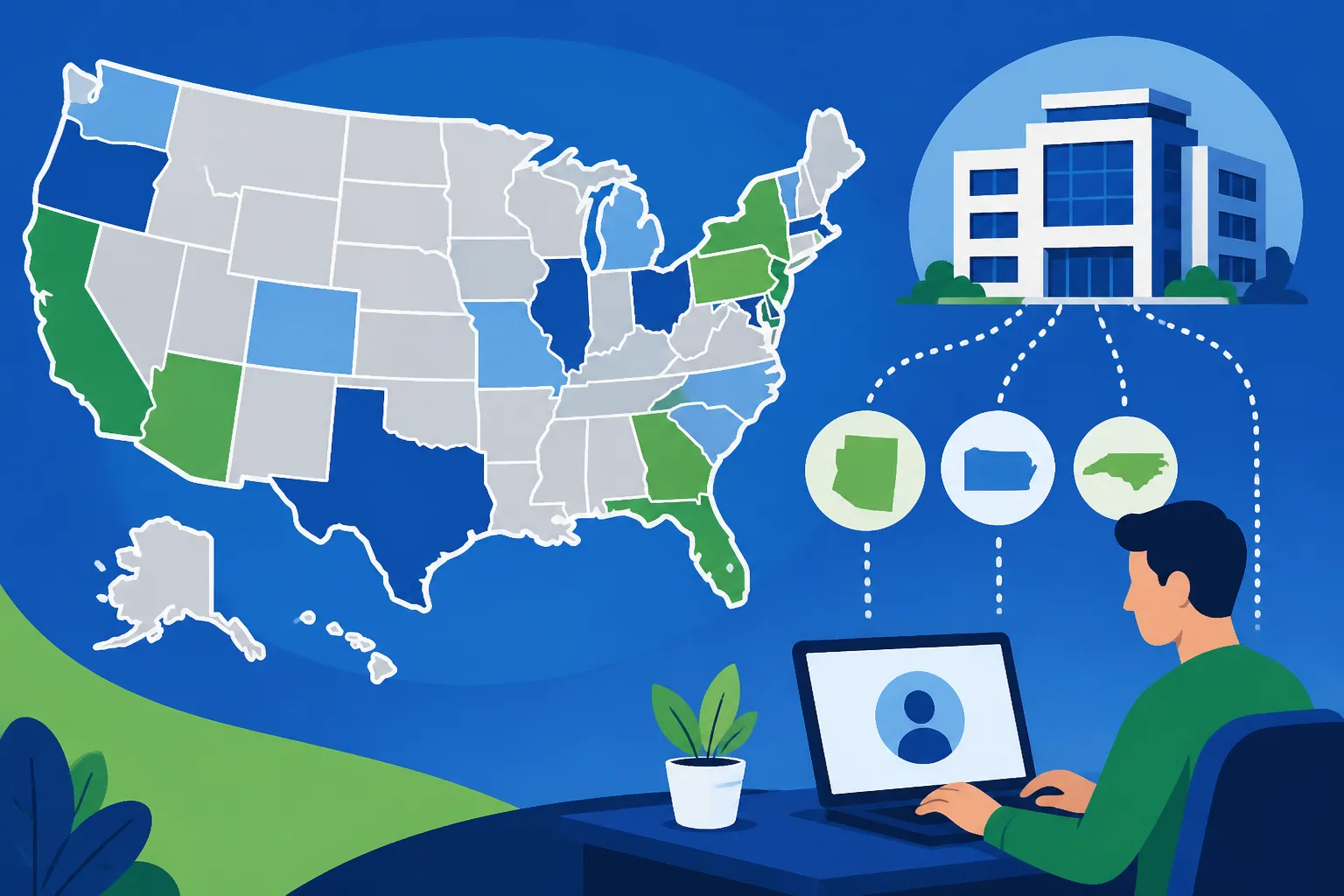
Currently, a handful of states actively enforce the convenience of the employer rule, and these are often states with significant business hubs and relatively higher income taxes. It's crucial to understand which states these are because they can have a direct impact on your tax bill, even if you never step foot in them for work.
Deep Dive into Key States
New York is perhaps the most well-known and aggressive enforcer of the convenience rule. If you work remotely for a New York-based employer and your primary office could be in New York, the state's Department of Taxation and Finance will likely consider your income taxable there, regardless of where you actually live and work. This has caused significant friction, particularly for residents of neighboring states like New Jersey, Connecticut, and Pennsylvania who commute or used to commute into NYC. The state’s strict interpretation often leads to confusion about New York Convenience Rule & Remote Work. Even if you spent only a few days in the New York office for meetings, the convenience rule can still be applied to your income for the entire year, unless you can prove that your remote work was a necessity for the employer.
Delaware also applies a similar rule, though it may not be as widely publicized as New York's. If your employer is based in Delaware and you choose to work remotely outside the state, Delaware might claim your income as sourced to Delaware. Their rule generally states that income from services performed outside Delaware is still taxable if those services could have been performed within Delaware for the convenience of the employee, not the employer.
Pennsylvania is another state with a convenience rule. While it's slightly different in its application, it essentially seeks to tax non-residents working remotely for Pennsylvania-based employers if the remote work is for the employee's convenience. This often intersects with local taxes, like the Philadelphia Wage Tax 2026, adding another layer of complexity for remote workers with a Philadelphia-based employer but living outside the city or state.
States Without the Rule and Why It Matters
Most states do not have a convenience of the employer rule. In these states, income is generally sourced to where the work is physically performed. This means if you live in, say, Florida (a state with States With No Income Tax (2026 Full List)) and work remotely for an employer in a non-convenience rule state like California, California would only tax the portion of your income earned during any days you physically worked in California. The rest, earned while you were in Florida, would typically not be subject to California state income tax. This fundamental difference is why understanding your employer's state of residence and their policies is absolutely critical. For those in states without an income tax, the convenience rule can be a rude awakening, potentially creating a tax liability in a state they never intended to live or work in.
Here's a quick comparison of key aspects regarding the convenience rule:
| Feature | States with Convenience Rule (e.g., NY, DE, PA) | States without Convenience Rule (Most Others) |
|---|---|---|
| Income Sourcing Principle | Income generally sourced to employer's state unless remote work is employer's necessity. | Income generally sourced to where the work is physically performed. |
| Remote Work Taxation | Often taxes non-residents working remotely for in-state employers. | Typically taxes non-residents only for work performed physically within the state. |
| Taxpayer Burden of Proof | Employee must prove remote work is not for their convenience. | State must generally prove physical presence for taxation. |
| Risk of Double Taxation | Higher risk, as home state may also tax the income. | Lower risk, as sourcing is clearer. |
| Key Factor | Employer's location and reason for remote work. | Employee's physical location during work. |
How the Convenience Rule Impacts Remote Workers
For remote workers, the convenience of the employer rule can create a truly frustrating and often financially burdensome situation. It fundamentally alters where your income is considered earned for tax purposes, potentially leading to double taxation and significant administrative hurdles. This is why it’s not just an abstract legal concept but a real-world financial challenge.
The Double Taxation Conundrum
The most significant impact for remote workers caught by this rule is the potential for double taxation. Let's revisit our New York example: if you live in New Jersey but work remotely for a New York employer, New York applies its convenience rule and says, "Your income is sourced here, so we're taxing it." Simultaneously, New Jersey, as your state of residence, says, "You live here, so your worldwide income is taxable here." Suddenly, the same dollar of income is theoretically taxable by two different states.
Now, thankfully, most states have mechanisms to help How to Avoid Double Taxation Between States through what are called "credit for taxes paid to another state." Your home state (New Jersey in this case) will typically grant you a credit for the income taxes you paid to the non-resident state (New York). However, this credit often doesn't make you whole. If the tax rate in the convenience rule state is higher than your resident state's rate, you might still end up paying more in total taxes than if you worked and lived in a single state without such rules. This is a common pain point, forcing many people to reconsider their remote work arrangements or even where they choose to live, as explored in guides like Working in One State, Living in Another: Tax Guide.
Withholding Challenges for Employers
It's not just employees who feel the pinch; employers also face significant challenges. If an employer has remote workers spread across different states, they need to correctly determine where to withhold state income taxes. For employees in convenience rule states, employers may be required to withhold taxes for that state, even if the employee never physically works there. This adds a layer of complexity to payroll and compliance. Companies often rely on tax software solutions like TurboTax or professional services to help navigate these intricate multi-state payroll requirements. Misinterpreting these rules can lead to penalties for the employer, making it a critical area for HR and finance departments to get right. It also requires a deeper understanding of where each employee's "tax home" truly lies, factoring in Domicile vs Statutory Residency definitions for each state involved.
Navigating the Rule: Strategies for Remote Employees
If you find yourself in a situation where the convenience of the employer rule might apply to you, don't despair. While it adds complexity, there are strategies you can employ to understand your obligations, minimize your tax burden, and stay compliant. It requires diligence and, often, professional advice.
Understanding Your Domicile and Statutory Residency
The first step in navigating this rule is to clearly understand your own residency status. Your domicile is generally your true, fixed, and permanent home, the place you intend to return to whenever you're away. Your statutory residency is often determined by how many days you spend in a particular state during the year. For instance, New York has a 183-day rule; if you spend more than 183 days in New York and maintain a "permanent place of abode" there, you can be considered a statutory resident, regardless of your domicile. These concepts are distinct from being a mere non-resident. Understanding the difference between Resident vs Nonresident vs Part-Year Resident is paramount, as it dictates which state can lay claim to your income. This understanding informs your strategy for how to handle taxes if you're a Remote Worker Living in No-Tax State but your employer is in a convenience rule state.
Seeking Professional Tax Guidance
Honestly, this is one area where trying to go it alone can be a costly mistake. Tax laws, especially multi-state tax laws, are notoriously complex and subject to change. A qualified tax professional specializing in multi-state taxation can assess your specific situation, help you determine if the convenience rule applies to you, and guide you through the filing process. They can advise on proper withholding, help you claim credits for taxes paid to other states, and ensure you're compliant in both your resident state and the employer's state. Services like SmartAsset can connect you with financial advisors who understand these nuances, and professional tax software, though helpful, is no substitute for personalized advice in complex scenarios. They can also advise on strategies like formally changing your How to Change Your State Residency for Taxes if that's a viable option for your long-term plans.
Documentation is Key
Whether you consult a professional or brave it yourself, meticulous record-keeping is your best friend. If you believe your remote work is for the employer's necessity and not your convenience, you need to be able to prove it. This means:
- Employer Policies: Keep copies of any company policies or official communications that explicitly state your role is remote due to business necessity (e.g., lack of office space, specific geographic needs, or the nature of the job itself).
- Work Agreements: Ensure your employment contract or any written work-from-home agreements clearly outline the terms of your remote work arrangement, emphasizing the employer's requirement if applicable.
- Time Tracking: Maintain detailed records of the days you worked in your resident state versus any days you spent physically working in the employer's state. This is especially important for The 183-Day Rule for State Taxes and for filing accurate Nonresident State Tax Return Guide if required.
- Communication: Keep records of any emails or memos from your employer directing you to work remotely for business reasons.
The burden of proof often falls on the taxpayer to demonstrate that their remote work is not for convenience. Without proper documentation, it's very difficult to argue your case, particularly against a state as vigilant as New York. Knowing What Triggers a State Residency Audit can also help you understand the importance of having all your ducks in a row.
The Future of the Convenience Rule and Remote Work
The increasing prevalence of remote work has put a spotlight on the convenience of the employer rule, sparking debates and legal challenges. The future of this rule, and how it will adapt (or not) to our evolving work landscape, is a hot topic among tax policy experts.
Legislative Debates and Court Challenges
There have been numerous legislative efforts to challenge or modify the convenience rule, especially as remote work became mainstream during and after the pandemic. Lawmakers, particularly in states neighboring New York, have argued that the rule is unfair and an outdated relic that penalizes their residents. However, these challenges face an uphill battle. States like New York are understandably reluctant to give up a significant portion of their tax revenue, especially from high-earning individuals. The U.S. Supreme Court has, to date, declined to hear cases challenging the rule, leaving the existing precedent in place. This means that for now, the rule remains a powerful tool for states that choose to enforce it. The ongoing discussions about State Income Tax Cuts & Changes for 2026 in various states suggest that tax policy is highly dynamic, and this rule is certainly part of that larger conversation.
Potential for Nationwide Change
While federal legislation to create a uniform remote work tax standard has been proposed, it has yet to gain significant traction. A nationwide approach would eliminate much of the current confusion and double taxation risk, potentially benefiting millions of remote workers and their employers. Imagine a world where states had clear guidelines for Do Remote Workers Pay Taxes Where the Company Is? or simplified reciprocity agreements. However, tax policy is often a matter of state sovereignty, and states are generally hesitant to cede control over their tax bases. Until a more unified approach emerges, remote workers will continue to navigate a patchwork of state laws, making individual tax planning and compliance more critical than ever. The disparity also highlights the importance of understanding specific agreements, or the lack thereof, as shown in topics like State Reciprocity Agreements Explained.
Disclaimer
Please remember that this article provides general information and should not be considered tax advice. Tax laws are complex and constantly changing. Your specific situation may vary, and it is always recommended to consult with a qualified tax professional or financial advisor for personalized advice regarding your state income tax obligations.