Do Digital Nomads Pay State Taxes?
The allure of working from anywhere, whether it's a beach in Bali or a cabin in the Rockies, is undeniably powerful. But for many digital nomads, the freedom of location comes with a gnawing question: where exactly do I pay state taxes? This is a common pain point, and the truth is, navigating state income tax laws when you don't have a fixed address can feel like trying to hit a moving target. This comprehensive guide is designed to cut through that confusion, helping you understand your state tax obligations, avoid costly mistakes, and confidently embrace your nomadic lifestyle without unexpected tax surprises.
Unpacking the Digital Nomad Lifestyle for Tax Purposes
So, you're living the dream, right? Laptop open, a new view every few months, escaping the traditional 9-to-5 office grind. But when April 15th rolls around, that dream can quickly turn into a tax-filing nightmare if you don't understand the rules. For digital nomads, the very nature of their flexible lifestyle often creates unique state tax challenges that traditional residents never face.
What Exactly is a Digital Nomad?
At its core, a digital nomad is someone who uses technology to earn a living and travels frequently, often without a fixed, traditional home base. This broad definition encompasses a wide spectrum of lifestyles. You might be a freelance writer hopping between Airbnbs across the country, a web developer working remotely from different cities, or an entrepreneur running an online business from a van. The key tax differentiator here is that lack of a traditional, singular, fixed residence.
It often feels like the tax system wasn't built for us, and honestly, you're not wrong. Most state tax laws were conceived in an era where people lived and worked in the same place for decades. The state lines were clear, and residency was rarely debated. Now, with technology allowing us to work from literally anywhere, those lines have blurred, and states are still catching up. Your income source might technically be anywhere in the world, but state tax residency rules still apply based on where you are physically located, even if that presence is temporary.
The Difference Between Travel and Residency
Just visiting a state is fundamentally different from establishing residency there, but the line can be surprisingly blurry for tax purposes. For casual tourism, you typically don't trigger state tax obligations simply by being present. However, once you start working and spending more time in a state, even if it's only for a few weeks or months, things can quickly become complicated.
Many digital nomads mistakenly assume that if they're only somewhere for a short period, they're entirely safe from that state's tax reach. But some states have aggressive definitions of what constitutes "presence" for tax purposes. For instance, earning money while physically present in a state, even if your client is based elsewhere, can create a taxable "nexus." Imagine a freelance graphic designer who decides to spend two months working from a rental in Los Angeles. Even if all their main clients are in New York or even overseas, California might claim a slice of the income earned during their stay because the work was performed within California's borders. It's not about where your clients are, but where you are when you're doing the work.
Why States Care About Your Location
Let's get real for a moment: states care about your location for one primary reason – revenue. States need money to fund essential services like roads, public schools, emergency services, and infrastructure. If you're physically present within their borders, using their roads, potentially relying on their public services, and generating economic activity, they want their share. It's not personal; it's about maintaining their tax base and ensuring everyone contributes fairly to the public good.
The more time you spend in a state, and the more ties you build there, the stronger their claim to you as a resident for tax purposes becomes. They look for patterns and connections: where is your driver's license issued? Where are your vehicles registered? Where do you vote? Where do you keep your primary bank accounts? All these factors contribute to a state's case for why you should be considered a resident. It’s a matter of legal jurisdiction. The federal government taxes based on citizenship or worldwide income, but states tax based on residency or income sourced within their specific borders. These are two separate but equally important considerations that digital nomads must juggle.
The Residency Puzzle: Domicile vs. Statutory Residency
This is where the real brain-twister for digital nomads often begins. Understanding the difference between domicile and statutory residency is not just academic; it's absolutely critical for managing your state tax obligations and avoiding costly double taxation.
Understanding Domicile: Your True Home
Domicile is arguably the most crucial concept for digital nomads to grasp. It's your one true legal home, the place you intend to return to, even if you're traveling for years. Think of it as your "permanent home," the place where your heart and, more importantly for tax purposes, most of your life's significant connections truly reside. You can only have one domicile at a time.
To establish domicile in a state, you generally need two things: physical presence and an intent to make that state your permanent home. This intent isn't just a feeling; it's proven through a multitude of documented actions. States look for tangible evidence like your driver's license, voter registration, vehicle registration, primary bank accounts, professional licenses, and where you maintain a mailing address or even store significant personal belongings. If you're looking to make a change, understanding how to effectively How to Change Your State Residency for Taxes is vital. States known for being aggressive in tax collection, such as California or New York, will scrutinize these details closely, demanding clear, documented evidence that you've genuinely cut ties with them and established a new permanent home elsewhere. They're looking for actions that speak louder than words.
Statutory Residency: The Days Count Rule
This is where many digital nomads get caught out. Statutory residency is a legal definition that a state applies based on the amount of time you spend within its borders, regardless of your stated domicile. While the famous "183-day rule" (spending more than half the year) is a common threshold, it's not universal, and states can have other criteria, such as maintaining a "permanent place of abode."
This rule catches many digital nomads off guard. You might intend to be domiciled in Florida, a state with no income tax, and genuinely consider it your home base. But if you spend, say, 200 days physically present in Colorado (even if it's spread out over several different trips), Colorado could consider you a statutory resident and claim you owe them income tax on your worldwide income. This scenario can easily lead to the dreaded "dual residency" situation, where two states both claim you as a resident. For this very reason, a deep dive into The 183-Day Rule for State Taxes is a must-read for anyone living this lifestyle.
Each state's statutory residency rules vary. Some count partial days, while others might exclude days spent for specific purposes. Some states also look at whether you maintain a "permanent place of abode" (like owning or regularly renting a home) in addition to physical presence. It's not a simple, one-size-fits-all number, which means meticulous tracking of your travel days is not just helpful, it's absolutely non-negotiable.
Establishing a New Domicile
For digital nomads keen on optimizing their tax situation, establishing domicile in a state with no income tax is a popular strategy. Destinations like Florida, Texas, or Nevada frequently top the list for those seeking to minimize their state income tax burden. However, it's critical to understand that this isn't a passive process; it's an active and deliberate effort.
You need to actively and convincingly sever ties with your old domicile while simultaneously creating undeniable new connections in your chosen no-income-tax state. This means updating your driver's license, vehicle registration, and voter registration to your new state. You should also change your primary bank accounts, update your mailing address, and even revise legal documents like your will to reflect your new domicile. Consider setting up a P.O. box or a virtual mailbox service that provides a street address in your new home state for official correspondence. If you're eyeing the Sunshine State, our detailed guide on How to Establish Florida Domicile can walk you through the specifics.
Consistency is paramount. If you declare Florida as your domicile but continue to keep a fully furnished apartment in New York, frequently return there, and maintain strong social or professional ties, the New York tax authorities might still consider you a resident. Documentation is your strongest ally here – collect utility bills in your name, gym memberships, receipts from local doctors or service providers, and anything else that proves your physical presence and intent in your new home state. These aren't just suggestions; they are crucial pieces of evidence in the event of a residency audit.
Navigating State Income Tax for Digital Nomads
The landscape of state income tax can feel like a minefield when you're a digital nomad. However, with careful planning and an understanding of the key differentiators, you can successfully navigate these waters.
States with No Income Tax: The Dream?
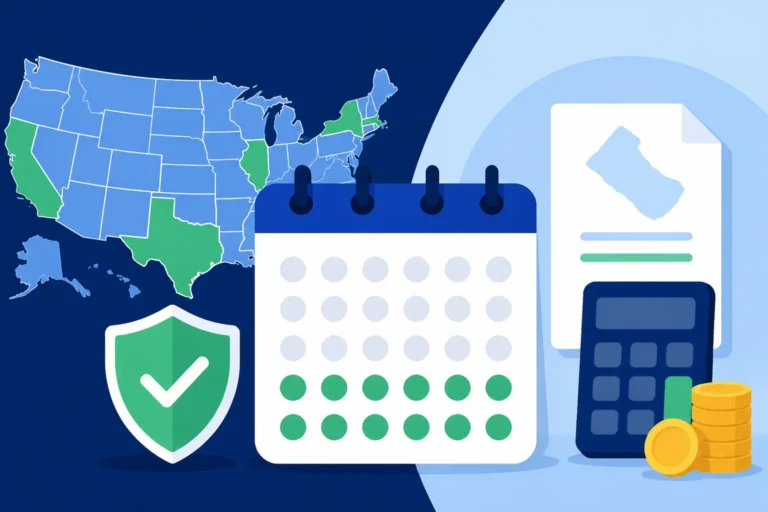
The concept of states with no state income tax is incredibly appealing to digital nomads, and for good reason. Currently, nine states do not impose a statewide income tax on wages: Alaska, Florida, Nevada, New Hampshire (only taxes interest and dividends), South Dakota, Tennessee (abolished its income tax in 2021), Texas, Washington (only taxes capital gains), and Wyoming. It sounds like a perfect solution to keep more of your hard-earned money, doesn't it?
While these states certainly offer significant income tax advantages, it's essential to understand that it's rarely a "free ride." States have to generate revenue somehow. Many of them make up for the lack of income tax with higher property taxes, sales taxes, or various other fees. So, while your wages might not be taxed, your overall tax burden could still be substantial depending on your spending habits, property ownership, and local taxes. For example, before you pack up for the Lone Star State, you might want to carefully consider Is Texas Really Tax Free? The Full Picture to understand all the other potential taxes you'd face.
The key to successfully leveraging these states is to genuinely establish and maintain residency there. Simply using a friend's address for mail while living most of the year elsewhere is a recipe for disaster. You need to live there, build substantial ties, and document it rigorously to withstand any potential residency audit, especially if you're transitioning from a high-tax state like California or New York.
States with Reciprocity Agreements
If your digital nomad adventures involve working across state lines, particularly if you're frequently in adjacent states, reciprocity agreements can be a significant simplification. These are formal agreements between states that prevent double taxation on income earned when you live in one state but work in another.
For instance, consider a digital nomad domiciled in Pennsylvania who frequently spends weeks at a time working from a co-working space or short-term rental in New Jersey. Without a reciprocity agreement, they might theoretically owe income tax to both states: Pennsylvania because it's their domicile, and New Jersey because income was earned within its borders. However, thanks to the reciprocity agreement between Pennsylvania and New Jersey, our nomad would generally only pay tax to Pennsylvania, their home state. This dramatically simplifies tax filing and prevents having to claim credits on multiple returns. Our comprehensive guide on State Reciprocity Agreements Explained provides a full overview of these agreements.
However, it's crucial to remember that not all states have these agreements, and the specific terms can vary widely. For example, New Jersey and New York do not have a reciprocity agreement, which often leads to complex tax situations for those who Live in NJ Work in NY: Tax Guide. It's imperative to check the specific agreements between any states you regularly travel or work between. Even in the absence of a reciprocity agreement, most states offer a tax credit for income taxes paid to another state, which helps prevent true double taxation, but it's often more complex to calculate and file.
Filing as a Nonresident or Part-Year Resident
When your nomadic journey involves moving states mid-year, or earning income in a state where you're not domiciled, you'll likely encounter the need to file as a part-year resident or a nonresident for tax purposes. While this can seem daunting, it's a necessary step for compliance and accurately reflecting your income and residency throughout the year.
A part-year resident return is filed for the portion of the year you officially resided in a state before or after a move. This typically means you'll calculate your income earned during your residency period in that state. A nonresident return, on the other hand, is specifically for income sourced within a state where you are not a resident. For example, if you're domiciled in Georgia but spend three months working on a client project from a temporary setup in Maryland, you might need to file a nonresident Maryland return for the income earned during that time. Tax software like TurboTax can be very helpful here, guiding you through the process for each state and helping to correctly allocate income.
It’s absolutely critical to understand what income is considered "sourced" to a particular state. For remote workers and digital nomads, this can get incredibly complicated, especially with states that employ specific "convenience of the employer" rules (which we'll discuss in detail next). Mastering How to File a Part-Year Resident Return is an essential skill for any mobile professional to avoid penalties and ensure proper reporting.
Common Pitfalls and How to Avoid Them
The freedom of the digital nomad life is intoxicating, but it comes with a unique set of tax-related challenges. Being aware of these common pitfalls can save you a tremendous amount of stress and money.
Accidental Dual Residency
This is arguably the biggest nightmare scenario for any digital nomad. Accidental dual residency occurs when two different states both legally claim you as a resident for tax purposes in the same tax year. This typically happens if you fail to fully sever your ties with your old domicile while simultaneously meeting the statutory residency requirements (like the 183-day rule) of another state.
The ramifications of dual residency can be severe: you could end up owing income tax to both states on the same income. While most states do offer a credit for taxes paid to another state to mitigate true double taxation, these credits don't always fully offset the burden, and the administrative hassle of untangling such a situation is immense. States like New York are particularly notorious for their aggressive residency audits, meticulously examining every detail to establish a claim. Imagine the headache of trying to prove your residency intent to two different state tax departments simultaneously.
To proactively avoid this, you must be incredibly diligent. If you're moving and establishing a new domicile, make sure you clearly and unequivocally break ties with your old state. Maintain meticulous records of your travel days, utility bills, mail, financial transactions, and any other connections that demonstrate your physical presence and intent in your chosen state. A single misstep or lack of documentation can easily lead to a costly audit and the headache of dual taxation. Being informed about What Triggers a State Residency Audit? can give you a significant advantage in preventing such issues.
Ignoring the "Convenience of the Employer" Rule
This rule is a stealthy trap for many remote digital nomads, particularly those working for employers based in specific states. A handful of states, most notably New York, but also Pennsylvania, Delaware, and Nebraska, have what's called the "convenience of the employer" rule.
Under this rule, if you work remotely for an employer located in one of these states, your income is considered sourced to that state unless your remote work arrangement is for the necessity of the employer, not merely for your personal convenience. So, even if you're physically working from a low-tax haven like Florida, New York might still claim you owe them income tax because your employer's office is located in New York, and your remote work is deemed a convenience to you, not a business necessity for the company. This can result in a shocking tax bill for digital nomads who thought their physical location dictated their tax obligation.
This rule is highly contentious and has been the subject of numerous lawsuits and legislative debates. If your employer is based in one of these "convenience rule" states, it is absolutely critical to understand their specific regulations and how they apply to your situation. For a deeper dive, exploring resources like New York Convenience Rule & Remote Work is essential. This rule highlights why even if you're physically nomadic, your employer's location can still have a profound impact on your state tax liabilities.
Underestimating Documentation Needs
For digital nomads, believing that a nomadic lifestyle means less paperwork for taxes is a dangerous misconception. In reality, the opposite is true. The key to successfully navigating your tax obligations as a digital nomad is rigorous, consistent, and exhaustive documentation. State tax authorities are inherently skeptical of claims of no fixed residency or changes in domicile, especially when such claims result in less tax revenue for them.
You need to keep detailed, organized records of almost everything. This includes meticulous travel logs (dates of entry and exit for every state you visit), receipts for Airbnbs, hotels, and other lodging, transportation records (flight tickets, bus tickets, gas receipts), and financial ties (bank statements, credit card bills showing purchases in specific locations that corroborate your travel). Furthermore, maintain records of declarations of intent: updated driver's licenses, voter registration, vehicle registration, and changes to any professional licenses. Think of it as building an ironclad case for your residency status.
This level of documentation might feel like an overwhelming chore, but it is your absolute best defense in the event of a state tax audit. Imagine trying to prove you spent less than 183 days in California two years ago without a single verifiable receipt or travel entry. It's an almost impossible task. Modern tools like travel tracking apps (e.g., TripIt), digital calendars, or even a simple, regularly updated spreadsheet can make this process far less daunting, but the onus is on you to maintain these records.
Smart Strategies for Tax Optimization
Living the digital nomad life doesn't mean you have to be at the mercy of complex tax laws. With a few smart strategies, you can optimize your tax situation and keep more of your hard-earned money.
Choosing a Tax-Friendly Home Base
One of the most common and effective strategies for digital nomads looking to reduce their state tax burden is to intentionally establish their domicile in a state with low or no state income tax. This is more than just selecting a mailing address; it requires a genuine, documented commitment to creating a new primary home base.
When considering a new domicile, look beyond just the income tax rate. While states like Florida, Texas, or Washington don't tax wages (though Washington does have a capital gains tax), they might have higher property taxes, sales taxes, or other local fees that could still impact your overall financial picture. For example, a website like SmartAsset offers robust tools that allow you to compare total tax burdens across different states, giving you a holistic view of how your overall tax situation might change. You might find that the Best States for High Earners (Tax) don't align with the best states for someone with significant real estate holdings. This decision should be a deliberate, well-researched financial move, not an impulsive choice based solely on one tax factor.
The goal is to choose a state that genuinely aligns with your lifestyle and financial goals, and where you can legitimately establish the ties necessary to prove domicile. This isn't about avoiding taxes illegally; it's about legally positioning yourself in a favorable tax jurisdiction.
Tracking Your Travel Days Meticulously
As we've explored, the number of days you spend physically present in a particular state can be the single most critical factor in determining statutory residency. This means that diligent, accurate, and continuous travel tracking is absolutely paramount for any digital nomad. States are becoming increasingly sophisticated in how they gather information about an individual's presence, often cross-referencing data points.
You need a robust system for logging your exact entry and exit dates for every state you visit. Whether you use a dedicated travel tracking app, a detailed digital calendar, or a simple spreadsheet updated daily, consistency is key. Additionally, retain receipts for any hotels, Airbnbs, transportation (flights, train tickets, rental cars), and even significant daily expenses that might provide proof of your physical location on specific dates. These records are your primary and most crucial defense if a state challenges your residency status during an audit.
Do not guess or estimate your travel days. A small miscalculation or an assumption of a few days here or there could push you over a statutory residency threshold in a state and result in an unexpected and unwelcome tax bill. This meticulous tracking is particularly vital for states with aggressive audits or complex "day-counting" rules, such as the stringent California Residency Requirements for Taxes.
Professional Guidance Makes a Difference
Let's be brutally honest: state tax laws are inherently complex, even for individuals who reside in a single location their entire lives. For digital nomads navigating potentially multiple jurisdictions, changing domiciliaries, and varied income streams, the complexity multiplies exponentially. Trying to figure it all out on your own, solely relying on online searches, is a recipe for errors, penalties, and an enormous amount of stress.
Engaging with a qualified tax professional who specializes in multi-state taxation or has experience with digital nomad clients is not an expense; it's a strategic investment. These experts can help you understand the intricate nuances of specific state rules, advise you on the proper steps to establish and maintain domicile, assist in meticulously tracking your presence, and accurately prepare your complex state tax returns. Their expertise can potentially save you far more in avoided penalties and optimized tax liabilities than their fee.
Don't wait until April 15th to seek help. Proactive tax planning is the bedrock of successful tax management for digital nomads. A knowledgeable CPA or tax attorney can help you strategically structure your affairs throughout the year, taking into account your travel plans, income sources, and residency intentions, to minimize your tax exposure and ensure full compliance. This proactive approach allows you to focus on your work and enjoy your travels, rather than constantly worrying about the next unexpected state tax bill or audit from a state like New York, which is known for its detailed New York Residency Audit Explained.
Essential Tools and Resources for Digital Nomads
Navigating state taxes as a digital nomad can feel like a full-time job in itself. Thankfully, several tools and resources can help lighten the load and provide clarity.
Tax Software and Online Calculators
Modern tax software has become incredibly sophisticated, offering significant assistance for multi-state filing scenarios. Platforms like TurboTax, H&R Block, and TaxAct provide robust interview-style guidance that can help you prepare both your federal and multiple state returns. They're designed to walk you through the complexities, often identifying whether you need to file a Nonresident State Tax Return Guide or a part-year resident return based on your input.
These digital tools excel at streamlining the filing process, especially if your tax situation isn't excessively convoluted. Many can effortlessly import W-2s, 1099s, and other income forms, automatically calculate potential credits for taxes paid to other states, and allow for convenient e-filing directly with state agencies. However, it's crucial to remember that the accuracy of these programs hinges entirely on the accuracy of the information you input, reinforcing the need for meticulous record-keeping on your end.
For preliminary research, budgeting, or estimating your potential tax burden in different locations, online calculators are fantastic. Websites like SmartAsset offer free, user-friendly tools that allow you to compare overall tax burdens—including income, property, and sales taxes—across various states. This can provide invaluable insights as you plan your travels or consider establishing a new domicile, giving you a clearer financial picture for future decisions.
State Tax Agencies and Official Guides
While third-party resources and tax software are incredibly helpful, the most authoritative and up-to-date information always originates directly from the state tax agencies themselves. Each state's Department of Revenue, Franchise Tax Board, or equivalent official website is an invaluable treasure trove of information. These sites host official forms, detailed publications, frequently asked questions (FAQs), and direct contact information.
Don't shy away from consulting these official resources. Look specifically for publications related to residency rules, part-year residency, income sourcing, and nexus requirements for businesses. For instance, the California Franchise Tax Board (FTB) provides incredibly detailed guides on California Residency Requirements for Taxes that are essential reading for anyone contemplating a move to or from the Golden State. Similarly, New York's Department of Taxation and Finance offers explicit guidance regarding its New York Residency Audit Explained process.
When you're uncertain about a specific nuance of your situation, don't hesitate to reach out to the state tax agency directly. While wait times can sometimes be long, speaking with a representative can clarify specific rules and how they apply to your unique circumstances. Always make sure to take detailed notes, including the date, time, and the name of the representative you spoke with, for your records.
Working with Tax Professionals
For a significant number of digital nomads, particularly those with complex income streams (like multiple freelance clients, business ownership, or diverse investment portfolios) or a history of frequent moves across various states, a qualified tax professional is not just helpful but often indispensable. These experts can offer personalized, nuanced advice that no generic software or online guide can fully replicate.
When seeking professional help, look for Certified Public Accountants (CPAs) or Enrolled Agents (EAs) who possess proven experience with multi-state taxation and, ideally, a client base that includes individuals living a nomadic lifestyle. They can provide comprehensive assistance with everything from correctly establishing domicile to navigating complex, state-specific rules such as the infamous New York Convenience Rule & Remote Work. Critically, they can also represent you in the event of a state residency audit, providing immense peace of mind and expert advocacy.
Professional services often extend beyond mere tax preparation to include proactive tax planning, which is paramount for digital nomads. This involves strategically reviewing your travel plans, various income sources, and residency intentions to develop the most tax-efficient approach for the upcoming year. Their guidance helps you anticipate and avoid potential tax traps, ensures you remain fully compliant in every state you touch, and ultimately allows you to immerse yourself in your work and travels without the constant burden of tax worries.
| Residency Type | Definition for Digital Nomads | Tax Implications | Key Considerations |
|---|---|---|---|
| Domicile | Your one true legal home, where you maintain primary ties and intend to return. For nomads, this is often a state with no or low income tax, even if rarely physically present. | Taxed on all worldwide income by your domiciliary state if it has an income tax. If no income tax, this is generally your primary tax advantage. | Requires clear intent and documented actions to establish and maintain. States will scrutinize factors like driver's license, voter registration, vehicle registration, primary bank accounts, physical mailing address, and "center of vital interests." Moving from high-tax states like California or New York demands rigorous documentation to prove severance of ties and prevent accidental dual residency. Consistent actions are paramount. |
| Statutory Resident | You spend a certain number of days (often 183+ during the tax year) in a state, irrespective of your domicile. Some states also consider maintaining a "permanent place of abode" (e.g., owning or regularly renting a home) within their borders. | Taxed on all worldwide income by that state, similar to a domiciliary resident, even if you don't intend it to be your permanent home. This can easily lead to accidental dual residency if your domicile is elsewhere, potentially resulting in double taxation on the same income (though credits for taxes paid to other states usually apply). | Meticulous travel tracking is absolutely crucial for every day of your travels. Understand each state's specific day-count rules, as they vary (e.g., partial days, specific exclusions). Be aware of "permanent place of abode" definitions, which can trigger residency even with fewer days. This is a common pitfall where digital nomads unintentionally incur significant tax obligations and face unexpected audits. |
| Nonresident | You are not domiciled in a state and do not meet its statutory residency criteria, but you earn income from sources within that state. | Only taxed on income that is sourced within that specific state's borders. For digital nomads, this typically means income earned while you were physically present and performing work in that state, or income from rental property or business operations located there. | Requires filing a nonresident return for each state where you earned income. Determining income "sourcing" for remote workers can be complex, especially with "convenience of the employer" rules in certain states. You will often need to calculate and claim credits for taxes paid to your home state to avoid double taxation on the same income, though the administrative burden is still high. |
| Part-Year Resident | You move into or out of a state during the tax year, thereby establishing or relinquishing your domicile in that state. This status applies only for the portion of the year you were a resident of that state. | You are taxed as a resident for the portion of the year you were domiciled there (on your worldwide income during that period) and as a nonresident for any income sourced to that state during the non-resident portion of the year. | Requires filing a part-year resident return, which can be more complex than a full-year resident or nonresident return. You must meticulously delineate income earned before and after your move date. This status usually applies in the year of a significant move (e.g., moving from New York to Florida), and proper documentation is essential to prove the change in residency for tax purposes. Be prepared for increased administrative work and potentially filing two state returns for a single tax year. |
Disclaimer
The information provided in this guide is for general informational purposes only and does not constitute tax advice. State tax laws are complex and subject to change. Your individual tax situation as a digital nomad is unique and dependent on your specific circumstances, including your domicile, travel patterns, and income sources. We strongly recommend consulting with a qualified tax professional specializing in multi-state taxation to receive personalized advice tailored to your needs.