Is Texas Really Tax Free? The Full Picture
Every year, thousands of hard-working professionals stare at their paystubs in total frustration, watching a significant chunk of their hard-earned money vanish into state coffers before they even see a dime. The promise of a 0% state income tax rate in the Lone Star State sounds like a financial miracle, a way to finally get ahead of the rising cost of living. But as any veteran Texan will tell you, the government always gets its cut; it just changes the name of the bill. This guide dives deep into the reality of the Texas tax system to help you determine if moving there will actually save you money or just shift your debt from one bucket to another.
The Truth About the Lone Star State Tax Structure
When people talk about Texas being a tax haven, they are almost exclusively referring to the lack of a personal income tax. This is a massive draw for people living in high-tax environments who are tired of the complex math involved in local tax filings. If you are coming from a place like the West Coast, you might have already looked at California vs Texas Taxes Compared so you can see the immediate impact on your take-home pay.
No Personal Income Tax The Big Selling Point
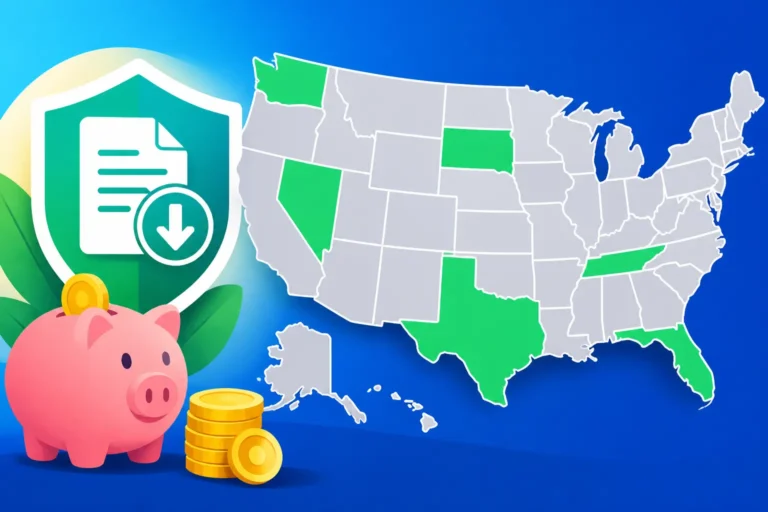
The most visceral benefit of living in Texas is the absolute absence of a state-level income tax. This means that if your salary is $100,000, your state withholding for income tax is exactly zero. For many, this feels like an immediate raise. Texas is a prominent member of the States With No Income Tax (2026 Full List) but that is only one side of the ledger. The lack of this tax is not just a policy; it is a point of pride for the state's leadership and a primary tool for economic recruitment.
However, it is important to understand that while your paycheck looks "cleaner," the state still requires billions of dollars to function. Infrastructure, public safety, and the massive Texas school system require funding. Since the state cannot dip into your paycheck, it looks toward other avenues—primarily your home and your shopping cart. This trade-off is the fundamental reality of the Texas "economic miracle."
The Constitutional Protection Against Income Tax
One thing that gives newcomers peace of mind is that the lack of an income tax is not just a passing whim of the current legislature. In 2019, Texas voters passed a constitutional amendment that makes it incredibly difficult for the state to ever implement an individual income tax in the future. This provides a level of long-term financial predictability that you simply do not find in many other states.
While many ask Does Texas Have State Income Tax?, the real question is how they fund their schools and roads without that revenue. This constitutional barrier forces the state to rely heavily on sales taxes and local entities to rely on property taxes. This creates a decentralized system where your "tax friendliness" depends heavily on exactly which county or city you choose to call home.
How Texas Collects Revenue Without Income Taxes
If you aren't paying the state through your salary, you are paying them through your lifestyle. Texas has a reputation for being a "low tax" state, but it is more accurately described as a "differently taxed" state. To truly understand the "Full Picture," we have to look at the two primary ways the state fills its bank accounts: property and consumption.
Property Taxes The Heavy Hitter
This is where the "tax-free" dream often meets a harsh reality. Texas consistently ranks among the states with the highest property tax rates in the entire country. Because there is no state income tax, local governments—including school districts, cities, and counties—rely almost entirely on property taxes to fund their operations. It is not uncommon for a homeowner in a high-growth area like Austin, Dallas, or Houston to pay 2% to 3% of their home's value in taxes every single year.
For a family living in a $500,000 home, a 2.5% tax rate results in a $12,500 annual bill. In many cases, this annual property tax bill can be significantly higher than what a family would have paid in state income tax in another state. Using a calculator from SmartAsset can help you visualize how these property tax rates might impact your monthly mortgage payment, as the "escrow shock" is a very real phenomenon for new residents.
Sales and Use Taxes Paying at the Register
The second pillar of Texas revenue is the sales tax. The state levies a 6.25% sales tax on most goods and some services. However, local jurisdictions (cities, counties, and special purpose districts) can add up to another 2%, bringing the total sales tax in most major metropolitan areas to 8.25%. This is a consumption-based tax, meaning the more you spend, the more you pay.
For lower and middle-income families, this can feel particularly burdensome. Because a larger percentage of their income goes toward purchasing taxable goods, the sales tax is often viewed as regressive. While Texas does exempt most grocery items and prescription medicines from sales tax, the 8.25% rate on everything from electronics to furniture adds up quickly. Detailed analysis from SmartAsset suggests that middle-income earners may actually find their total tax burden to be higher in Texas than in some states that have a modest income tax but much lower property taxes.
Excise Taxes and Hidden Fees
Beyond property and sales taxes, Texas utilizes various excise taxes. You will notice this most clearly at the gas pump and when purchasing "sin" items like alcohol and tobacco. The state also generates significant revenue through various fees, such as vehicle registration and professional licensing. While these are not unique to Texas, they are vital components of the state's ability to remain "income tax free."
It is also worth noting that many Texas neighborhoods are located in Municipal Utility Districts (MUDs) or Public Improvement Districts (PIDs). These entities can levy their own taxes on top of the standard county and school district taxes to pay for the infrastructure (pipes, roads, parks) of a new development. When you are house hunting, it is crucial to ask about these specific "add-on" taxes, as they can add hundreds of dollars to your monthly carrying costs.
Comparing the Tax Burden Texas vs High Tax States
To get the "Full Picture," we have to compare Texas to the states people are moving away from. Most of the migration into Texas comes from California, New York, and Illinois. In these states, the tax burden is often layered: high income tax, high sales tax, and moderately high property tax.
The Middle Class Experience Is It Actually Cheaper
The answer to whether Texas is "cheaper" is highly individual. For a high-earning professional, Texas is almost certainly a massive win. High earners often find it is one of the Best States for High Earners (Tax). This is because the "savings" from not paying a 10% or 13% state income tax on a high salary far outweigh the "cost" of higher property taxes.
However, for a middle-income family earning $60,000 to $80,000, the math gets much closer. If that family moves from a state with a 4% flat income tax and a 1% property tax into a Texas suburb with a 2.8% property tax, they might actually end up with less disposable income at the end of the year. The total tax burden is a metric that matters more than a single tax line item, and for the middle class, Texas is often a lateral move rather than a step up in terms of pure tax savings.
| Tax Category | Texas (Typical) | California (Typical) | New York (Typical) |
|---|---|---|---|
| State Income Tax | 0% | 1% – 13.3% | 4% – 10.9% |
| Average Property Tax | ~1.8% – 2.5% | ~0.75% – 1.2% | ~1.7% – 2.5% |
| Combined Sales Tax | 8.25% | 7.25% – 10.25% | 4% – 8.875% |
| Corporate Income Tax | 0% (Franchise Tax) | 8.84% | 6.5% – 7.25% |
The Regressive Nature of the Texas System
One of the most frequent criticisms of the Texas tax model is that it is regressive. In a progressive system, like the federal income tax or California's state tax, those who earn more pay a higher percentage of their income. You can learn more about this in our guide on Progressive Income Tax States 2026. In Texas, the opposite is often true in practice.
Because sales and property taxes are based on consumption and value rather than income, lower-income residents often pay a higher percentage of their total earnings toward taxes than the wealthy do. If you are a renter, you are still paying property taxes—they are just baked into your monthly rent by your landlord. Comparing the States With No Income Tax but High Other Taxes reveals that "tax-free" is often a misnomer for those at the lower end of the income spectrum.
Impact on Different Lifestyles and Income Levels
Whether Texas feels "tax-free" depends entirely on your lifestyle choices. Are you a minimalist who rents a small apartment, or are you a family of five looking for a 4,000-square-foot home in a top-rated school district? Your answer to that question will determine your true tax rate.
Renters vs Homeowners
Renters in Texas often feel like they are "beating the system." They don't see a state income tax coming out of their paycheck, and they never receive a massive property tax bill in the mail. However, the Texas rental market is incredibly sensitive to property tax hikes. When a county appraiser raises the value of an apartment complex, the landlord almost immediately passes that cost onto the tenants through increased rent.
Homeowners, on the other hand, deal with the volatility of the Texas real estate market head-on. Texas does not have a "Prop 13" like California that severely limits how much an assessment can rise each year. While there are some protections for primary residences, your property tax bill can still climb significantly year-over-year. Homeowners should immediately look into the Homestead Exemption rules once they settle in to ensure they are getting every possible discount.
The Retiree Perspective
For retirees, Texas is a bit of a mixed bag. The state does not tax Social Security benefits or pension income, which is a massive relief for those on a fixed income. It’s worth looking at Retirement Taxes: Florida vs Other States to see how another no-income-tax state compares for those in their golden years. However, the "forever bill" of high property taxes can be a major stressor for seniors living in a home they have already paid off.
Many seniors in Texas eventually "downsize" not just for the space, but to escape the property tax burden of a large family home. While there are "tax freezes" for those over 65 in many Texas school districts, the county and city portions of the bill can still rise. As SmartAsset often highlights in their cost-of-living breakdowns, the lack of an income tax is great for the "earning" phase of life, but the "holding" phase (homeownership) remains expensive.
Practical Considerations for Moving to Texas
If you’ve done the math and decided that the 0% income tax is worth the trade-offs, you need to make sure you execute the move correctly from a legal and tax standpoint. Simply spending time in Texas isn't enough to satisfy the tax collectors in your old state, especially if you are coming from a high-tax jurisdiction like New York or California.
Establishing Texas Residency for Taxes
Before packing the U-Haul, you should understand Establishing Texas Residency for Taxes so you don't accidentally keep a tax footprint in your old state. This process involves more than just getting a Texas driver's license. You need to prove that Texas is your "domicile"—the place you intend to return to and your primary base of operations.
High-tax states are notorious for auditing former residents who claim to have moved to Texas. They will look at where you spend your time, where your doctors are located, and even where you keep your most "prized" possessions. To successfully transition, you should look into the specific Texas Residency Requirements for Taxes. Failing to do this correctly could result in you owing income tax to your old state even while you are paying Texas property taxes.
Calculating Your Real Cost of Living
Taxes are only one part of the equation. When people move to Texas, they are often surprised by other costs that offset the tax savings. For example, the cost of electricity in Texas can be volatile due to the deregulated market, and homeowners' insurance is notoriously expensive because of the risk of hail, tornadoes, and hurricanes.
Checking with SmartAsset to see how property tax rates shift from one neighborhood to another is a vital step in your house-hunting process. Don't just look at the list price of the home; look at the "total cost of ownership," which includes that hefty tax bill and the cost of cooling a large home during a four-month-long Texas summer.
Regional Variations Within Texas
One of the biggest mistakes newcomers make is assuming that the tax burden is the same across the state. In reality, Texas is a patchwork of thousands of different taxing jurisdictions.
Why Property Taxes Vary by County
The property tax you pay is the sum of several different rates. You will pay a rate to your school district (usually the largest portion), a rate to your county, and a rate to your city. You might also pay into a hospital district or a community college fund.
Because school funding is so tied to property values, districts in areas with less commercial development often have much higher residential tax rates. Conversely, a city with a massive industrial base might be able to keep residential property taxes relatively low. This is why you might see a 2.1% tax rate in one suburb and a 3.2% rate just ten miles away in a different school district.
Municipal and Local Sales Taxes
While the state takes its 6.25%, the local "add-ons" vary. Most major cities hit the 2% cap, but some smaller rural areas might not. Additionally, some cities use a portion of their sales tax to fund specific initiatives, like "Type B" economic development corporations or professional sports stadiums. While a 0.5% difference in sales tax might not seem like much, it contributes to the overall "vibe" of how expensive or affordable a specific Texas town feels over the long term.
State Income Tax Rates 2026 All 50 States Ranked
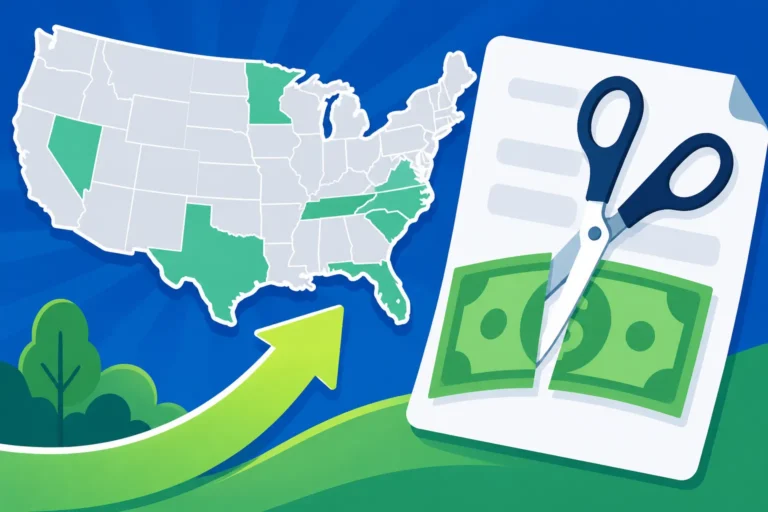
To truly see where Texas fits in the national landscape, it helps to look at the broader picture. While Texas is one of the few with no income tax, other states are moving toward flat taxes or reducing their rates to compete.
| State | Income Tax Type | Top Bracket |
|---|---|---|
| Texas | None | 0% |
| Florida | None | 0% |
| Nevada | None | 0% |
| California | Progressive | 13.3% |
| New York | Progressive | 10.9% |
| North Carolina | Flat | 3.99% |
| Arizona | Flat | 2.5% |
As you can see, the competition for your residency is heating up. Some states with low flat taxes might offer a better "total" deal when you factor in their lower property taxes compared to Texas.
State Income Tax Disclaimer
The information provided in this guide is for educational and informational purposes only and does not constitute professional tax, legal, or financial advice. Tax laws, including property tax rates, sales tax exemptions, and residency requirements, are subject to change by the Texas Legislature and local taxing authorities. Always consult with a qualified CPA or tax attorney who is familiar with both Texas law and the laws of your previous state of residence before making significant financial moves or filing your tax returns.
Summary Checklist for Prospective Texans
- Calculate the Income Gap: Determine exactly how much you will save by not paying state income tax.
- Estimate the Property Tax: Look up the specific tax rate for the neighborhood you are considering (don't forget MUD/PID fees).
- Check Sales Tax Rates: Be aware that most metro areas in Texas will be at 8.25%.
- Review Residency Rules: Ensure you follow the steps to legally break ties with your former state.
- Factor in "Hidden" Costs: Compare insurance, utilities, and tolls to your current location.
- Apply for Exemptions: If you move, file for your Homestead Exemption immediately to cap your assessment increases.