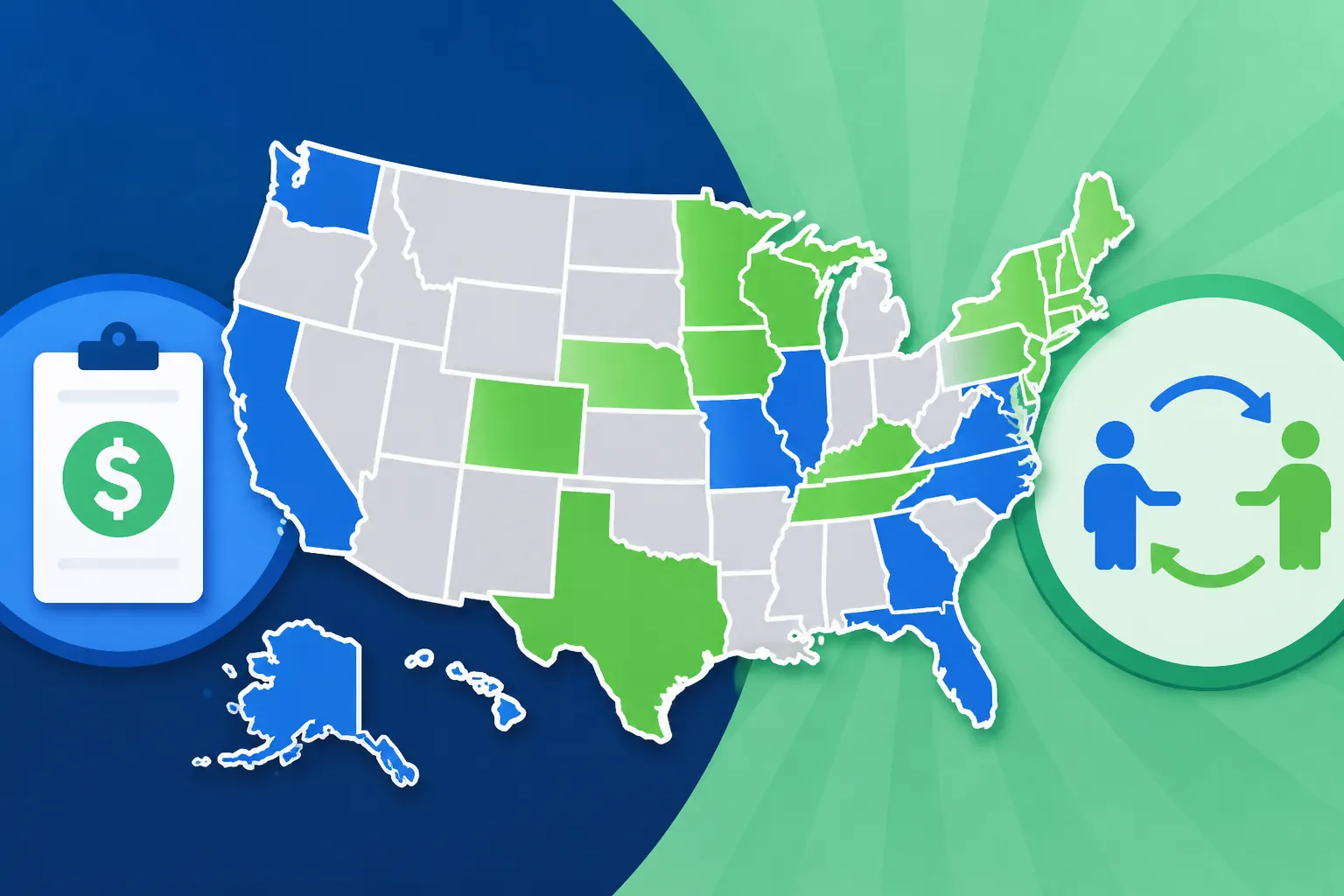
What States Have Tax Reciprocity?
Crossing state lines for work can feel like stepping into a tax maze, leaving you wondering which state gets a piece of your hard-earned paycheck. It’s a common frustration to think you might owe taxes to two different states just because your job is in one place and your home in another. This guide is here to untangle that complexity, focusing specifically on state tax reciprocity agreements and how they can simplify your tax life.
Understanding the Headache of Multi-State Taxation
Many people find themselves in a tricky situation: they live in one state but commute daily or weekly to work in a neighboring state. You might be a resident of Pennsylvania, but your job is in Wilmington, Delaware. Or perhaps you call Indiana home, but your office is just across the border in Chicago. The immediate worry is often, "Am I going to get taxed twice?" This isn't just a hypothetical concern; it's a real and frequent question that causes significant stress and confusion for millions of Americans every tax season.
The Double Taxation Dilemma
Without any special agreements, the default rule is that states generally have the right to tax income earned within their borders, regardless of where the worker lives. So, if you live in State A and work in State B, State B might want to tax the income you earned there. At the same time, your home state, State A, typically taxes all of your income, no matter where it was earned, because you're a resident there. This scenario is precisely what leads to the fear of "double taxation." Imagine working hard all year, only to discover a significant portion of your income is subject to taxes from two different governmental entities. It’s enough to make anyone dread April 15th.
For instance, consider someone living in New Jersey but working in New York City. New Jersey considers all income earned by its residents taxable, and New York wants to tax the income earned within its state, including the city's local income tax. Without specific relief, this commuter would seemingly owe taxes to both. This is why understanding the nuances of how states handle these situations is so crucial. You don't want to overpay or, worse, find yourself in hot water with a state tax authority because you didn't understand the rules. For a broader look at how different residency situations affect your tax obligations, you might want to explore our guide on working in one state, living in another: tax guide.
Credit for Taxes Paid to Another State
Thankfully, states recognize this potential for double taxation and have a common mechanism to prevent it: the "credit for taxes paid to another state." This is the general solution in the absence of a reciprocity agreement. Here's how it typically works: your resident state (where you live) will usually allow you to claim a credit for the income taxes you've paid to the nonresident state (where you work).
This credit essentially reduces your tax liability in your home state by the amount you paid to the work state, up to what your home state would have taxed that income. So, while you still have to file tax returns in both states, you usually won't end up paying more in total than if all your income was taxed by your home state alone. It’s a helpful safety net, ensuring fairness, but it still requires filing multiple returns and can be quite a bit of a hassle. For a detailed explanation, check out our piece on how to avoid double taxation between states.
For example, if you live in Florida (a state with no income tax) and work in Georgia, Georgia will tax your earnings. When you file your Florida return (if required for other income or just to report), you wouldn't need a credit because Florida doesn't tax your wages anyway. But if you live in Alabama and work in Georgia, Alabama would give you a credit for the taxes you paid to Georgia on that income. Tax software like TurboTax is generally quite adept at helping you navigate these calculations, especially if you have income in multiple states. They walk you through the process of entering income and credits for each state, ensuring you don't miss out on any benefits.
What Exactly Is a State Tax Reciprocity Agreement?
Now, let's talk about a real game-changer for many interstate commuters: state tax reciprocity agreements. These are special arrangements between two states that simplify the tax filing process for residents who work across state lines. They are designed specifically to eliminate the need for you to file a non-resident tax return in the state where you work, which is a huge relief for many.
How Reciprocity Simplifies Your Life
Think of reciprocity as a handshake agreement between two states. It basically says, "Hey, if your resident works in my state, we won't tax their wages. You tax them instead." This means that if you live in a state with a reciprocity agreement and work in the other state party to that agreement, you only pay income tax to your home state. You don't have to worry about the work state taxing your wages, and you certainly don't need to file a non-resident return there for those wages.
This is a stark contrast to the credit method, where you still have to file in both states. With reciprocity, the process is streamlined. Your employer in the work state will withhold taxes for your resident state, not their own. This ensures that the correct taxes are going to the right place from the start, minimizing the chances of owing a big chunk of money or getting a surprising refund at tax time. It truly makes the tax process much more straightforward for commuters. Our comprehensive article on State Reciprocity Agreement Chart 2027 dives deeper into the specifics of these arrangements.
The Paperwork Behind Reciprocity
While reciprocity agreements simplify your tax life significantly, they don't happen automatically. You have a crucial step to take to ensure your employer withholds taxes correctly. You’ll need to complete a specific exemption form provided by the work state and submit it to your employer. This form tells your employer not to withhold state income tax for the state where you work, but rather for your state of residence.
For example, if you live in Ohio but work in Kentucky, you would typically fill out Kentucky Form 42A809, Certificate of Nonresidency. By giving this to your Kentucky employer, they will stop withholding Kentucky state income tax from your paychecks and instead withhold Ohio state income tax. If you fail to submit this form, your employer will likely continue to withhold taxes for the work state, and you'll then have to file a non-resident return in the work state to get those taxes refunded. This means filing unnecessary paperwork just to get your money back – a frustration that can be easily avoided. Most tax software, including options like SmartAsset's tax tools, can help you identify these forms and guide you through the process.
A Comprehensive List of States with Reciprocity Agreements
Understanding which states have these agreements is key. Not all neighboring states have them, and the rules can vary slightly. It's not uncommon for people to assume reciprocity exists just because states share a border, only to find out the hard way that it doesn't.
Current Reciprocity States and Their Partners
Here's a breakdown of the current state tax reciprocity agreements in the U.S. as of 2026. Keep in mind that tax laws and agreements can change, so it's always wise to double-check with your state's revenue department or a tax professional if you have any doubts.
| State of Residence | Reciprocity Agreements with (Work State) |
|---|---|
| Illinois | Iowa, Kentucky, Michigan, Wisconsin |
| Indiana | Kentucky, Michigan, Ohio, Pennsylvania, Wisconsin |
| Iowa | Illinois |
| Kentucky | Illinois, Indiana, Michigan, Ohio, Virginia, West Virginia, Wisconsin |
| Maryland | Pennsylvania, Virginia, West Virginia, D.C. |
| Michigan | Illinois, Indiana, Kentucky, Minnesota, Ohio, Wisconsin |
| Minnesota | Michigan, North Dakota |
| Montana | North Dakota |
| New Jersey | Pennsylvania |
| North Dakota | Minnesota, Montana |
| Ohio | Indiana, Kentucky, Michigan, Pennsylvania, West Virginia |
| Pennsylvania | Indiana, Maryland, New Jersey, Ohio, Virginia, West Virginia |
| Virginia | Kentucky, Maryland, Pennsylvania, West Virginia, D.C. |
| West Virginia | Kentucky, Maryland, Ohio, Pennsylvania, Virginia |
| Wisconsin | Illinois, Indiana, Kentucky, Michigan |
| Washington D.C. | Maryland, Virginia |
It's important to note a few states that do not have reciprocity with significant commuting partners. For example, New York and New Jersey, despite their massive commuter population, do not have a reciprocity agreement. This means that if you Live in NJ Work in NY: Tax Guide, you'll face the more complex scenario of filing in both states and claiming a credit. The same goes for Pennsylvania and Delaware. Always verify the specific agreements that apply to your situation.
Real-World Examples of Reciprocity in Action
Let's illustrate how these agreements play out in everyday life with a couple of common scenarios:
Scenario 1: The Ohio-Kentucky Commuter
Imagine Sarah lives in Cincinnati, Ohio, but works just across the Ohio River in Covington, Kentucky. Because Ohio and Kentucky have a reciprocity agreement, Sarah can submit Kentucky Form 42A809 to her employer in Covington. This tells her employer to withhold Ohio state income tax from her paychecks, not Kentucky's. Come tax season, Sarah only needs to file an Ohio resident tax return. She doesn't have to file a Kentucky non-resident return for her wages, saving her time and potential headaches. This is a perfect example of how reciprocity truly simplifies the filing process.
Scenario 2: The Illinois-Wisconsin Resident
John lives in Kenosha, Wisconsin, but commutes daily to his job in Waukegan, Illinois. Wisconsin and Illinois also have a reciprocity agreement. John provides Illinois Form IL-W-5-NR, Declaration of Exemption from Withholding of Illinois Income Tax, to his Waukegan employer. His employer then withholds Wisconsin state income tax. When tax season rolls around, John files his Wisconsin resident tax return, reporting all his income. He doesn't need to touch an Illinois tax form for his wages, making his tax preparation significantly easier. These types of agreements are a huge benefit for millions of people crossing state lines for their daily work.
The Nitty-Gritty: How Reciprocity Impacts Your Paycheck and Filing
Reciprocity doesn't just simplify filing; it affects your actual paycheck throughout the year. Understanding these impacts can prevent surprises and ensure you're on the right track.
Adjusting Your Withholding
The most immediate impact of a reciprocity agreement, once you've submitted the necessary form to your employer, is on your paycheck. Instead of your employer withholding state income tax for the state where your workplace is located, they will withhold for your state of residence. This is a critical distinction. If you don't submit the form, your employer will likely withhold taxes for the work state by default, treating you as a resident for withholding purposes.
If you forget to file the exemption form, you'll see work state taxes withheld from your paychecks all year. This doesn't mean you're being double-taxed yet, but it does mean you'll need to jump through an extra hoop at tax time. You would then have to file a non-resident tax return with the work state specifically to request a refund of the incorrectly withheld taxes. This is an avoidable headache that often leads to delays in getting your money back. Platforms like SmartAsset and TurboTax often have guides that remind you about these crucial initial steps to ensure proper withholding from day one.
Filing Your Tax Returns
When reciprocity is properly applied, your tax filing process becomes much simpler. You'll typically only need to file a resident tax return with your home state. On this return, you'll report all your income, including the wages earned in the reciprocity state. Since your employer withheld taxes for your home state all year, your tax situation should be relatively normal, much like if you worked in your home state.
However, sometimes the work state might still require you to file a non-resident return for informational purposes or to report other types of income not covered by the reciprocity agreement (e.g., rental income, business income, or capital gains from sources within that state). It’s not about paying income tax on your wages again, but rather acknowledging your presence and activity in that state. Always check the specific rules for both your resident and the reciprocity work state to ensure you're not missing any requirements. Our guide on Resident vs Nonresident vs Part-Year Resident can offer more clarity on these distinctions.
When Reciprocity Doesn't Apply
It's crucial to understand that reciprocity agreements typically only cover wages and salaries. They often do not extend to other types of income, such as self-employment income, rental income from property in the work state, or business profits. If you earn income from these sources in a state where you don't reside, even if there's a reciprocity agreement for wages, you may still be required to file a non-resident return in that state for those specific types of income.
Moreover, reciprocity agreements usually pertain only to state income taxes. They generally do not cover local or city income taxes. For example, if you live in Ohio (which has reciprocity with Pennsylvania) but work in Philadelphia, Pennsylvania, you might still be subject to Philadelphia's city wage tax. Similarly, in Ohio, many cities impose their own income taxes. If you live in one Ohio city but work in another, you'll need to understand the specifics of Ohio City Income Taxes (RITA vs CCA). Some states, like Indiana, have county income taxes that may still apply even with state-level reciprocity. Learning about Indiana County Income Taxes Explained can provide insights into these local tax complexities. Always verify whether local taxes are applicable in your work city or county, as reciprocity agreements won't exempt you from them.
Common Misconceptions and Things to Watch Out For
Navigating state taxes is complex, and reciprocity, while helpful, is often misunderstood. Let's clear up a couple of common pitfalls.
Don't Confuse Reciprocity with No Income Tax States
A significant misconception is confusing states with reciprocity agreements with states that simply have no state income tax at all. The two are entirely different concepts. States like Florida, Texas, and Washington are known for having States With No Income Tax (2026 Full List). If you live in one of these states and work in a state that does have income tax, you'll likely only pay taxes to the work state (unless your home state has another specific tax on certain types of income, like Washington's capital gains tax). Reciprocity agreements, however, are specifically for states that both have income taxes and agree not to tax each other's residents' wages.
For instance, if you live in New Hampshire (which historically only taxed interest and dividends, but is phasing that out as explained in New Hampshire Interest & Dividends Tax Repeal) and work in Massachusetts, you would generally owe Massachusetts income tax on your wages because New Hampshire doesn't have a broad income tax for wages, and there's no reciprocity agreement between them. Your New Hampshire residency doesn't mean Massachusetts won't tax your earned income there. Always clarify whether the lack of tax is due to a no-income-tax state status or a specific reciprocity agreement.
Keeping Up with Changes
State tax laws are not static. Reciprocity agreements, like other tax legislation, can change. States might enter new agreements, modify existing ones, or even terminate them. This means that an agreement that was in place last year might not be valid for the current tax year. Tax policy is a constantly evolving landscape, with many State Income Tax Cuts & Changes for 2026 making headlines.
It's your responsibility as a taxpayer to stay informed about the current status of these agreements. Relying on outdated information could lead to incorrect withholding, filing errors, and potential penalties. A good practice is to check your state's Department of Revenue website or consult with a tax professional annually, especially if you commute across state lines. Tax software providers like TurboTax and SmartAsset usually update their systems to reflect the latest state tax laws and agreements, but it's always smart to confirm directly with state sources, too. Understanding your state tax obligations is a continuous process, not a one-time check. If you're looking for general guidance on filing your taxes, our How to File State Taxes: Complete Guide can be a valuable resource.
Disclaimer
The information provided in this article is for general informational purposes only and does not constitute tax advice. Tax laws are complex and subject to change. It is always recommended to consult with a qualified tax professional or refer to official state tax agency resources for advice tailored to your specific situation.