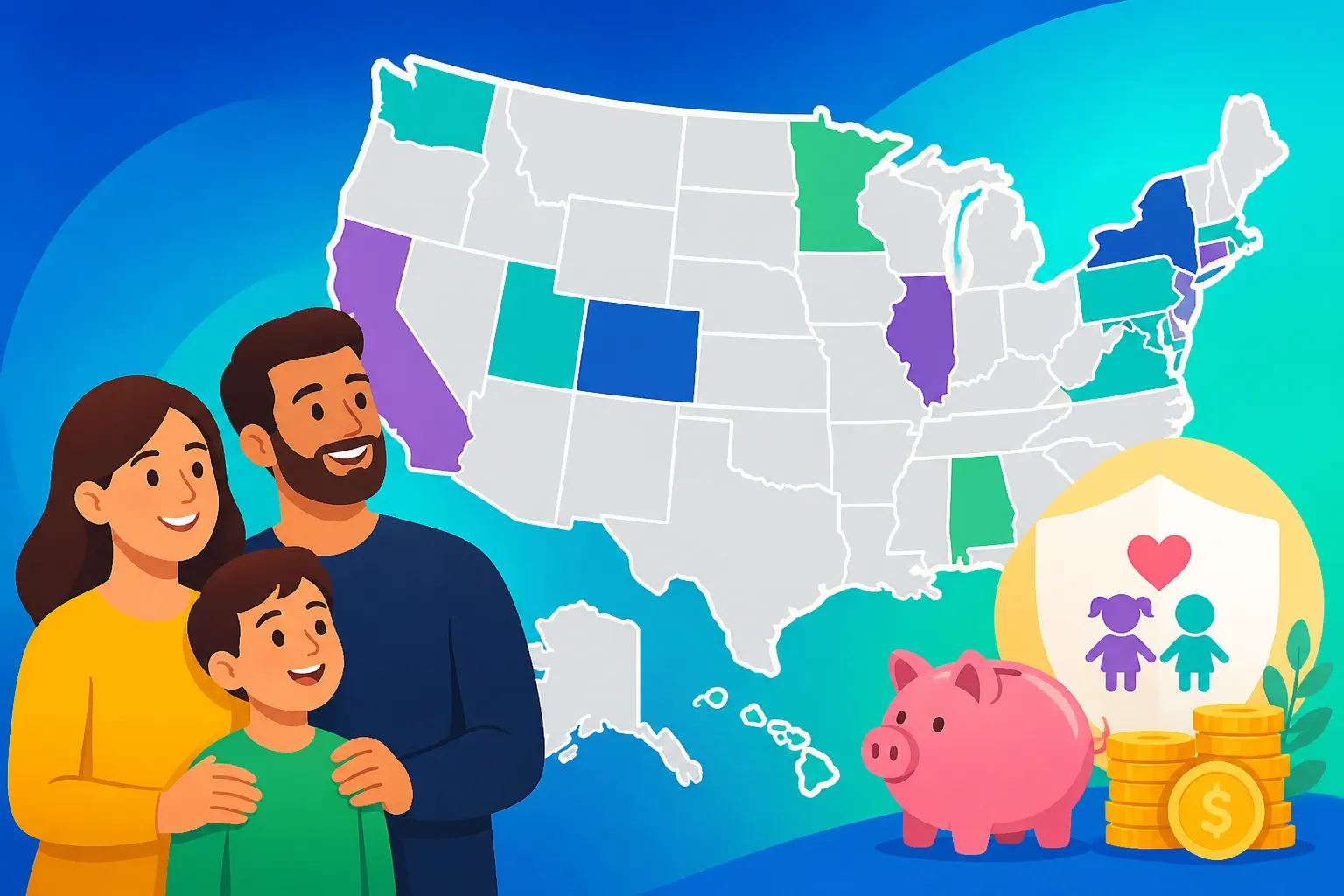
Which States Have a Child Tax Credit 2026?
For many families, especially those juggling rising costs of living, the thought of another tax season can feel like a heavy burden. Trying to keep food on the table, clothes on the kids' backs, and still save a little for their future is a constant challenge. Thankfully, both federal and some state governments offer a helping hand through child tax credits, designed to ease some of that financial pressure. This comprehensive guide is here to break down which states are currently offering or planning to offer their own child tax credits for 2026, helping you understand how these vital benefits can make a real difference for your household.
Understanding State Child Tax Credits
The landscape of tax benefits can be pretty bewildering, and child tax credits are no exception. While most people are familiar with the federal child tax credit, many states have also recognized the significant financial strain on families and have implemented their own versions. These state-level credits are not just a nice bonus; they can be a crucial component of a family's financial planning, often designed to target specific needs within their communities.
Federal vs. State Child Tax Credits
Let's start by clarifying the big difference. The federal child tax credit is a nationwide benefit administered by the IRS. For 2024, it can be worth up to $2,000 per qualifying child, with up to $1,600 of that potentially being refundable. This means if you owe less than $1,600 in taxes, you could still get a refund for the difference. It's a significant help for millions of families across the country, providing a baseline level of support.
State child tax credits, on the other hand, are a whole different beast. They vary wildly from state to state in terms of eligibility, amount, and refundability. Think of them as localized relief programs. A state might offer a credit that's smaller than the federal one but has different income thresholds, making it accessible to a wider range of families. Some states have fully refundable credits, meaning even if you owe no state income tax, you can still receive the full amount as a refund. This is a game-changer for low-income families who might not benefit as much from non-refundable credits. For more detailed insights into how these credits work, you might want to explore our guide on State Earned Income Tax Credits (EITC) Guide.
Why States Offer These Credits
States implement child tax credits for a variety of compelling reasons, all centered around supporting families and boosting local economies. From a social perspective, these credits are seen as a direct way to combat child poverty, allowing parents to spend money on essential items like food, housing, childcare, and healthcare. When families have more disposable income, it can lead to better outcomes for children in terms of health, education, and overall well-being.
Economically, pumping money directly back into households stimulates local spending. When parents receive a credit, they often spend it immediately on necessities, which in turn supports local businesses and creates a ripple effect throughout the state's economy. It's also a way for states to attract and retain young families, signaling that the state is a supportive place to raise children. For instance, a state with a generous child tax credit might be more appealing for those considering moving to a tax-friendly state for families.
States Offering Child Tax Credits in 2026
When we look ahead to 2026, the landscape for state child tax credits continues to evolve. While exact legislative changes are always on the horizon, many states have established or are proposing credits that will likely carry into or expand by 2026. It's important to remember that state tax laws are dynamic, so while we’re looking at current trends and planned legislation, things can always shift. Reputable financial analysis tools and sites like SmartAsset often provide updated summaries of these state-specific programs.
Let's dive into some of the states that are leaders in offering these crucial family benefits.
Leading States with Child Tax Credits
A growing number of states have established their own child tax credits, recognizing the ongoing need to support families. These credits come in various forms, some as direct income tax reductions, others as refundable payments.
- California: The Golden State offers a refundable Young Child Tax Credit (YCTC) for families with a child under age six and who qualify for the California Earned Income Tax Credit (CalEITC). While it's tied to the CalEITC, it provides significant relief for eligible lower-income families. The maximum credit amount can provide a much-needed boost, though it does have income limitations. For those living in California, understanding your full tax picture, including credits, is key. You can find more comprehensive information in guides like California Tax Credits & Deductions Guide.
- Colorado: Colorado offers a state Child Tax Credit that mirrors a percentage of the federal credit, making it familiar to many taxpayers. The amount and refundability are tiered based on income, generally offering more support to lower-income families. This tiered approach ensures that those who need the most assistance receive it, while still providing some benefit to middle-income households.
- Maryland: The Old Line State provides a refundable child tax credit for families with adjusted gross income (AGI) below a certain threshold. It’s particularly designed to help families cover essential costs. Maryland's credit is a great example of a state focusing on refundability to ensure the benefit reaches families regardless of their tax liability.
- New York: New York boasts a robust Empire State Child Credit. This credit is fully or partially refundable, depending on income, and can be quite substantial. For New York families, this credit, combined with other state deductions, can significantly reduce their overall tax burden. Understanding New York Income Tax Brackets 2026 and how credits interact with them is vital.
- Minnesota: Minnesota has one of the most generous child tax credits in the nation. It's a fully refundable credit that provides substantial relief per qualifying child, with the amount phasing out at higher income levels. This move aims to significantly reduce child poverty within the state.
- New Jersey: The Garden State provides a child tax credit that is fully refundable for lower-income families. This credit is part of a broader effort in New Jersey to make the state more affordable for working families, particularly those with young children.
Emerging Trends and Potential Changes for 2026
The trend across many states is towards expanding and increasing the refundability of child tax credits. Lawmakers are increasingly recognizing the direct impact these credits have on family well-being and local economies. For 2026, we might see:
- Increased Amounts: Some states could propose increasing the maximum credit amount to keep pace with inflation and rising costs of living.
- Expanded Eligibility: There's a push in some states to raise income thresholds, making the credit available to more middle-income families who also face financial pressures.
- Enhanced Refundability: The debate between refundable and non-refundable credits continues, with a growing movement towards making credits fully refundable to provide direct financial assistance to all eligible low-income families, even if they owe no state tax.
- New States Joining: More states, especially those with budget surpluses or a strong focus on family welfare, might introduce new child tax credits or convert existing dependent exemptions into credits. For example, states like Georgia are consistently reviewing their tax structures, and while they moved to a Georgia Flat Tax Rate 2026, they might also look at other family-focused credits.
Keeping an eye on state legislative sessions will be important for the most accurate 2026 information, as bills can be introduced and passed that significantly alter these provisions.
State Child Tax Credit Overview 2026 (Projections)
Below is a snapshot of some prominent states with child tax credits. Please remember that this information is based on current laws and trends, and legislative changes for 2026 are always possible. Amounts and eligibility criteria are subject to change.
| State | Max Credit Per Child (Approx.) | Refundable? | Age Limit (Generally) | Income Phase-Out Starts (Approx.) | Key Feature |
|---|---|---|---|---|---|
| California | $1,000 | Yes | Under 6 | Varies with CalEITC | Tied to CalEITC, assists low-income families. |
| Colorado | $1,200 | Yes (tiered) | Under 17 | $75,000 (single) | Percentage of federal credit, tiered refundability. |
| Maryland | $500 | Yes | Under 17 | $6,000 (single) | Fully refundable for low-income. |
| Massachusetts | $180 | No | Under 12 / Disabled | N/A (non-refundable) | Credit for dependent care expenses. |
| Minnesota | $1,750 | Yes | Under 17 | $35,000 (single) | One of the highest fully refundable credits. |
| New Jersey | $1,000 | Yes (tiered) | Under 6 | $30,000 (single) | Tiered for lower-income families. |
| New Mexico | $175 | Yes | Under 17 | Varies with AGI | Fully refundable, broad eligibility. |
| New York | $100 – $330 | Yes | Under 17 | Varies with AGI | Empire State Child Credit, substantial relief. |
| Oregon | $1,000 | Yes | Under 6 | $30,000 (single) | New in 2024, fully refundable for lower incomes. |
| Vermont | $1,000 | Yes | Under 6 | N/A (fully refundable) | Fully refundable, no income phase-out. |
Note: "N/A" for income phase-out for fully refundable credits often means the credit amount doesn't reduce based on income for the target group, or it's a fixed amount for all eligible. Always check official state tax websites for the most precise and current information.
Key Considerations for State Child Tax Credits
Navigating the specifics of state child tax credits can be a bit like solving a puzzle, especially with all the varying rules. It's not just about knowing if your state has one, but how it applies to your unique family situation. Understanding the nitty-gritty details, like eligibility and refundability, can make all the difference in maximizing your benefit.
Eligibility Requirements
Just like with any tax credit, there are specific hoops you need to jump through to qualify for a state child tax credit. These can differ significantly from the federal requirements, so don't assume that if you qualify for one, you automatically qualify for the other.
- Child's Age: This is a big one. The federal child tax credit generally applies to children under 17. However, many states, like California and Minnesota, focus on younger children, often those under 6 years old, believing that early childhood support is most impactful. Other states might extend the age limit to 18 or even 24 if the child is a full-time student or disabled. Always check your state's specific age cut-off.
- Relationship to Child: The child must be your dependent and generally a biological child, stepchild, foster child, sibling, or descendant of any of them. Proof of this relationship, usually through birth certificates or adoption papers, is often required.
- Residency: You (and often the child) must be a resident of the state for a certain period during the tax year. This typically means you lived there for more than half the year. If you recently moved or are considering it, understanding How to Change Your State Residency for Taxes is incredibly important for tax purposes, including claiming credits.
- Income Thresholds: Most state child tax credits have income limitations, which can be an Adjusted Gross Income (AGI) cap or a phase-out range. This means that if your income is above a certain amount, you might receive a reduced credit or no credit at all. These limits are designed to target the credit towards families who need it most. Some states, particularly those with higher costs of living, might have higher thresholds than others.
Refundable vs. Non-Refundable Credits
This is perhaps the most crucial distinction when it comes to understanding the real-world value of a child tax credit, especially for lower-income families.
- Non-Refundable Credits: A non-refundable credit can reduce your tax liability to zero, but it won't result in a refund if the credit amount exceeds the taxes you owe. For example, if you owe $500 in state taxes and qualify for a $1,000 non-refundable child tax credit, your tax bill would drop to $0, but you wouldn't get the remaining $500 back as a refund. These credits are still incredibly valuable for reducing or eliminating your tax bill, but they don't provide direct cash assistance beyond that. Many states that have a State Income Tax vs Federal Income Tax might offer non-refundable credits as a way to ease the burden.
- Refundable Credits: A refundable credit is a different story. If the credit amount is more than the taxes you owe, the state will send you the difference as a refund. Using the same example, if you owe $500 in state taxes and qualify for a $1,000 refundable child tax credit, your tax bill would drop to $0, and you would receive a $500 refund check. This is a lifeline for many low-income families who might not owe much in income taxes but still face significant expenses raising children. States like Minnesota and Vermont have championed fully refundable credits to directly address child poverty. Understanding this distinction is paramount for calculating your expected refund or payment.
How to Claim Your State Child Tax Credit
Once you've determined that your state offers a child tax credit and you meet the eligibility criteria, the next step is actually claiming it. This process can sometimes feel daunting, especially if you're new to filing state taxes or if your family situation has changed. But with a bit of preparation and knowing where to look, it's a straightforward process that can put much-needed funds back into your pocket.
Gathering Necessary Documentation
Preparation is key when it comes to taxes. Before you even sit down to fill out forms or use tax software, make sure you have all your ducks in a row. Having the right documents organized will save you a lot of headaches and ensure you don't miss out on any credits you deserve.
- Personal Identification for You and Your Children: This usually includes Social Security numbers (SSNs) or Individual Taxpayer Identification Numbers (ITINs) for yourself, your spouse (if filing jointly), and each qualifying child. Ensure these are accurate, as discrepancies can cause significant delays.
- Proof of Relationship and Age: While not always explicitly requested during initial filing, it's wise to have birth certificates or adoption papers readily accessible for your children. Should your state tax agency conduct an audit or request further verification, you'll be prepared.
- Income Statements: Gather all your W-2s, 1099s, and any other documents showing your income for the tax year. State child tax credits often have income thresholds or phase-outs, so accurate income reporting is critical. For instance, if you're looking at What Is My State Tax Rate If I Make $100,000?, your W-2 will be the starting point.
- Residency Proof: Documents like utility bills, driver's licenses, or lease agreements can help establish your state residency for the tax year, especially if you moved during the year. This is particularly important for those who might be considered a Part-Year Resident Return.
Filing Your State Tax Return
Once you have your documents in hand, it's time to tackle the actual filing process. You have a few options, each with its own advantages.
- Tax Software: For most people, using tax preparation software is the easiest and most efficient way to file both federal and state taxes. Programs like TurboTax, H&R Block, and TaxAct are designed to walk you through the process step-by-step, asking questions to determine which credits and deductions you qualify for. They automatically calculate your state child tax credit based on the information you provide, reducing the chance of errors. Many of these services offer state filing as an add-on to their federal packages.
- State Tax Forms: If you prefer to file manually or have a more complex situation, you can download the specific state income tax forms from your state's Department of Revenue website. Look for forms related to personal income tax and any specific forms for child tax credits. For example, in California, you'd be looking for forms like the CA 540. Our guide on How to File State Taxes: Complete Guide offers more general steps.
- Professional Tax Preparer: If your financial situation is particularly complex, or if you simply feel overwhelmed, consulting with a certified public accountant (CPA) or an enrolled agent can be a wise investment. They can ensure you claim all eligible credits and deductions, navigate complex state tax laws, and handle any multi-state filing issues if you, for example, were Working in One State, Living in Another: Tax Guide.
Remember, while the federal tax deadline is typically April 15th, many states have their own State Tax Deadlines 2026 (All States), so double-check those dates to avoid late filing penalties. Even if you don't owe taxes, filing on time is crucial to receive any refundable credits you're due.
Disclaimer
The information provided in this guide is for general informational purposes only and does not constitute financial, tax, or legal advice. Tax laws are complex and subject to change by state legislatures and the federal government. It is crucial to consult with a qualified tax professional or financial advisor for advice tailored to your specific situation. We strive to keep information up-to-date, but cannot guarantee the accuracy of all details as of the moment you read this, especially regarding future tax years like 2026, which may see legislative adjustments.