Does Washington Have State Income Tax?
One of the biggest questions I hear from folks considering a move or just trying to understand their financial picture in the Pacific Northwest is about income tax. It can be incredibly confusing trying to figure out which states have what, especially when headlines can be misleading. This guide will cut through the noise and clarify exactly what you need to know about Washington State's income tax situation, including its unique approach to capital gains.
The Straight Scoop: Does Washington State Have a General Income Tax?
Let's get right to it because there's a lot of chatter out there, and it's easy to get mixed up. For the vast majority of residents, the short answer is no, Washington State does not levy a broad-based personal income tax on wages, salaries, or traditional investment income like interest and dividends. This is a huge draw for many individuals and businesses, distinguishing Washington from many other states that take a slice of your regular earnings. Imagine getting your paycheck and not seeing a state income tax deduction – that's the reality for most Washingtonians.
Understanding the "No Income Tax" Distinction
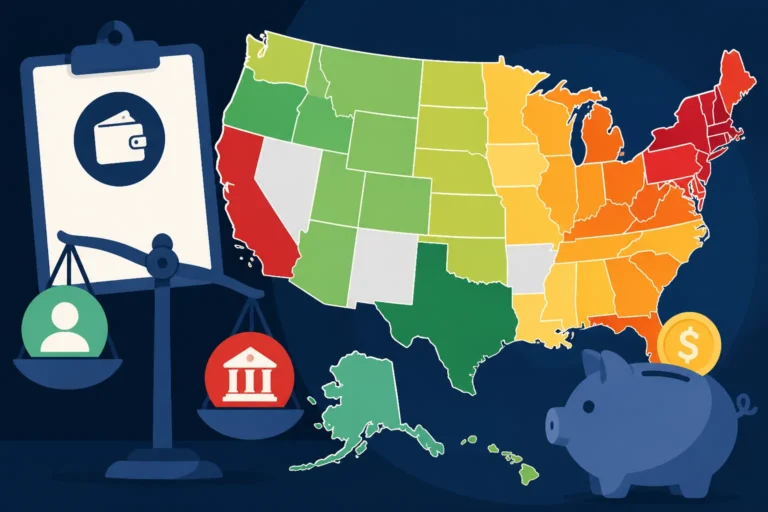
When we say "no income tax," it’s crucial to understand what that really means. It means that the state doesn't have a tax structure like, say, California or New York, where a percentage of your total earned income, whether from your job or a standard investment portfolio, goes directly to the state coffers. This is often why Washington is included in lists like the . For everyday workers, from the barista in Seattle to the software engineer in Redmond, their gross wages aren't subject to a state income tax. This can translate to a higher take-home pay compared to counterparts earning the same salary in states with significant income tax rates. It's a key factor many people consider when looking at the overall financial implications of living here.
A New Nuance: The Capital Gains Tax
However, and this is where the conversation gets a bit more complex and where some of the confusion stems from, Washington State did introduce a new 7% capital gains tax effective January 1, 2022. This isn't a broad income tax, but a very specific tax targeting long-term capital gains from the sale or exchange of certain assets, like stocks, bonds, and other investments, when those gains exceed a specific threshold. It's not a tax on all income, nor is it a tax on gains from real estate or certain retirement accounts. This distinction is vital because it doesn't apply to your regular paycheck or the interest you earn on your savings account. Many financial tools, like the ones offered by SmartAsset, often focus on broad income taxes, so it's important to dig into the specifics of all tax types.
Diving Deep into Washington's Capital Gains Tax
The capital gains tax in Washington is probably the most talked-about change in the state's tax landscape in recent memory. It’s definitely not a traditional income tax, but it does represent a shift, especially for high-net-worth individuals or those with significant investment portfolios. Let’s unravel the specifics of this tax so you can truly understand its implications.
The Specifics: What's Taxed and What's Exempt?
The tax is a 7% levy on capital gains exceeding a certain threshold in a calendar year. For 2023, for instance, the threshold was $250,000 for individuals, meaning only gains above that amount are subject to the 7% tax. This threshold is adjusted annually for inflation. So, if you had $300,000 in qualifying capital gains, only $50,000 would be taxed at 7%. It’s critical to note that this tax applies to long-term capital gains from the sale or exchange of tangible personal property located in Washington and intangible personal property, which includes things like stocks, bonds, and business interests. If you're wondering which specific types of assets are included, you might find our article on helpful.
What's not taxed is just as important as what is. Crucially, the sale of real estate, whether it’s your primary residence, a vacation home, or even commercial property, is exempt. This means if you sell your house in Seattle for a tidy profit, that gain won't be subject to this 7% tax. The same goes for the sale of certain retirement assets, such as those held in a 401(k) or IRA, and even assets held in a qualified pension plan. Additionally, there are specific exemptions for the sale of a qualified family-owned small business, certain livestock, and timber and timberland. This targeted approach means it's not designed to hit every investment gain, but rather significant gains from specific types of investments.
Navigating the Legal Landscape and Current Status
When the capital gains tax was first proposed and then enacted, it faced a wave of legal challenges. Opponents argued it was an unconstitutional income tax under Washington's constitution, which has historically treated income as property and requires property taxes to be uniform. However, the Washington State Supreme Court ultimately upheld the tax in 2023, ruling that it is an excise tax on the privilege of selling capital assets, not a property tax on income itself. This was a landmark decision that solidified the tax’s place in Washington's revenue system. So, as of now, the tax is fully in effect and being collected by the Washington State Department of Revenue. This legal battle highlights the unique tax philosophy in the state and why the concept of "income tax" is so fiercely debated here.
The "No Income Tax" Misconception: Understanding Washington's Broader Tax Landscape
Given the capital gains tax, it's fair to ask why Washington is still widely considered a "no income tax" state. The reality is that the new capital gains tax, while significant for some, doesn't change the fundamental fact that the vast majority of residents don't pay state income tax on their wages. The perception remains largely true for the average working individual. However, understanding the entire tax picture is key to truly assessing the financial impact of living in Washington. Many online calculators, like those on SmartAsset, provide a comprehensive view of overall tax burdens, which helps clarify the true cost of living.
How Washington Funds Itself Without a General Income Tax
So, if Washington doesn't tax most income, how does the state keep the lights on, fund schools, build roads, and provide essential services? The answer lies in its reliance on other forms of taxation, which can be quite substantial. The state's primary revenue generators are:
- Sales Tax: This is a big one. Washington has a high state sales tax rate, currently 6.5%. But that's not all – local jurisdictions, like cities and counties, can add their own sales taxes on top of that. For example, in Seattle, the combined sales tax rate can be as high as 10.3%. This means nearly every purchase you make, from groceries (though some food items are exempt) to clothing to electronics, has a significant chunk added on. This broad consumption tax means that everyone, regardless of income, contributes to state revenue through their spending habits.
- Property Tax: Property taxes are also a significant source of revenue, funding local services like schools, fire departments, and local infrastructure. While there isn't a statewide property income tax, the taxes levied on real estate can be considerable, especially in desirable areas. This often leads to discussions about how property taxes compare to income taxes, a topic we explore in depth in our article . If you own a home, this will be one of your largest tax obligations.
- Business and Occupation (B&O) Tax: This is a tax on the gross receipts of businesses engaging in certain activities within the state, rather than a tax on profits. It's often passed on to consumers in various forms.
- Other Excise Taxes: Washington also collects excise taxes on specific goods and services, such as fuel, tobacco, and cannabis.
This structure means that while you might save on income tax, you could end up paying more in sales and property taxes, depending on your spending habits and where you live. This is why when people ask, "Is it cheaper to live in a state with no income tax?", the answer is almost always, "It depends on the other taxes." Our article on sheds light on these trade-offs.
Comparing Washington's Tax Burden to Income Tax States
When you look at the total tax burden – including sales, property, and excise taxes, alongside any specific taxes like the capital gains tax – Washington's overall tax picture can be quite different from states with a traditional income tax. For instance, a high-spending individual who rents might feel the sales tax pinch more than a high-earning individual in an income tax state who saves most of their income. Conversely, a homeowner in a high-value area will see significant property tax bills.
Consider a scenario where Jane lives in Washington and earns $80,000 a year, spending a good portion of her income on consumer goods and services, and owns a modest home. Her take-home pay won't have state income tax deducted. However, she'll pay 9-10% sales tax on most purchases, and a few thousand dollars in property taxes. Now compare her to John, who earns $80,000 in a state like Oregon, which has no sales tax but a progressive income tax and lower property taxes. John's paycheck will see state income tax deducted, but his everyday purchases won't be taxed, and his property tax bill might be smaller. Ultimately, the total amount of tax paid can vary significantly based on individual financial behavior and asset ownership. This is often why financial advisors and platforms like SmartAsset encourage a holistic view of your tax responsibilities.
Who is Affected by Washington's Capital Gains Tax?
While it's true that the capital gains tax is not a broad income tax, it's certainly not negligible for those it does affect. If you're an investor, a business owner, or someone with a substantial portfolio, this specific tax could definitely impact your financial planning. Understanding who falls into this category is crucial for effective tax strategy.
Scenarios Where the Capital Gains Tax Kicks In
Let’s look at some real-world examples to illustrate when this 7% tax would apply:
- The Tech Stock Investor: Imagine Sarah, a seasoned tech investor in Bellevue, decides to sell a large block of Amazon stock she's held for years. She realizes a long-term capital gain of $500,000. Since the exemption for 2023 was $250,000, $250,000 of her gain would be subject to the 7% tax. That's $17,500 in state capital gains tax. If she had lived in a state without such a tax (and assuming she was a resident for tax purposes), this state tax liability wouldn't exist.
- The Startup Founder: Consider David, who founded a successful startup in Spokane and sells his ownership stake in the company to a larger corporation. His share of the sale results in a long-term capital gain of $1,000,000. After applying the $250,000 exemption, $750,000 of his gain would be taxed at 7%, resulting in a state tax bill of $52,500. This is a significant amount that needs to be factored into exit planning.
- The Mutual Fund Enthusiast: Even someone who invests in mutual funds or ETFs might trigger this tax. If Mark in Vancouver had a particularly good year and sells off several funds, realizing $300,000 in long-term capital gains, the amount above the $250,000 threshold ($50,000) would be taxed at 7%, costing him $3,500.
These examples clearly show that while not a universal income tax, this capital gains tax can have a real impact on individuals with significant investment activity. It encourages careful planning around when and how assets are sold.
Planning Considerations for Investors and High-Net-Worth Individuals
For those affected, proactive planning is essential. Strategies might include:
- Tax-Loss Harvesting: This involves selling investments at a loss to offset capital gains. While this is primarily a federal strategy, reducing your federal capital gains can also reduce your Washington capital gains.
- Utilizing Exemptions: Be aware of the annual exclusion threshold and the various asset-specific exemptions (like real estate or qualified small business sales). Structuring transactions to fall under these exemptions, where legally and financially appropriate, can be a smart move.
- Qualified Opportunity Funds (QOFs): Investing capital gains into QOFs can defer or even exclude federal capital gains, and these benefits can sometimes indirectly apply to state-level taxes depending on how the state tax code interacts with federal provisions.
- Estate Planning: For individuals considering passing on assets, understanding the stepped-up basis rules can be crucial. Capital gains are often realized upon sale, and proper estate planning can help beneficiaries avoid these taxes if assets are held until death.
Tools from reputable financial firms can often help model these scenarios and provide guidance. For example, some financial planners integrate SmartAsset's tools into their advisory process to help clients visualize their tax outcomes.
Here’s a simplified comparison of Washington’s tax structure to a state with a more traditional income tax:
| Tax Type | Washington State (Example) | Hypothetical Income Tax State (e.g., Oregon) |
|---|---|---|
| General Income Tax | No broad tax on wages, salaries, interest, or dividends. | Yes, progressive tax rates on most income types. |
| Capital Gains Tax | 7% on long-term gains over annual threshold (e.g., $250k). Excludes real estate, retirement. | Typically treated as ordinary income or separate capital gains rates, often integrated into progressive income tax. |
| State Sales Tax | High (6.5% state + local, often 8-10% total). | Low or none (e.g., Oregon has no sales tax). |
| Property Tax | Significant, varying by locality. | Varies widely by state and locality; can be lower than WA. |
| Business & Occupation Tax | Yes, on gross receipts for many businesses. | Corporate income tax on profits, often with specific rates. |
| Overall Impact | Lower income tax burden for most; higher consumption/property taxes. | Higher income tax burden; lower consumption taxes. |
This table illustrates the fundamental differences in how states like Washington choose to fund their services. It really drives home the point that "no income tax" doesn't mean "no taxes." If you're comparing the overall tax burden, you'd need to consider your personal spending habits, homeownership status, and investment portfolio. For instance, someone with very little in capital gains but significant spending will likely feel the high sales tax more acutely than a high-income earner who saves and invests heavily.
It's also worth noting that states are always evaluating their tax structures. You can stay informed about potential changes by checking out resources like . While Washington has its capital gains tax, many other states are exploring or implementing different tax changes, like the to adjust their revenue streams. The dynamic nature of state taxation means it’s always wise to keep an eye on developments, especially if you have significant financial interests. You might also be interested in guides like for broader comparisons.
In summary, Washington State remains an attractive option for many due to its lack of a general state income tax on wages. However, the introduction of the capital gains tax, coupled with relatively high sales and property taxes, means that residents still contribute substantially to the state's coffers through other means. Understanding these nuances is key to making informed financial decisions about living and working in the Evergreen State.
Disclaimer
This article is for general informational purposes only and does not constitute professional advice. Laws and regulations vary by location and change over time. Consult a qualified professional for guidance on your specific situation.