State Tax Burden by State 2026
If you have ever stared at your paycheck and wondered where that missing chunk of change went, or if you have considered moving across state lines just to get a break from the "tax man," you are certainly not alone. Understanding the true cost of living in any given area is about more than just checking a single percentage on a government website. This guide breaks down the total state tax burden by state, helping you see the full picture so you can make informed decisions about your career, your home, and your future.
Understanding Total State Tax Burden vs. Nominal Rates
When we talk about taxes, most people immediately think of the percentage taken out of their paycheck. This is your nominal income tax rate, and while it is a major factor, it is often a misleading one. A state might boast a low or even zero income tax rate, but they still have to pave the roads, fund the schools, and pay for emergency services. To do that, they often turn to other revenue streams like high sales taxes, sky-high property taxes, or "hidden" fees that can make your cost of living much higher than you initially anticipated.
The total state tax burden is a calculation of the percentage of personal income that residents actually pay in state and local taxes. It includes income tax, property tax, and sales and excise taxes. This is a much more realistic metric for the average person because it reflects the actual impact on your bank account. For example, some people use tools like SmartAsset to compare how their take-home pay might change between states, only to realize that the lack of an income tax in one state is completely offset by the property tax bill on a modest suburban home in another.
To truly understand your financial situation, you have to look at How State Tax Brackets Work: Marginal vs Effective. Your marginal rate is the tax you pay on your last dollar of income, but your effective rate—and more importantly, your total burden—is what determines whether you can afford that annual family vacation or if you are stuck eating ramen until April 15th. We often see people move for a "better" tax situation only to find that the "sticker price" of the state was a total fantasy once they started paying for car registrations and groceries.
Why the Sticker Price Doesnt Tell the Whole Story
Imagine you are looking at a job offer in a state with a 0% income tax. It feels like a massive raise, right? You might be tempted to sign the lease on a more expensive apartment or buy a nicer car. However, states like Texas or New Hampshire, which are famous for their lack of a traditional income tax, often have property taxes that are double or triple the national average. If you are a homeowner, that "missing" income tax is simply being collected through your mortgage escrow account every month.
Furthermore, excise taxes on things like gasoline, alcohol, tobacco, and even utilities can vary wildly. Some states have "sin taxes" that are significantly higher than their neighbors, and others charge premium prices for vehicle registration and licensing. When you add all these up, a state with a "high" income tax might actually have a lower total burden for a renter who doesn't own a car or spend much on taxable goods. This is why looking at the State Tax Burden by State 2026 metrics is so critical for real-world planning.
The Hidden Components of Your Tax Bill
Sales tax is perhaps the most visible "hidden" tax because you see it on every receipt. But even this is nuanced. Some states exempt groceries and prescription drugs, while others tax them at the full rate. If you are a family of four with a large monthly grocery bill, a 7% tax on food can add hundreds of dollars to your annual expenses. SmartAsset and other financial platforms often highlight these discrepancies because they drastically change the math for middle-class families.
Then there are the local and municipal taxes. Many people forget that cities and counties can tack on their own percentages. If you live in a major metro area, you might be paying a city income tax on top of your state and federal obligations. These "piggyback" taxes are common in places like Maryland or Ohio, and they can catch newcomers completely off guard. Understanding Local & City Income Taxes in the US is just as important as knowing the state-level rules if you want to avoid a surprise bill at the end of the year.
The Highest Tax Burden States in 2026
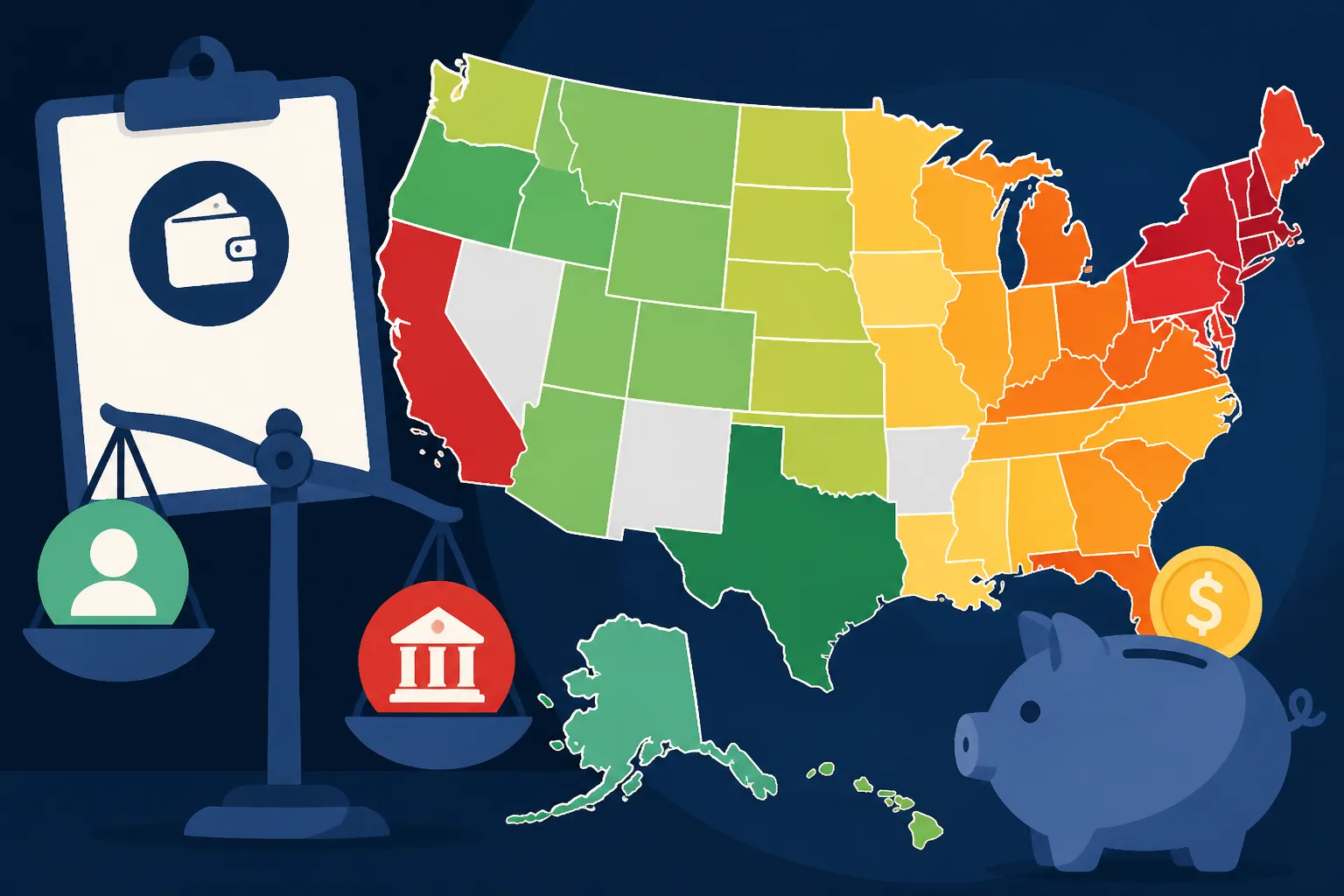
It probably comes as no surprise that the states with the highest tax burdens are often those with the highest costs of living in general. These states typically offer a wide range of public services, extensive infrastructure, and high-quality educational systems, but those amenities come with a significant price tag. For 2026, the leaders in the high-burden category continue to be the usual suspects on the coasts, along with a few surprising entries from the Midwest where property tax structures are particularly aggressive.
When you live in a high-burden state, you are often paying a "premium" for the location. Whether it is the access to the tech hubs of California or the financial capital of New York, the state governments leverage that demand to fund their budgets. However, for the average worker, these taxes can feel suffocating. It is not uncommon for residents in these areas to see 10% to 12% of their total income go toward state and local taxes before they even consider their federal tax bill.
The High-Cost Coastal Leaders
California and New York consistently top the list of high-burden states. In California, the progressive income tax system means that high earners are taxed at some of the highest rates in the country. Many people ask, Why Are California Taxes So High? and the answer is a complex mix of social programs, environmental initiatives, and high administrative costs. While the state has some protections for property taxes (like Proposition 13), the sheer weight of the income tax often keeps the total burden near the top of the charts.
New York is a similar story, particularly for those living in the five boroughs. If you are a resident of the city, you aren't just dealing with the New York Income Tax Brackets 2026; you are also paying the NYC Income Tax Explained (2026 Rates). This "double dip" of income taxation, combined with some of the highest property taxes in the nation (especially in the suburbs of Westchester and Nassau counties), makes the Empire State a very expensive place to earn a living. For many, the career opportunities make it worth it, but the financial strain is undeniable.
Why Some Midwest States Surprise You
While the coasts get all the negative press for high taxes, states like Illinois and Wisconsin often have total tax burdens that rival their coastal cousins. The culprit here is usually not just the income tax, but a heavy reliance on property taxes to fund local schools. Illinois, in particular, has faced significant fiscal challenges that have led to high property tax rates across the state. Even if your income isn't being taxed at a massive rate, the bill you receive for owning a home can be eye-watering.
Residents in these states often feel the "squeeze" because the cost of living isn't necessarily offset by the same high-paying job markets found in places like San Francisco or Manhattan. If you are living in a mid-sized Illinois city, paying California-level property taxes can feel like a massive disadvantage. This is why it is so important to look at the total burden rather than just the income tax line item on your pay stub. You have to account for the reality of your specific housing and spending situation.
The States with the Lightest Tax Burdens
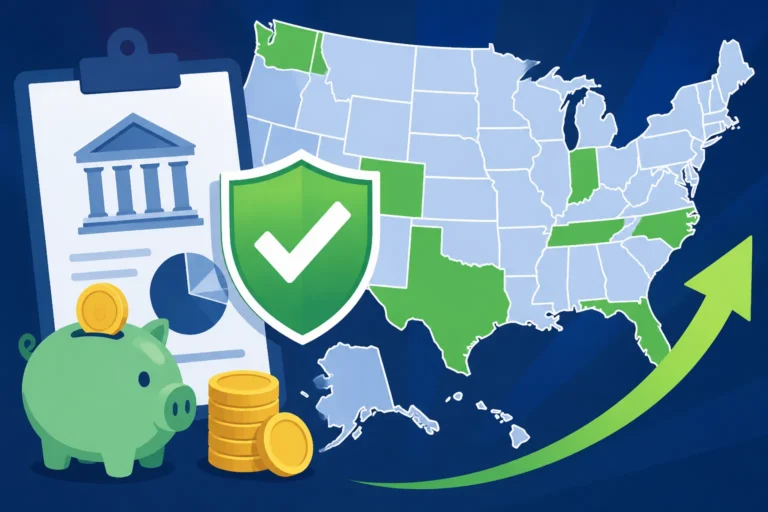
On the other end of the spectrum, we have the states that pride themselves on being "tax-friendly." These are the destinations of choice for retirees, remote workers, and businesses looking to escape the high-cost environments of the Northeast and West Coast. States like Florida, Texas, Nevada, and Tennessee continue to attract thousands of new residents every month by promising a lower total tax burden.
However, "lower" does not mean "zero." Every state needs money to function, and the way these low-burden states collect it can be sneaky. They often rely heavily on consumption taxes (sales tax) or tourism-related taxes. This means that if you are a big spender, you might actually end up paying more in taxes than you would in a state with a moderate income tax and a lower sales tax. It is all about how you live your life.
Life in No-Income-Tax States
The allure of a state with no income tax is powerful. Who wouldn't want an immediate 5% to 7% raise just by moving? There are currently nine states that do not tax earned income, and you can see them all on the States With No Income Tax (2026 Full List). For a high-earner, the savings can be astronomical—potentially tens of thousands of dollars a year. This is why many professional athletes and CEOs choose to establish residency in places like Florida or Nevada.
But for the average family, the math is a bit more complicated. Florida, for instance, has no income tax but relies on sales tax and property taxes. Because so much of Florida's revenue comes from tourists, the "burden" on residents can be lower than in other states. However, you have to be careful about where you buy a home, as property insurance and property taxes in some coastal areas have skyrocketed recently. Always use a tool like SmartAsset to run your specific numbers before assuming a move will solve all your financial problems.
Low-Tax States with Surprising Trade-offs
Then there are the states that have an income tax but keep it very low, such as Arizona or Indiana. These states often use a flat tax system, which we explain in our guide to States With a Flat Income Tax (2026). A flat tax can be very attractive because it is predictable and often lower than the top tiers of progressive systems. These states often compete with their neighbors by offering a more "business-friendly" environment with fewer regulations and lower corporate burdens.
The trade-off in these states is often found in the quality of public services. You might find that the roads aren't as well-maintained, or the public schools have fewer resources than what you are used to in a high-tax state. For many, this is a trade-off they are happy to make in exchange for keeping more of their own money. However, if you have children in school or a long commute, these "hidden" costs of lower public investment can manifest in other ways, like private school tuition or more frequent car repairs.
How Your Lifestyle Influences Your Personal Tax Burden
The "average" tax burden for a state is just that—an average. Your personal tax burden is highly dependent on how you earn your money, what you buy, and whether you own property. A single person renting a small apartment in a city will have a vastly different tax experience than a married couple with three kids, two cars, and a four-bedroom house in the suburbs.
This is where the "cluster" of taxes really hits home. When you are looking at the 2026 data, you have to filter it through the lens of your own life. Are you a high-earner who invests heavily? You need to look at capital gains. Are you a retiree living on a pension? You need to see how your state treats retirement income. The "best" state for one person could be a financial nightmare for another.
The Impact for Homeowners vs. Renters
If you are a renter, you are largely shielded from the direct impact of property taxes, though your landlord certainly passes some of those costs down to you in the form of higher rent. In high-property-tax states like New Jersey or New Hampshire, being a renter can actually be a smart tax move. You get to live in the state without the massive annual bill that homeowners face. In some cases, you might even qualify for a California Renters Credit 2026 or similar programs in other states designed to provide relief to those who don't own their dwellings.
Homeowners, on the other hand, are the primary target for local revenue collection. If you are moving to a state like Texas, you might think you are winning big on taxes, but you need to read Is Texas Really Tax Free? The Full Picture to understand the property tax reality. For many Texans, the property tax bill is the single largest expense after their mortgage principal and interest. If the value of your home increases, so does your tax bill, which can make "affordable" areas much more expensive over time.
Retirement and Fixed Incomes
For those nearing the end of their careers, the tax burden shift is dramatic. Once you stop receiving a traditional W-2 paycheck, the state's treatment of Social Security, pensions, and 401(k) withdrawals becomes the most important factor in your budget. Some states are incredibly friendly to seniors, while others continue to take a bite out of every retirement dollar. You should check the list of States That Don't Tax Social Security (2027) to see where your benefits are protected.
Many retirees find that "downsizing" their tax burden is just as important as downsizing their home. Moving from a high-tax state like Connecticut to a retirement-friendly state like South Carolina can add thousands of dollars to your annual disposable income. It is not just about the income tax; many states offer "homestead exemptions" for seniors that can drastically lower their property tax bills once they reach a certain age. These lifestyle-specific benefits are what truly define your personal burden.
| State Type | Primary Revenue Source | Pros | Cons |
|---|---|---|---|
| High Income Tax | Progressive Income Tax | Strong public services, high-tier schools | High "sticker price" for earners |
| No Income Tax | Property & Sales Tax | Massive savings for high-earners | High property taxes, higher cost of goods |
| Flat Tax States | Uniform Income Tax | Predictable, simple filing | Less relief for low-income families |
| Tourism Dependent | Sales & Excise Tax | Low burden for residents | Potential for high "fees" on everything |
Strategic Planning for a Lower Tax Burden
If you have realized that your current state is taking too much of your hard-earned money, you might be considering a move. But "tax flight" is not as simple as just packing a U-Haul and driving across the border. State tax departments are very savvy, and they don't like losing taxpayers—especially high-earning ones. You have to be strategic about how you change your residency to ensure you aren't being chased by your old state's tax collectors.
Strategic planning also involves maximizing the rules of the state you are in. Even in high-tax states, there are ways to lower your burden through savvy use of credits, deductions, and investment vehicles. Most people leave money on the table every year simply because they don't know the specific quirks of their state's tax code.
Navigating Residency and Domicile
Changing your state for tax purposes requires more than just getting a new driver's license. You have to prove that you have truly changed your "domicile"—the place you intend to be your permanent home. States like New York and California are notorious for auditing people who claim to have moved but still maintain significant ties to the state. You should study the State Tax Residency Rules Explained to understand the "183-day rule" and other common pitfalls.
To win a residency audit, you need a "trail" of evidence. This includes things like registering to vote, moving your bank accounts, and even where you keep your most "near and dear" possessions (like family heirlooms or your pet). If you are moving to avoid a big tax bill, you need to know How to Prove You Changed Your Domicile so your old state can't claim you still owe them a cut of your income. It is a process that requires attention to detail and, often, a bit of professional advice.
Maximizing Credits and Deductions
If moving isn't an option, your next best bet is to dig into your state's specific deductions. Most people just take the standard deduction and move on, but you might be missing out. For 2026, many states have updated their rules. Understanding the difference between the State Standard Deduction vs Itemized (2026) can save you hundreds. Some states allow you to deduct things that the federal government does not, such as specific educational expenses or energy-efficient home improvements.
Furthermore, remote work has opened up a whole new world of tax complexity. If you work for a company in one state but live in another, you need to be very careful about who you owe. Our guide on Which State Do I Pay Taxes In If I Work Remotely? is a must-read for anyone in the "laptop class." Depending on the state's "convenience of the employer" rules, you could potentially be taxed by two different states, though most offer a credit for taxes paid to another jurisdiction to avoid double taxation.
Final Thoughts on the 2026 Tax Landscape
The 2026 state tax burden data shows a country that is increasingly divided in its approach to fiscal policy. Some states are doubling down on high-tax, high-service models, while others are racing to the bottom to attract new residents and businesses. There is no "right" answer for everyone, but there is definitely a "best" answer for you.
Take the time to look past the headlines and do the math. Use resources like SmartAsset to run scenarios for different zip codes. Look at the property tax history of homes you are considering. Check the sales tax rates in the counties where you will be doing your shopping. When you understand the total burden, you take the power back from the tax man and put it back where it belongs—in your wallet.
State Income Tax Disclaimer
This guide is for informational purposes only and does not constitute professional tax, legal, or financial advice. Tax laws and rates are subject to frequent changes by state legislatures and local governments. Always consult with a qualified Certified Public Accountant (CPA) or tax professional before making significant financial decisions or changing your state of residency. Individual tax burdens can vary significantly based on personal circumstances, income levels, and specific local ordinances.