North Carolina Income Tax Rate 2026
Many North Carolinians find themselves staring at their pay stubs with a mix of confusion and mild irritation, trying to figure out exactly why their take-home pay fluctuates from year to year. With the state’s aggressive schedule of legislative tax reductions, keeping track of your actual liability can feel like chasing a moving target. This guide breaks down the North Carolina income tax rate for 2026 to help you budget and plan your financial future with confidence.
The Evolution of North Carolina’s Flat Tax System
For those who have lived in the Tar Heel State for a decade or more, the memory of a multi-tiered, progressive tax system might still be fresh. It used to be that the more you earned, the higher your percentage went, much like the federal system. However, the state underwent a massive shift in its fiscal philosophy, moving toward a simplified flat tax model. This was intended to make the state more competitive for businesses and to simplify the filing process for the average resident. While a flat tax sounds simple on paper, the constant incremental decreases scheduled by the General Assembly can make it difficult for families to know what to expect when January rolls around.
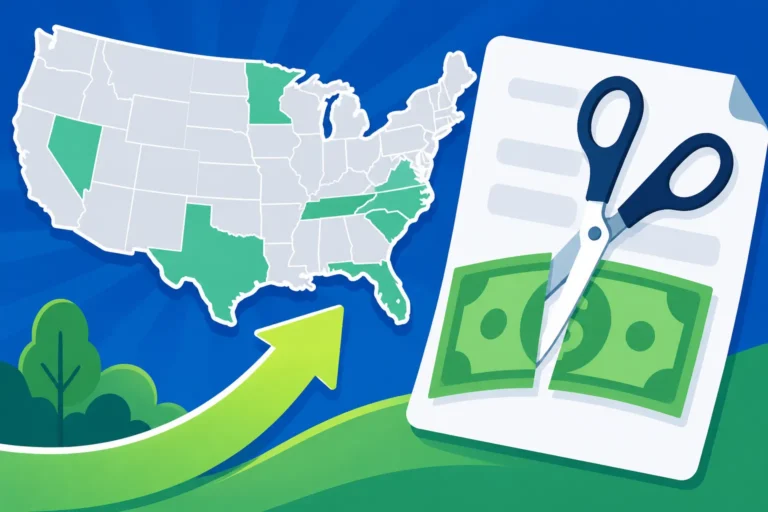
The transition to a flat tax has been a hallmark of State Income Tax Cuts & Changes for 2026 across several jurisdictions, but North Carolina has been one of the most consistent in its downward trend. The frustration for many taxpayers lies in the "fine print." While the headline rate goes down, other changes in the tax code—like adjustments to the standard deduction or the elimination of certain credits—can sometimes mask the actual savings. It’s important to look at the total picture rather than just the percentage listed on the Department of Revenue’s website.
As we look toward 2026, North Carolina continues to solidify its position among the States With a Flat Income Tax (2026). This means that whether you are a barista in Asheville or a tech executive in the Research Triangle Park, the base percentage of your taxable income going to Raleigh remains the same. This predictability is great for long-term planning, provided you understand how that rate is applied to your specific earnings after deductions are taken into account.
North Carolina Income Tax Rate 2026 Specifics
The scheduled individual income tax rate for North Carolina in 2026 is set to reach a milestone 3.99%. This is part of a multi-year phase-down that has seen the rate drop from over 5% down to this sub-4% level. Legislators have even discussed further "triggers" that could lower the rate even more if the state hits certain revenue targets, though the 3.99% figure is the baseline for your 2026 planning. Understanding this number is the first step in determining your North Carolina Tax Brackets 2026 impact, even though the "bracket" is technically just one single tier.
When comparing this to the national landscape, a 3.99% rate is remarkably low for a state that provides the level of infrastructure and services found in North Carolina. However, it is essential to remember that a "flat" rate doesn't necessarily mean everyone pays the same amount relative to their total wealth. Because North Carolina does not have the progressive tiers seen in other states, the impact of the tax can feel heavier on middle-income households who don't benefit as much from capital gains or high-end investment incentives. Resources like SmartAsset often highlight how these flat rates compare to the national average, helping you see where North Carolina stands in the broader economy.
To help you visualize the trend of these rates over the last few years, consider the following breakdown of how the flat tax has been reduced:
| Tax Year | North Carolina Flat Tax Rate |
|---|---|
| 2023 | 4.75% |
| 2024 | 4.50% |
| 2025 | 4.25% (Projected) |
| 2026 | 3.99% (Scheduled) |
This table illustrates the steady march toward a lower tax burden. However, for many residents, the savings of 0.26% from 2025 to 2026 might seem like a small win when inflation is driving up the cost of groceries in Charlotte or rent in Wilmington. It’s a classic case of the "macro" view of the state economy not always aligning with the "micro" reality of a family's checking account.
How the North Carolina Standard Deduction Affects Your Bottom Line
The actual rate you pay is only half the story. To find your taxable income, you first have to subtract the North Carolina standard deduction. This is an area where the state has actually been quite generous in recent years, often increasing the deduction amount to shield lower-income earners from the flat tax entirely. For 2026, these deduction amounts are a critical component of your North Carolina Tax Credits & Deductions Guide strategy.
For a married couple filing jointly in 2026, the standard deduction is expected to remain robust, likely around $25,500, though this is subject to final inflation adjustments by the state. Single filers can expect a deduction of approximately $12,750. This means if you are a single person earning $40,000 a year, you aren't paying 3.99% on the full $40,000. You are paying it on $27,250. This distinction is vital when you are trying to understand How State Tax Brackets Work: Marginal vs Effective. In a flat tax state, your "marginal" rate is 3.99%, but your "effective" rate—the actual percentage of your total income that goes to the state—is much lower because of that initial deduction.
One common frustration for people moving to North Carolina from states like New York or California is the "add-back" rules. North Carolina does not allow many of the itemized deductions that the federal government does. If you usually itemize your mortgage interest or charitable donations on your federal return, you might find that you are forced to take the standard deduction on your North Carolina return anyway. This can lead to a higher-than-expected state tax bill even if the rate itself looks low. Using a calculator from a site like SmartAsset can help you run these scenarios before you file, so you aren't caught off guard by a bill in April.
Special Considerations for Retirees and Families
North Carolina has a bit of a "good news, bad news" reputation when it comes to specific types of income. For families, the North Carolina Child Tax Credit (officially known as the Child Deduction) provides a tiered deduction based on your income level. If you have children under 17, you can deduct a certain amount per child from your taxable income. This helps offset the fact that the 3.99% rate applies to everyone equally, giving a bit of a break to those with the high costs of raising a family in growing cities like Durham.
For the older generation, there is often a question: Does North Carolina Tax Retirement Income? The answer is nuanced. The state does not tax Social Security benefits, which is a massive relief for many seniors living on a fixed income. However, most other forms of retirement income, including 401(k) distributions, traditional IRA withdrawals, and private pensions, are taxed at the standard 3.99% flat rate. This can be a shock for those moving from states that exempt a large portion of pension income.
Military retirees, however, have seen a significant positive change. Recent legislation has moved to exempt most military retirement pay from state income tax, making North Carolina one of the more friendly states for veterans. If you are a veteran living in Fayetteville or near Camp Lejeune, this change can save you thousands of dollars over the course of your retirement. It is always worth checking current SmartAsset data to see how these exemptions stack up against neighboring states like Tennessee or South Carolina, which have their own unique retirement tax rules.
Residency Rules and Filing Your 2026 Return
If you are new to the state or perhaps a "digital nomad" spending only part of your year in the Blue Ridge Mountains, you need to be aware of The 183-Day Rule for State Taxes. Generally, if you spend more than 183 days in North Carolina, the state considers you a resident for tax purposes, meaning all of your income—regardless of where it was earned—is subject to that 3.99% flat tax. This can become complicated if you are working remotely for a company based in a different state.
When it comes time to actually submit your paperwork, the process is relatively straightforward thanks to the flat rate. You will likely use Form D-400. Knowing How to File North Carolina State Taxes correctly involves ensuring that all your "add-backs" (like interest from non-NC municipal bonds) are accounted for. The state has moved toward a more digital-first filing system, and if your income is below a certain threshold, you can often file for free through the state's NCfreefile program.
Don't forget the deadline! While we usually think of April 15th as the universal tax day, it can occasionally shift due to holidays or weekends. Planning around the North Carolina Tax Deadline 2026 is essential to avoid the 5% per month late-filing penalty, which can eat into your savings very quickly. If you find yourself overwhelmed, remember that the North Carolina Department of Revenue offers taxpayer assistance centers in cities like Raleigh, Charlotte, and Winston-Salem, though they can get incredibly busy as the deadline approaches.
Planning for the Future in North Carolina
The move to a 3.99% flat tax in 2026 is a clear signal that North Carolina wants to be seen as a low-tax destination. For residents, this means more money in their monthly paychecks, but it also places more responsibility on the individual to manage their own financial planning. Without the "buffer" of progressive brackets, you need to be very intentional about your withholdings. If you find that you are consistently owing money at the end of the year, it might be time to adjust your NC-4 employee withholding allowance certificate.
While the tax cuts are generally popular, they do spark a realistic debate about the state's ability to fund long-term infrastructure. As someone living in a high-growth area, you might feel the frustration of traffic congestion or overcrowded schools while hearing about state tax surpluses and rate cuts. It’s a complex trade-off. However, from a purely personal finance perspective, the 2026 rate is an opportunity to re-evaluate your savings goals. Whether you’re putting that extra percentage into a 529 plan for your kids or beefing up your emergency fund, every bit counts.
Ultimately, staying informed is your best defense against tax-season stress. By understanding that the 2026 rate is 3.99%, knowing your standard deduction amounts, and being aware of the specific credits available to you, you can navigate the North Carolina tax landscape with ease. Use the tools available to you, double-check your math, and remember that even in a flat-tax state, the details of your specific life situation are what truly determine your tax bill.
Disclaimer
This guide is provided for informational purposes only and does not constitute professional tax, legal, or financial advice. Tax laws, including the North Carolina scheduled rate of 3.99% for 2026, are subject to change by the North Carolina General Assembly and the Department of Revenue. While we strive to provide accurate and up-to-date information, readers should consult with a qualified tax professional or the North Carolina Department of Revenue to confirm how specific laws apply to their individual financial situations before making any tax-related decisions.