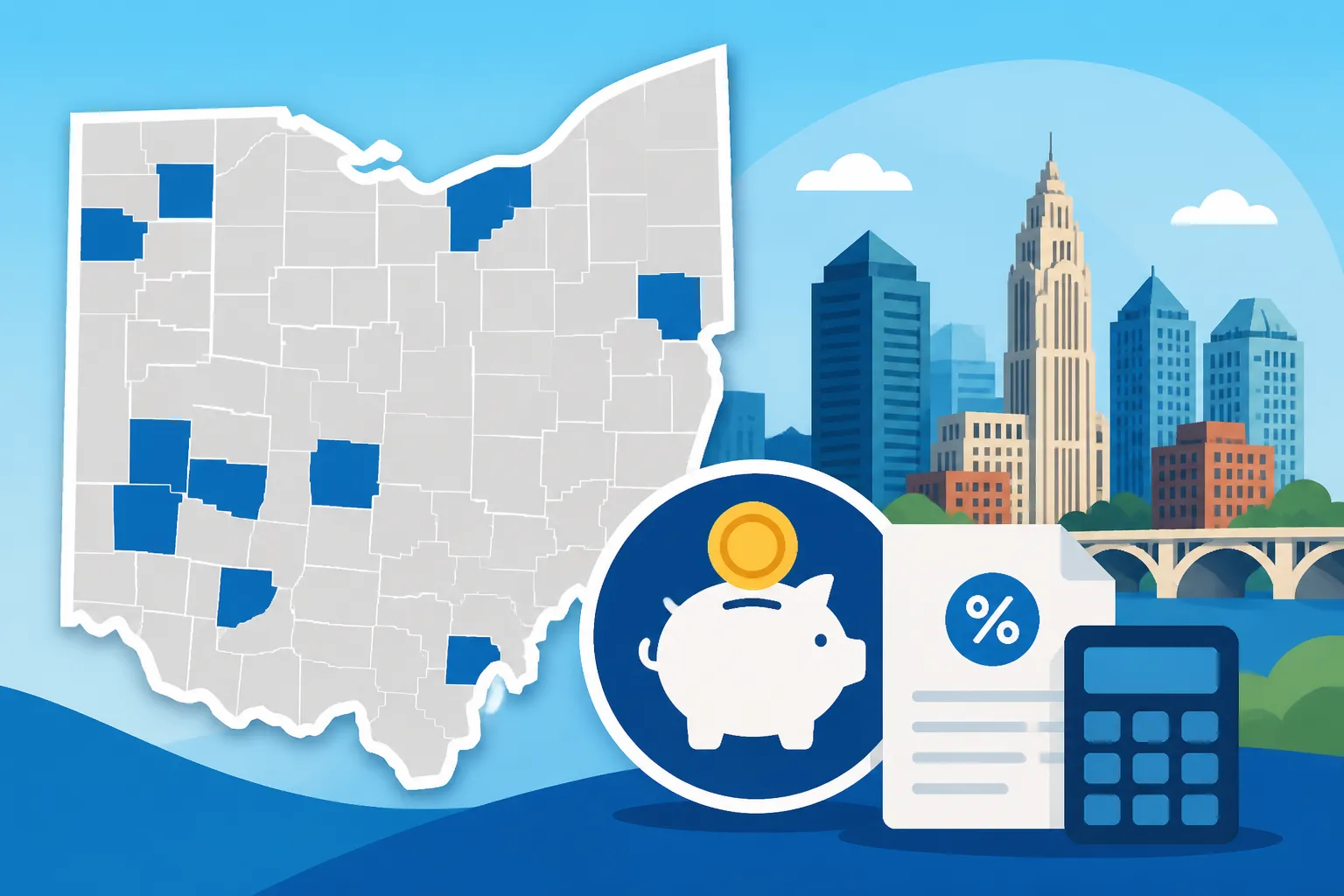
Which Ohio Cities Have Income Tax?
It's incredibly frustrating, isn't it, when you think you've finally wrapped your head around federal and state income taxes, only to discover there's another layer of taxation waiting for you at the city level? For many living and working in Ohio, this isn't just a hypothetical concern but a real headache. You might be wondering, "Which Ohio cities even have income tax?" and more importantly, "How does it all work?" This comprehensive guide is here to untangle the complexities of municipal income taxes in Ohio, helping you understand if you're affected, how much you might owe, and how to navigate the filing process.
The Complex World of Ohio City Income Taxes
Unlike some states where income tax is solely a state-level affair, Ohio adds an extra layer of complexity with its widespread municipal income taxes. This isn't a statewide blanket rule; rather, it's a patchwork quilt of local ordinances, meaning whether you owe city income tax depends entirely on where you live and where you work within the state. It can certainly feel like an unexpected burden, especially if you've moved to Ohio from a state where city income taxes aren't common, or even if you're just moving between different Ohio municipalities.
Explaining the 'Why' Behind Local Taxes
So, why do Ohio cities levy an income tax in the first place? It really comes down to funding. Local governments need revenue to pay for essential services that directly impact your daily life, such as police and fire departments, street maintenance, parks and recreation, and other vital public works. Property taxes and sales taxes are often primary revenue sources, but city income taxes provide an additional, stable stream of funding for these crucial services. Without these funds, many cities would struggle to maintain the quality of life their residents expect and deserve. It's a system designed to support the immediate community infrastructure, even if it adds a bit more paperwork for taxpayers.
These taxes are typically levied at a flat rate on earned income, meaning wages, salaries, and sometimes net profits from businesses. They generally don't apply to unearned income like Social Security benefits, most pension income, or interest and dividends, which is a common misconception. For more on how these various tax structures compare, you might be interested in our guide on Graduated vs Flat State Income Tax Explained. It sheds light on how different tax systems are designed.
Understanding the Key Players: RITA and CCA
When you delve into Ohio city income taxes, two acronyms pop up frequently: RITA and CCA. These aren't cities themselves, but rather agencies that help many Ohio municipalities administer and collect their local income taxes. They streamline the process for both cities and taxpayers, acting as central collection points.
- RITA (Regional Income Tax Agency): This is by far the largest municipal income tax collection agency in Ohio. If your city is a member of RITA, you'll file your city income tax return directly with them, not the city itself. RITA handles everything from sending out notices to processing payments and issuing refunds. They also provide taxpayer assistance, which can be a real lifesaver when you're trying to figure out if you owe tax to a city like Columbus or Cleveland, both of which are RITA members. Their services are designed to centralize and simplify the collection process for the hundreds of communities they serve, although navigating their specific forms and rules can still take some getting used to. Many people find their online portal useful for checking their obligations and filing.
- CCA (Central Collection Agency): Similar to RITA, the CCA also collects municipal income taxes for a number of Ohio cities. While smaller in scale than RITA, CCA plays the same role, managing tax collection and administration for its member communities, such as Akron and Canton. If your city is a CCA member, you'll work with CCA for your city tax needs. The goal of both RITA and CCA is to create a more efficient system, rather than having each city manage its own independent tax department. They essentially act as shared services for city tax administration, and understanding which agency serves your particular city is the first step in managing your city tax obligations. You can learn more about how these organizations fit into the broader landscape of local taxes in our article about Local & City Income Taxes in the US.
It's important to remember that not all cities use RITA or CCA. Some of the larger cities, and many smaller ones, still maintain their own independent tax departments. For instance, Cincinnati has its own city tax division. So, the first step is always to determine which, if any, agency or department is responsible for collecting taxes in your specific Ohio city.
Identifying Your Local Tax Obligations
The fundamental question for anyone living or working in Ohio is, "Do I even have to pay city income tax?" This isn't always straightforward because it depends on two factors: where you reside and where you earn your income. Many people get tripped up by this, especially if they commute across city lines for work. It's a common scenario in Ohio, where suburbs might surround a major metropolitan area, each with its own tax rules.
Where to Find Your City's Tax Rate
Determining if your city (or the city you work in) has an income tax, and what the rate is, is crucial. You can't just assume it's like the federal system where rates are clearly published everywhere. Here's how you can go about it:
- Check Your Pay Stubs: If your employer is withholding city income tax, it should be listed on your pay stub, usually alongside federal and state withholdings. This is often the easiest way to confirm if you're already paying. The pay stub should also indicate the city to which the tax is being paid.
- Consult City or Agency Websites: Most cities with an income tax, or the agencies like RITA or CCA that collect for them, have dedicated sections on their websites. These pages will clearly state whether a tax exists, the current rate, and who is required to pay. For example, if you live in Cleveland, you'd check RITA's website, or if you're in Akron, you'd go to CCA's site. Many financial websites, like SmartAsset, also provide comprehensive lists and tools where you can input your location to see applicable rates. SmartAsset’s tax calculator is a handy resource for individuals trying to quickly estimate their tax burden.
- Contact Your Employer's HR or Payroll Department: If you're unsure about withholdings, your employer's HR or payroll team can tell you if they are withholding city income tax on your behalf and to which municipality. They deal with these nuances constantly, so they're often the best immediate source of information.
It's important to remember that these rates are generally flat, meaning everyone pays the same percentage, regardless of their income level. This is different from the progressive tax brackets you see at the federal level or in many state income tax systems, such as those discussed in How State Tax Brackets Work: Marginal vs Effective.
Here's a table with examples of city income tax rates for some notable Ohio cities (rates are for illustrative purposes and based on recent data, but always confirm with official city or agency sources):
| Ohio City | Tax Rate (Example) | Administering Body | Notes |
|---|---|---|---|
| Columbus | 2.50% | RITA | Largest city in Ohio, many commuters |
| Cleveland | 2.50% | RITA | Credit for taxes paid to other cities |
| Cincinnati | 1.80% | City Tax Division | Own independent tax department |
| Akron | 2.25% | CCA | Credit for taxes paid to other cities |
| Toledo | 2.25% | City Tax Division | Also has its own tax department |
| Dayton | 2.50% | City Tax Division | Credit for taxes paid to other cities |
| Canton | 2.00% | CCA | Credit for taxes paid to other cities |
| Dublin | 2.00% | RITA | Popular suburban community |
| Beavercreek | 1.75% | City Tax Division | Self-administered, no RITA/CCA |
| Upper Arlington | 2.50% | RITA | Residential community near Columbus |
Please note: Tax rates can change, so always verify the most current information with the specific city or tax agency.
Navigating the "Live vs. Work" Scenario and Credits
This is where things can get truly perplexing for many Ohioans. What happens if you live in one city but work in another, and both cities have an income tax? This is a common situation for commuters throughout the state. The general rule in Ohio is that you typically owe tax to the city where you work, and also to the city where you live. Yes, that sounds like double taxation, but thankfully, there are mechanisms in place to prevent that from happening unfairly.
Most Ohio cities offer a credit for taxes paid to another municipality. This credit usually prevents you from paying the full tax twice. For example, if you live in Upper Arlington (2.5% tax rate, RITA) but work in Columbus (2.5% tax rate, RITA), you'll pay tax to Columbus where you work. When you file your Upper Arlington return, they will likely give you a credit for the taxes you paid to Columbus. If both rates are the same, your credit will often eliminate your liability to your resident city. If your resident city has a higher tax rate than your work city, you might still owe a small difference to your resident city.
Let's imagine you live in Worthington (2.5% tax rate, RITA) but work in Westerville (2.0% tax rate, RITA). You'll typically have 2.0% withheld for Westerville. When you file your Worthington resident return, you'll receive a credit for the 2.0% paid to Westerville, but you'll still owe the remaining 0.5% difference to Worthington. It's essential to understand that this credit is usually capped at the lower of the two tax rates or your resident city's rate. This ensures you're not paying the full amount to two different places, but you're also not completely avoiding contributing to the city where you reside. Financial platforms like SmartAsset can help individuals compare tax burdens in different Ohio cities, which can be invaluable when considering a move or a new job. For a broader understanding of how states handle these situations, our article on Working in One State, Living in Another: Tax Guide provides excellent context.
Filing and Paying Your Ohio City Income Tax
Once you've determined your obligation, the next step is knowing how to file and pay. The process, while similar in principle to state and federal filing, has its own unique quirks in Ohio. Ignoring these local taxes can lead to penalties and interest, so it's best to be proactive and informed.
Annual Filing Requirements and Deadlines
Just like your state and federal taxes, Ohio city income taxes have annual filing requirements and strict deadlines.
- Who Needs to File: Generally, if you live in a city with income tax, you're required to file a resident return, even if no tax is due (for example, if you received a full credit for taxes paid to another city). If you work in an Ohio city with income tax but don't live there, you'll typically file a non-resident return for the work city. There are usually minimum income thresholds for filing, but it's always safer to confirm with the specific city or agency.
- The Forms: Each city or agency (RITA, CCA) will have its own specific forms. For example, RITA has a standard municipal income tax form that its member cities use. You can usually download these forms directly from their websites or use tax software that supports city tax filings.
- Deadlines: The annual filing deadline for most Ohio city income taxes typically aligns with the federal and state deadline, which is usually April 15th (or the next business day if April 15th falls on a weekend or holiday). If you need more time, extensions are often available, but remember that an extension to file is generally not an extension to pay. If you expect to owe, you should pay by the original deadline to avoid interest and penalties. For a detailed look at various deadlines, check out State Tax Deadlines 2026 All States.
Common Mistakes to Avoid
Navigating city income taxes can be tricky, and it's easy to make mistakes. Here are some common pitfalls to watch out for:
- Assuming No Obligation: Don't assume that because your employer withholds state and federal taxes, they're also handling city taxes, or that your city doesn't have one. Always verify your specific situation. Many smaller employers might not be familiar with the rules for every municipality their employees might live or work in.
- Ignoring Credits for Taxes Paid Elsewhere: One of the most common and costly mistakes is paying full tax to both your work city and your resident city without claiming the credit. This is why understanding the "live vs. work" scenario is so important. When you file your return with your resident city or RITA/CCA, make sure to report any income earned and taxes paid to other cities to claim your credit. This credit is designed to avoid How to Avoid Double Taxation Between States, a principle that also applies at the city level in Ohio.
- Missing Deadlines: Late filing or late payment can result in penalties and interest. Even if you don't have all your documents ready, file an extension if you need more time to prepare your return, but always pay any estimated tax due by the original deadline.
- Incorrectly Calculating Income: Ensure you're reporting the correct type of income. City income taxes generally apply to earned income (wages, commissions, net business profits) but not usually to passive income like social security, pensions, or interest.
- Confusing RITA/CCA with Your City: Remember, if your city is a member of RITA or CCA, you file with them, not the individual city's tax department. Sending your return to the wrong place can cause delays and potential issues.
Understanding How to File State Taxes: Complete Guide can also provide a broader context, though city taxes have their own specific forms.
Strategies to Manage Ohio City Taxes
Dealing with Ohio city income taxes doesn't have to be a yearly scramble. With a few smart strategies and a little planning, you can navigate these local obligations more smoothly and ensure you're not paying more than you owe. It's about being informed and leveraging the rules in your favor.
Leveraging Tax Credits and Exemptions
The most significant strategy for managing Ohio city income taxes, especially if you commute, is understanding and utilizing the credits available to you. As mentioned earlier, most Ohio cities (or the agencies that collect for them) offer a credit for municipal income tax paid to another city.
- The Purpose of the Credit: This credit isn't just a nice gesture; it's designed to prevent you from being taxed twice on the same income. Imagine living in a suburb of Cleveland, like Parma (2.0% tax rate, RITA), but working in Cleveland itself (2.5% tax rate, RITA). Your employer would withhold 2.5% for Cleveland. When you file your Parma resident return, Parma would likely give you a credit up to its 2.0% rate for the taxes paid to Cleveland. In this scenario, you'd effectively pay 2.0% to Parma (via the credit for Cleveland) and the remaining 0.5% difference to Cleveland.
- Applying for the Credit: To claim this credit, you typically need to provide documentation of the income earned and taxes paid to the other municipality. This usually means attaching a copy of your W-2 form, which clearly shows the city income tax withheld. If you pay estimated taxes to a work city, you’ll need records of those payments. Tax software, or the online portals for RITA and CCA, will guide you through this process. You might even find it useful to check guides like Ohio Flat Tax 2026 (2.75%) Explained to understand the state's broader tax philosophy, which often influences local tax structures.
- Understanding Reciprocity (or Lack Thereof): It's crucial to distinguish between state reciprocity agreements and city credits. States sometimes have reciprocity agreements that prevent income earned in one state from being taxed by another. For example, if you Live in PA Work in NJ: Reciprocity might apply. However, these do not typically apply to city-level taxes in Ohio. Instead, it's the individual city's credit provision that handles potential double taxation. Always assume you have an obligation to both your work and resident cities unless explicitly stated otherwise by the municipal tax authority.
When Professional Guidance is Essential
While many individuals can handle their Ohio city income taxes on their own, there are situations where seeking professional help is not just advisable, but essential.
- Complex Commuting Situations: If you work in multiple cities throughout the year, or if you moved mid-year between cities with different tax rules, your situation can quickly become convoluted. A tax professional can help ensure you're filing correctly for all applicable municipalities and maximizing any credits.
- Business Owners and Self-Employed Individuals: If you run your own business or are self-employed, calculating and paying city income taxes can be more complex. You might owe tax on your net profits to both your business location and your residential city, requiring careful tracking and estimated payments. SmartAsset often recommends consulting financial advisors for small business tax planning, and this advice certainly applies to Ohio's city taxes.
- Residency Audits: Ohio cities, especially those with their own tax departments, do conduct residency audits. If you've recently moved to or from a city with income tax, or if you're a snowbird splitting time, a professional can help you establish clear domicile and statutory residency to avoid unexpected tax bills. Our guide on What Triggers a State Residency Audit? offers insights that are also relevant at the local level.
- Dealing with Delinquent Taxes or Notices: If you receive a notice from a city tax department, RITA, or CCA about unfiled returns or unpaid taxes, it's wise to consult a tax professional immediately. They can help you understand the notice, negotiate with the agency if necessary, and rectify the situation to minimize penalties.
- Major Life Changes: Getting married, having children, buying a house, or retiring can all impact your tax situation, including at the city level. A professional can help you understand how these changes affect your obligations and ensure you're optimizing your tax planning. If you're wondering Do Retirees Pay State Income Tax?, it's worth noting that while most city income taxes don't hit pension or Social Security, other earned income in retirement could still be subject to city tax.
Even for simpler situations, tax preparation software often supports filing for RITA and CCA member cities, as well as some independent city tax departments. Companies like TurboTax, TaxAct, and H&R Block offer state tax filing, and many include modules for Ohio city taxes. Just be sure to double-check that the software supports your specific city's requirements. Remember, while software is helpful, it won't replace the personalized advice of an expert for truly complex scenarios.
Navigating the Nuances of City Tax Administration
Ohio's city income tax system, with its mix of independent city tax departments, RITA, and CCA, can feel like a labyrinth. However, understanding the basic framework and knowing where to find reliable information empowers you to manage your obligations effectively. Whether you're a long-time resident, a new transplant, or a commuter, taking the time to confirm your city tax status is a small effort that can prevent significant headaches down the line.
The landscape is always shifting, too. Tax laws, even at the local level, are not set in stone. Cities occasionally adjust their rates, and the list of RITA and CCA member cities can change. Staying informed through official city websites, agency portals, and trusted financial resources like SmartAsset is key. Remember, the goal isn't just to pay your taxes, but to pay the right amount of taxes, and not a penny more. This proactive approach will save you time, stress, and potentially money.
Disclaimer
The information provided in this guide is for general informational purposes only and does not constitute tax advice. Tax laws are complex and subject to change. It is always recommended to consult with a qualified tax professional or the official tax department of your specific Ohio city, RITA, or CCA for personalized advice regarding your individual tax situation.