Do I Pay Taxes in Two States If I Work Remotely?
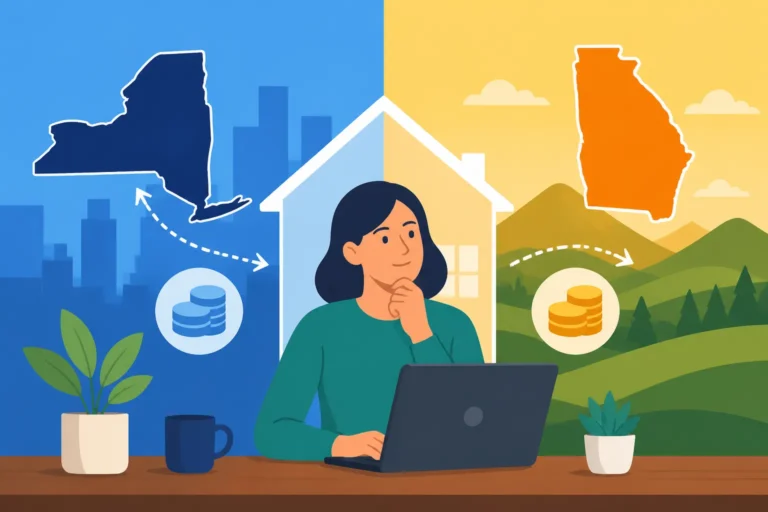
Oh, the joys of remote work! It promises freedom and flexibility, but let's be honest, it often ushers in a whole new world of tax confusion. If you're living in one state and working remotely for an employer based in another, you've probably found yourself staring at your screen, wondering, "Do I really have to pay taxes in two states?" It's a valid and incredibly common frustration that can make you feel like you need a law degree just to file your annual returns. This guide is here to untangle that knot, breaking down exactly when and why you might owe taxes to multiple states when working remotely.
The Core Question: Do You Pay Taxes in Two States?
This is the million-dollar question for so many remote workers, and the short answer is: possibly. It's not always a straightforward "yes" or "no" because state tax laws vary wildly, creating a complex patchwork of rules that can leave you scratching your head. The good news is, in most cases, you won't actually pay double tax on the same income, thanks to mechanisms designed to prevent that. But filing in two or more states? Absolutely, that's a common reality.
The General Rule: Where You Perform the Work
The fundamental principle in state taxation is that income is generally taxable by the state where it is earned. For a traditional commuter, this is simple: you work in New Jersey, you earn income in New Jersey, and New Jersey taxes that income. But for remote workers, "where it is earned" becomes a fascinating, often frustrating, puzzle.
Let's say you live nestled in your cozy home in State A, but your employer's main office is physically located in bustling State B. Even though you're working from your living room, State B might consider that income as "sourced" to State B because that's where the employer is headquartered, where the business operations are, or where the "economic nexus" of your work lies. Simultaneously, your home state, State A, will want to tax your income because you are a resident there. This is precisely where the dilemma arises, forcing many remote workers into a multi-state filing situation. This distinction is crucial and often the first hurdle people encounter when navigating remote work taxes.
Domicile vs. Physical Presence: The Two Key Factors
To really understand if you're looking at a two-state tax situation, you need to grasp two key concepts: your domicile and your physical presence. These aren't just fancy legal terms; they're the bedrock of state tax residency.
Your domicile is essentially your permanent home, the place you intend to return to whenever you're away. It's where you have your closest ties – where you vote, have your driver's license, register your vehicles, and where your family usually resides. You generally only have one domicile at a time, and it's notoriously difficult to change without clear intent and actions. Your domicile state has a primary claim to tax all of your income, regardless of where it's earned, because you are considered a resident. This is why understanding What Is Tax Domicile vs Residency? is so vital.
Physical presence, on the other hand, refers to where you actually perform your work. If you're living in Oregon but working remotely for a tech company in Seattle, Washington, your physical presence for work is in Oregon. If you occasionally travel to the Seattle office, you have a physical presence in Washington for those days. States generally have the right to tax income earned within their borders, regardless of whether you're a resident or not. So, if you're physically working in State A, even for an employer in State B, State A has a claim to tax that income. This is where the clash happens for many remote employees: your domicile state wants to tax all your income, and the state where you physically perform the work also wants a piece.
Navigating the Double Taxation Trap
The idea of paying taxes on the same income to two different states sounds like a nightmare, right? Thankfully, tax laws have provisions to prevent this kind of true double taxation. However, these mechanisms don't necessarily eliminate the need to file in multiple states. They just ensure you're not paying the full amount twice over.
Credit for Taxes Paid to Another State
The most common way states prevent double taxation is through a "credit for taxes paid to another state." This is usually how it plays out: if you, as a resident of State A, earn income that is also taxed by State B (because you worked there, even remotely, or due to a "convenience of the employer" rule), your home state (State A) will typically allow you to claim a credit for the taxes you paid to State B.
Think of it this way: State B taxes your income first because that's where the income was sourced or earned. Then, when you file your resident return in State A, you report all your income, including the portion taxed by State B. But because you've already paid tax on that portion to State B, State A will give you a credit to offset that amount. It's not a refund of the taxes you paid to State B; instead, it reduces the amount you owe to State A. However, the credit is usually limited to what State A would have taxed that income, meaning if State B's tax rate was higher, you might not get credit for the full difference. Understanding how to apply this Credit for Taxes Paid to Another State is key for multi-state filers.
For example, imagine Sarah lives in New Jersey (State A) and earns $70,000 working remotely for a company located in New York City (State B). Due to New York's specific rules, New York might tax her entire $70,000 as New York-sourced income. When Sarah files her New Jersey resident tax return, she'll report her $70,000 income. But because she paid taxes on that income to New York, New Jersey will allow her to claim a credit for the New York taxes paid. This ensures she's not taxed on the same $70,000 by both states without any relief.
State Reciprocity Agreements
Some states have special agreements called "reciprocity agreements" that can simplify things considerably for commuters and, in some cases, remote workers. Essentially, these are mutual agreements between states where they agree not to tax each other's residents who commute across state lines for work.
For instance, if you live in Pennsylvania and commute to work in Ohio, normally Ohio would tax your income as a non-resident, and Pennsylvania would tax it as a resident. However, because Pennsylvania and Ohio have a reciprocity agreement, you would only pay state income tax to Pennsylvania, your home state. Your employer would withhold Pennsylvania taxes, and you wouldn't owe anything to Ohio. This avoids the need for a non-resident return in the work state.
While these agreements were originally designed for physical commuters, if you're working remotely from a reciprocal state for an employer in the other reciprocal state, you might still benefit. The critical point here is that your physical work location needs to be within one of the reciprocal states. Not all states have these, and their terms can vary, so it's always worth checking a State Reciprocity Agreement Chart 2027 if you suspect your states might be covered. Brands like TurboTax are often quite good at guiding you through these specific scenarios during the filing process.
The "Convenience of the Employer" Rule
Now, this is where things can get particularly tricky and frustrating for remote workers. A handful of states, most notably New York, have what's known as the "convenience of the employer" rule. Under this rule, if you work remotely for an employer located in one of these states, that state may consider your income to be sourced there and therefore taxable by them, even if you are physically working from another state.
The core idea is that if you're working remotely for your own convenience rather than out of a necessity for your employer, the income is treated as if you performed the work in the employer's state. New York is famously strict about this. For example, if you live in Connecticut but work remotely for a New York City firm, New York will generally tax your income unless your employer requires you to work from home (e.g., they don't have enough office space for you, or your role inherently demands remote work from a specific location outside New York). "I just prefer working from my house" won't cut it. This rule can be a real headache, forcing you to file a non-resident return in the employer's state and then claim a credit in your home state, as discussed earlier. For a deeper dive into the specifics, check out New York Convenience Rule & Remote Work. Other states like Delaware, Nebraska, and Pennsylvania (though Pennsylvania’s application is somewhat unique to Philadelphia) also have similar, albeit sometimes less strict, rules. When considering a move or a remote job, looking at tools like SmartAsset's tax burden calculators can help you anticipate how these rules might impact your overall financial picture.
Practical Steps and Scenarios for Remote Workers
Navigating multi-state taxes as a remote worker can feel like a maze, but breaking it down into manageable steps and understanding common scenarios can make it less daunting.
Determining Your Filing Requirements
The first step is always to figure out where you actually need to file. It's not always intuitive, and missing a filing requirement can lead to penalties and interest.
- Your Domicile State: If your domicile state has an income tax, you will almost always need to file a resident tax return there, reporting all your income from all sources. There are usually income thresholds that determine if you must file, but generally, if you're earning, you're filing.
- The "Source" State (Where You Work/Employer Is): This is where it gets more complicated. You'll likely need to file a non-resident return in any state where:
- You physically performed work (even remotely) and that state has an income tax.
- Your employer is located in a "convenience of the employer" state, and you don't meet their strict "necessity" criteria for working remotely.
- You worked physically within that state for a certain number of days (even if not your domicile or employer's state). Some states have minimum earning thresholds or days present that trigger a filing requirement for non-residents. For example, even if you just spend a few weeks working from a vacation rental, that income could technically be taxable by that state. Understanding Do I Need to File State Taxes? (Thresholds) is crucial here.
It's common for remote workers to have a "resident" return for their home state and one or more "non-resident" returns for other states where they earned income.
Common Remote Work Tax Scenarios
Let's walk through a few typical situations to illustrate how these rules play out in the real world.
Scenario 1: Living in a No-Income-Tax State, Working for a Company in an Income-Tax State
Imagine you live in Florida (a state with States With No Income Tax (2026 Full List)), but you work remotely for a company based in California. Since Florida doesn't tax wage income, you won't owe state income tax there. However, California, being your employer's state, might still assert its right to tax your income, especially if they deem your remote work to be for your convenience. This is less common if you never set foot in California, but some states are more aggressive than others in claiming income from out-of-state remote workers if the employer nexus is strong. In many cases, if you genuinely perform all your work outside California, California would typically not tax your income. But it's vital to confirm based on the specific state's rules and your employer's setup. This scenario often falls under the guidance of Remote Worker Living in No-Tax State.
Scenario 2: Living in an Income-Tax State, Working for a Company in Another Income-Tax State
This is perhaps the most common situation. Let's say you live in Virginia and work remotely for a company headquartered in Maryland. Both states have income taxes. In this case, Maryland would generally consider your income sourced to Maryland, and Virginia would tax you as a resident on all your income. You would file a non-resident return with Maryland for the income sourced there. Then, on your Virginia resident return, you would claim a credit for the taxes you paid to Maryland. This mechanism prevents you from being truly double-taxed. This scenario is a classic example of Working in One State, Living in Another: Tax Guide and highlights why the credit for taxes paid is so important.
Scenario 3: The "Digital Nomad" or Frequent Traveler
Perhaps you don't have a single fixed remote work location. Maybe you're a digital nomad who spends a few months in Colorado, then a few in Texas, all while working for a New York-based company. This is where it gets really complex. Each state has its own rules for establishing residency and non-resident filing thresholds. Spending a certain number of days or earning a certain amount of income in a state can trigger a filing requirement. For example, New York might still claim your income under the "convenience of the employer" rule, while Colorado might claim a portion of your income for the days you physically worked there, and Texas, having no income tax, wouldn't tax you on earnings there. You might end up filing in several states and carefully tracking your workdays in each location. This scenario makes you wonder, How Many Days Can I Work in a State Tax-Free?, a question with a highly variable answer by state.
Best Practices for Remote Workers
Given the complexity, here are some actionable steps to help you navigate multi-state remote work taxes with greater confidence:
- Track Your Workdays Meticulously: This cannot be overstated. Keep detailed records (a simple spreadsheet will do) of which states you physically worked in and for how many days. This is your primary defense if a state questions your non-resident filing.
- Understand Your Employer's Withholding: Look at your pay stubs. Which state taxes are being withheld? If you're working remotely in Arizona for a California company, your employer might be withholding California taxes. You might need to fill out state-specific W-4 forms to ensure withholding is accurate for your situation. Sometimes, employers might not be set up to withhold for every state, which means you might need to make estimated tax payments to states where you expect to owe.
- Consult a Tax Professional: For complex multi-state situations, especially if you're dealing with "convenience of the employer" rules or significant income, hiring a tax professional who specializes in multi-state taxation is invaluable. They can help you understand your specific obligations, ensure proper filing, and potentially optimize your tax situation.
- Utilize Tax Software Wisely: While tax software like TurboTax can guide you through the filing process for multiple states, it's always best to understand the underlying principles yourself. The software will ask you questions about your residency and work locations, and the accuracy of your answers directly impacts your filing. These tools are fantastic for streamlining the process, especially if you're looking for Best Tax Software for Multiple States.
- Be Aware of Potential Audits: States, especially those with high income tax rates and "convenience of the employer" rules (looking at you, California and New York), are increasingly vigilant about remote workers. They want to ensure they're collecting their fair share of tax revenue. Having clear records and understanding the rules is your best defense. Proactive management of your tax situation is crucial to How to Avoid Double Taxation Between States.
Here's a quick overview of some key states and their approaches:
| State | Income Tax? | Convenience of Employer Rule? | Reciprocity Agreements? | Notes for Remote Workers |
|---|---|---|---|---|
| New York | Yes | YES | No (e.g., CT, NJ) | Very strict. If employer is in NY, and you work remotely for convenience, NY taxes income. Must prove employer's necessity for remote work to avoid NY tax. |
| California | Yes | No (generally) | No | Taxes income earned within CA. If you perform all work outside CA, CA generally won't tax. However, be cautious about physical presence (even brief visits) triggering sourcing. |
| Pennsylvania | Yes | No (state level) | Yes (e.g., OH, WV) | State-level has broad reciprocity. However, Philadelphia has a wage tax that can apply even if you live outside the city but work remotely for a Philadelphia employer if your remote work isn't for employer's necessity. |
| Delaware | Yes | YES (similar to NY) | No | Similar to NY, may tax non-residents working remotely for DE employers if remote work is for convenience. |
| New Jersey | Yes | No | Yes (e.g., PA) | Taxes residents on all income. If you work for a NY employer, NJ grants a credit for taxes paid to NY. |
| Texas | No | N/A | N/A | No state income tax. Great for residents, but if working for a TX company from an income-tax state, your home state will tax you. |
| Florida | No | N/A | N/A | No state income tax. Similar to Texas, your resident state will tax your income if you live elsewhere. |
This table provides general information and individual situations may vary. State tax laws are subject to change.
Disclaimer
The information provided in this article is for general informational purposes only and does not constitute tax advice. Tax laws are complex and constantly evolving. You should consult with a qualified tax professional or financial advisor for advice tailored to your specific situation.