Does Working From Home Affect My State Taxes?
Working from home has definitely changed a lot about our daily lives, and for many, it's thrown a real curveball into something we used to think was pretty straightforward: our state taxes. It used to be simple – you lived in one state, worked in that same state, and paid your taxes there. But now, with so many of us logging in from our living rooms, basements, or even a different state entirely, figuring out your state tax obligations can feel like trying to solve a Rubik's Cube blindfolded. This guide is here to untangle that knot, helping you understand how working remotely can impact your state income tax liability and what you need to do to stay compliant.
The Core Challenge: Residency and Nexus for Remote Workers
When you start working remotely, especially across state lines, the seemingly simple question of "where do I pay taxes?" suddenly becomes incredibly complex. It's not just about where your paycheck comes from or even where you physically sit each day. States have very specific, and often different, rules about who they consider a resident for tax purposes and when they can claim a slice of your income. This intricate dance between your physical location and your employer's location is where most of the confusion arises.
Domicile vs. Statutory Residency
One of the biggest hurdles in understanding your state tax situation is grasping the difference between "domicile" and "statutory residency." Trust me, these aren't just fancy legal terms; they have real financial implications for you.
Your domicile is essentially your true, fixed, and permanent home—the place you intend to return to whenever you're away. It's where you genuinely consider yourself a resident and generally where you hold your primary ties: your driver's license, voter registration, bank accounts, and even where your pets are registered. Once you establish a domicile, it remains your domicile until you deliberately take steps to establish a new one in another state. It’s not enough to simply live somewhere else for a while; you must intend for that new place to be your permanent home and sever ties with your old one. For instance, if you move from New York to Florida to work remotely, but still own a home in New York, keep your New York driver's license, and visit your family there every weekend, New York might argue you're still domiciled there. You can learn more about how states define these critical terms by checking out our guide on Domicile vs Statutory Residency.
On the other hand, statutory residency is a bit more cut and dried, but equally important. Many states have a rule that if you spend a certain number of days within their borders during the tax year, and you maintain a "permanent place of abode" there, you're considered a statutory resident for tax purposes, even if your true domicile is elsewhere. The most common threshold is The 183-Day Rule for State Taxes. So, if you're domiciled in a no-income-tax state like Florida but spend more than 183 days a year working from a second home in, say, North Carolina, and that North Carolina home is considered a permanent place of abode, North Carolina might treat you as a statutory resident and tax all your income, regardless of where it was earned. This can be a huge shock for remote workers who thought they were cleverly avoiding state taxes!
The "Convenience of the Employer" Rule
Now, this is where things get particularly tricky for remote workers, especially those who work for companies based in states like New York, Delaware, Pennsylvania, and Nebraska. These states, among others, employ what's known as the "Convenience of the Employer" rule.
What this rule basically says is that if you work remotely for an employer located in one of these states, your income is still considered sourced to that state – and thus taxable by that state – unless your employer requires you to work outside of that state for their own business necessity. It's not about what's convenient for you as the employee; it's about what's convenient for the employer.
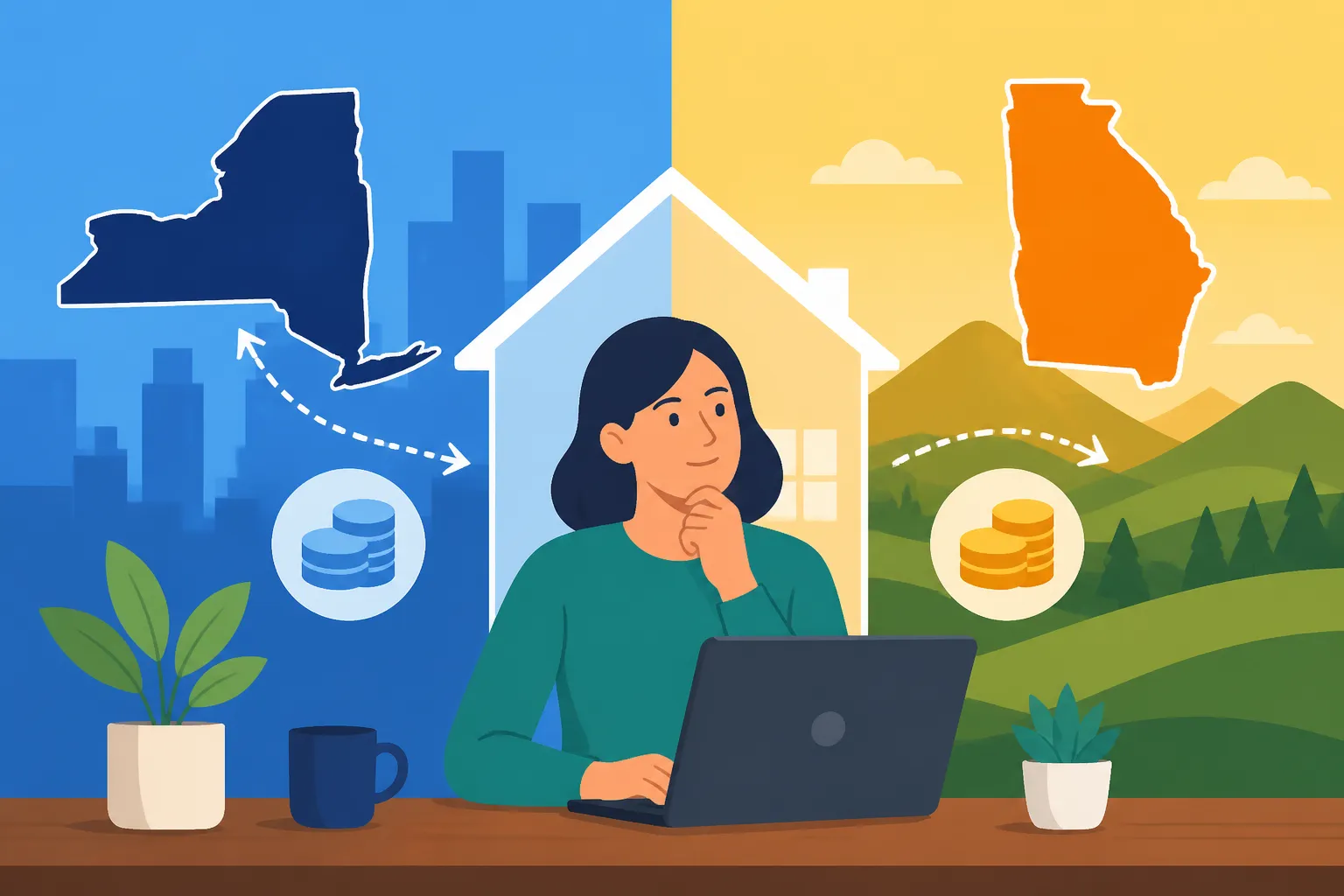
Let's break that down with an example. Imagine you live in New Jersey, a state with its own income tax. You work for a company whose main office is in New York City. Before the pandemic, you commuted daily, and New York taxed your income earned there. Now, you work from your home in New Jersey 100% of the time. You might think, "Great, I'll only pay New Jersey taxes!" But if New York applies its "Convenience of the Employer" rule, and your employer allows you to work from New Jersey simply for your convenience (not because the job requires you to be outside New York), New York will still consider your income sourced to New York and tax it. This means you could end up paying tax to New York and New Jersey on the same income. In such a scenario, you'd want to understand the specifics of New York Convenience Rule & Remote Work. While many states offer a credit for taxes paid to another state to prevent true double taxation, the Convenience Rule can still mean you're paying higher taxes overall if your "home" state has a lower tax rate than your "employer's" state.
Navigating Multi-State Tax Scenarios for Remote Workers
The reality of remote work often means you're crossing state lines, at least virtually, and this brings a host of different tax scenarios into play. It's crucial to understand which scenario applies to you so you can plan accordingly.
Working in a No-Income-Tax State
One of the big draws of remote work for many is the idea of relocating to a state with no state income tax, like Florida, Texas, or Nevada. The dream is to earn a high salary while avoiding that state income tax bite. While this can absolutely be a savvy move, it's not always a straightforward path, especially if your employer is based in a state that does have an income tax.
If you genuinely establish domicile in a no-income-tax state, sever all ties with your previous high-tax state, and your employer doesn't fall under a "convenience of the employer" rule, then yes, your wages may largely escape state income tax. This is often the case if your employer is also located in a no-income-tax state, or if they have a physical presence (a "nexus") in your remote work state, allowing them to legally source your income there. However, if your company is in, say, California, and you move to Texas to work remotely, California will generally still want to tax your income unless you can prove that your work activities are not solely for your convenience. This is why properly establishing residency, as detailed in guides like How to Change Your State Residency for Taxes, is so critical. Tools like SmartAsset's tax calculators or financial advisors can help you model these scenarios.
States with Reciprocity Agreements
To alleviate some of the burdens of multi-state taxation, several states have entered into "reciprocity agreements." These are essentially pacts between states that say, "Hey, if you live in our state but work in your state, you only have to pay income tax to your state of residence." This can be a huge simplification!
For example, if you live in Pennsylvania but work in Ohio, typically Ohio would want to tax your income earned there. However, because Pennsylvania and Ohio have a reciprocity agreement, your employer would generally withhold Pennsylvania income tax, and you wouldn't owe Ohio any tax on those wages. It means less paperwork and no need to file a non-resident return in the work state. There are numerous State Reciprocity Agreements Explained that streamline the process for commuters and remote workers in bordering states. Always check if your state of residence and your employer's state have one of these agreements, as it can save you a lot of hassle. TurboTax and H&R Block often incorporate these rules into their software, making filing easier.
Filing as a Non-Resident
Even with reciprocity agreements, many remote workers will find themselves needing to file a non-resident tax return in the state where their employer is located, or where some portion of their income is considered sourced. This is particularly true if your employer is in a state with an income tax, and you live in a different state with an income tax, and there's no reciprocity.
In this scenario, the work state will tax the income you "earned" within its borders (even if virtually), and your home state will tax all your income. To prevent you from being taxed twice on the same income, your home state will usually offer a "credit for taxes paid to another state." This credit effectively reduces your home state tax liability by the amount of tax you paid to the non-resident state, up to the amount of tax your home state would have charged on that income. It's not a dollar-for-dollar refund, but it prevents true double taxation. This process is detailed further in our article on Nonresident State Tax Return Guide. It requires careful attention to detail to ensure you properly allocate income to each state and claim the correct credits.
Consider someone living in New Jersey but working for a company in New York City. As discussed with the "Convenience Rule," New York might tax their full income. New Jersey would also tax their full income as a resident. However, New Jersey would then offer a credit for the taxes paid to New York on that New York-sourced income. It can feel like a lot of extra steps, but it’s essential to avoid penalties and potential audits.
Withholding and Estimated Taxes for Remote Workers
Once you understand the residency and sourcing rules, the next big step is making sure you're actually paying those taxes throughout the year. For most W-2 employees, this happens automatically through payroll withholding. But for remote workers in multi-state situations, or those who transition to contractor roles, it might require a bit more proactive management.
Adjusting Your Withholding (Form W-4)
If you're a W-2 employee working remotely, your employer should generally be withholding state income tax based on your declared state of residence and where your income is sourced. However, if your remote work situation has changed, or you've moved states, you must update your Form W-4 with your employer.
Your W-4 tells your employer how much federal income tax to withhold from your paycheck. For state taxes, there's usually a similar state-specific form (sometimes just called a state W-4 or equivalent) that you'll need to fill out. If you've moved from California to a no-income-tax state, for example, you'd want to ensure your employer is no longer withholding California income tax. If you work for a company in a "convenience rule" state like New York and live in New Jersey, you might need to have New York tax withheld, and also adjust your New Jersey withholding to account for the expected credit. It's a dance, and getting it wrong can mean a big tax bill or a surprisingly small refund come tax season. Always communicate clearly with your HR or payroll department about your updated residency and work location.
Paying Estimated Taxes
For some remote workers, especially those who transition to independent contractor roles (1099 workers) or those with complex multi-state income streams, relying solely on employer withholding might not be enough, or even possible. In these cases, you might be required to pay state estimated taxes throughout the year.
Estimated taxes are payments made directly to the state tax authority (and the IRS for federal taxes) to cover your tax liability for income not subject to withholding. This is common for freelancers, small business owners, and those with significant income from investments. If you expect to owe more than a certain amount (often $500 or $1,000, depending on the state) in state taxes for the year, you're generally required to pay these taxes in quarterly installments. Missing these payments or underpaying can result in penalties. Our guide on State Estimated Tax Requirements provides a comprehensive overview of how this works across different states. Many tax software programs like TurboTax can help you calculate and even make these estimated payments, but it requires diligent tracking of your income and expenses.
Practical Tips and Avoiding Pitfalls
Navigating the complexities of remote work and state taxes can be daunting, but with a strategic approach, you can minimize surprises and ensure you're compliant.
Documentation is Key
When it comes to state tax residency, the burden of proof is often on you. States, especially those with high income taxes that you might be trying to leave, are notoriously aggressive in auditing former residents. They want to ensure you truly cut ties. This means meticulous record-keeping is not just a good idea, it's absolutely essential.
You'll want to keep records of everything that supports your claim of domicile in your new state:
- Physical presence: Travel logs, utility bills, receipts for local purchases, gym memberships, doctor's appointments.
- Voter registration and driver's license: Updated to your new state.
- Bank accounts and financial statements: Showing activity in your new location.
- Vehicle registration: Updated.
- Real estate: Lease agreements or property deeds in your new state, and proof of sale or rental of any property in your old state.
- Family ties: School enrollment for children, where your spouse lives.
- Social connections: Memberships to local clubs, religious organizations.
The more evidence you have that you've truly established your life in one state and severed ties with another, the stronger your position will be in the event of an audit. Some states, like California, even have specific "safe harbor" rules (though these are often complex) that detail exactly what they expect to see. This extensive record-keeping will also be invaluable if you find yourself needing to file Filing Taxes in Multiple States.
Seeking Professional Guidance
While this guide aims to provide a clear understanding, state tax laws are incredibly nuanced and can change. What applies to someone working for a small startup in Delaware might be very different for an employee of a large corporation with multiple offices.
If your situation is complex—you split time between states, have significant income, move mid-year, or your employer is based in a "convenience rule" state—it's highly recommended to consult with a qualified tax professional. An enrolled agent or a CPA specializing in multi-state taxation can analyze your specific circumstances, advise on the best course of action, and help ensure you're compliant. They can also help you understand how to properly calculate and claim a Credit for Taxes Paid to Another State. Firms like H&R Block or local CPAs often have specialists in this area. It's an investment that can save you a lot of money and stress in the long run. Even for simpler scenarios, using reputable tax software like TurboTax can guide you through the process, but for truly complex situations, human expertise is often invaluable.
Here's a quick overview of states with "Convenience of the Employer" rules or particularly strict remote work tax interpretations, as these are often the trickiest for remote workers:
| State of Employer's Nexus | Remote Work Tax Rule | Common Scenario | Implications for Remote Workers |
|---|---|---|---|
| New York | Convenience of the Employer | Employee lives in NJ, works remotely for a NYC-based company. | NY taxes the income unless the employer requires the employee to work from home for a bona fide business reason. Employee may owe NJ tax too, but typically gets a credit for taxes paid to NY. See New York Convenience Rule & Remote Work. |
| Pennsylvania | Convenience of the Employer | Employee lives in DE, works remotely for a Philadelphia-based company. | PA taxes the income unless employer necessity dictates out-of-state work. Similar to NY, may face dual taxation issues without careful planning. Note: Philadelphia also has its own wage tax, which can add another layer. |
| Delaware | Convenience of the Employer | Employee lives in MD, works remotely for a DE-based company. | DE treats income as DE-sourced unless business necessity. Maryland residents would likely claim a credit for DE taxes paid. |
| Nebraska | Convenience of the Employer | Employee lives in IA, works remotely for a NE-based company. | NE taxes income unless required out-of-state work. Iowa residents would claim a credit. |
| Connecticut | Convenience of the Employer (similar approach) | Employee lives in MA, works remotely for a CT-based company. | CT generally considers income sourced to CT if the job is for a CT employer, even if performed remotely, unless certain conditions are met. |
| Arkansas | Convenience of the Employer (similar approach) | Employee lives in MO, works remotely for an AR-based company. | AR taxes income sourced from an AR employer unless specific business necessity. |
| Alabama | Taxable income based on location where services are performed (no convenience rule) | Employee lives in AL, works remotely for a GA-based company. | AL would tax as resident. GA would tax based on where services are performed (out-of-state). AL offers credit for GA taxes. Simpler than convenience rule states generally. |
| California | Source-based taxation (no convenience rule, but strict residency) | Employee moves from CA to NV, works remotely for CA company. | If truly a non-resident, CA only taxes CA-sourced income. Proving non-residency to CA can be very challenging; they audit aggressively. See How to Avoid California Residency for Taxes. |
This table provides a high-level view. Each state's rules are incredibly detailed, and specific circumstances can greatly alter your tax liability. Always consult official state tax department guidelines or a tax professional for personalized advice.
Disclaimer
The information provided in this article is for general informational purposes only and does not constitute tax or legal advice. Tax laws are complex and subject to change. It is crucial to consult with a qualified tax professional or financial advisor for advice tailored to your specific situation.