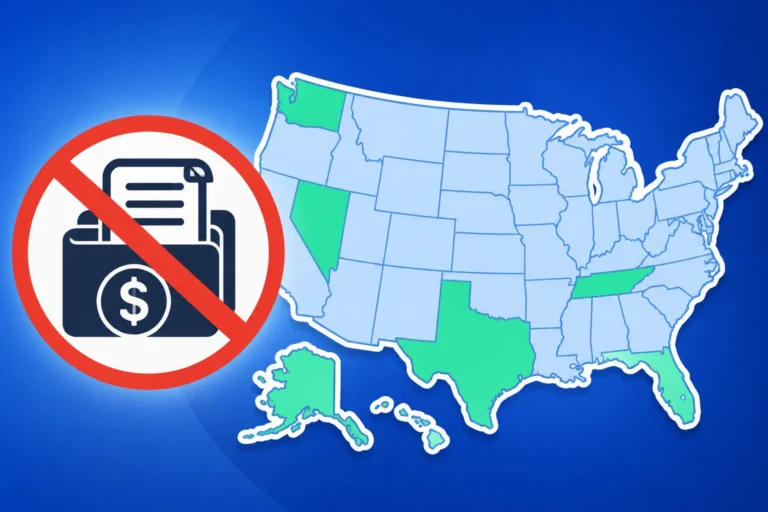
529 Tax Parity States Explained
Saving for college can feel like a labyrinth, especially when you start digging into the nitty-gritty of tax benefits. Many folks know about 529 college savings plans and their fantastic federal tax advantages, but the state-specific benefits can be a real head-scratcher. Understanding if your state offers "529 tax parity" can be the key to unlocking significant savings, giving you more flexibility and potentially more money growing for your child's future education. This guide is going to break down exactly what 529 tax parity means, which states offer it, and how you can navigate these rules to make the best financial decisions for your family.
Understanding the Basics of 529 Plans
Before we dive deep into the fascinating world of state tax parity, let's just quickly get on the same page about what a 529 plan actually is. Think of it as a special kind of investment account designed specifically for educational expenses. It’s got some unique perks that make it a powerhouse for college savings.
What is a 529 Plan?
At its heart, a 529 plan is a tax-advantaged savings and investment plan sponsored by states, state agencies, or educational institutions. It's designed to help families save for future qualified education expenses, which can range from tuition, fees, and books to room and board at eligible colleges, universities, and even K-12 private schools in some cases. The money you contribute is typically invested in various portfolios, much like a 401(k) or IRA, and it grows over time.
The real magic happens with the tax benefits. While your contributions aren't deductible at the federal level, the money grows tax-free, and withdrawals are also tax-free as long as they're used for those qualified education expenses. This means all that compounding interest and investment gains aren't chipped away by Uncle Sam, which can make a huge difference over many years of saving. It's a powerful tool, and understanding its nuances, especially at the state level, is critical.
The Federal Tax Angle
From a federal perspective, 529 plans are pretty straightforward and universally beneficial. You put money in after-tax, meaning you don't get a federal deduction for your contributions. However, the true federal advantage comes from the tax-free growth and tax-free withdrawals for qualified educational expenses. This means that if you invest $10,000 and it grows to $15,000, that $5,000 in earnings is never taxed, provided it's spent on college costs.
There are also federal gift tax benefits to consider. Contributions to a 529 plan are considered completed gifts, which means they're removed from your taxable estate. You can contribute a significant amount each year without triggering federal gift tax (currently up to $18,000 per individual, or $36,000 for married couples, for 2024, with the option to front-load five years' worth of contributions at once). This makes 529 plans particularly attractive for grandparents or high-net-worth individuals looking to pass on wealth tax-efficiently.
The State Tax Benefit Puzzle
Now, here's where things get interesting, and often, a little complicated. While the federal tax treatment of 529 plans is consistent across the board, how states treat these plans varies wildly. This is the "puzzle" that leads us directly to the concept of tax parity. Some states offer income tax deductions or credits for contributions to 529 plans, which can be a huge boost to your savings efforts. This is a direct incentive from your state government to encourage you to save for college.
However, many states put a condition on this benefit: they might only give you that valuable tax break if you contribute to their own state-sponsored 529 plan. This means if you live in New York, you might only get a state income tax deduction if you contribute to the New York's 529 College Savings Program. If you instead choose, say, Virginia's plan, you'd miss out on that specific state deduction. This is where the concept of "parity" comes into play, deciding whether your choice of plan is limited by state lines or open to any plan nationwide.
What Exactly is 529 Tax Parity?
The term "529 tax parity" might sound like fancy tax jargon, but it's actually a pretty simple, yet incredibly important, concept for anyone looking to save for college. It directly impacts your flexibility and potential tax savings.
Defining "Parity" in 529 Contributions
When a state offers 529 tax parity, it means that they give their residents a state income tax deduction or credit for contributions to any state's 529 plan, not just their own. In other words, if you live in a parity state, you are treated equally whether you contribute to your home state's 529 plan or an out-of-state 529 plan. The state income tax break is available regardless of which state's plan you choose.
For example, if you live in a state like Arizona, and Arizona offers a deduction for 529 contributions, you would receive that same deduction whether you put your money into Arizona's own plan or into, say, the Fidelity Arizona College Savings Plan (which technically uses the Arizona plan), or even if you chose to contribute to the New Hampshire UNIQUE College Investing Plan. This freedom allows you to shop around for the best plan based on investment options, fees, and performance, rather than being tied to your home state's offering just to get the tax benefit. It removes a significant barrier to entry and encourages broader participation in 529 plans, recognizing that all college savings ultimately benefit the future workforce.
Why Some States Offer Parity
So, why do some states extend this generosity, while others keep their deductions exclusive to their own plans? It often comes down to differing philosophies and economic strategies. States that offer parity often aim to promote any college savings for their residents, rather than strictly promoting their own state-managed plan. They understand that fostering an educated populace is beneficial regardless of where the money is housed. These states often recognize that restricting the deduction might dissuade some residents from utilizing 529 plans at all if their in-state plan isn't competitive or doesn't align with their investment preferences.
For parity states, the primary goal is usually to help their residents save for higher education, period. They're less concerned with attracting assets to their specific state plan and more focused on reducing the tax burden for families committed to educational funding. It also reflects a more open market approach, where residents aren't penalized for seeking out what they perceive as the best investment vehicle for their needs, even if it's managed by another state. This makes it a much more consumer-friendly environment.
The Non-Parity Trap
On the flip side, states that do not offer 529 tax parity typically restrict their state income tax deduction or credit to contributions made only to their own state-sponsored 529 plan. This is what we call the "non-parity trap." If you live in a non-parity state like New York or Illinois, you'll only get a state income tax break if you contribute to the New York 529 College Savings Program or the Illinois Bright Start/Bright Directions plan, respectively. If you choose an out-of-state plan, you forfeit that state income tax deduction.
This approach is usually driven by a desire to incentivize residents to keep their investments within the state's own financial ecosystem. By making their own plan the exclusive gateway to a state tax deduction, these states aim to attract more assets under management, which can benefit their state's financial institutions or fund educational initiatives. While it can offer a compelling incentive to use the in-state plan, it can also limit choices for residents who might find another state's plan more attractive due to lower fees, better investment performance, or a broader range of investment options. For instance, someone in a non-parity state might feel compelled to choose their state's plan even if a plan like the Vanguard 529 College Savings Plan (offered by Nevada) or the Utah Educational Savings Plan (UESP) offers more appealing features. This "trap" means you have a harder decision to make: prioritize the state tax deduction or prioritize potentially better plan features elsewhere.
States That Offer 529 Tax Parity (The Full List for 2026)
This is where the rubber meets the road! Knowing which states offer tax parity is crucial for maximizing your college savings strategy. These states give you the freedom to choose any 529 plan nationwide and still claim a state income tax deduction or credit for your contributions.
Comprehensive List and Specifics
As of our most current information, and projecting into 2026, here's a rundown of states that generally offer 529 tax parity. Keep in mind that tax laws are always subject to change, so it's wise to double-check with your state's Department of Revenue or a financial advisor for the very latest updates.
Here are the states that offer 529 tax parity for 2026, meaning you get a tax benefit regardless of which state's plan you contribute to:
| State | Deduction/Credit Type | Annual Maximum Deduction/Credit | Additional Details |
|---|---|---|---|
| Arizona | Deduction | $4,000 for single filers, $8,000 for married filing jointly | One of the most generous, allowing deductions for contributions to any state's 529 plan. This makes Arizona particularly attractive for savers who want maximum flexibility. |
| Arkansas | Deduction | $5,000 for single, $10,000 for married filing jointly | Contributions to any 529 plan qualify. This large deduction can significantly reduce taxable income for many families. |
| Kansas | Deduction | $3,000 for single filers, $6,000 for married filing jointly | A solid deduction for residents, regardless of the plan chosen. |
| Maine | Deduction | $500 for single filers, $1,000 for married filing jointly | While a smaller deduction, it still offers the parity advantage. |
| Minnesota | Credit or Deduction | Up to $500 credit (adjusted gross income limits apply), or $1,500 deduction for married filing jointly (higher AGI limits) | Unique in offering either a credit or a deduction depending on income, and it applies to any 529 plan. |
| Missouri | Deduction | $8,000 for single filers, $16,000 for married filing jointly | One of the highest deduction limits among parity states, providing substantial tax relief. |
| Montana | Deduction | $3,000 for single filers, $6,000 for married filing jointly | Another state that values flexibility for its residents' college savings. |
| New Mexico | Deduction | Unlimited | That's right, unlimited! New Mexico allows a full deduction for contributions to any 529 plan, making it extremely tax-friendly for college savers. |
| Ohio | Deduction | $4,000 per beneficiary per year (rollover allowed) | Ohio allows you to deduct up to $4,000 per beneficiary per year, with a carryforward provision for amounts over that. This applies to any 529. |
| Oregon | Tax Credit | Up to $150 credit for single, $300 for married filing jointly (income limits apply) | Offers a credit rather than a deduction, but still applies to contributions to any 529 plan. |
| Pennsylvania | Deduction | $18,000 for single, $36,000 for married filing jointly | This is an incredibly generous deduction for contributions to any 529 plan, making Pennsylvania a top choice for maximizing state tax benefits and flexibility. |
| Utah | Tax Credit | 5% of contributions, up to $1,140 for single filers and $2,280 for married filing jointly | Utah, home to the highly-rated UESP 529 plan, also extends a tax credit to residents for contributions to any plan. |
| West Virginia | Deduction | $50,000 for single, $100,000 for married filing jointly | One of the highest deduction limits in the nation, making it exceptionally attractive for large contributions to any 529 plan. |
| Wisconsin | Deduction | $3,860 per beneficiary (indexed annually) | Wisconsin provides a competitive deduction for contributions to any 529 plan, encouraging broad college savings. |
This table provides a snapshot, but always remember to check your specific state's Department of Revenue website for the most current legislation and any potential changes for 2026. These deductions can significantly lower your taxable income, and resources like SmartAsset can help you estimate your potential savings based on your income and contribution levels.
How Parity Benefits Savers
The benefits of 529 tax parity are huge, offering flexibility that non-parity states simply can't match. First and foremost, you get choice. In a parity state, you're not forced to pick your home state's 529 plan just to get a tax break. You can truly shop around, comparing plans from all 50 states (and the District of Columbia), and select the one that best fits your needs. This means you can evaluate factors like:
- Investment Options: Some plans offer a wider array of underlying investments, from age-based portfolios to individual fund choices. If your state's plan has limited or unappealing options, parity lets you look elsewhere.
- Fees and Expenses: Fees can eat into your returns over time. With parity, you can hunt for a plan with lower administrative fees, expense ratios, or even commission-free options.
- Performance: While past performance is no guarantee of future results, comparing track records of different plans can be a valid part of your decision-making process.
- Customer Service and Tools: Some plans, like the widely respected Utah Educational Savings Plan (UESP), are known for excellent customer service and user-friendly online tools. You can prioritize these features without sacrificing your state tax deduction.
This freedom allows you to make a more informed and potentially more profitable investment decision, knowing that your choice won't penalize you at tax time. It’s about empowering you, the saver, to find the best fit for your unique financial goals and risk tolerance.
Important Nuances and Limitations
Even in parity states, it's essential to be aware of the specific nuances and potential limitations that might apply to your 529 contributions and deductions. Not all parity is created equal, and understanding the fine print can prevent surprises.
One common nuance is the annual deduction limit. As you saw in the table above, states like Arizona and Missouri have generous limits, but they are limits nonetheless. If you contribute more than that cap in a single year, only the amount up to the limit will be deductible. Some states, like Ohio, allow you to carry forward excess contributions to future tax years, essentially letting you deduct larger contributions over several years. This is a fantastic feature if you plan on front-loading your 529 contributions.
Another consideration is income limitations for credits or deductions. While less common for 529 deductions, some state tax credits, like Oregon's or Minnesota's, might have adjusted gross income (AGI) thresholds. If your income is above a certain level, you might qualify for a smaller credit or no credit at all. Always check the specific income requirements for your state.
Finally, be mindful of rollover implications. If you roll over a 529 plan from one state's plan to another, some states might consider that a non-qualified withdrawal, or at least treat it differently than a direct contribution for deduction purposes. Generally, direct contributions are what qualify for the deduction. For instance, if you move from a parity state to a non-parity state, or vice-versa, your past deductions aren't usually affected, but your future contributions will be subject to the rules of your new resident state. It's a complex area, so using tax software like TurboTax can be incredibly helpful to ensure you're reporting everything correctly, especially if you're dealing with a mid-year move.
Navigating Non-Parity States: What to Do If Your State Doesn't Offer Parity
If you live in a state that doesn't offer 529 tax parity, don't despair! You still have excellent options for saving for college, but your strategy will need to be a bit more focused on your home state's plan if you want to reap those valuable state income tax benefits.
The In-State Plan Advantage
For residents of non-parity states, the most direct path to a state income tax deduction or credit is almost always through their own state's 529 plan. These states typically offer a deduction or credit solely for contributions made to their specific program. For example:
- New York residents can deduct up to $5,000 for single filers ($10,000 for married filing jointly) for contributions to the New York 529 College Savings Program. If they contribute to, say, the Fidelity Massachusetts plan, they get no New York state tax break. This is a strong incentive to stick with the home state plan. For more on this, check out our guide on New York 529 Deduction Limit.
- Illinois offers a generous deduction of up to $10,000 for single filers ($20,000 for married filing jointly) for contributions to its Bright Start or Bright Directions 529 plans. This is a significant tax break that can really encourage residents to use the state's programs. More details can be found in our post about the Illinois 529 Plan Tax Deduction.
- Indiana provides a substantial 20% tax credit on contributions up to $1,000 per year, exclusively for its CollegeChoice 529 Direct Savings Plan. This credit is worth $200 for every $1,000 contributed, which is a direct dollar-for-dollar reduction of your tax liability.
- Virginia allows deductions of up to $4,000 per account per year, with an unlimited carryforward, but only for contributions to the Virginia529 plans.
The advantage here is clear: you get a tangible reduction in your state income tax bill. This immediate savings can sometimes outweigh minor differences in fees or investment options compared to out-of-state plans. For many families, an upfront tax break is a powerful motivator, providing a guaranteed return on their contribution in the form of lower taxes. To see a full list of these deductions, refer to our comprehensive guide on 529 Plan Tax Deductions by State.
Weighing Your Options
If your state doesn't offer parity, you're faced with a decision: Do you choose your home state's 529 plan to get the state tax deduction, or do you opt for an out-of-state plan that might have lower fees, better investment performance, or more suitable investment choices, even if it means forfeiting the state tax break?
This isn't always an easy choice. To properly weigh your options, you'll need to do a little math. Calculate the value of your state tax deduction. For instance, if you're in a state with a 5% income tax rate and you get a deduction for $5,000, that's $250 in tax savings. Then, compare your state's plan with an out-of-state option. Look at the expense ratios, administrative fees, and overall investment performance. Could the out-of-state plan's potentially lower fees or higher returns generate more than $250 per year in additional growth?
Sometimes, the difference in fees or performance between a good in-state plan and a great out-of-state plan might be negligible, making the state tax deduction the clear winner. Other times, an in-state plan might have significantly higher fees or limited investment choices, making it worth considering an out-of-state plan despite losing the deduction. It’s a personalized calculation that depends on your state's specific deduction amount, your tax bracket, and the features of the plans you're comparing. Understanding How State Tax Brackets Work: Marginal vs Effective can help you calculate the true value of any deduction.
Strategies for Non-Parity State Residents
So, what are some smart strategies if you live in a non-parity state?
- Prioritize the In-State Deduction: For most people, if your state offers a decent income tax deduction for contributions to its own 529 plan, that's often the best starting point. The guaranteed reduction in your tax bill is a powerful incentive. Check your state's deduction limits (e.g., State 529 Deduction Limits 2026 (All States)) and try to contribute at least enough to maximize that deduction annually. This is a straightforward way to effectively lower your State Income Tax vs Federal Income Tax burden.
- Evaluate In-State Plan Competitiveness: Don't just blindly choose your state's plan. Take the time to evaluate its investment options, fees, and historical performance. Many state-sponsored plans are excellent and competitive, like the New York 529 plan (managed by Vanguard) or the Illinois Bright Start (managed by Union Bank & Trust). If your state's plan is good, there's little reason to look elsewhere.
- Consider Other Savings Vehicles: If your state offers no 529 tax deduction at all (some states, particularly those without a state income tax, fall into this category, as explored in States With No 529 Deduction), then you truly have complete freedom to choose any 529 plan nationwide based purely on its merits. In this scenario, you could also explore other college savings vehicles like Coverdell ESAs or custodial accounts (UGMA/UTMA), though 529 plans generally offer superior tax benefits and contribution limits.
- Seek Professional Advice: When in doubt, a qualified financial advisor can help you crunch the numbers and make an informed decision based on your unique financial situation and goals. They can help you understand How to Lower Your State Income Tax effectively.
Beyond Parity: Other State-Specific 529 Benefits
While tax parity and income tax deductions are significant, many states sweeten the deal even further with additional incentives to encourage college savings. These can come in various forms and are definitely worth investigating.
Matching Grant Programs and Scholarships
Some states offer unique matching grant programs or scholarships tied to their 529 plans, acting as an extra boost to your savings. These aren't deductions or credits on your income tax, but rather direct contributions from the state to your 529 account, often based on income eligibility or initial contributions.
For example, states like Rhode Island, Vermont, and Pennsylvania have offered various matching grant programs. Rhode Island's CollegeBound Saver program, for instance, has had programs that match a portion of initial contributions for lower-income families. Similarly, states might offer scholarship incentives, where simply having an account open and contributing regularly makes a child eligible for state-sponsored scholarships. These programs are designed to particularly help families who might otherwise struggle to start saving for college, providing a powerful incentive for early and consistent contributions. Always check your state's 529 program website to see if such programs are currently available, as they can change annually.
Special State-Specific Deductions or Credits
Beyond the standard contribution deductions, some states have specific provisions or additional credits that can further enhance the value of their 529 plans. These often address particular educational needs or demographic groups.
A notable example is the ability in some states to use 529 funds for K-12 private school tuition expenses. While this is a federal allowance, some states may offer additional deductions or credits for these specific withdrawals or contributions used for K-12 tuition. For instance, New York allows up to $10,000 per student per year in K-12 tuition expenses to be considered qualified withdrawals.
Another special benefit might include enhanced deductions for specific types of contributors (e.g., grandparents) or for beneficiaries meeting certain criteria. Some states may even offer tax-free treatment for distributions that are otherwise non-qualified for federal purposes, but meet a state-specific definition of an educational expense. These state-level unique benefits are less common than the standard deduction, but they underscore the importance of looking closely at your own state's 529 plan details, especially if it's a non-parity state where you're already incentivized to use its plan. You might be surprised by the extra perks they offer.
Choosing the Right 529 Plan: A Decision Tree
Navigating the world of 529 plans, especially with all the state-specific tax rules, can feel like a big decision. But by following a logical "decision tree," you can simplify the process and confidently choose the best plan for your family's needs.
Start with Your Home State's Rules
The very first step in choosing a 529 plan should always be to investigate your own state's rules and benefits. This is the cornerstone of your decision-making process because your state residency dictates the state income tax benefits you might be eligible for.
Ask yourself these critical questions:
- Does my state offer an income tax deduction or credit for 529 contributions? If your state is one of the few that doesn't offer any state income tax benefit (like states with no income tax, or those that simply don't have a specific deduction), then your decision process becomes much simpler: you have full flexibility to choose any 529 plan nationwide based purely on its investment features and fees.
- If my state offers a tax benefit, is it a "parity" state or a "non-parity" state?
- Parity State: If your state offers tax parity, congratulations! You get a state income tax deduction or credit regardless of which state's 529 plan you contribute to. This means you can confidently move to the next step and compare plans based on their merits without worrying about losing a tax break.
- Non-Parity State: If your state is a non-parity state, meaning the deduction or credit is only for contributions to its own state-sponsored 529 plan, then you have a strategic choice to make. You'll need to seriously consider if the value of that state tax deduction outweighs any perceived advantages of an out-of-state plan. For most people, the guaranteed tax savings will be a significant factor.
Understanding these initial state-specific rules immediately narrows down your options or clarifies your priorities.
Compare Plan Features
Once you understand your state's tax landscape, you can start comparing the actual features of various 529 plans. If you're in a parity state, you can look at all 50+ plans. If you're in a non-parity state, you'll likely focus on your home state's plan, but it's still good practice to compare it against a few highly-rated out-of-state plans just to be sure you're not missing a glaring opportunity.
Here's what to look for when comparing plans:
- Investment Options: Do the plans offer age-based portfolios (which automatically adjust investments as your child gets closer to college) or static portfolios (where you choose the asset allocation)? What are the underlying funds? Are they passively managed index funds or actively managed funds? Look for diversity and options that align with your risk tolerance.
- Fees and Expenses: This is crucial. Compare expense ratios, program management fees, and any annual maintenance fees. Even small differences in fees can add up to thousands of dollars over 10-18 years of saving. Look for low-cost, direct-sold plans whenever possible, as these typically have fewer fees than advisor-sold plans.
- Past Performance: While not indicative of future results, looking at how a plan's portfolios have performed historically can give you an idea of their management effectiveness.
- Customer Service and Ease of Use: Is the plan's website user-friendly? Do they have good customer support? Can you easily make contributions, change investment options, or update beneficiary information? These practical aspects can make a big difference in your experience.
There are many resources available online that provide detailed comparisons of 529 plans, making this step much easier than it used to be.
Utilizing Financial Tools
Finally, don't forget to leverage the fantastic financial tools and resources available to help you make this important decision. Websites like SmartAsset offer comprehensive 529 plan comparison tools that allow you to filter plans by state, fees, and performance. They can also help you understand the tax implications specific to your location and income.
Tax software like TurboTax can also be invaluable, especially when it comes to accurately claiming any state income tax deductions or credits for your 529 contributions. They guide you step-by-step through the filing process and help ensure you're taking advantage of every tax benefit you're entitled to. These platforms often incorporate the latest state tax laws and can help you navigate complex scenarios, such as filing How to File a Part-Year Resident Return if you've moved states recently. Using these tools can save you time, reduce stress, and potentially help you avoid costly mistakes, giving you confidence in your college savings strategy.
Disclaimer
Please note that tax laws, including those related to 529 plans, are subject to change by federal and state legislatures. The information provided in this article is for general informational purposes only and does not constitute tax, legal, or financial advice. It is essential to consult with a qualified tax professional or financial advisor for advice tailored to your specific situation and to verify the most current laws and regulations that apply to you.