Refundable vs Nonrefundable State EITC
Navigating the world of state income taxes can feel like deciphering a secret code, especially when you start looking at tax credits. It's often confusing to figure out how these credits truly impact your final tax bill, and a common question revolves around whether a state's Earned Income Tax Credit (EITC) is "refundable" or "nonrefundable." This guide is here to untangle that complexity, helping you understand the crucial distinction between these two types of credits and how they can significantly affect your household finances.
Understanding the Earned Income Tax Credit EITC at a State Level
The Earned Income Tax Credit (EITC) is one of the most powerful tools available to help low-to-moderate-income working individuals and families. While many people are familiar with the federal EITC, fewer realize that a significant number of states have adopted their own versions, each with unique rules and impacts. This can add another layer of complexity to tax season, but it also presents a valuable opportunity for eligible taxpayers.
The Federal EITC Foundation
Let's start with the basics: the federal EITC. This credit was established to offset the burden of Social Security and Medicare taxes for working individuals and to encourage work. It's not a deduction, which merely reduces your taxable income; instead, it's a credit, which directly reduces the amount of tax you owe, dollar for dollar. The amount of credit you can receive depends on several factors, including your income, marital status, and the number of qualifying children you have. Generally, the more children you have (up to three), and the lower your income (within certain thresholds), the larger your potential EITC.
For example, a single parent with two children earning a modest income might qualify for a substantial federal EITC, while a single individual without children would receive a much smaller credit, if any, due to stricter income limits. Eligibility rules are fairly detailed, considering factors like adjusted gross income (AGI), investment income limits, and residency. It's a credit designed to put money back into the pockets of those who need it most, helping them cover essential living expenses and contributing to their financial stability.
Why States Adopt Their Own EITC
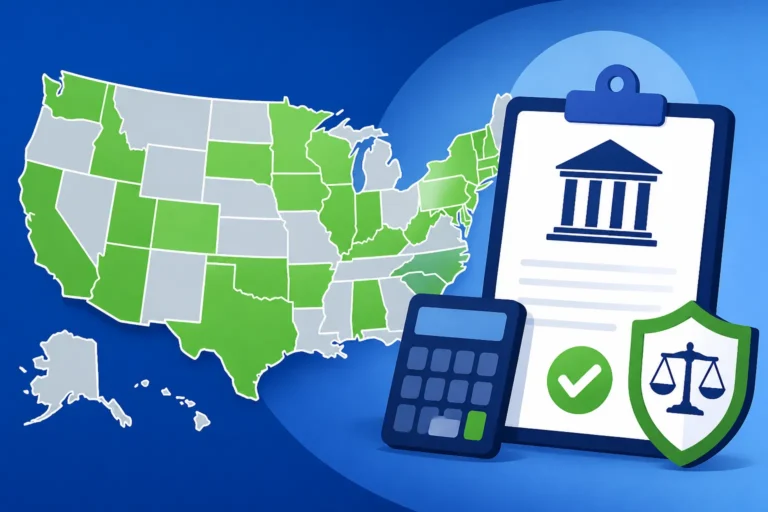
Given the federal EITC's success in lifting millions out of poverty and stimulating local economies, it’s not surprising that many states have decided to implement their own versions. As of early 2024, nearly 30 states, along with Washington D.C., Guam, and Puerto Rico, offer their own state-level EITC. The motivations behind these state initiatives are diverse but often revolve around similar goals: reducing poverty, addressing income inequality, and providing an economic boost to working families within their borders.
These state-level credits often mirror the federal EITC's structure, but with critical distinctions. Some states tie their credit directly to a percentage of the federal EITC, making it relatively straightforward to calculate. For instance, a state might offer an EITC equal to 20% of the federal credit you qualify for. Other states introduce their own unique income thresholds, credit percentages, or even specific eligibility criteria that diverge from federal guidelines. This localized approach allows states to tailor the EITC to their specific economic conditions and policy priorities, further demonstrating their commitment to supporting their lower- and middle-income residents.
The Core Difference: Refundable vs. Nonrefundable Credits
Understanding the distinction between refundable and nonrefundable tax credits is absolutely paramount, especially when it comes to state-level Earned Income Tax Credits. This one difference can dramatically change whether you receive money back in your pocket or simply reduce your tax bill to zero. It’s a concept that often trips people up, but it’s really quite simple once you grasp the fundamental mechanics.
What is a Refundable Tax Credit?
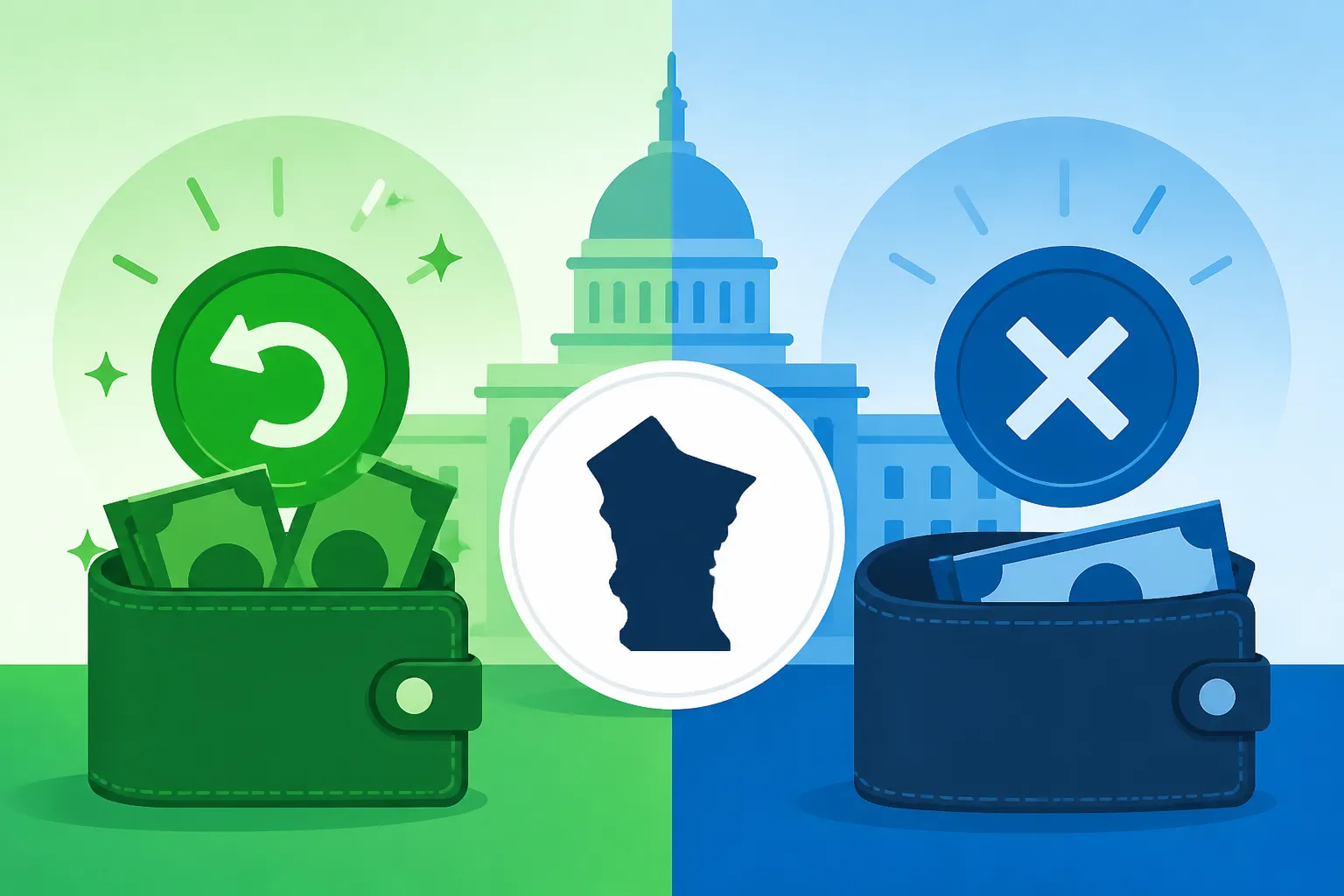
A refundable tax credit is the holy grail for many taxpayers, especially those with lower incomes, because it means you can potentially receive money back even if you don't owe any taxes. Let's break that down. If your refundable credit amount is greater than your total tax liability, the government (or state, in this case) will send you the difference as a tax refund. It's like having a coupon at the store that's worth more than your purchase – you don't just get the item for free, you get cash back!
Imagine this scenario: you're a single parent in California, and after all your calculations, you find you owe $500 in state income tax for the year. However, based on your income and family size, you qualify for a $1,200 refundable state EITC. With a refundable credit, that $1,200 credit first wipes out your $500 tax liability, bringing it to $0. But because the credit is refundable, you then get the remaining $700 ($1,200 – $500) sent directly to you as a refund. This kind of credit provides a direct financial infusion for families, helping with everything from groceries to utility bills. This is a critical distinction, making refundable credits a significant form of direct financial aid for eligible working families. For further reading, explore more about State Earned Income Tax Credits (EITC) Guide.
What is a Nonrefundable Tax Credit?
Now, let's contrast that with a nonrefundable tax credit. While still beneficial, a nonrefundable credit operates differently. These credits can reduce your tax liability down to zero, but they cannot generate a refund beyond that. If your nonrefundable credit exceeds the amount of tax you owe, the excess credit simply vanishes – you don't get that extra amount back. Think of it as a coupon that can only cover the cost of your purchase, but if the coupon is worth more than the item, you don't get cash back for the difference.
Consider a family in a state like Ohio, which currently offers a nonrefundable EITC. Let's say this family owes $700 in state income tax, and they qualify for a $1,000 nonrefundable EITC. The $1,000 credit will reduce their tax liability from $700 down to $0. That's fantastic – they no longer owe state taxes! However, the remaining $300 of the credit ($1,000 – $700) is simply lost. They won't receive that $300 as a refund because the credit is nonrefundable. While still a valuable reduction in tax burden, it doesn't provide the same direct cash benefit as a refundable credit. It’s important to know how these nuances work to accurately gauge your overall tax obligation and potential refund.
State EITC Landscape: A Tale of Two Credit Types
The diverse landscape of state EITCs truly highlights the individual approaches states take to support their working residents. You'll find a patchwork quilt of different percentages, eligibility rules, and, most importantly, whether the credit is refundable or nonrefundable. This variation means that two families with identical income and family structures living in different states could see vastly different outcomes on their state tax returns.
States Offering Refundable EITCs
Many states have embraced the refundable model, recognizing its powerful impact on low-income families. States like California, New York, Maryland, and Minnesota are prominent examples that offer fully refundable EITCs. These states often calculate their EITC as a percentage of the federal EITC amount a taxpayer qualifies for. For instance, California's EITC, known as the CalEITC, can be a significant boost for eligible residents, and it's fully refundable, meaning any amount exceeding your tax liability comes back to you as a refund. This policy aligns with the state's broader efforts to alleviate poverty and support its workforce.
New York's EITC, similarly, is largely refundable and tied to a percentage of the federal credit. This means a family in Brooklyn who qualifies for a federal EITC could see an additional substantial sum in their state refund, helping them manage the high cost of living in the region. Minnesota also provides a robust refundable EITC, often seen as a critical component of its social safety net. These refundable credits are often championed by advocates as an effective anti-poverty measure, as they provide tangible financial relief directly to those who need it most, empowering them to spend that money in their local communities and fostering economic growth.
States with Nonrefundable EITCs
On the other side of the coin, several states opt for a nonrefundable EITC. While still beneficial, these credits offer a more limited impact on a taxpayer's finances compared to their refundable counterparts. For example, Ohio has a nonrefundable EITC. This means that while eligible families in Columbus or Cleveland might see their state income tax bill reduced to zero, they won't receive a cash refund if the credit amount exceeds their tax liability. The benefit, though real, doesn't extend to providing additional income.
Similarly, states like Georgia have historically offered a nonrefundable EITC, calculated as a percentage of the federal credit. This approach ensures that the credit primarily serves to offset existing tax obligations rather than directly injecting cash into households that may already have zero or negative tax liability after other deductions and credits. The effect is still a reduction in tax burden, which is certainly welcome, but it underscores the importance of understanding this refundable/nonrefundable distinction when you're estimating your potential tax refund. Always check the specific rules for your state, as these can be complex. You might find resources on websites like SmartAsset helpful for looking up state-specific tax details.
States with Hybrid or No EITC
The state EITC landscape also includes some hybrid models and, of course, states that simply don't have an income tax or a state-level EITC. For example, some states might have a partially refundable credit or different rules for different income tiers. The policy is dynamic, with states frequently reviewing and adjusting their EITC programs. A great example of this evolution is how states like Missouri and Kansas have recently expanded their EITCs or transitioned them from nonrefundable to fully refundable, significantly increasing the benefit for their working families. This trend reflects a growing recognition among policymakers of the power of refundable credits.
Then there are states that don't have a state income tax at all, such as Florida, Texas, or Washington. In these states, the concept of a state EITC is moot, as there's no state income tax to apply it against. While these states may appeal to some because of their lack of income tax, residents won't benefit from a state-level EITC. It’s a trade-off that factors into the overall tax friendliness of a state. Understanding this full spectrum, from fully refundable EITCs to no EITC at all, is crucial for anyone trying to get a complete picture of their state tax situation. For more detailed information on specific state tax policies and changes, keeping an eye on resources about State Income Tax Cuts & Changes for 2026 is highly recommended.
Here's a quick comparison of how a few states approach their EITC, illustrating the refundable vs. nonrefundable difference:
| State | State EITC Status | Calculation (often % of federal EITC) | Refundable? | Typical Impact Example |
|---|---|---|---|---|
| California | Robust | Up to 85% of federal EITC | Yes | Family with $500 tax liability, $1500 CalEITC. Tax bill drops to $0, receives $1000 refund. |
| New York | Substantial | 30% to 100% of federal EITC | Mostly Yes | Family with $300 tax liability, $800 NYS EITC. Tax bill drops to $0, receives $500 refund. |
| Ohio | Moderate | 30% of federal EITC | No | Family with $700 tax liability, $1000 Ohio EITC. Tax bill drops to $0. No additional refund. |
| Georgia | Moderate | 10% of federal EITC | No | Family with $200 tax liability, $300 Georgia EITC. Tax bill drops to $0. No additional refund. |
| Maryland | Generous | 20% to 100% of federal EITC | Yes | Family with $400 tax liability, $1200 MD EITC. Tax bill drops to $0, receives $800 refund. |
| Washington | N/A | No state income tax | N/A | No state income tax, thus no state EITC to claim. |
Note: Percentages and rules can change year to year. Always refer to the most current state tax guidelines.
How State EITCs Impact Your Wallet
The practical implications of whether your state's EITC is refundable or nonrefundable cannot be overstated. For many families, these credits represent a significant portion of their annual financial wiggle room, influencing everything from budgeting for essentials to saving for the future. Understanding how to claim them and their real-world impact is key to maximizing your tax benefits.
Maximizing Your Refund Potential
When a state offers a refundable EITC, it essentially means the state is committed to ensuring that qualifying low-to-moderate-income working families receive a tangible cash benefit, regardless of their final tax liability. This can be a game-changer. Imagine a family struggling to make ends meet, where an extra $500 or $1,000 refund can mean the difference between paying rent on time or falling behind, or affording necessary school supplies for their children. Refundable credits are designed to inject money directly into these households, stimulating local economies as those funds are typically spent on immediate needs.
This is where diligent tax preparation becomes crucial. Using reliable tax software like TurboTax or consulting with a qualified tax professional can help ensure that you identify and claim all eligible credits, including your state's EITC. These tools are designed to walk you through the process, considering both federal and state regulations. Knowing that your state offers a refundable credit can also influence your financial planning throughout the year, as you might anticipate a larger refund than you would in a state with only nonrefundable credits. It empowers individuals and families to better manage their finances by providing a predictable source of financial relief. For a broader perspective on how taxes affect overall financial well-being, considering your State Tax Burden by State 2026 can provide valuable insights.
Understanding Eligibility and Claiming the Credit
While state EITCs are incredibly beneficial, they aren't automatic. You generally need to meet specific eligibility criteria and actively claim the credit on your state tax return. Most state EITCs largely mirror federal requirements: you must have earned income, fall within certain income thresholds, and meet specific residency requirements. Having qualifying children often significantly increases the credit amount, but childless workers can also qualify for a smaller credit. Your filing status also plays a role, with married filing separately often having different rules.
To claim the credit, you'll typically need to file a state income tax return, even if your income is so low that you wouldn't otherwise be required to. The process usually involves completing a specific form or schedule provided by your state's department of revenue, which will prompt you to input information about your federal EITC amount, income, and dependents. It's vital to gather all your income documentation, like W-2s and 1099s, and have accurate information about your children's Social Security numbers. If you're wondering Do I Need to File State Taxes? even with low income, the answer is often yes, especially to claim refundable credits like the EITC. Many states offer free e-filing options, and tax software can guide you through the process, but always double-check the accuracy to avoid delays or audits.
Navigating the Nuances and Future Trends
The world of state income tax is rarely static. What might be true for one tax year could shift dramatically in the next, and state EITCs are no exception. Keeping an eye on these changes and understanding the broader implications is essential for informed financial planning.
The Dynamic Nature of State Tax Policy
State legislatures are constantly evaluating and adjusting their tax codes, and the EITC is a popular target for policy reform. We've seen a clear trend in recent years where states are not only adopting new EITCs but also expanding existing ones, making them more generous, or, crucially, converting nonrefundable credits into refundable ones. This is a reflection of ongoing political debates about how best to support working families, reduce poverty, and stimulate local economies. For instance, a state might increase the percentage of the federal EITC it offers, or it might expand the income thresholds to allow more families to qualify.
These changes can have a substantial impact on your household budget. A shift from a nonrefundable to a refundable EITC could mean hundreds or even thousands of dollars in your pocket that you wouldn't have received before. Staying informed about these developments, perhaps through state tax agency websites or reputable financial news sources, is key. If you're trying to project your tax burden or potential refund, understanding these legislative dynamics is just as important as knowing the current rules. For an overarching view of how states are changing their tax structures, you might find details in articles about State Tax Cuts & Changes for 2026.
Broader Implications for State Economies
Beyond the immediate benefit to individual families, state EITCs, particularly refundable ones, have a ripple effect on the broader economy. When low-to-moderate-income families receive a cash infusion, they tend to spend it quickly on necessities like food, housing, and transportation. This immediate spending boosts local businesses, which in turn can lead to job creation and increased economic activity. It's often viewed as an efficient form of economic stimulus, as the money goes directly to those most likely to spend it.
Moreover, a strong state EITC can play a significant role in reducing child poverty rates and improving public health and educational outcomes for children in beneficiary families. By alleviating financial stress, these credits allow families to invest more in their children's well-being. This societal benefit, alongside the economic one, makes the state EITC a powerful policy tool. As states consider the overall Cost of Living vs Taxes by State, the presence and structure of an EITC can be a crucial factor in attracting and retaining a vibrant workforce, contributing to the state's long-term economic health and community stability.
Disclaimer
The information provided in this guide is for general informational purposes only and does not constitute financial, tax, or legal advice. Tax laws are complex and subject to change, and individual circumstances vary. Always consult with a qualified tax professional or financial advisor for advice tailored to your specific situation.