Do Any States Have a Child Tax Credit?
The rising cost of living, from groceries to gas, is a constant worry for families across the country. It often feels like you're playing a perpetual game of catch-up, and every little bit of financial relief can make a huge difference. One area where states are stepping up to help is through child tax credits, offering a much-needed boost to household budgets. This guide will walk you through which states currently offer these valuable credits, how they work, and what you need to know to potentially claim them.
Understanding State Child Tax Credits (CTCs)
When we talk about child tax credits, most people immediately think of the federal credit. And while that's certainly a big one, many states have decided to implement their own versions, recognizing that local families need tailored support. These state-level credits can significantly reduce your tax burden, and in some cases, even put money back in your pocket.
How State CTCs Differ from Federal
The federal Child Tax Credit (CTC) is a well-known benefit, currently offering up to $2,000 per qualifying child, with a portion of that being refundable for many families. It's a national program, so it applies to taxpayers across all 50 states (and D.C.). However, state child tax credits operate independently, which means they can vary wildly from one state to the next.
Think of it like this: the federal CTC is the main course, but state CTCs are like delicious side dishes that some states choose to offer. Some states might provide a credit that's a fixed amount per child, while others might tie it to a percentage of the federal credit. Eligibility requirements can also differ significantly. For instance, a state might have a lower income threshold for its credit than the federal program, or it might define a "qualifying child" differently (though this is less common). The key takeaway is that you can often claim both the federal and your state's child tax credit, potentially doubling up on that much-needed relief. Understanding these nuances is crucial because a credit in California might look very different from one in Minnesota, both in terms of the dollar amount and who can claim it.
Refundable vs. Non-Refundable Credits
One of the most critical distinctions you'll encounter with any tax credit, especially child tax credits, is whether it's "refundable" or "non-refundable." This technical-sounding difference has a massive impact on your wallet, particularly for lower-income families.
A non-refundable credit can reduce your tax liability down to zero, but no further. If the credit amount is more than the tax you owe, you won't get the difference back as a refund. For example, if you owe $500 in state taxes and qualify for a $700 non-refundable child tax credit, your tax liability becomes $0, but you won't receive the extra $200. These credits are still incredibly valuable because they directly reduce how much you owe, but they don't provide a cash payment if you have little or no tax liability.
On the flip side, a refundable credit is truly a game-changer. If a credit is refundable, and the credit amount exceeds your tax liability, the state will actually send you a check for the difference. Using the same example, if you owe $500 in state taxes and qualify for a $700 refundable child tax credit, your tax liability goes to $0, and you'll receive a $200 refund. This is why refundable credits are often seen as more impactful for low- and moderate-income families, as they can provide direct financial support even if those families don't owe much in taxes to begin with. Many states are moving towards making their child tax credits refundable to maximize their benefit to families most in need, mirroring some of the federal discussions around the expansion of the Child Tax Credit. You can learn more about how credits like the Earned Income Tax Credit work in this way by checking out our guide on Refundable vs Nonrefundable State EITC.
States Offering Refundable Child Tax Credits
These are the states really stepping up, ensuring that families get direct financial support even if they don't have a high state income tax burden. For many, a refundable credit can be the difference between making ends meet and falling behind.
Leading the Way: States with Robust Refundable Credits
Several states have recognized the significant impact a refundable child tax credit can have on families and have implemented generous programs. These states are often at the forefront of providing tangible relief.
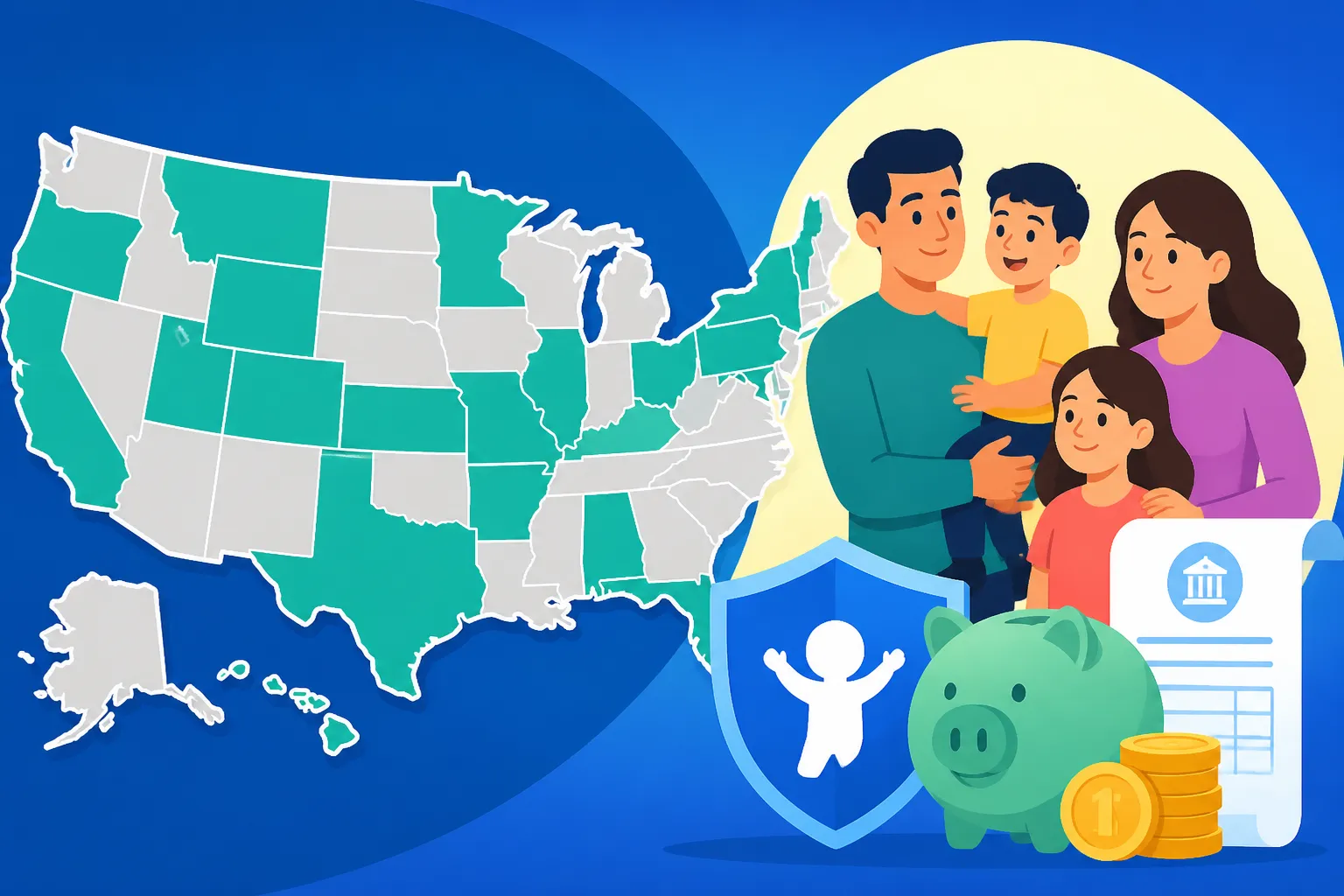
For example, California offers the Young Child Tax Credit, which is fully refundable and designed to complement the federal EITC. While not a direct "child tax credit" in the traditional sense, it's aimed at families with children under age six, and it’s a big deal. The amount can be up to $1,083 per family for the 2023 tax year, and the eligibility is tied to CalEITC eligibility. This can be incredibly impactful for families in a high-cost-of-living state like California. Then there's Colorado, which offers a refundable Child Tax Credit for families with children under age 17. For the 2023 tax year, this credit can be up to $1,200 per child, with phase-outs based on income, and it's fully refundable up to a certain percentage of the federal credit. This means a family in Denver could see substantial savings or even a refund directly from the state.
Maryland also has a notable refundable child tax credit, specifically for families with children under 17 and adjusted gross income below certain thresholds. For 2023, the credit amount is $500 per child, and it's fully refundable for those who qualify. Massachusetts and Minnesota also stand out, with Minnesota's program offering one of the most generous refundable child tax credits in the nation. For 2023, it could be up to $1,750 per child under age 17, again with income phase-outs. This is a clear example of a state actively working to reduce child poverty and support its residents. Other states like New York, New Jersey, New Mexico, Oregon, Rhode Island, Vermont, and even Washington (which only has a capital gains tax, but offers a refundable Working Families Tax Credit that includes a child component) are providing significant, often refundable, credits to families. This array of refundable credits helps millions of families annually, offering a much-needed financial cushion in an unpredictable economic landscape.
Exploring Newer or Expanding Programs
The landscape of state tax credits is far from static. Many states are continually evaluating their tax codes and often look to child tax credits as a way to support their residents. We're seeing a trend where more states are either introducing new credits or enhancing existing ones, particularly making them refundable. This reflects a growing understanding among policymakers of the financial pressures families face.
For example, Georgia has recently moved towards a Georgia Flat Tax Rate 2026, but alongside these broader tax reforms, discussions around expanding or introducing specific family-oriented credits often emerge. The idea is to offset the impact of other tax changes and provide targeted relief. Similarly, states like Maine and Connecticut have recently expanded or tweaked their child tax credits to make them more accessible or more generous, often by increasing the maximum credit amount or adjusting income thresholds. These changes are usually driven by a combination of economic conditions, legislative priorities, and advocacy from family and child welfare organizations. It’s worth noting that the federal discussion about expanding the Child Tax Credit often sparks similar conversations at the state level, as states aim to complement federal efforts or fill gaps. Keeping an eye on state legislative sessions and tax department announcements, perhaps through resources like SmartAsset, is a good way to stay informed about potential new opportunities for tax relief. These continuous adjustments mean that the list of states with refundable credits is always evolving, usually for the better!
States Offering Non-Refundable Child Tax Credits
While not as impactful for every income bracket as refundable credits, non-refundable child tax credits are still a valuable form of tax relief. They directly reduce the amount of state income tax you owe, which can free up funds for other household necessities.
States with Targeted Non-Refundable Credits
Many states offer non-refundable child tax credits. These credits generally apply to your state income tax liability, bringing it down dollar for dollar until your tax bill reaches zero. You won't get a check back from the state if the credit exceeds your tax owed, but you'll still pay less in taxes, which is a definite win.
States like Idaho, for instance, offer a non-refundable child tax credit. For the 2023 tax year, it's $205 per qualifying child, which can be a nice chunk off your tax bill. Iowa, even with its recent tax reforms, maintains a non-refundable child and dependent care credit that functions similarly to a child tax credit, helping families reduce their taxable income. Other states that typically offer non-refundable credits include Kentucky, Montana, Ohio, Oklahoma, South Carolina, Utah, and Wisconsin. In these states, if you have a tax liability, these credits will directly lower it. For example, if you're a family in Columbus, Ohio, owing $1,500 in state income tax and you qualify for a $500 non-refundable child tax credit, your tax bill immediately drops to $1,000. While you won't get a cash refund if you owe less than $500, that $500 reduction is still significant and makes a real difference in your annual budget.
Credit Amounts and Income Thresholds
The actual amount of a non-refundable child tax credit and the income limitations can differ greatly across states. It’s not a one-size-fits-all situation, which can be frustrating when you're just trying to figure out your tax obligations.
For example, a state might offer a flat $200 per child, while another might offer a percentage of the federal credit. Utah offers a non-refundable dependent exemption credit, which provides a credit for each dependent. The exact amount can vary slightly each year based on inflation and legislative changes. Similarly, South Carolina provides a dependent exemption amount that reduces taxable income, leading to a smaller tax bill. These credits often come with income phase-outs, meaning that as your income rises above a certain threshold, the value of the credit might begin to decrease or disappear entirely. For instance, a household earning $60,000 might qualify for the full credit, but a household earning $150,000 might find their credit reduced or eliminated. It’s essential to look up the specific details for your state each tax year, as these numbers are subject to legislative changes. Websites for each state's Department of Revenue are usually the most accurate source for the current year's rules and credit amounts.
States Without a Dedicated Child Tax Credit
It’s easy to assume every state might have a child tax credit, especially with the federal one being so prominent. However, that’s not always the case. Understanding which states don't offer one, and why, is just as important for your overall financial planning.
No State Income Tax States and Their Alternatives
The most straightforward reason a state might not have a child tax credit is because it doesn't levy an income tax at all! This means there's no state income tax for a child tax credit to reduce. There are currently seven states with no broad-based income tax: Alaska, Florida, Nevada, South Dakota, Texas, Washington, and Wyoming. In addition, New Hampshire only taxes interest and dividends, and Tennessee does not tax wages, though it did historically tax investment income. You can find a full overview in our guide on States With No Income Tax (2026 Full List).
While these states don't offer a direct child income tax credit, they often compensate for the lack of income tax through other means, such as higher sales taxes or property taxes. For instance, a family in Orlando, Florida, wouldn't get a state CTC, but they also wouldn't pay state income tax on their wages. Instead, they might benefit from other state or local programs, sales tax exemptions on certain necessities, or homestead exemptions that reduce property tax burdens for homeowners. It’s a different balance of taxation, and while a direct child tax credit isn't an option, the overall lower tax burden on income can be seen as an alternative benefit for families.
States Relying Solely on Federal CTC
Beyond the no-income-tax states, there are some states that do have an income tax but simply haven't implemented their own specific child tax credit. For families in these states, the federal Child Tax Credit becomes the sole source of this particular type of tax relief.
This means that a family living in, say, Arizona or North Carolina would primarily rely on the federal CTC for child-related tax benefits. While these states might offer other family-friendly deductions or credits – perhaps for dependent care, or specific educational expenses – they don't have a separate, dedicated "child tax credit" like California or Minnesota do. The implications for families are significant: they won't see an additional state-level reduction to their income tax liability specifically for having children. This underscores the importance of the federal CTC in these areas, as it represents the main financial lever for families hoping to offset some of the costs of raising children through the tax system. It also highlights why understanding your state's entire tax picture, beyond just the presence of a CTC, is vital when planning your finances, which can be explored further in topics like How State Tax Brackets Work: Marginal vs Effective.
| State | Child Tax Credit Type (Typical) | Maximum Credit Amount (Approx. 2023-2024) | Key Eligibility Notes |
|---|---|---|---|
| California | Refundable (Young Child Tax Credit) | Up to $1,083 per family (tied to CalEITC) | Children under 6, specific AGI thresholds. |
| Colorado | Refundable | Up to $1,200 per child | Children under 17, AGI phase-outs, percentage of federal. |
| Maryland | Refundable | $500 per child | Children under 17, AGI thresholds. |
| Massachusetts | Refundable (Dependent Care & Child Care) | Varies (e.g., $180 per child) | Specific dependent care expenses, AGI thresholds. |
| Minnesota | Refundable | Up to $1,750 per child | Children under 17, AGI phase-outs, one of the most generous. |
| New Jersey | Refundable | $500 – $1,000 per child | Children under 6, income thresholds for various credit amounts. |
| New York | Refundable (Empire State Child Credit) | Up to $100 – $330 per child (or 33% of federal) | Children under 17, AGI thresholds, combined with federal. |
| Idaho | Non-Refundable | $205 per qualifying child | General eligibility for dependents. |
| Iowa | Non-Refundable (Dependent Care) | Varies (percentage of federal) | Dependent care expenses for children under 13. |
| Ohio | Non-Refundable (Dependent Care) | Varies (percentage of federal) | Dependent care expenses, AGI thresholds. |
| South Carolina | Non-Refundable (Dependent Exemption) | Varies (deduction rather than direct credit) | General dependent eligibility. |
| Texas | None (No State Income Tax) | N/A | No state income tax, so no income tax credit. |
| Florida | None (No State Income Tax) | N/A | No state income tax, so no income tax credit. |
Note: Amounts and eligibility are subject to change annually based on legislative action. Always consult official state tax department resources for the most current information.
Navigating Eligibility and Claiming Your Credit
Okay, so you've seen that your state might offer a child tax credit – fantastic! But knowing it exists is only half the battle. The next crucial step is understanding if you actually qualify and how to go about claiming it. This is where the details really matter, and a little preparation can save you a lot of headache.
Common Eligibility Requirements Across States
While each state's child tax credit has its own specific rules, there are some common threads that run through most programs. Understanding these general requirements can help you get a head start on determining your eligibility.
First and foremost, there's typically an age limit for qualifying children. Most states follow the federal guideline of the child being under age 17 at the end of the tax year, but some, like New Jersey or California's Young Child Tax Credit, might focus on even younger children (e.g., under 6). Then there are residency requirements. For your child to qualify for a state credit, they usually need to have lived with you for more than half the year in that specific state. If you had a Mid-Year Move: Filing Taxes in Two States, you might need to check if you qualify as a part-year resident for the credit in either state. The relationship to the child is also critical; generally, the child must be your son, daughter, stepchild, foster child, brother, sister, half-brother, half-sister, stepbrother, stepsister, or a descendant of any of them. Finally, income thresholds are almost always a factor. Both refundable and non-refundable credits often have adjusted gross income (AGI) limits. If your AGI is above a certain amount, the credit might be reduced (phased out) or eliminated entirely. These thresholds are designed to ensure the credits go to the families who need them most. It's really important to confirm these details directly with your state's Department of Revenue, as they are the ultimate authority on what applies to you.
How to Claim State Child Tax Credits
Once you've determined you might be eligible, the process of actually claiming your state child tax credit is generally integrated into your annual state income tax filing. It's usually not a separate application.
When you prepare your state tax return, either through tax software like TurboTax or by working with a tax professional, the program or person will guide you through the relevant sections. You'll typically need to provide information about your qualifying children, including their names, Social Security numbers, and dates of birth. The software will then automatically calculate the credit amount based on your income and the number of qualifying children. For instance, if you're filing your California Income Tax Brackets 2026 return, you'll enter the relevant information, and the system will factor in the Young Child Tax Credit if you meet the criteria. It’s critical to have all your documents ready, including W-2s, 1099s, and any other income statements, as well as the Social Security numbers for all dependents. If you're unsure, or if your situation is complex (say, you've had a significant income change or moved states), consulting a tax professional can be incredibly helpful. They can ensure you claim all the credits you're entitled to and avoid any costly mistakes. Many state tax forms will have a specific line or schedule for child-related credits, so if you're filing manually, make sure you locate and accurately complete that section.
Future Outlook and Potential Changes for 2026
The world of state income tax is constantly evolving. What's true today might not be true tomorrow, especially when it comes to deductions and credits designed to help families. Keeping an eye on these trends can help you plan for the future.
Legislative Trends and Advocacy
There's a noticeable and growing momentum in state legislatures to either introduce new child tax credits or enhance existing ones, particularly making them refundable. This trend is often fueled by a combination of factors: rising awareness of child poverty, the ongoing economic challenges faced by families, and lessons learned from the impact of the expanded federal Child Tax Credit during the pandemic.
We've seen states like Iowa and Georgia, which have undergone significant tax reforms, still engaging in conversations about how to provide more targeted relief to families, even as they simplify their overall tax structure. Many states are examining how to make their tax systems more equitable and responsive to the needs of working parents. Advocacy groups are playing a crucial role, pushing lawmakers to consider the long-term benefits of these credits, not just for individual families but for the state's economy as a whole. As we head towards 2026, it's highly probable that we'll see more states proposing or passing legislation related to child tax credits. This could mean increased credit amounts, expanded eligibility, or new credits emerging in states that previously didn't have one. This dynamic legislative environment means it's worth staying informed about what's happening in your state's capital, as changes could directly impact your household budget. For a broader look at current and upcoming changes, you might find our article on State Child Tax Credit Expansions 2026 particularly useful.
Staying Informed About State Tax Reforms
Given the fluid nature of state tax laws, staying informed is absolutely essential. Relying on outdated information could mean missing out on valuable credits or facing unexpected tax liabilities. It's not always easy to keep up, but there are reliable ways to ensure you have the most current information.
The best place to start is always your specific state's Department of Revenue or Taxation website. These sites are the official source for all tax forms, instructions, and legislative updates. They often have dedicated sections for recent tax law changes. Financial news outlets and reputable personal finance websites are also excellent resources. For example, sites like SmartAsset often publish comprehensive guides and analyses of state tax laws, including updates on child tax credits. Subscribing to newsletters from your state's tax department or trusted financial news sources can also keep you in the loop. Additionally, if you use tax preparation software like TurboTax, it will typically update its programs annually to reflect the latest state tax laws, helping you ensure you're claiming everything you're entitled to. Remember, a little proactive research now can save you a lot of money and stress when tax season rolls around. Understanding How to Lower Your State Income Tax often starts with knowing all the credits and deductions available to you.
Disclaimer
This article is for general informational purposes only and does not constitute professional advice. Laws and regulations vary by location and change over time. Consult a qualified professional for guidance on your specific situation.