What Is Domicile for Tax Purposes?
Navigating state taxes can be a real headache, especially when confusing terms like 'residency' and 'domicile' come into play. Many people mistakenly believe they're the same, but for tax purposes, understanding your domicile is absolutely crucial. Whether you've moved states, work remotely, or own property elsewhere, knowing where your true tax home lies can significantly impact your tax bill. This guide will meticulously break down what domicile means, why it matters, and how states determine it.
Understanding the Concept of Domicile for Tax Purposes
It's easy to assume your "residence" is your "domicile," but state tax departments don't always see it that way. This distinction is where a lot of confusion, and potentially costly mistakes, can creep in, particularly for those with complex living or working arrangements. The difference isn't just semantics; it's the foundation upon which your state income tax obligations are built.
The True Home Rule and Intent
At its core, domicile refers to your one true permanent home — the place you intend to return to whenever you're away. Think of it as your most settled and permanent connection, the place where you live and truly consider home, with the intention of remaining there indefinitely. This concept is often called the "true home rule." It's not just about where you physically lay your head for the majority of the year, but where your heart and long-term plans reside.
For instance, consider a college student who moves from Ohio to California to attend university for four years. While they might reside in California during the school year, their domicile typically remains Ohio, especially if they intend to return home after graduation. Similarly, military personnel deployed overseas or stationed in another state usually retain their domicile in their home state, as their physical presence elsewhere is temporary and dictated by orders, not by an intent to permanently relocate. The emphasis here is heavily on intent, but it's important to remember that intent alone isn't enough; it must be backed by actions that demonstrate that intent.
Domicile vs. Statutory Residency: A Critical Distinction
Here's where things get really interesting and often tangled. While you can only have one domicile at any given time, you can be considered a "resident" of multiple states for tax purposes. This is largely due to what's known as "statutory residency." Many states, like New York or California, have rules that define you as a statutory resident if you spend more than a certain number of days (often 183 days, or roughly half the year) within their borders and maintain a "permanent place of abode" there. Even if your true, permanent home (your domicile) is elsewhere, fulfilling these statutory conditions can trigger tax obligations.
Imagine a "snowbird" who domiciles in Massachusetts but spends more than six months of the year enjoying the warmth in Florida, where they own a condo. While their primary home and intent to return might be in Massachusetts, Florida could still classify them as a statutory resident if they meet certain criteria, potentially subjecting them to Florida's (admittedly limited) taxes for specific income, even though Florida is one of the [[States With No Income Tax]]. This creates a complex scenario where you might have to file tax returns in two states, requiring careful attention to avoid double taxation. For a deeper dive, our guide on Domicile vs Statutory Residency offers more insights into these crucial differences.
Key Factors in Establishing or Changing Your Domicile
Changing your domicile isn't as simple as just packing your bags and telling people you've moved to a new state. State tax departments, especially those in states with higher income taxes, are often quite skeptical of claims of domicile change, particularly if it appears to be primarily motivated by tax avoidance. States like California and New York are notorious for scrutinizing these moves, and they require concrete evidence to prove you’ve truly abandoned your old domicile and established a new one.
Physical Presence and Intent to Remain
The process of establishing a new domicile hinges on two fundamental elements: physical presence and intent. First, you must physically move to the new state and actually live there. This isn't just about owning property; it's about making it your principal home. Second, and perhaps more critically, you must demonstrate a genuine and unequivocal intent to make that new state your permanent home and abandon your old one. You must intend to remain there indefinitely, not just for a season, a job contract, or to attend school.
This "intent" isn't a fleeting thought or a spoken declaration; it’s a commitment that must be clearly and consistently reflected in your actions and the practical aspects of your daily life. If your actions contradict your stated intent, state tax authorities will likely side with your actions, potentially leaving you liable for taxes in your old state. It's a holistic assessment, not a checkbox exercise, where every aspect of your life is considered.
Tangible Evidence of Domicile
Since "intent" can be subjective, states rely heavily on tangible evidence—the objective facts and circumstances of your life—to determine your domicile. They build a compelling picture based on a variety of indicators. Changing your voter registration, obtaining a new driver's license, and registering your vehicles in the new state are often considered strong initial steps. Updating your address with banks, investment firms, and credit card companies is also vital.
Beyond that, consider where you maintain your primary bank accounts, receive your mail, and even where your pets are registered. If you own property, selling your primary residence in the old state and purchasing or renting a new primary residence in the new state is highly persuasive. Establishing a homestead exemption, if available in your new state, is another strong indicator. Where you seek medical care, join professional organizations or social clubs, or register for local religious services all contribute to the overall picture. Online resources, like the calculators and guides on SmartAsset, can provide valuable insights into specific state requirements and help you compare your current situation against the criteria states look for. You might also consult guides from financial platforms like SmartAsset, which often break down state-specific rules for establishing domicile.
Here's a table summarizing common factors states consider when determining domicile:
| Factor | Strong Evidence of New Domicile | Weaker/Contradictory Evidence |
|---|---|---|
| Voter Registration | Registered to vote in New State | Registered in Old State (or not at all in new) |
| Driver's License | Issued by New State; Old State license surrendered | Issued by Old State (or expired/not updated) |
| Vehicle Registration | Registered in New State | Registered in Old State (or not updated) |
| Physical Presence | Majority of time spent in New State, especially key dates | Significant time (e.g., 183+ days) still spent in Old State |
| Property Ownership | Sold primary residence in Old State; bought/rented primary in New | Own multiple properties, especially a large/expensive one in Old State |
| Bank Accounts | Primary checking/savings in New State | Significant accounts/financial advisors in Old State |
| Professional Licenses | Transferred or obtained in New State | Maintained primarily in Old State |
| Family Ties | Spouse/dependents live in New State | Spouse/dependents remain in Old State |
| Mail & Bills | All primary mail directed to New State; mail forwarding setup | Significant mail/bills still going to Old State |
| Medical Care | Primary doctor/dentist/specialists in New State | Continued primary care in Old State |
| Social/Community Ties | Memberships in clubs, religious organizations in New State | Maintained strong ties/memberships in Old State |
| Estate Documents | Will/trust updated to reflect New State laws | Documents still based on Old State |
| Employment | Primary employment/business located in New State | Primarily working remotely for a company in the Old State |
The "Last Known Domicile" Trap
One of the most significant challenges in changing your domicile, especially when moving from a high-tax state, is overcoming the "last known domicile" presumption. States like California and New York are notorious for this. They operate under the assumption that once you've established domicile there, it remains your domicile until you can definitively prove otherwise. This means the burden of proof rests squarely on your shoulders to demonstrate a clear and complete abandonment of your old domicile and the establishment of a new one.
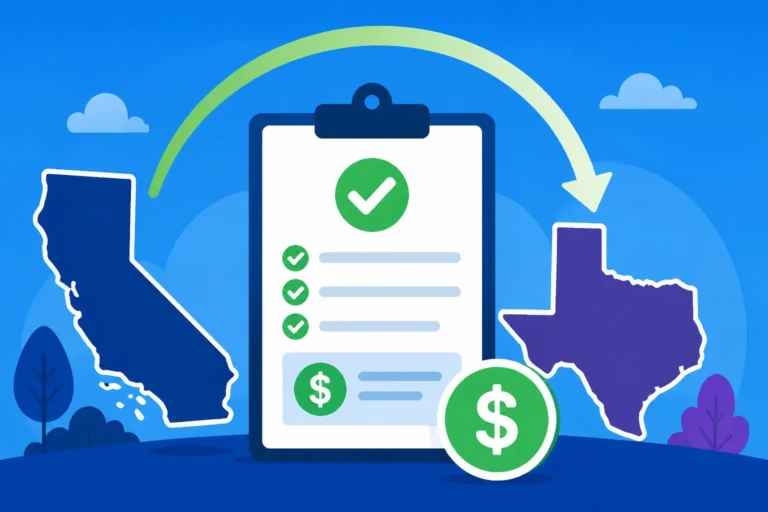
If you leave California for a no-income-tax state like Nevada, for example, California's Franchise Tax Board (FTB) might still attempt to tax your worldwide income, arguing that you didn't truly sever your ties and relocate permanently. This can lead to aggressive residency audits that require meticulous documentation and a strong case to overturn the state's presumption. Understanding How to Avoid California Residency for Taxes and navigating a New York Residency Audit Explained are crucial for anyone looking to make such a move and minimize their tax exposure.
Practical Implications for Your State Tax Bill
The reason we even care so much about domicile is simple: it dictates which state gets to claim the lion's share of your income for tax purposes, among other significant financial implications. Get it wrong, and you could face double taxation or unexpected liabilities.
Why Domicile Matters for Income and Estate Taxes
Your state of domicile typically has the right to tax all your income, regardless of where it was earned. This is often referred to as "worldwide income" taxation by your domiciliary state. While states usually provide a credit for taxes paid to another state on income earned there, it's still a complex process and doesn't always fully offset the burden. For example, if you are domiciled in Illinois but earn some income working temporarily in Missouri, Illinois will likely tax all your income, but provide a credit for taxes paid to Missouri.
Beyond income taxes, domicile plays a pivotal role in estate and inheritance taxes. At the time of your passing, your state of domicile is the one that has the authority to levy estate or inheritance taxes on your assets. For individuals with substantial wealth, choosing a domicile in a state with no estate tax can result in significant savings for their heirs. Domicile can also impact your eligibility for certain tax benefits, such as homestead exemptions on property taxes, which can significantly lower your annual property tax bill. Our guide on Homestead Exemption by State provides more details on these valuable deductions.
Common Scenarios and Potential Pitfalls
Understanding domicile becomes particularly critical in several common modern-day scenarios. Remote workers, for instance, often face a labyrinth of tax rules. If you live in a low-tax state but work remotely for a company based in a high-tax state like New York, you might be surprised to find that the high-tax state claims your income under "convenience of the employer" rules, regardless of your domicile. This is a complex area, and understanding Remote Work State Taxes & Convenience of the Employer and specifically the New York Convenience Rule & Remote Work is essential to avoid unexpected tax bills.
"Snowbirds" or seasonal residents also need to be vigilant. Spending half the year in a warm climate like Florida and the other half in a colder home state means you must be very clear about where your true domicile lies, as this will determine which state has the primary claim on your income. Similarly, owning multiple properties, such as a vacation home or a rental property in another state, doesn't automatically establish domicile there. The intent to make it your permanent home, backed by comprehensive actions, is still the ruling factor. When you're dealing with income sourced from multiple states or trying to claim credits for taxes paid to another state, filing software like TurboTax can guide you through the complexities, ensuring you correctly allocate income and avoid double taxation.
How States Determine Your Domicile and Avoid Audits
State tax authorities are not simply going to take your word for it when you declare a change of domicile. They have established tests and indicators they scrutinize closely to validate your claim, especially if it leads to a reduction in their tax revenue.
State-Specific Rules and "Factors Tests"
Most states employ what's known as a "factors test" or a "totality of the circumstances" approach. This means they look at all the evidence combined, rather than relying on a single piece of documentation. No one factor, like a driver's license or voter registration, is usually determinative on its own. Instead, it's the overall picture conveyed by your actions and affiliations that tells the story of your intent. Tax authorities will often weigh each piece of evidence to understand your deepest connections and long-term intentions. The more consistent your actions are with your stated intent to change domicile, the stronger your case.
Some states, particularly those with higher income tax rates like California and New York, are known for their aggressive residency audits. The California Franchise Tax Board (FTB) and the New York Department of Taxation and Finance have robust departments dedicated to scrutinizing individuals who claim to have moved out of state, especially high-income earners. These audits can be incredibly detailed and burdensome, requiring taxpayers to provide extensive documentation and justify their claims. This is why understanding California Residency Audit & FTB and being prepared to prove your new domicile are absolutely essential. Services like those offered by tax professionals, or even comprehensive tax software such as TurboTax Premier, often have features designed to help identify potential red flags and guide you through documenting your domicile.
Proving a Change in Domicile
The most crucial step in avoiding a costly residency audit and successfully changing your domicile is to meticulously gather and maintain records that unequivocally demonstrate your intent to abandon your old state and establish a new permanent home. This process requires a proactive and continuous effort, not just a few superficial changes. You need to essentially "live like a resident" of your new state.
Start by updating all official documents: voter registration, driver's license, vehicle registration, and professional licenses. Then, update all financial accounts, insurance policies, and estate planning documents (like wills and trusts) to reflect your new address and state laws. Severing ties with the old state is just as important as establishing new ones. This means canceling club memberships, changing your doctors and dentists, enrolling in local community activities, and ensuring all your mail is forwarded or directly addressed to your new location. Some experts even advise keeping a diary of your physical presence if you split time between states, especially when trying to avoid the 183-day statutory residency rule, as detailed in The 183-Day Rule for State Taxes. It's a continuous process that needs to show a clear and consistent pattern of living and intending to live permanently in your new state. For more detailed steps, check out How to Prove You Changed Your Domicile. Don't forget that working with a tax professional who specializes in multi-state taxation is often the best investment you can make, as they can help you gather and present the compelling evidence needed to satisfy state tax authorities like those in New York when facing a residency audit.
Disclaimer
Please note that this article is intended for informational purposes only and does not constitute tax advice. State tax laws are complex and constantly changing. It is always recommended to consult with a qualified tax professional for personalized advice regarding your specific tax situation.