Hawaii Income Tax Rate 2026
Moving to Hawaii is often seen as the ultimate life goal, but many newcomers are blindsided by the financial reality of the "Paradise Tax." Beyond the expensive groceries and housing, Hawaii’s aggressive income tax structure can take a massive bite out of your paycheck. This guide provides a deep dive into the 2026 Hawaii income tax rates and brackets to help you navigate these complex waters.
The Reality of the Hawaii Income Tax System
When you look at a map of the United States and compare tax burdens, Hawaii consistently sits near the top of the list. It is not just the cost of a gallon of milk at a Honolulu grocery store that pinches the wallet; it is the fact that Hawaii utilizes one of the most complex and multi-layered tax systems in the country. While some states have moved toward a flat tax or even eliminated income tax entirely, Hawaii has maintained a highly progressive system that features twelve distinct tax brackets.
This twelve-bracket system is an anomaly in modern American tax policy. Most states with progressive taxes stick to four, five, or perhaps seven brackets. By having twelve, Hawaii ensures that as your income grows, even by relatively small margins, you are constantly "climbing the ladder" into higher percentages. For the average worker, this means that every raise or bonus is met with a slightly larger hand from the state government reaching into their pocket.
If you are coming from a place like Florida or Texas, the transition can be jarring. You might find that a salary that felt substantial in the mainland feels significantly diminished once the Hawaii Department of Taxation takes its share. It is vital to understand How State Tax Brackets Work: Marginal vs Effective before you sign a lease or a mortgage on the islands. Understanding the difference between what you owe on your last dollar earned versus your total tax bill is the first step in surviving the financial side of island life.
Hawaii Income Tax Brackets for 2026
The tax brackets in Hawaii are designed to capture revenue from a broad range of income levels. Because the brackets start at very low income thresholds, almost every earner in the state quickly finds themselves paying more than the introductory 1.4% rate. For many, the transition through the mid-level brackets happens so quickly that it feels like a steep uphill climb.
For the 2026 tax year, the brackets remain structured to tax higher earners at some of the highest rates in the nation, peaking at 11%. This top rate is second only to California and perhaps New York City when local taxes are included. To get a better sense of how your specific income will be treated, using a tool like SmartAsset can provide a personalized look at your take-home pay after these deductions are considered.
| Taxable Income (Single Filers) | Tax Rate |
|---|---|
| $0 – $2,400 | 1.40% |
| $2,401 – $4,800 | 3.20% |
| $4,801 – $9,600 | 5.50% |
| $9,601 – $14,400 | 6.40% |
| $14,401 – $19,200 | 6.80% |
| $19,201 – $24,000 | 7.20% |
| $24,001 – $36,000 | 7.60% |
| $36,001 – $48,000 | 8.20% |
| $48,001 – $150,000 | 9.25% |
| $150,001 – $175,000 | 10.00% |
| $175,001 – $200,000 | 10.50% |
| Over $200,000 | 11.00% |
Note: For Married Filing Jointly, the income thresholds are generally doubled.
Comparing Hawaii to the Rest of the Nation
It is helpful to put Hawaii’s rates into a broader perspective. Many people looking to relocate are weighing Hawaii against other "lifestyle" destinations. For instance, comparing the California Income Tax Rate 2026 to Hawaii’s reveals that both states are quite aggressive, though California’s top rate is slightly higher. However, the cost of living in Hawaii, particularly concerning housing and imported goods, often makes the tax burden feel heavier in the islands.
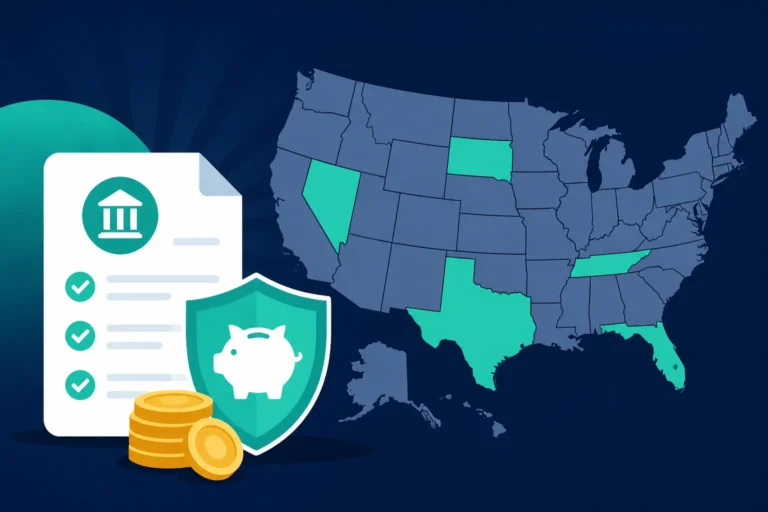
On the other end of the spectrum, you have States With No Income Tax (2026 Full List). If you are a remote worker with the freedom to live anywhere, the contrast between Hawaii’s 11% top rate and the 0% rate in states like Nevada or Washington is staggering. On a $200,000 income, that is a $22,000 difference in state tax alone, not accounting for local levies or sales tax variations.
However, Hawaii does not have a local or city income tax, which is a small mercy. Unlike some states where you might pay both a state and a city tax, in Hawaii, your state filing is the primary concern. Still, when you factor in the high General Excise Tax (GET), which acts like a sales tax but is more pervasive, the total tax burden is significant. Many residents turn to the financial calculators on SmartAsset to see how these different taxes interact and affect their monthly budget.
Understanding Marginal vs Effective Tax Rates
One of the biggest mistakes taxpayers make is assuming their entire income is taxed at the highest bracket they fall into. This is a fundamental misunderstanding of What Is a Marginal Tax Rate? versus What Is an Effective Tax Rate?. In Hawaii, the first $2,400 you earn is taxed at 1.4%, no matter how much you make in total. Only the income that falls within the highest bracket is taxed at that 11% rate.
Let’s look at a hypothetical scenario. Imagine a software engineer living in Kihei, Maui, earning $160,000 a year. Only the last $10,000 of that income is taxed at the 10% rate. The bulk of their income is taxed at the 9.25% rate, and the first few thousand dollars are taxed at those very low introductory rates.
When you average these out, your effective tax rate is usually much lower than your top marginal bracket. However, in Hawaii, because the brackets are so "thin" (meaning you jump to higher rates very quickly), your effective rate tends to be higher than it would be in a state with wider brackets. This is why residents often feel like they can never get ahead, even as their salary increases.
Deductions and Credits in Hawaii
To soften the blow of these high rates, Hawaii offers several deductions and credits. However, unlike the federal government, which significantly increased its standard deduction several years ago, Hawaii’s standard deduction has remained relatively low. This often forces residents to itemize their deductions to see any real tax relief.
If you are a homeowner, you may be able to deduct your mortgage interest, which is a major benefit given the high cost of real estate in Honolulu or on the Big Island. Additionally, Hawaii allows for certain credits that can directly reduce the amount of tax you owe. For families, the State Child Tax Credits 2026 can be a lifesaver. These credits are particularly valuable because they are a dollar-for-dollar reduction in your tax liability, rather than just a reduction in your taxable income.
Another area where Hawaii is relatively generous is in the treatment of retirement income. For many seniors, the question of Does Hawaii Tax Social Security? is a major factor in their decision to retire in the islands. Currently, Hawaii does not tax Social Security benefits, and it also exempts many types of employer-funded pension plans. This makes the state a surprisingly attractive destination for retirees who have a fixed pension income, despite the high taxes on active workers.
Residency Rules and the 200-Day Presumption
Hawaii is very protective of its tax base. If you spend a significant amount of time in the islands, the state will likely consider you a resident for tax purposes. Hawaii uses what is known as the "200-day presumption." If you are in the state for more than 200 days in a calendar year, the state presumes you are a resident and expects you to pay taxes on your worldwide income.
This creates a complex situation for "digital nomads" or people who split their time between the islands and the mainland. It is crucial to understand the distinction between a Resident vs Nonresident vs Part-Year Resident when filing your return. If you move to Hawaii halfway through the year, you will file as a part-year resident, taxing only the income you earned while physically present in the state (and any Hawaii-sourced income).
The Hawaii Department of Taxation is known for being quite thorough in its residency audits. They look at factors like where your car is registered, where you are registered to vote, and where your primary professional ties are located. To ensure you are accurately reporting and not overpaying, many taxpayers consult the residency guides on SmartAsset to clarify their status before tax season arrives.
Strategies for Managing Hawaii’s High Tax Burden
Given the high rates, tax planning is not just for the wealthy in Hawaii; it is a necessity for the middle class. One of the most effective ways to lower your taxable income is to maximize contributions to tax-advantaged retirement accounts like 401(k)s or IRAs. Since Hawaii’s tax system starts with your federal adjusted gross income, reducing that number at the federal level automatically reduces your state tax burden as well.
Another island-specific strategy involves understanding the General Excise Tax (GET). While the income tax is what you see on your paycheck, the GET is "hidden" in almost every transaction. Businesses in Hawaii often pass this tax on to consumers, but it is technically a tax on the business. For freelancers and small business owners, managing the GET alongside income tax requires careful bookkeeping and a solid understanding of state-specific exemptions.
For those who feel overwhelmed by these numbers, it is often helpful to look at the total "tax burden" rather than just the income tax rate. This includes property taxes, which are actually quite low in Hawaii compared to the national average, and sales/GET taxes. When you look at the total picture, Hawaii’s high income tax is somewhat offset by lower property taxes, though the high cost of housing often negates that benefit for the average person.
The Future of Hawaii Tax Policy
There is ongoing debate in the Hawaii State Legislature about tax reform. Many advocates argue that the twelve-bracket system is outdated and punishes the very workers the state needs to sustain its economy—teachers, nurses, and first responders. Some have proposed shifting toward a more simplified system or increasing the standard deduction to match federal levels.
However, Hawaii’s heavy reliance on tourism revenue means that the state is often hesitant to cut income taxes, especially during economic downturns. For the 2026 tax year, the current structure is expected to hold firm. This means residents must continue to be proactive in their financial planning. Using resources like SmartAsset to stay informed on policy changes and utilizing available credits is the best way to ensure that your dream of island living doesn't become a financial nightmare.
Final Thoughts on Island Finances
Living in Hawaii is a choice that involves a series of trade-offs. You trade a lower cost of living and lower taxes for the incomparable beauty of the Pacific, the "Aloha Spirit," and a pace of life that is hard to find anywhere else. While the 11% top tax bracket is a bitter pill to swallow, understanding the rules, utilizing the right deductions, and planning your residency status can make the burden manageable.
The key is to never be surprised. By staying ahead of the 2026 tax changes and understanding exactly how much of your hard-earned money will stay in your pocket, you can focus on what really matters—enjoying the incredible environment that Hawaii offers.
State Income Tax Disclaimer
This guide is intended for informational purposes only and does not constitute professional tax, legal, or financial advice. Tax laws, including Hawaii’s income tax rates and brackets, are subject to change by legislative action and may be interpreted differently based on individual circumstances. Always consult with a qualified tax professional or the Hawaii Department of Taxation before making significant financial decisions or filing your state tax return.