State Tax Deadline vs Federal Deadline
It's tax season, and you've finally gathered all your W-2s, 1099s, and expense reports. You've heard April 15th tossed around for months, but then someone mentions a state tax deadline, and suddenly, you're wondering if you're navigating a single finish line or a whole maze of them. This common confusion can lead to a lot of stress and, worse, costly penalties. This guide is here to demystify the federal versus state tax deadline conundrum, providing clarity so you can file confidently and on time.
The Grand Divide: Federal vs. State Income Tax Deadlines
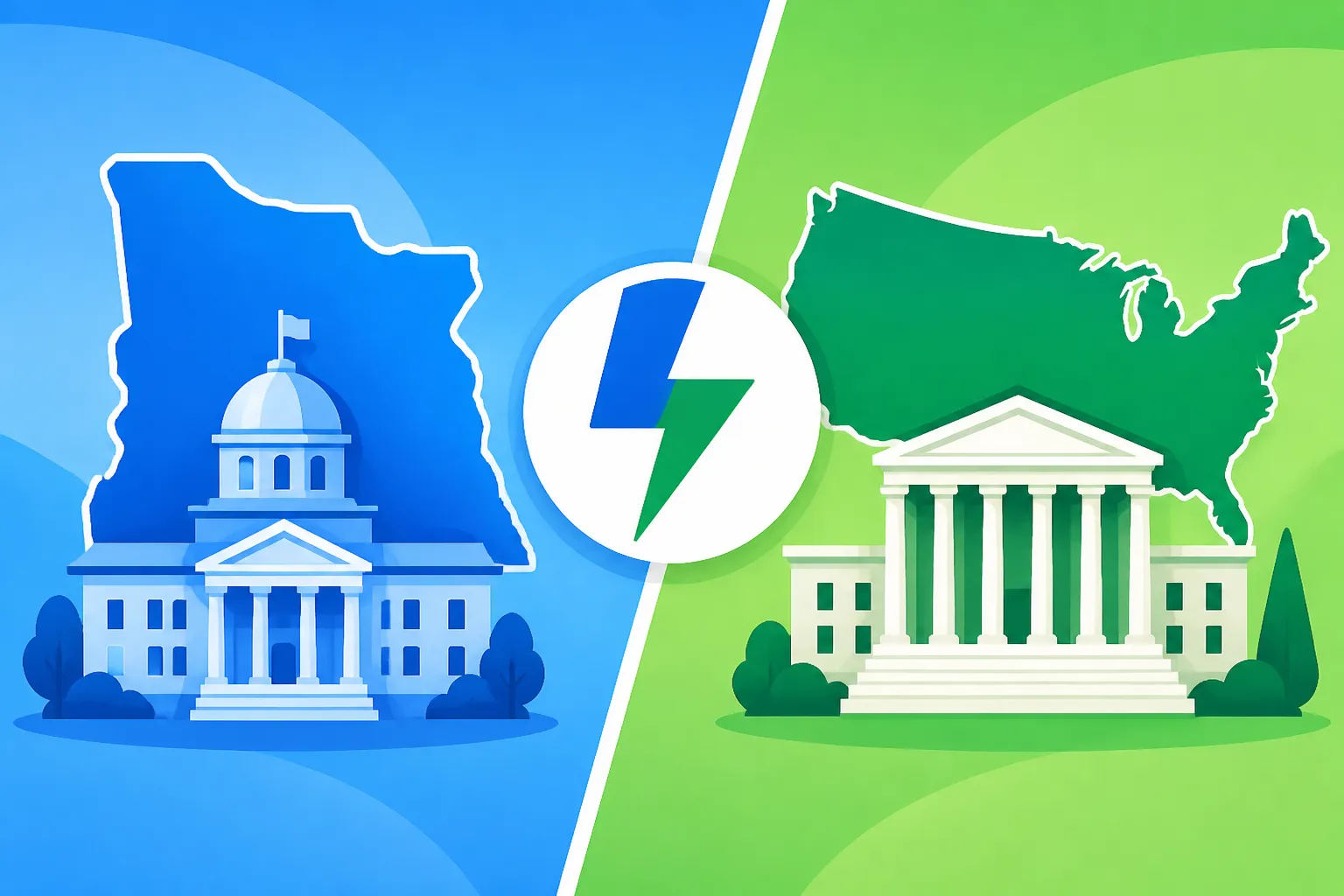
Let's cut right to the chase: while most people are laser-focused on the federal income tax deadline, the reality is that each state with an income tax sets its own deadline. And, let's be real, it's not always the same as the federal one, which can be a real headache. This isn't just a minor technicality; it's a crucial piece of information that can make or break your tax season sanity.
Why the Dates Often Align But Aren't Guaranteed
For the vast majority of taxpayers, the good news is that many states intentionally align their individual income tax filing deadline with the federal deadline, which typically falls on April 15th. This is done to simplify things, both for taxpayers and for state revenue departments. Imagine the chaos if every single state had a wildly different date; it would be nearly impossible to keep track, especially for people who live in one state and work in another, or who have moved mid-year.
However, "often align" doesn't mean "always align." There are a handful of states that consistently march to the beat of their own drum, and others that might shift their dates due to holidays, natural disasters, or other unique circumstances. For example, if April 15th falls on a weekend or a holiday (like Emancipation Day in Washington D.C., which can push the federal deadline to April 18th), many states will follow suit. But what happens if a state has its own holiday on the 15th, or just decides to set a different date entirely? That's where things get tricky, and why relying solely on the federal date is a gamble. Understanding the nuances here is key to avoiding an unwelcome surprise later on.
The Impact of Weekends and Holidays
The standard federal income tax deadline is April 15th. But, as we mentioned, if April 15th happens to land on a Saturday, Sunday, or a holiday observed in Washington D.C. (like Emancipation Day), the deadline shifts to the next business day. For example, in 2024, the federal deadline was pushed to April 15th because Emancipation Day, a holiday celebrated in D.C., fell on April 16th, which then made the 15th the default. This seemingly small detail can have a ripple effect.
Most states that mirror the federal deadline will also push their deadlines in these scenarios, which is a relief. However, always double-check. Don't just assume your state will follow suit. A quick check of your state's Department of Revenue website or reliable tax software like TurboTax can save you a lot of grief. It’s important to remember that state-specific holidays can also affect deadlines. If April 15th is a federal business day but a state holiday in your particular state, that state might delay its deadline. While rare, it's those obscure details that can trip you up.
Common State Tax Deadlines and Notable Exceptions
So, what are we usually looking at for state income tax deadlines? For the vast majority of states that levy an income tax, you'll be eyeing April 15th. It’s the tried-and-true date that most people instinctively know. But knowing the exceptions is where you really become a tax-savvy individual.
States That Generally Follow the Federal April 15th Deadline
Most states, in their wisdom, try to keep things simple for their residents and align their income tax deadline with the federal one. This means that if you live in, say, New York, California, or Illinois, your state tax deadline will typically be April 15th, or the next business day if the 15th falls on a weekend or holiday. This synchronized approach helps streamline the filing process, as many taxpayers prepare their federal and state returns concurrently. It’s like a well-choreographed dance, where both partners move in time.
However, even within these "aligned" states, there can be subtle differences. For instance, sometimes a state's system might experience a technical glitch, or a local disaster might prompt an extension solely for that state. While these are usually publicized widely, it highlights why even in generally aligned states, a quick verification never hurts. Think of it as a safety check before you take off on a road trip – you assume the car is good, but you still check the tires. For a complete overview, you can always refer to a comprehensive guide like State Tax Deadlines 2026 (All States).
States with Unique Filing Dates
Now, for the curveballs! Not all states play by the same rules, and a few states have unique filing dates that deviate from the federal April 15th. It’s crucial to be aware of these, especially if you’ve recently moved or have income sourced from one of these states.
Delaware: Often, Delaware gives residents a bit more breathing room, with their state tax deadline frequently falling on April 30th. This extra couple of weeks can be a blessing if you're scrambling to gather documents or just need a little more time to finalize your return.
Iowa: Iowa has, in the past, also extended its deadline to April 30th, giving residents an additional two weeks beyond the federal date. While these dates can shift year-to-year based on legislative changes, Iowa has historically been one of those states to offer a later deadline.
Virginia: In some years, Virginia has moved its tax deadline to May 1st, providing even more time. This is a significant difference from the federal deadline and can easily be overlooked if you're not paying close attention. Imagine thinking you have until the 15th, only to realize you had an extra two weeks! It's a pleasant surprise, but only if you know about it.
It's these unique situations that can cause confusion. If you're a Massachusetts resident, for example, your state income tax deadline is typically April 15th, but if you've recently moved there from a state like Delaware, you might incorrectly assume you have until the end of April. This is where researching specific state guidelines becomes absolutely critical.
The No-Income-Tax States: A Different Scenario
Then, of course, there are the states that don't even have a state income tax to worry about! For residents of these states, the federal income tax deadline is the only personal income tax deadline they need to keep in mind. This is a significant advantage for many, reducing a layer of complexity from their annual tax filing.
Currently, there are nine states that do not impose a statewide individual income tax: Alaska, Florida, Nevada, New Hampshire (only taxes interest and dividends, but is phasing this out), South Dakota, Tennessee (phasing out income tax on interest and dividends), Texas, Washington (has a capital gains tax, but no broad income tax), and Wyoming. If you live in one of these places, you can breathe a sigh of relief on the state income tax front. However, it's worth noting that even in these states, you might still have other state-level taxes to contend with, such as property taxes, sales taxes, or specific capital gains taxes like in Washington state. So, while income tax might be off the table, it doesn't mean you're entirely tax-free. For more details on these states, you can check out States With No Income Tax (2026 Full List).
Here's a quick overview table of typical deadlines, but remember, always verify current year specific dates!
| Jurisdiction | Typical Income Tax Deadline | Notes |
|---|---|---|
| Federal (IRS) | April 15th | Shifts to next business day if April 15th is a weekend or D.C. holiday (e.g., Emancipation Day). |
| Most States | April 15th | (e.g., California, New York, Illinois) Generally follow federal shifts due to weekends/holidays. |
| Delaware | April 30th | Historically offers a later deadline, but always verify for the current tax year. |
| Iowa | April 30th | Has often provided an extended deadline compared to the federal one. |
| Virginia | May 1st | Historically one of the latest state deadlines, but confirm annually. |
| No Income Tax States | N/A | (e.g., Florida, Texas, Nevada) No state individual income tax filing requirement. |
Extensions: Federal, State, and How They Interact
Life happens. Sometimes, despite your best intentions, you just can't get your taxes filed by the deadline. That's where extensions come in, offering a much-needed reprieve. But here's another common trap: a federal extension doesn't automatically mean you get a state extension. It's a critical distinction that can cause significant headaches if overlooked.
Filing for a Federal Extension
When you file Form 4868 with the IRS, you're typically granted an automatic six-month extension to file your federal income tax return. This pushes the deadline from April 15th to usually October 15th. It's a common misconception, however, that an extension to file is an extension to pay. It's not. If you expect to owe federal taxes, you still need to pay an estimate of what you owe by the original April 15th deadline to avoid interest and penalties. The extension simply buys you more time to get all your paperwork in order and submit the actual return.
Many taxpayers rely on tax software like TurboTax to easily file their federal extension. It's a straightforward process that can save you a world of stress if you're running short on time. Just remember to make that estimated payment if you anticipate a tax liability. Ignoring this crucial step could lead to penalties, which no one wants. For a more detailed guide, see State Tax Extensions: How to File.
State-Specific Extension Rules
This is where the plot thickens. While many states do automatically grant you a state extension if you've filed a federal extension, many others require you to file a separate state-specific extension form. And then there are a few states that don't require an extension form at all if you have a federal extension, but they still require you to pay any estimated state taxes by the original due date. It’s a patchwork system, to say the least.
For instance, states like California or New York generally grant an automatic state extension if you've filed a federal one, but you still need to ensure any estimated state taxes are paid by their original April 15th deadline. Other states, like Pennsylvania, require you to file a separate state extension form, even if you’ve already filed federal Form 4868. Ignoring this could mean your state return is considered late, subjecting you to penalties. This is why it’s so important to check your specific state's Department of Revenue website or consult a tax professional. Never assume. Always verify. This is particularly relevant for those complex situations, like Filing Taxes in Multiple States.
The "Pay Now, File Later" Principle
Regardless of whether you're dealing with federal or state taxes, the golden rule for extensions is "pay now, file later." An extension grants you additional time to prepare and submit your tax forms, but it does not extend the time you have to pay any taxes you owe. If you estimate that you will owe taxes, you must pay those estimated taxes by the original deadline (April 15th for federal, and your state's original deadline for state taxes).
Failing to pay your estimated tax liability by the original deadline, even with an extension to file, can result in penalties and interest. These can accrue quickly and turn a minor delay into a much bigger financial hit. So, before you click that "file extension" button, take a moment to calculate your estimated tax due and make that payment. Most state tax agencies, like the IRS, have online payment portals or allow payments via mail. It's a simple step that protects you from unnecessary financial burdens.
Strategies for Managing Multiple Deadlines
If you're dealing with multiple state returns, or just trying to navigate the federal and state maze, it can feel like you need a personal assistant just for your taxes. But with a few smart strategies, you can keep everything organized and avoid those dreaded late fees.
Centralizing Your Tax Information
The first step to managing multiple deadlines is to get organized. Don't wait until April 1st to start scrambling for documents. As soon as you receive W-2s, 1099s, bank statements, and other financial records, put them all in one dedicated spot – a physical folder, a cloud storage folder, or a specific email inbox. This makes it much easier when you sit down to tackle your taxes, whether you're using tax software or working with a professional.
Think about having a checklist that covers both federal and state requirements. Did you move mid-year? You might need records for two different states. Do you own property in a different state from where you live? That could add another layer of complexity. Having all your information consolidated prevents you from missing a crucial document for one particular return, which could then delay your filing or lead to errors.
Leveraging Tax Software for Efficiency
Modern tax software can be an absolute lifesaver when dealing with the complexities of federal and state taxes. Programs like TurboTax are designed to guide you through the process step-by-step, often automatically importing data from your federal return to populate your state return. This significantly reduces the chances of errors and helps ensure you don't miss any deductions or credits.
Many software options also include features that alert you to different state deadlines, remind you about estimated payments, and even help you file extensions for both federal and state returns. For someone with a Mid-Year Move: Filing Taxes in Two States, using such software can be invaluable. It can also help you figure out things like Credit for Taxes Paid to Another State, which is essential if you're trying to avoid double taxation. While there's a cost associated with these services, the peace of mind and time saved can be well worth the investment, especially if your tax situation isn't straightforward.
Setting Up Reminders and Calendars
In today's busy world, it's easy for deadlines to slip through the cracks. Don't rely solely on your memory! Implement a system of reminders to keep track of your federal and state tax deadlines, estimated payment dates, and any extension due dates.
- Digital Calendars: Set up alerts in Google Calendar, Outlook Calendar, or your phone's native calendar app. Schedule reminders for a week before each deadline, and then again a day or two before.
- Physical Calendar: If you prefer a tangible reminder, mark all critical dates on a wall calendar in a prominent place.
- Tax Software Alerts: Many tax software platforms, including TurboTax, offer email or in-app notifications for important dates. Make sure you enable these features.
- Review Your Withholding: Throughout the year, especially if you experience life changes like a new job, marriage, or having a child, review your federal and state tax withholdings. This can prevent a surprise tax bill or a surprisingly small refund at tax time.
By being proactive with your reminders and leveraging available tools, you can transform the daunting task of managing multiple tax deadlines into a manageable process.
What Happens If You Miss a State Tax Deadline?
Okay, let's talk about the uncomfortable truth: sometimes, despite all your best efforts, you might miss a deadline. It happens. But it's crucial to understand the repercussions and, more importantly, what to do next. Panicking won't help, but swift action will.
Penalties for Late Filing and Late Payment
Missing a state tax deadline can trigger two main types of penalties: a penalty for late filing and a penalty for late payment.
- Late Filing Penalties: States can impose penalties for simply failing to file your return by the due date (or extended due date). This penalty is usually a percentage of the tax you owe and can increase with each month or part of a month your return is late, often capped at a certain percentage. For example, some states might charge 5% of the unpaid tax for each month or part of a month that a return is late, up to a maximum of 25%.
- Late Payment Penalties: Even if you file on time, if you haven't paid all the tax you owe, you'll likely face a late payment penalty. This is also typically a percentage of the unpaid tax, and it can also accrue monthly. On top of that, you'll also be charged interest on the underpaid amount, which adds to the total debt.
These penalties are designed to incentivize timely filing and payment, and they can really add up. If you're wondering about specifics for your state, a good resource would be State Tax Penalties & Interest by State. Ignoring the problem will only make it worse, as penalties and interest continue to accrue.
Interest Charges and Underpayment
Beyond penalties, states will charge interest on any unpaid tax from the original due date until the date you finally pay it. This interest is usually compounded daily or monthly, further increasing your total debt. The interest rate varies by state and is often adjusted annually. While it might seem small at first, over several months, it can become a significant amount.
For instance, if you owed $1,000 to the state of Georgia and missed the deadline, and their interest rate is 1% per month plus a late payment penalty of 0.5% per month, that $1,000 could quickly become $1,015, $1,030, and so on, just in a couple of months, plus the late filing penalty if you didn't file. It's a costly lesson, which is why accurate estimated payments or timely filing are so important.
Steps to Take If You Missed the Deadline
If you find yourself in this unfortunate situation, don't despair, but do act quickly.
- File Your Return Immediately: Even if you can't pay the full amount, file your return as soon as possible. The late filing penalty is often much higher than the late payment penalty. Filing stops the clock on the late filing penalty.
- Pay What You Can: If you can't pay the full amount, pay as much as you can. This will reduce the amount of tax subject to penalties and interest.
- Contact Your State Tax Agency: Reach out to your state's Department of Revenue (or equivalent agency). Explain your situation. They might be willing to work with you on a payment plan or, in some cases, even abate penalties if you have a reasonable cause.
- Consider a Payment Plan: Many states offer installment agreements if you can't pay your tax bill in full. This allows you to pay off your debt over time, though interest and some penalties may still apply. You can learn more about these options in State Tax Payment Plans & Penalties.
It’s always best to be proactive. The sooner you address a missed deadline, the better your chances of minimizing the financial hit. It might feel intimidating to reach out to the tax authorities, but they often have programs in place to help taxpayers get back on track.
Final Thoughts on Deadline Management
Navigating the world of state and federal tax deadlines can feel like a high-stakes game of Tetris, especially if you have a complex financial life or move frequently. But with a clear understanding of the rules, a proactive approach to organization, and smart use of resources, you can tackle tax season with confidence.
Remember, the federal deadline is a big one, but it’s not the only one. Every state with an income tax has its own schedule, and these can vary based on state-specific holidays or legislative decisions. Always double-check your state's particular requirements each year, especially if you're a new resident or if there have been significant tax law changes in your state, perhaps due to initiatives like State Income Tax Cuts & Changes for 2026.
Whether you're using tax software to streamline the process, meticulously tracking dates on your calendar, or seeking professional advice for tricky situations, being informed is your greatest asset. Don't let tax deadlines cause unnecessary stress. Take control, stay organized, and you'll sail through tax season like a pro.
Disclaimer
The information provided in this article is for general informational purposes only and does not constitute professional tax or legal advice. Tax laws are complex and subject to change. Always consult with a qualified tax professional or financial advisor for advice tailored to your specific situation.