What Happens If You Don’t File State Taxes?
It's an all-too-common scenario: tax season rolls around, life gets chaotic, and before you know it, that April deadline has come and gone. You might be thinking, "Oh no, I'll just deal with it later," or even "Maybe they won't notice." But trust me, ignoring your state income tax obligations is like leaving a small, simmering pot on the stove – eventually, it's going to boil over, and the cleanup can be a real headache. This comprehensive guide is here to walk you through exactly what can happen if you don't file your state taxes, the consequences you might face, and most importantly, how to get back on track.
Understanding Your State Tax Filing Obligation
The first hurdle many people face is simply figuring out if they even need to file state taxes. It's not always as straightforward as the federal return, especially with states having such different rules.
Who Needs to File a State Tax Return?
The short answer is: it depends entirely on where you live and earn your income. Most states with an income tax have specific thresholds for gross income, net income, or even a combination, that determine if you're required to file. These aren't just for W-2 employees; if you're an independent contractor, have rental income, or receive pension distributions, these all count toward your filing obligation.
For instance, in a state like California, if your gross income exceeds a certain amount, or your adjusted gross income (AGI) plus non-taxable interest exceeds another, you're expected to file. These thresholds are updated annually, so what applied last year might not apply this year. It's crucial to check your specific state's Department of Revenue website or consult a tax professional. Even if you think you don't owe any tax, filing might still be mandatory, particularly if you have wages subject to withholding.
Many people mistakenly believe that if they didn't earn much, or if their federal return indicates no tax due, the same applies to their state. This isn't always the case, and failing to file even when you're below a certain income level can sometimes prevent you from claiming a refund if tax was withheld from your paychecks. Always assume you need to file unless you've explicitly confirmed otherwise with up-to-date information for your state.
The Difference Between Federal and State Filing
One of the biggest sources of confusion is distinguishing between federal and state tax requirements. While closely related, they are distinct systems. You file a federal return with the IRS, and a state return with your state's tax agency. Just because you filed one doesn't mean you've filed the other, and the rules for each can be vastly different.
For example, nine states currently don't impose a statewide income tax on wages: Alaska, Florida, Nevada, New Hampshire (only on interest and dividends), South Dakota, Tennessee (only on interest and dividends), Texas, Washington (only a capital gains tax), and Wyoming. If you live and work solely in one of these states, you might not have a state income tax filing obligation at all, though you'll still have to file your federal return. You can find a complete list in our guide on States With No Income Tax (2026 Full List).
Conversely, even if you owe no federal tax, you might still owe state income tax, or vice versa. Many states have their own sets of deductions, credits, and tax brackets that differ from federal rules. This is why it’s imperative to treat federal and state tax filing as two separate, albeit often interconnected, processes. Using tax software like TurboTax can sometimes help streamline this by guiding you through both, but you still need to actively complete both parts.
The Immediate Consequences of Not Filing
So, you missed the deadline. What happens next? The state tax authority isn't going to send the sheriff to your door immediately, but the consequences can start piling up surprisingly quickly.
Penalties for Failure to File
The most immediate and common consequence of not filing your state income tax return by the deadline is the "failure to file" penalty. This isn't just a slap on the wrist; it can be quite substantial. Most states calculate this penalty as a percentage of the unpaid tax, and it typically accrues for each month or part of a month that your return is late, usually capped at a certain percentage.
For instance, many states impose a penalty of 5% of the unpaid tax for each month or part of a month that the return is late, often capped at 25%. So, if you owed $2,000 in state taxes and filed five months late, your penalty could reach $500, in addition to the original tax bill. This is why even a relatively small tax liability can quickly balloon into a much larger sum. It's also worth noting that this penalty is usually applied even if you eventually file, as long as it's after the deadline.
However, if you're owed a refund, the situation is a bit different. Most states don't charge a failure-to-file penalty if you're getting money back because, well, there's no "unpaid tax" to base the penalty on. But that doesn't mean you should delay. If you're due a refund and don't file, you simply won't get your money. And, there's typically a statute of limitations for claiming a refund, often three years from the original due date of the return. Miss that window, and your refund is gone forever. This is a common pitfall for those who qualify for things like a State Earned Income Tax Credits (EITC) Guide or State Child Tax Credits 2026.
Penalties for Failure to Pay
Separate from the failure-to-file penalty is the "failure to pay" penalty. This kicks in if you file your return on time but don't pay the taxes you owe by the deadline. Like the failure-to-file penalty, it's usually a percentage of the unpaid tax per month, but at a lower rate, perhaps 0.5% or 1% per month, also capped.
What's really important to understand is that if you both fail to file and fail to pay, states will often levy both penalties. This means your tax burden can skyrocket. On top of these penalties, interest will also be charged on any unpaid tax, including the penalties themselves. State interest rates vary, but they compound daily, meaning the longer you wait, the more expensive your original tax bill becomes.
Imagine you're in New York and you failed to file and pay your state income tax. The New York State Department of Taxation and Finance can hit you with both penalties, plus interest. This can create a daunting financial hole that could have been avoided by simply filing on time, even if you couldn't pay the full amount immediately. Many states offer options like State Tax Payment Plans & Penalties to help taxpayers settle their debts, but you have to engage with them first.
Loss of Refunds and Credits
We touched on this briefly, but it bears repeating: if you don't file, you won't get your refund. Period. It sounds obvious, but you'd be surprised how many people leave money on the table simply because they never got around to submitting their return. This isn't just about overpaid withholding; it's also about missing out on valuable tax credits that could put money back in your pocket.
Many states offer specific credits that can significantly reduce your tax liability or even result in a refund, such as renters' credits, property tax credits, or higher education credits. These are not automatically applied; you have to file a return and claim them. If you've had state income tax withheld from your paychecks throughout the year and are due a refund, that money sits with the state until you file. As mentioned, there's a strict time limit – usually three years from the original due date – to claim these refunds. After that, the money becomes the state's property.
This is particularly painful if you're a lower-income individual or family who might rely on credits like the state-level Earned Income Tax Credit (EITC) to make ends meet. Missing the filing deadline means you miss out on these crucial financial lifelines. It’s why even if you earned very little, or know you won't owe tax, it’s always worth checking your filing obligation and seeing if you're eligible for any refundable credits by filing your return. Using tax software can often illuminate these possibilities for you.
Escalating Actions by State Tax Authorities
Ignoring those initial notices won't make the problem disappear. State tax agencies are persistent, and their collection powers are significant.
Notices and Correspondence
When you don't file, your state's Department of Revenue (or equivalent agency) will typically start with a series of notices. These aren't usually threatening at first, but they will become increasingly insistent. You might receive:
- Reminder letters: Often automated, these simply inform you that a return for a specific tax year has not been received.
- Proposed assessment notices: If the state has information that suggests you had income (like a W-2 from your employer or a 1099 from a client), but no return was filed, they might send a notice proposing an estimated tax liability. This estimate is often calculated without the benefit of any deductions or credits you might be entitled to, making it higher than your actual liability might be.
- Demand for payment notices: These follow if you don't respond to the proposed assessment. They will specify the tax owed, plus accumulated penalties and interest, and demand payment by a certain date.
It's critical to open and respond to these letters promptly. Ignoring them only pushes you further down a path of escalating penalties and enforcement actions. Even if you can't pay, contacting the state tax agency as soon as you receive a notice is the best course of action. They are generally more willing to work with taxpayers who initiate contact than those who try to avoid it.
Estimated Assessments and Liens
If you continue to ignore communications, the state can move from proposed assessments to actually filing a return on your behalf – often called a "substitute return" or "estimated assessment." This is almost never to your advantage. States typically use whatever income information they have (from employers, banks, etc.) and calculate a tax liability without applying any deductions, exemptions, or credits that you might have been eligible for. This means you’ll likely owe more than you actually should have.
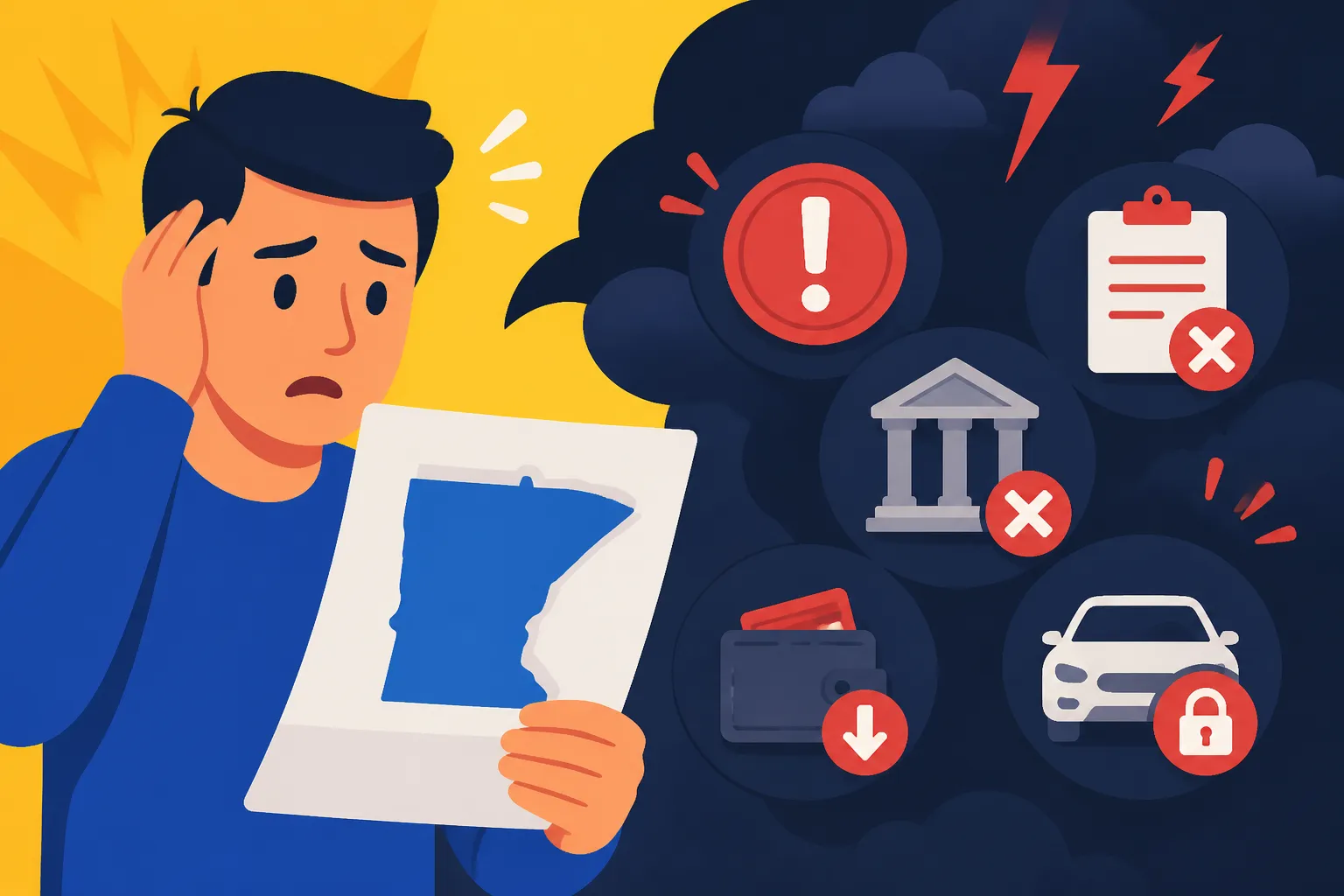
Once an estimated assessment becomes final, the state has legally established your debt. They can then take steps to secure that debt through a tax lien. A tax lien is a legal claim against your property, including real estate (like your home or land), vehicles, and sometimes even intangible assets. It publicly announces that you owe taxes and can severely impact your credit score. If you try to sell property that has a state tax lien on it, the lien must typically be satisfied before the sale can go through, meaning the state gets paid from the sale proceeds.
These liens can linger for years, even after you pay the tax, affecting your ability to get new loans, mortgages, or even rent an apartment. It’s a very serious consequence that extends beyond just the financial debt. For anyone considering purchasing property or taking out a major loan, a state tax lien can be a massive roadblock.
Wage Garnishments and Bank Levies
When all else fails, and you've ignored assessments and liens, state tax authorities have powerful collection tools at their disposal. The most common are wage garnishments and bank levies.
-
Wage Garnishment: This is when the state legally requires your employer to withhold a portion of your wages and send it directly to the tax agency to satisfy your outstanding tax debt. This happens without your direct consent, and your employer is legally obligated to comply. The amount garnished is usually a percentage of your disposable income and can significantly reduce your take-home pay, making it incredibly difficult to manage your daily finances. Imagine trying to pay rent, utilities, and groceries with a significant chunk of your paycheck suddenly missing. It’s a stressful situation that impacts every aspect of your financial life.
-
Bank Levy: A bank levy allows the state to seize funds directly from your bank accounts. They can instruct your bank to freeze your account and then transfer a portion or all of the funds to cover your tax debt. This can happen without prior warning from your bank and can leave you without access to your money for days or even weeks. It can bounce checks, cause overdraft fees, and disrupt your ability to pay essential bills.
These actions are typically a last resort for states, but they will use them if taxpayers remain unresponsive. It’s a clear indication that the state is serious about collecting its due and will go to great lengths to do so. The best way to avoid such drastic measures is to address your tax obligations proactively, even if it feels overwhelming at first.
Long-Term Repercussions and How to Rectify the Situation
The immediate financial hit from penalties and interest is just the beginning. Not filing state taxes can cast a long shadow over your financial future.
Impact on Credit and Future Financial Planning
A state tax lien, as mentioned, is a public record that significantly damages your credit score. This isn't a short-term ding; it can stay on your credit report for many years, even after the tax debt is paid. A poor credit score will make it harder, if not impossible, to:
- Get approved for loans: Mortgages, car loans, personal loans, and even small credit lines will become much harder to secure, and if you do get approved, the interest rates will be much higher, costing you more in the long run.
- Rent an apartment: Many landlords check credit reports, and a tax lien can signal financial instability, making it difficult to find housing.
- Obtain certain jobs: Some employers, particularly in financial or government sectors, conduct credit checks, and a lien could jeopardize your employment prospects.
- Start a business: Access to business loans or lines of credit can be severely hampered.
Beyond credit, the mental and emotional toll of constantly being pursued by a state tax agency can be immense. The stress of knowing you have an unresolved tax issue hanging over your head can affect your well-being and hinder your ability to focus on long-term financial planning, like saving for retirement. It also creates a barrier to important discussions like how RMDs and State Taxes might impact your withdrawals in the future.
Statute of Limitations and Tax Fraud
One common misconception is that if you wait long enough, the state will simply forget about your unfiled return. This is generally not true, especially when it comes to the statute of limitations for assessment. For federal taxes, the IRS typically has three years to assess additional tax from the date you file your return. Most states have similar statutes. However, here's the critical point: if you never file a return, the statute of limitations for assessing the tax generally never begins.
This means the state can pursue you for unfiled taxes indefinitely. There's no magical expiration date if you completely fail to file. This is a powerful tool for tax authorities to ensure compliance. While they might prioritize recent years, they absolutely can go back many years, even decades, if they discover you haven't filed.
Furthermore, deliberately avoiding filing and paying taxes can cross the line from a simple oversight into tax fraud. While accidentally missing a deadline might incur civil penalties, intentional tax evasion – which involves willful failure to file or willful understatement of income – can lead to criminal charges, substantial fines, and even imprisonment. States take tax fraud very seriously, and while it's a higher bar to prove than a simple failure to file, it's a risk you absolutely do not want to take.
Steps to Take If You Haven't Filed
If you find yourself in this situation, the absolute best thing you can do is take action immediately. Don't let fear or embarrassment paralyze you.
- Gather Records: Collect all your income documents (W-2s, 1099s, K-1s) for the unfiled years. Don't worry if you don't have everything; your employer or financial institutions can usually provide copies, or you can request wage and income transcripts from the IRS (which will often show state-reported income).
- Prepare and File All Past-Due Returns: This is the most crucial step. Even if you can't pay, file the returns to stop the accumulation of "failure to file" penalties and start the clock on the statute of limitations. You can use tax software like TurboTax to prepare past-due returns, though you may need to print and mail older years. Our guide on How to File State Taxes: Complete Guide can offer more detailed steps.
- Calculate Your Tax Liability: Determine exactly how much you owe for each year, including penalties and interest. This gives you a clear picture of the debt.
- Contact the State Tax Agency: Once you know what you owe, reach out to the state. Explain your situation. Most states are willing to work with taxpayers who are making an effort to resolve their debt. They may offer:
- Payment Plans: An installment agreement allows you to pay your tax debt over time, typically with interest still accruing. This is often preferable to levies or garnishments.
- Offer in Compromise (OIC): For certain circumstances, usually severe financial hardship, you might be able to settle your tax debt for a lower amount. This is a complex process and not available to everyone.
- Penalty Abatement: In some cases, if you have a reasonable cause for failing to file or pay (e.g., serious illness, natural disaster), the state might agree to waive some or all of the penalties, though you'll still owe the original tax and interest.
- Seek Professional Help: For complex situations, multiple unfiled years, or if you're facing large debts, consider hiring a tax professional, such as a CPA or an Enrolled Agent. They can help you prepare past-due returns, navigate negotiations with the state, and potentially reduce your overall burden.
Special Considerations for Common Scenarios
Life is rarely simple, and tax obligations can become even more complex when your circumstances aren't straightforward.
Moving Between States
Relocating from one state to another mid-year is a very common scenario that often leads to tax confusion. If you live in one state for part of the year and another for the rest, you typically become a "part-year resident" in both. This means you’ll often need to file a tax return in both states, reporting the income earned while you were a resident of each. Our guide on How to File a Part-Year Resident Return explains this process in detail.
The complexities don't stop there. Some states have specific residency tests beyond just the number of days you spend there. For example, your "domicile" (your true home, where you intend to return) plays a crucial role. If you moved from California to Texas, for instance, California might still consider you a resident for a period if you maintain strong ties there. Understanding State Tax Residency Rules Explained is vital to avoid double taxation. Many states offer a credit for taxes paid to another state to prevent you from being taxed twice on the same income, but you have to file correctly to claim it. This is why when you're Moving From California to Avoid State Tax, understanding the nuances is key.
If you don't file in all states where you have a filing obligation, you run the risk of one of those states eventually catching up to you. States share information, and if a W-2 shows income earned in a state where you didn't file, it can trigger an inquiry years down the line. It's much simpler to tackle Filing Taxes in Multiple States proactively than to deal with audits and penalties later.
Remote Workers
The rise of remote work has introduced a whole new layer of complexity to state income taxes. If you live in one state (your primary residence) but work remotely for an employer based in another state, who do you pay taxes to? It’s not always straightforward.
Some states, most notably New York, have what's known as the "convenience of the employer" rule. If your employer is based in New York and you work remotely from, say, New Jersey, New York might still claim your income is taxable there unless your employer requires you to work remotely for their convenience, not yours. This rule can lead to significant headaches for commuters who traditionally worked in New York City but now work from their home in New Jersey or Connecticut. We delve deeper into this specific challenge in our article on Remote Work State Taxes & Convenience of the Employer.
Even without a "convenience rule," you generally owe taxes to the state where you physically perform the work. This means if you live in Georgia and work remotely for a company in California, you typically owe Georgia income tax on that income. Your employer should be withholding for the correct state, but mistakes happen. If you're a remote worker and haven't properly accounted for your state tax obligations, you could be underpaying in your resident state, or mistakenly paying too much to your employer's state. Ignoring these nuances can easily lead to missed filings or underpayments in your actual state of residence, resulting in penalties.
Businesses and Independent Contractors
For small business owners and independent contractors (those receiving 1099s), the consequences of not filing state income taxes can be particularly severe. Unlike W-2 employees, you don't have an employer automatically withholding taxes from each paycheck. This means you're responsible for calculating and paying your estimated state taxes throughout the year. Forgetting this obligation can quickly lead to substantial underpayment penalties, in addition to failure-to-file and failure-to-pay penalties.
States often have specific requirements for businesses, including annual reports, franchise taxes, and other fees that are separate from individual income tax but often linked. Failing to file your individual state income tax return as a self-employed individual can also flag your business to the state, potentially leading to audits or scrutiny of your business operations. Our guide on State Estimated Tax Requirements can help you understand when and how to make these payments to avoid penalties.
Moreover, if you operate your business across state lines, perhaps selling goods online or providing services to clients in different states, your filing obligations multiply. You might need to file nonresident returns in multiple states where you have a "nexus" or significant economic activity. Missing these filings can lead to an even more complex web of penalties and back taxes across several jurisdictions, making the rectification process much more challenging.
| Penalty Type | Description | Typical State Rate/Amount |
|---|---|---|
| Failure to File | Charged for not filing your return by the due date. Usually a percentage of the unpaid tax, accruing monthly. | 5% of unpaid tax per month (capped at 25%) |
| Failure to Pay | Charged for not paying the tax due by the deadline, even if you filed on time. Also a percentage of the unpaid tax, accruing monthly. | 0.5% – 1% of unpaid tax per month (capped at 25%) |
| Underpayment | Charged if you didn't pay enough estimated tax throughout the year, usually for self-employed individuals. | Varies by state; often calculated based on a fixed rate or difference between tax paid and 90% of current year's tax liability. |
| Interest | Charged on any unpaid tax from the due date until paid, including on penalties. Accrues daily. | Varies by state; often prime rate + 1-3% |
| Tax Lien | Legal claim against your property, publicly notifying creditors of your tax debt. Impairs credit and asset sales. | Filed for significant unpaid balances. |
| Wage Garnishment | State legally requires your employer to withhold a portion of your wages and send it directly to the tax agency. | Varies by state, often a percentage of disposable income. |
| Bank Levy | State legally seizes funds from your bank accounts to satisfy outstanding tax debt. | Full or partial account seizure for the amount owed. |
Note: The specific rates and caps for penalties and interest vary significantly from state to state and can change annually. This table provides general examples.
Disclaimer
The information provided in this article is for general informational purposes only and does not constitute tax advice. State tax laws are complex and constantly changing. It is highly recommended to consult with a qualified tax professional or your state's Department of Revenue for advice tailored to your specific situation.