New Hampshire Interest & Dividends Tax Repeal
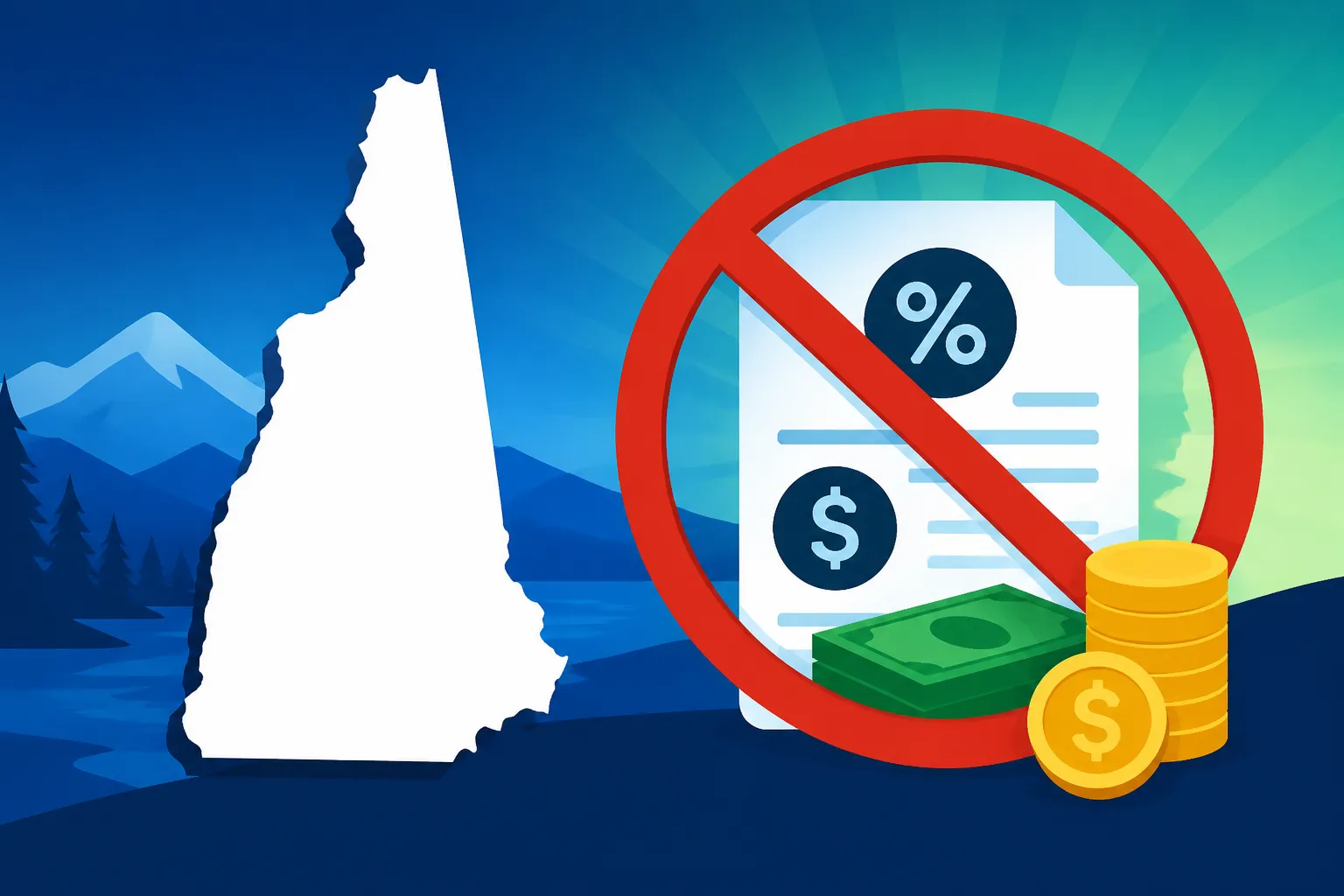
If you have lived in the Granite State for any length of time, you have likely dealt with the confusing irony of New Hampshire’s tax system: it is famous for having no earned income tax, yet retirees and investors were still getting hit with a bill every spring for their savings. This guide breaks down the full repeal of the New Hampshire Interest & Dividends Tax, explaining the timeline, the savings for residents, and what the future of tax-free living really looks like.
The Long Road to a Truly Income Tax Free State
For decades, New Hampshire held a unique position in the New England landscape. While neighbors like Massachusetts and Vermont maintained progressive income tax structures, New Hampshire touted its "Live Free or Die" motto by refusing to tax wages. However, the state’s Interest & Dividends (I&D) tax remained a stubborn asterisk on that reputation. It wasn't a tax on your paycheck, but it was certainly a tax on your financial success and your retirement security.
The frustration felt by many residents was palpable. Imagine spending forty years working in a state with no income tax, carefully tucking money away into brokerage accounts and high-yield savings, only to find that the moment you stopped working, the state finally decided to take a piece of your pie. For many seniors, this felt like a "stealth income tax" that penalized those who had saved the most diligently for their golden years.
What Exactly Was the Interest and Dividends Tax
The I&D tax was a 5% levy on income over a certain threshold derived from interest, dividends, and even some distributions from entities like trusts. It specifically targeted the passive income that fuels many retirement plans. For a single filer, the exemption was generally $2,400, while married couples filing jointly could exempt $4,800. Anything above that was subject to the state’s flat rate.
Because this tax did not apply to wages, it created a strange dynamic where a high-earning executive living in Bedford might pay zero state income tax on a $500,000 salary, while a retiree in Wolfeboro living off a modest portfolio could end up owing thousands. This perceived unfairness eventually led to a legislative push to join the ranks of States With No Income Tax (2026 Full List) in a more comprehensive way.
The Legislative Push for Repeal
The path to repeal was not a straight line. It involved years of political maneuvering and concerns about how the state would replace the lost revenue. Proponents argued that the tax discouraged wealthy investors from moving to New Hampshire or staying there once they reached retirement age. They pointed to the fact that States Phasing Out Income Tax often see an influx of capital and a more robust local economy.
Opponents, on the other hand, worried that the repeal would shift the tax burden onto property owners. New Hampshire already has some of the highest property taxes in the nation, and there was a fear that removing the I&D tax would leave a hole in the state budget that only local property assessments could fill. Despite these concerns, the desire to become a "pure" no-income-tax state won out, leading to the phase-out schedule that has finally reached its conclusion.
The Repeal Timeline and the 2025 Acceleration
If you were following the news a couple of years ago, you might remember a timeline that stretched all the way into 2027. The original plan was to slowly lower the rate by 1% each year until it vanished. However, New Hampshire’s strong fiscal performance and budget surpluses led lawmakers to accelerate the timeline significantly. This acceleration was a massive win for anyone planning their finances in the region.
Understanding the specific dates is crucial because tax law doesn't always align with the calendar year in the way we expect. For many, the transition period was confusing, leading to questions about whether they still owed money on gains realized in late 2024 or early 2025.
The Original Phase Out vs the Accelerated Schedule
Originally, the plan was a gradual sunset. The rate was set to drop from 5% to 4%, then 3%, and so on. But under House Bill 2, the legislature decided to rip the metaphorical Band-Aid off much faster. This was partly a response to the competitive tax landscape, as other states began States Cutting Income Taxes in 2026 to attract remote workers and businesses.
By moving the "zero percent" date forward, New Hampshire sent a clear signal to the rest of the country: if you want to protect your investment income, there is no better place in the Northeast. For residents using tools like SmartAsset to compare their tax liability across state lines, this move significantly changed the math in New Hampshire's favor, especially when compared to the high-tax environment of New York or Connecticut.
Tax Years 2024 and 2025 Explained
For the tax year 2024 (the return you likely filed in early 2025), the rate was already significantly reduced to 3%. This provided a nice "diet" version of the tax, allowing residents to keep more of their gains from a booming stock market. However, the real celebration began with the tax year starting January 1, 2025.
For all intents and purposes, for any income earned from interest and dividends on or after New Year's Day 2025, the tax rate is 0%. When you sit down to do your taxes in 2026, you will find that the I&D tax return is a thing of the past for current income. It is important to note, however, that the state still has the authority to audit previous years. If you haven't been paying your I&D tax for the last three years, the repeal doesn't give you a free pass on back taxes.
Comparing the Old and New Rates
To see just how much of an impact this has, look at the table below which shows the transition from the old regime to the current total repeal.
| Tax Year | I&D Tax Rate | Exemption (Single) | Exemption (Joint) |
|---|---|---|---|
| 2022 | 5.0% | $2,400 | $4,800 |
| 2023 | 4.0% | $2,400 | $4,800 |
| 2024 | 3.0% | $2,400 | $4,800 |
| 2025 | 0.0% (Repealed) | N/A | N/A |
| 2026 | 0.0% (Repealed) | N/A | N/A |
Impact on Retirees and Financial Planning
The repeal of the I&D tax is more than just a legislative footnote; it is a fundamental shift in how people approach retirement in New England. For decades, many "snowbirds" would maintain their primary residence in New Hampshire but were always looking over their shoulder at the tax bill. Others would move to Florida specifically to avoid these types of passive income taxes. Now, New Hampshire offers a competitive alternative that allows you to stay close to family and enjoy the four seasons without the tax penalty.
When you use a platform like SmartAsset to run a retirement "what-if" scenario, the elimination of a 5% tax on your secondary income streams can add tens of thousands of dollars back into your pocket over a twenty-year retirement. That is money that can be spent on travel, home renovations, or passed down to grandchildren.
Why New Hampshire is Now a Top-Tier Retirement Destination
With the I&D tax gone, New Hampshire officially enters the club of states that have no income tax of any kind. This makes it a "pure" tax haven for seniors. When you combine this with the fact that there is no state sales tax, the cost of living—at least from a tax perspective—becomes incredibly attractive.
We often hear from people asking, Does New Hampshire Have Income Tax? and the answer used to require a long, rambling explanation about interest and dividends. Now, the answer is a simple and resounding "No." For high-net-worth individuals, this is a game-changer. If you have a multi-million dollar portfolio generating $200,000 in dividends annually, you just gave yourself a $6,000 to $10,000 annual raise simply by the tax being repealed.
Estate Planning and Trust Considerations
The repeal also simplifies estate planning in the Granite State. Previously, certain types of trusts were subject to the I&D tax, which often led residents to set up complex out-of-state trusts in places like South Dakota or Nevada to shield their assets. With the repeal, those complexities often become unnecessary.
If you are a beneficiary of a trust living in Manchester or Concord, you no longer have to worry about the state taking a cut of the distributions you receive, provided those distributions are classified as interest or dividends. This makes New Hampshire an even more attractive place for multi-generational wealth preservation. It is always wise to check with a local professional, but the general rule is that the "tax wall" around New Hampshire has finally been completed.
Comparing New Hampshire to Florida and Texas
Many people moving out of high-tax states like Massachusetts or California often look at Florida or Texas first. While those states also have no income tax, New Hampshire now offers a similar tax profile without the extreme heat or the long-distance move.
However, it is important to look at the Is It Cheaper to Live in a State With No Income Tax? question holistically. While you save on income, interest, and dividends, New Hampshire will still get its revenue from somewhere. In this state, that "somewhere" is almost exclusively property taxes. If you are moving from a state with a 5% income tax but 1% property tax into New Hampshire, where property taxes can hover around 2% or higher, you need to do the math carefully. Using a tax calculator on SmartAsset can help you see if the I&D repeal actually saves you money once your new property tax bill arrives.
How the State Replaces the Revenue
One of the most common questions I get as a lifestyle blogger is, "If they aren't taxing my dividends, how is the state paying for the roads and schools?" It’s a fair point. New Hampshire operates on a very lean budget, but "lean" doesn't mean "zero." The state has a very specific "three-legged stool" approach to revenue, and the interest and dividends leg has now been removed.
This shift means the remaining legs—business taxes and property taxes—have to work a bit harder. Understanding this helps you be a more informed resident and prevents "tax shock" when you see your town’s property assessment.
The Reliance on Property Taxes
New Hampshire is famous (or infamous) for its property taxes. Because there is no broad-based income or sales tax, local municipalities rely almost entirely on property levies to fund education and local services. When the state repeals a tax like the I&D, it means less state-level aid might be available for towns, which can lead to local property tax hikes.
This is the classic New Hampshire trade-off. You get to keep every penny of your Apple stock dividends, but you might pay $12,000 a year in taxes on a modest three-bedroom home in a town like Londonderry or Exeter. For many, this is a trade they are happy to make because they have control over the property they buy, whereas they have less control over the market gains in their portfolio.
Business Profits and Enterprise Taxes
New Hampshire also generates a significant portion of its revenue through the Business Profits Tax (BPT) and the Business Enterprise Tax (BET). While individuals are breathing a sigh of relief over the I&D repeal, business owners still have to navigate a somewhat complex corporate tax landscape.
Fortunately, the state has also been lowering these business rates over the last few years to remain competitive with neighboring states. The goal is to create an environment where a business can grow, the owner can collect the profits tax-free at the personal level (thanks to the I&D repeal), and the state still gets a fair share from the business entity itself.
The Meals and Rooms Tax
Finally, there is the Meals and Rooms Tax. If you’ve ever gone out to dinner in Portsmouth or stayed at a hotel in the White Mountains, you’ve seen this 8.5% tax on your bill. This is New Hampshire’s way of taxing "consumption" and tourism without implementing a general sales tax that would hurt locals buying clothes or groceries.
This tax is a major revenue driver, especially during the foliage season and the summer months. By shifting the burden to tourists and those choosing to dine out, the state can afford to let residents keep their investment income. It’s a strategy that relies on the state’s natural beauty and popularity as a travel destination to keep the local tax burden low for residents.
Strategic Financial Planning in a Post-Repeal Era
Now that the tax is gone, how should you change your behavior? If you were previously holding off on selling certain assets or reinvesting dividends because you didn't want to trigger an I&D tax bill, the shackles are off. However, "tax-free" at the state level doesn't mean "tax-free" at the federal level.
You still have to deal with the IRS, and that is where most of your tax-planning energy should now be focused. But from a residency perspective, New Hampshire has become a much simpler place to live.
Timing Your Distributions
If you have been sitting on a large amount of accumulated interest in a non-retirement brokerage account, 2026 is the year to breathe easy. Previously, you might have consulted How State Tax Brackets Work: Marginal vs Effective to see how a large distribution would affect your state liability. Now, that concern is effectively eliminated.
You can now focus entirely on your federal tax brackets. If you are in a lower federal bracket, you can realize those gains without any "add-on" penalty from the state of New Hampshire. This is particularly useful for people who are "bridge-funding" their retirement—using brokerage assets to live on before they start taking Social Security or RMDs.
Moving to New Hampshire: A Reality Check
If you are reading this from Massachusetts and thinking about packing your bags, you aren't alone. We’ve seen a massive "border migration" of people moving just over the line to Salem, Nashua, or Hudson. But before you move, you must understand State Tax Residency Rules Explained.
Massachusetts is notoriously aggressive about tracking down former residents who claim to have moved but still spend significant time in the Bay State. If you move to New Hampshire to save on the I&D tax, you need to truly move. This means changing your driver's license, registering your car, and spending more than half the year in the Granite State. Massachusetts will look for any excuse to claim you are still a resident and tax your income—including your interest and dividends—at their rates.
Avoiding Double Taxation
For those who live in New Hampshire but work in a state with an income tax, the I&D repeal is a partial victory. You still have to pay taxes to the state where you work on your wages. However, your interest and dividends are generally taxed only by your state of residence.
Before the repeal, a New Hampshire resident working in Boston would pay MA tax on their salary and NH tax on their dividends. Now, you only pay the MA tax on the salary. This is a significant reduction in your total "tax footprint." You should look into How to Avoid Double Taxation Between States to ensure your withholdings are correct and that you aren't overpaying in jurisdictions that have no right to your passive income.
Common Misconceptions About New Hampshire’s Taxes
As we wrap up this guide, I want to address some of the "water cooler" talk I hear that isn't quite accurate. Just because the I&D tax is repealed doesn't mean New Hampshire is a free-for-all. There are still rules, and there are still ways the government collects its dues.
"New Hampshire Has No Taxes at All"
This is the biggest myth. While we don't have an income tax or a sales tax, we have a very high "tax burden" in other areas. If you own a high-value home, your property tax bill might be higher than the combined income and property tax bill of someone in a state like North Carolina.
It is all about where your money comes from. If you have a high income but a low-value home, New Hampshire is a paradise. If you are "house rich and cash poor," New Hampshire can actually be quite difficult. Always use a comprehensive tool like SmartAsset to look at your total tax burden, not just one specific tax.
"I Don't Need to File Anything Anymore"
For many people, the best part of the repeal isn't the money—it's the paperwork. The NH-1040 (the I&D tax form) was a notoriously clunky form. Starting with the 2025 tax year (filed in 2026), most residents will no longer have any filing requirement with the New Hampshire Department of Revenue Administration (DRA) at all.
However, if you own a business or have a rental property that is held in a business entity, you may still have to file the Business Enterprise Tax or Business Profits Tax forms. The repeal of the individual I&D tax does not automatically exempt business entities from their filing requirements.
The Future of New Hampshire’s Fiscal Policy
Is the repeal permanent? In the world of politics, "permanent" is a relative term. However, there is a very strong consensus in New Hampshire that the income tax—even a limited one like the I&D—is a non-starter. Both major parties in the state have, at various times, supported the move toward a more competitive tax structure.
As more people move to the state specifically for its tax-friendly status, the political cost of re-introducing such a tax becomes higher. New Hampshire has firmly planted its flag as the Most Tax-Friendly States for Retirees 2027, and it is unlikely to retreat from that position anytime soon.
Disclaimer
This guide is for informational purposes only and does not constitute professional tax, legal, or financial advice. Tax laws are subject to change, and individual circumstances vary significantly. You should consult with a qualified tax professional or financial advisor before making any decisions based on the information provided in this article.
The repeal of the New Hampshire Interest & Dividends tax represents a major shift for the state, officially making it one of the few true "no-income-tax" jurisdictions in the United States. For residents, this means more freedom, less paperwork, and a clearer path to a financially secure retirement. Whether you are a lifelong Granite Stater or someone considering a move to the North Country, the end of the I&D tax is a milestone worth celebrating.