Does New Hampshire Have Income Tax?
It can be incredibly confusing trying to figure out state taxes, especially when you hear a place like New Hampshire touted as a "no income tax state," but then you catch wind of something called an "interest and dividends tax." This guide is here to clear up that confusion and give you the real lowdown on New Hampshire's current tax landscape, helping you understand exactly what to expect if you live or plan to move to the Granite State. We'll dive deep into its unique tax structure and what it means for your wallet.
Unpacking the Myth: Does New Hampshire Actually Have an Income Tax?
For years, New Hampshire held a unique position among states with no broad-based personal income tax. However, it wasn't quite as simple as saying "no income tax" because of a specific levy on interest and dividends. This nuance often led to misunderstandings and a bit of a headache for those trying to get a clear picture of their tax obligations. While the state never taxed wages or salaries, the existence of the Interest and Dividends (I&D) Tax meant it wasn't entirely free of income-related taxation.
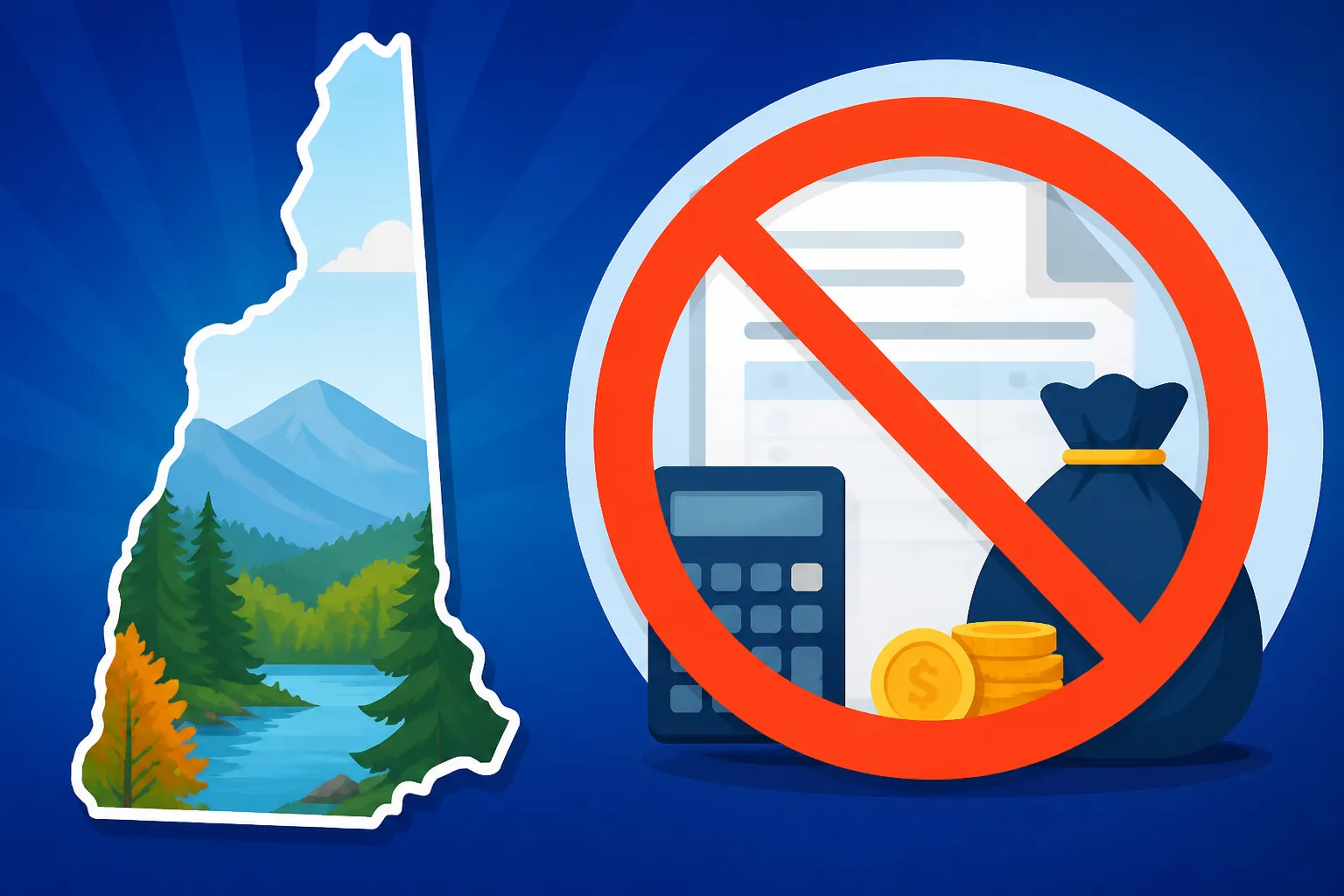
The good news, and what we're really here to talk about, is that this specific tax is now being phased out. This change represents a significant shift, truly solidifying New Hampshire's status as a state with no personal income tax on earnings. It's a big deal for retirees, investors, and anyone looking to manage their tax burden more effectively. So, if you've been wondering about those confusing reports, let's clear up the past and clarify the exciting present.
The Historical Reality: The Interest and Dividends Tax
Historically, New Hampshire had a 5% tax on interest and dividends for individuals, trusts, and estates. This wasn't a tax on all income, mind you, but specifically targeted investment income that exceeded a certain threshold. For example, in 2023, the exemption was generally $2,400 for a single filer, meaning only the amount over that threshold was subject to the 5% tax. It often came as a surprise to newcomers who heard "no income tax" and assumed all forms of income were exempt.
This particular tax was actually one of the oldest in the state's history, dating back to 1923. It was a critical revenue stream for New Hampshire, contributing to various state services. While it didn't impact those whose income primarily came from wages, it certainly affected retirees living off investments, or anyone with a substantial investment portfolio. If you were drawing income from your savings, bonds, stocks, or certain mutual funds, you likely found yourself filing a Form DP-10, the New Hampshire Interest and Dividends Tax Return.
Think about someone who moved from a high-tax state like California, expecting to shed all income tax burdens. They might have been thrilled to realize their salary wouldn't be taxed, but then faced a minor shock when their investment portfolio's earnings were still subject to the I&D tax. It wasn't the end of the world, but it definitely wasn't "no income tax" in the purest sense, creating a bit of a grey area that confused many, as acknowledged by financial platforms like SmartAsset.
The Recent Change: Phasing Out the I&D Tax
The landscape for New Hampshire taxes has changed significantly in recent years. In 2021, state lawmakers enacted legislation to gradually phase out the Interest and Dividends Tax. This wasn't an overnight change but a deliberate, planned reduction over several years. The process involved reducing the tax rate by one percentage point each year, starting in 2023.
For instance, the rate was 5% for tax year 2022. It dropped to 4% for 2023, then to 3% for 2024, and was scheduled to hit 2% for 2025. However, there's even better news! Thanks to further legislative action, the Interest and Dividends Tax will be fully repealed for tax periods beginning on or after January 1, 2025. This means that for the 2025 tax year (the returns you'll file in 2026), there will be absolutely no state-level tax on interest and dividends in New Hampshire. This change truly solidifies New Hampshire's position among the group of States With No Income Tax (2026 Full List).
This complete repeal has been met with enthusiasm, especially by retirees and those who rely heavily on investment income. It makes New Hampshire an even more attractive destination for those seeking to minimize their state tax burden on passive income. This move also reflects a broader trend among some states looking to entice residents and businesses with more favorable tax policies. You can learn more about this specific change in our article on the New Hampshire Interest & Dividends Tax Repeal.
Understanding New Hampshire's Current Tax System
With the Interest and Dividends Tax officially on its way out, New Hampshire firmly establishes itself as one of the few states that genuinely has no statewide personal income tax on earned wages or investment income. But that doesn't mean the state collects no revenue from its residents. Like all states, New Hampshire needs funds to operate its government, maintain infrastructure, and provide public services. The absence of an income tax and a general sales tax means that other forms of taxation bear a greater load, most notably property taxes.
This unique combination of low or no income and sales taxes, balanced by higher property taxes, creates a distinct financial environment. It's a critical factor for anyone considering a move or simply trying to understand their overall tax burden. Financial experts and resources like SmartAsset frequently highlight this balance when comparing states, emphasizing that a "no income tax" label doesn't equate to a "no tax" lifestyle.
No Broad-Based Personal Income Tax – For Real This Time
As of the 2025 tax year, when the interest and dividends tax is fully repealed, New Hampshire will truly stand as a state with no broad-based personal income tax. This means your wages, salaries, capital gains from selling property, or distributions from your 401(k) or IRA will not be subject to a state income tax. This is a significant draw for many, especially those who are high earners or retirees planning their golden years.
This lack of income tax extends to most types of retirement income as well. For instance, New Hampshire does not tax Social Security benefits, nor does it tax most pensions or 401(k) and IRA withdrawals. This makes it a very appealing state for those looking to stretch their retirement savings further, without a state government taking a slice of their hard-earned or saved income. This can be a huge relief, particularly when comparing it to states that do tax these income streams, which you can explore further in our guide to Retirement Income Exclusions by State.
However, it's important to differentiate between federal and state taxes. While New Hampshire won't tax these income sources, federal income tax rules still apply. So, while your state tax return might be simpler (or non-existent for many), you'll still need to factor in your federal tax obligations. The clarity around the complete absence of state income tax moving forward provides certainty for residents and potential new residents alike.
The Absence of a General Sales Tax
Adding another layer to New Hampshire's unique tax identity is the complete absence of a statewide general sales tax. This means when you head to the store to buy clothes, electronics, groceries (most states already exempt groceries), or pretty much anything else, you won't see an additional percentage tacked on at the register by the state. This is a noticeable difference, especially for those accustomed to paying 6%, 7%, or even more in sales tax in other states.
This lack of sales tax can make everyday purchases feel a little cheaper, and it certainly adds up for big-ticket items. Imagine buying a new car or furniture; the savings can be substantial compared to a neighboring state like Massachusetts or Maine, where you'd be paying state sales tax on top of the purchase price. This policy is a huge draw for shoppers, both residents and those from surrounding states, contributing to New Hampshire's reputation as a retail-friendly destination.
However, it's worth noting that while there's no general sales tax, New Hampshire does impose some specific excise taxes on certain goods and services, such as tobacco, alcohol, and motor fuels. These are not considered general sales taxes and are typically built into the price or applied at the point of sale in specific industries. So, while you won't pay extra on a new pair of jeans, you will pay taxes on your gasoline or a bottle of wine.
The Elephant in the Room: Property Taxes
Given the absence of a broad-based personal income tax and a general sales tax, how does New Hampshire fund itself? The answer, in large part, is through property taxes. New Hampshire has some of the highest property tax rates in the entire country, which is the primary way municipalities and the state fund local services like schools, police, fire departments, and local infrastructure. This is the significant trade-off for not having income or sales taxes.
For example, homeowners in New Hampshire might find their annual property tax bill to be substantially higher than in states with income or sales taxes, even on homes of comparable value. The average effective property tax rate in New Hampshire is often cited as one of the highest nationally, frequently ranking in the top five states. This means that while your paycheck might not be reduced by state income tax, a considerable portion of your housing budget will go towards property taxes.
Understanding this balance is crucial. A lower take-home pay due to income tax might feel more direct, but a high property tax bill can be a consistent, substantial expense that homeowners must budget for. Before celebrating the "no income tax" status, it's vital to research property tax rates in specific towns and counties, as these can vary significantly even within the state. Resources like SmartAsset provide detailed breakdowns of property tax rates by county and municipality, helping individuals assess the full financial picture. This is a key consideration if you're exploring if it's Cheaper to Live in a State With No Income Tax?.
Beyond Income and Sales: Other Taxes You'll Encounter
While the lack of broad personal income tax and general sales tax are New Hampshire's most famous tax features, it doesn't mean the state is tax-free. Like any functioning state, it relies on a diverse set of revenue streams to fund its budget. Understanding these other taxes is crucial for a complete picture of New Hampshire's fiscal environment, especially for businesses and consumers of specific goods and services.
This mix of taxes highlights how different states choose to generate revenue. Some lean heavily on income, others on sales, and a select few, like New Hampshire, rely more on property and business taxes. It’s a delicate balance, and each approach has its own set of economic and social implications for residents and local economies.
Business Taxes and Their Impact
New Hampshire does impose taxes on businesses operating within the state. These generally include a Business Profits Tax (BPT) and a Business Enterprise Tax (BET). The BPT is levied on a business's gross business profits, while the BET is a tax on the enterprise value tax base, which essentially includes compensation paid, interest paid, and dividends paid by the business. These taxes apply to various entities, including corporations, partnerships, and limited liability companies.
For instance, a small business owner considering opening a shop in Portsmouth or Nashua might avoid state personal income tax on their individual earnings but would certainly be subject to these business taxes. The rates for the BPT and BET have also seen reductions in recent years, reflecting the state's efforts to remain competitive and business-friendly. As of 2023, the BPT rate was 7.5% and the BET rate was 0.50%, with further reductions possible in subsequent years.
These business taxes contribute significantly to the state's overall revenue. They mean that while individual residents might enjoy a lower direct tax burden, the cost of doing business is factored into the state's economic model. This can indirectly affect consumers through pricing, but directly impacts entrepreneurs and corporations who choose to establish their operations in New Hampshire.
Specific Excise Taxes and Fees
Beyond property and business taxes, New Hampshire also collects revenue through various excise taxes and fees. These are typically levied on specific goods or services, often with the intent to regulate consumption or fund specific programs.
Some notable examples include:
- Tobacco Taxes: There's a tax on cigarettes and other tobacco products. This is common in almost every state and often aims to discourage smoking while generating revenue for public health initiatives.
- Alcohol Taxes: New Hampshire operates a state liquor commission, which controls the sale of alcoholic beverages. While there isn't a direct sales tax on alcohol, the pricing structure includes state markups that effectively generate revenue for the state. This system also means New Hampshire often has competitive prices on alcohol, drawing shoppers from neighboring states.
- Motor Fuel Taxes: A per-gallon tax is applied to gasoline and diesel fuel. This revenue is primarily earmarked for maintaining and improving the state's roads and bridges, a critical infrastructure need.
- Vehicle Registration and Licensing Fees: When you register your car or renew your driver's license, you'll pay various fees. These are standard in all states and contribute to the Department of Motor Vehicles' operations.
- Meals and Rooms Tax: While not a general sales tax, New Hampshire does levy a tax on prepared food, lodging, and vehicle rentals. This is often referred to as a "tourism tax" and is a significant revenue source from visitors and residents dining out or staying in hotels. For instance, if you enjoy a meal at a restaurant in Manchester, you'll see an 8.5% Meals and Rooms Tax added to your bill.
These specific taxes and fees are part of the broader revenue pie, ensuring that various sectors and activities contribute to the state's financial health without relying on a broad personal income or sales tax.
How New Hampshire Funds Its State Services
With no income tax and no general sales tax, it begs the question: how does New Hampshire manage to fund its state services? It's a valid concern, especially when you consider the scope of services a modern state government provides, from education and healthcare to public safety and transportation.
The primary pillars of New Hampshire's revenue structure are property taxes, which account for a substantial portion of local and state funding (especially for schools), and business taxes (BPT and BET). Beyond these, the state relies on the aforementioned specific excise taxes (on fuel, tobacco, and the Meals and Rooms Tax), as well as various licenses, permits, and fees. The state also receives federal funding, like all other states, for certain programs and projects.
A significant portion of property tax revenue is collected at the local level by towns and cities, which then use these funds to support local schools and municipal services. The state's general fund, which pays for state-level operations, is heavily dependent on the business taxes and the Meals and Rooms Tax. This diversified, albeit unique, approach allows New Hampshire to provide its services without directly taxing individual wages or most consumer purchases. Understanding this system is key to grasping the overall Cost of Living vs Taxes by State in New Hampshire.
Comparing New Hampshire to Other States
New Hampshire's tax structure often makes it a focal point in discussions about tax-friendly states. Its status as a "no income tax" state (now truly without the I&D tax) and a "no sales tax" state sets it apart. However, it's crucial to remember that a lower tax burden in one area often means a higher burden in another. No state is entirely "tax-free," and understanding the trade-offs is essential when comparing New Hampshire to its neighbors or other desirable locations.
This comparison isn't just about the numbers; it's about the entire tax picture and how it aligns with your personal financial situation. Whether you're a high-income earner, a retiree, or a growing family, different states will offer different advantages and disadvantages based on their revenue models.
The "No Income Tax" States Club
New Hampshire is one of nine states that currently (or will soon, with the repeal) impose no statewide personal income tax. The others include Alaska, Florida, Nevada, South Dakota, Tennessee, Texas, Washington, and Wyoming. Each of these states has its own unique way of making up for the lack of income tax revenue. For example, Washington has a capital gains tax, while Florida and Texas rely heavily on sales and property taxes. You can dive deeper into this topic by exploring Which States Have No Income Tax in 2026?.
Comparing New Hampshire to these other "no income tax" states reveals its distinct flavor:
- New Hampshire: No income tax, no general sales tax, but high property taxes.
- Florida: No income tax, but a 6% statewide sales tax (with local additions) and moderate to high property taxes.
- Texas: No income tax, but a high statewide sales tax (6.25% plus local up to 2%) and generally high property taxes.
- Washington: No income tax, but a high sales tax (6.5% statewide plus local additions) and moderate property taxes, alongside a capital gains tax.
As you can see, while they share the "no income tax" label, the overall tax burden and structure can vary significantly. New Hampshire's lack of a general sales tax is a major differentiator even within this exclusive club.
The Trade-Offs: High Property Taxes in Perspective
The primary trade-off for New Hampshire's income and sales tax exemptions is its high property tax burden. While this can seem daunting, it's essential to put it into perspective. For some individuals, particularly high-income earners or those with significant investment income who live in expensive homes, the absence of income tax can still result in a lower overall tax bill despite the elevated property taxes.
Consider a professional earning a high six-figure salary who also has substantial investment income. In a state like New York or California, they would face very high state income taxes, potentially well over 10% of their earnings. Even with a high property tax bill in New Hampshire, the total amount saved on state income tax could outweigh the additional property tax cost. On the other hand, individuals with lower incomes who rent or own modest homes might find that the higher property tax (which can be passed on through rent) offsets any perceived benefit.
Here's a simplified comparison:
| Tax Type | New Hampshire (2025 onwards) | Massachusetts (Example Neighbor) |
|---|---|---|
| State Personal Income Tax | None | Flat 5% (with exemptions/credits) |
| Interest/Dividends Tax | None | Flat 5% (as part of income tax) |
| General Sales Tax | None | 6.25% |
| Average Property Tax Rate | Among the highest (e.g., ~1.89%) | Moderate (e.g., ~1.17%) |
| Primary Funding Sources | Property, Business, Meals/Rooms Tax | Income, Sales, Property Taxes |
*Rates are approximate and can vary.
This table, which is also available on financial platforms like SmartAsset, highlights the stark differences. While Massachusetts has a flat 5% income tax and a 6.25% sales tax, its property taxes are generally lower. For someone making a decision, it boils down to what kind of income they have, how much they spend, and the value of their property. You can find more comprehensive data in our article on States With No Income Tax but High Other Taxes.
Making an Informed Decision About Residency
Ultimately, deciding whether New Hampshire's tax structure is beneficial for you requires a holistic view of your personal finances and lifestyle. It's not just about "Does New Hampshire Have Income Tax?" but also about how the complete tax picture, including property taxes and any specific excise taxes, affects your budget.
If you are a high-income earner, an investor, or a retiree with significant pension or investment income, New Hampshire's lack of personal income and sales tax can be incredibly attractive. You might find that your overall tax burden is lower here compared to states with high income taxes. However, if you are on a fixed income, rent your home, or own a property of significant value, the high property taxes could be a substantial financial commitment.
It's also important to consider the Cost of Living vs Taxes by State. While taxes are a big piece of the puzzle, housing costs, utilities, and other expenses also play a huge role. Before making any big moves, researching specific town property tax rates and consulting with a financial advisor is always a smart idea. For those contemplating a move, understanding how to formally change your state residency for taxes is also a crucial step to ensure you fully benefit from New Hampshire's tax advantages.
Disclaimer
Please remember that tax laws are constantly changing, and while we strive for accuracy, this information is for general guidance only and not tax advice. It's always best to consult with a qualified tax professional for personalized advice regarding your specific financial situation.