New Hampshire Income Tax Rate 2026
Deciding where to plant your roots often comes down to a simple calculation of what stays in your pocket versus what goes to the state. For years, New Hampshire has teased residents with the promise of no income tax, only to keep a lingering tax on investments that frustrated retirees and savers alike. This guide breaks down the New Hampshire Income Tax Rate 2026, confirming the final repeal of the interest and dividends tax and what this total "tax-free" status actually means for your cost of living.
The Milestone Year: New Hampshire Income Tax Rate 2026
If you have been following Granite State politics for a while, you know that the "Live Free or Die" motto has always had a bit of an asterisk next to it when it came to taxes. While the state has famously avoided taxing "earned income"—the wages you get from your 9-to-5 or your side hustle—it didn't let your money work for you entirely for free. For decades, the state maintained an Interest and Dividends (I&D) tax that targeted the very people the state hoped to attract: retirees and savvy investors.
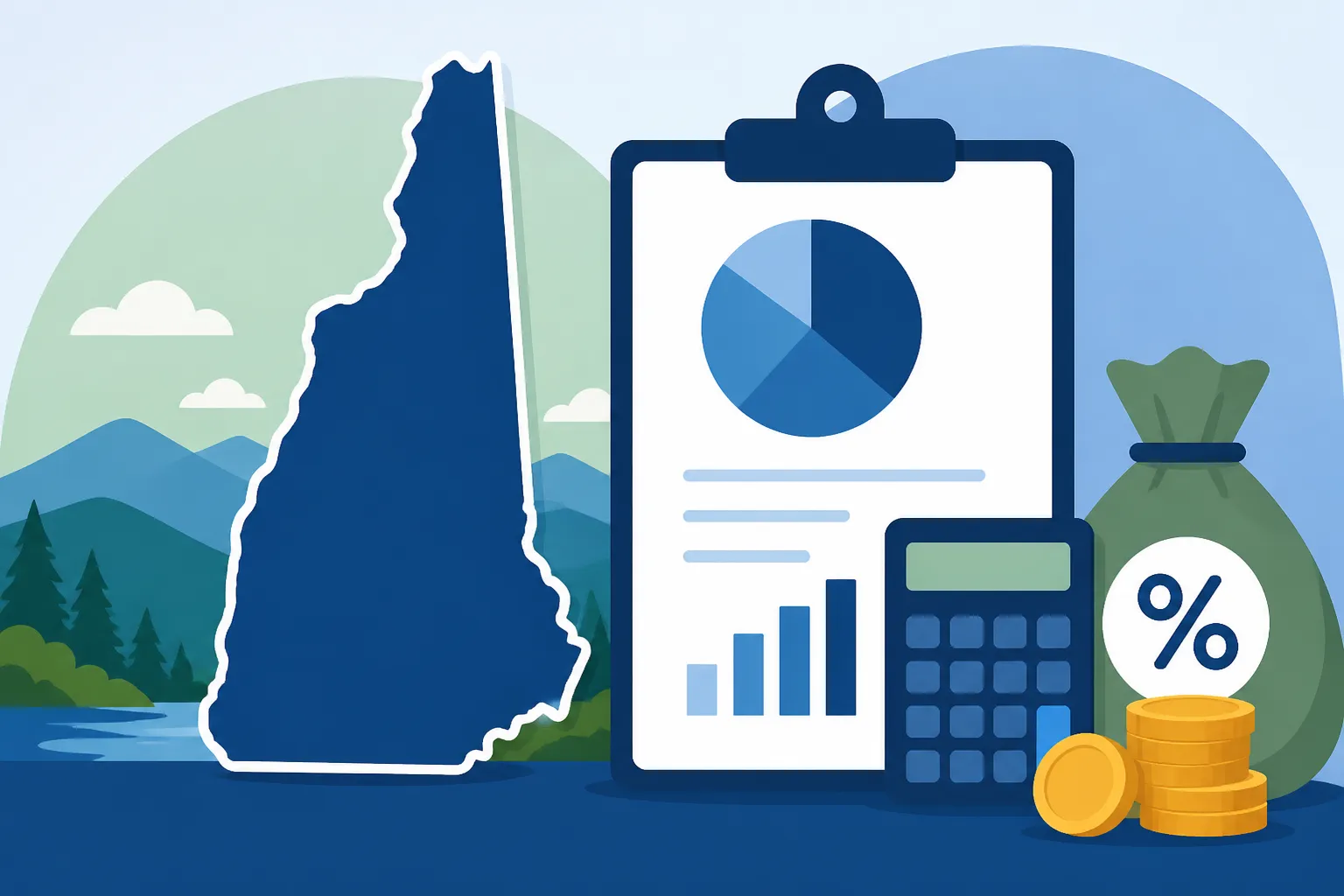
The big news for 2026 is that the asterisk is officially gone. As of January 1, 2026, the New Hampshire income tax rate is 0% across the board. This is the culmination of a multi-year phase-out plan designed to make the state one of the most competitive in the country for wealth retention. For the first time in modern history, residents will not owe the state a single penny on their wages, their bank account interest, or their stock dividends.
This transition isn't just a win for the wealthy. It is a massive relief for middle-class seniors who rely on their 401(k) distributions and modest investment portfolios to cover rising heating oil costs and grocery bills. When you look at the States With No Income Tax (2026 Full List), New Hampshire now stands in a much stronger position because it has removed the one "gotcha" tax that used to catch newcomers off guard. If you are planning your move, using a resource like SmartAsset can help you visualize how much more of your portfolio you get to keep under this 0% regime compared to neighboring states.
The History and Final Death of the I&D Tax
To understand why 2026 is such a landmark year, we have to look at the slow, sometimes painful death of the Interest and Dividends tax. This tax was originally set at 5%, which was high enough to cause significant "tax migration" to places like Florida or Tennessee. Legislators realized that to keep capital within state lines, they needed to simplify the code.
The phase-out started in earnest a few years ago. In 2023, the rate dropped to 4%, then to 3% in 2024, and it sits at 2% for the 2025 tax year. The New Hampshire Interest & Dividends Tax Repeal was structured this way to allow the state budget to adjust to the loss of revenue without triggering a fiscal crisis. By the time 2026 rolls around, the tax is legally dead.
| Tax Year | Interest & Dividends Rate | Earned Income Rate | Total State Income Tax Status |
|---|---|---|---|
| 2023 | 4.0% | 0% | Phase-out Stage 1 |
| 2024 | 3.0% | 0% | Phase-out Stage 2 |
| 2025 | 2.0% | 0% | Final Year of I&D Tax |
| 2026 | 0.0% | 0% | Fully Repealed / Tax-Free |
For anyone who has been filing a New Hampshire tax return just to report a few thousand dollars in dividends, 2026 is the year you can finally stop. You might want to check the Do I Need to File State Taxes? (Thresholds) to see if you still have any lingering obligations from previous years, but for the 2026 tax year and beyond, that administrative headache is effectively cured. It is a rare moment where a government makes its own forms obsolete for the majority of its citizens.
Comparing New Hampshire to Its New England Neighbors
Living in New England is expensive; there is no way to sugarcoat it. However, the 2026 repeal puts New Hampshire in a league of its own within the region. When you compare it to the Massachusetts Tax Brackets 2026, the difference is staggering. Massachusetts residents are not only dealing with a flat tax on wages but also a recently enacted "millionaire's tax" surtax on high earners.
For many people living in the southern part of the state, the proximity to Boston is a double-edged sword. If you live in Nashua or Salem but work in Boston, you still have to deal with the "commuter tax" reality. You will likely find yourself asking, Do I Pay State Income Tax Where I Live or Work?, and the answer is usually that you pay where the work is performed. However, by living in New Hampshire, you at least avoid a second layer of taxation on your non-wage income, like capital gains or interest, which would be taxable if you lived across the border in Lowell or Methuen.
Even when looking at States Phasing Out Income Tax across the country, New Hampshire's move to 0% is more aggressive than the incremental cuts seen in places like North Carolina or Kentucky. The lack of a progressive structure means you don't have to worry about How State Tax Brackets Work: Marginal vs Effective rates; the math is simply zero. This simplicity is a major draw for people who use platforms like SmartAsset to find the most efficient places to grow their wealth.
The Catch: Property Taxes and the Total Tax Burden
I would be doing you a disservice if I told you that New Hampshire is "cheap." While the state income tax is hitting zero in 2026, the state still needs to pave the roads and fund the schools. New Hampshire has a very specific way of doing this: high property taxes.
When people search for States With No Income Tax but High Other Taxes, New Hampshire is almost always at the top of the list. Because there is no broad-based sales tax and no income tax, the burden shifts almost entirely to homeowners. It is not uncommon for a modest three-bedroom home in a town like Derry or Concord to have an annual property tax bill exceeding $8,000 or $10,000.
This creates a "pay to play" environment. If you own a high-value home but have a low income, the lack of an income tax doesn't help you much when the property tax bill arrives. On the flip side, if you are a high-earner with a modest home, New Hampshire is a financial goldmine. Before you pack your bags, it is wise to use a SmartAsset property tax calculator to see if the income tax savings actually cover the increased cost of your mortgage's escrow account.
Residency and Tax Planning
With the total repeal of the I&D tax, more people than ever are looking to claim New Hampshire as their primary residence. However, just saying you live in the Granite State isn't enough to satisfy the tax collectors in the state you might be leaving. If you are moving from a high-tax state like New York or California, you need to be meticulous.
Understanding How to Change Your State Residency for Taxes is vital. States are becoming increasingly aggressive in "exit audits," looking for any proof that you haven't truly left. They will check your cell phone records, where you register your cars, and even where you walk your dog. If you want to enjoy the 0% New Hampshire Income Tax Rate 2026, you must establish a clear "domicile" in the state.
This involves more than just buying a condo in the White Mountains. You should review the State Tax Residency Rules Explained to ensure you are meeting the 183-day rule and showing "intent" to remain in New Hampshire. SmartAsset provides excellent checklists for people moving across state lines, helping you ensure that your "Live Free or Die" lifestyle doesn't result in a "Pay Twice or Die" tax bill from your former home state.
Final Thoughts for Granite State Taxpayers
The move to a 0% tax rate on all forms of personal income in 2026 is a bold statement of New Hampshire's economic identity. It reinforces the state as a bastion of fiscal conservatism in a region known for high government spending. For investors, retirees, and remote workers, the landscape is incredibly favorable.
Just remember that the "total tax burden" is what matters. While you celebrate the disappearance of the I&D tax return, keep a close eye on your local town's mill rate. New Hampshire is a state of trade-offs: you get the freedom from income tax, but you bear the responsibility of funding your community directly through your real estate. For those who can balance that equation, 2026 is looking like a very profitable year.
Disclaimer
This guide is provided for informational purposes only and does not constitute professional tax, legal, or financial advice. Tax laws, including the repeal of the Interest and Dividends tax in New Hampshire, are subject to legislative changes. Always consult with a qualified tax professional or CPA regarding your specific financial situation and residency status.