Texas Tax Brackets 2026
Many people move to Texas expecting a massive financial windfall only to realize that while the state doesn't take a bite out of their paycheck, other costs can creep up quickly. This guide breaks down the reality of Texas Tax Brackets 2026—or the lack thereof—and explains exactly how the state balances its budget without a personal income tax.
Does Texas Have a State Income Tax in 2026
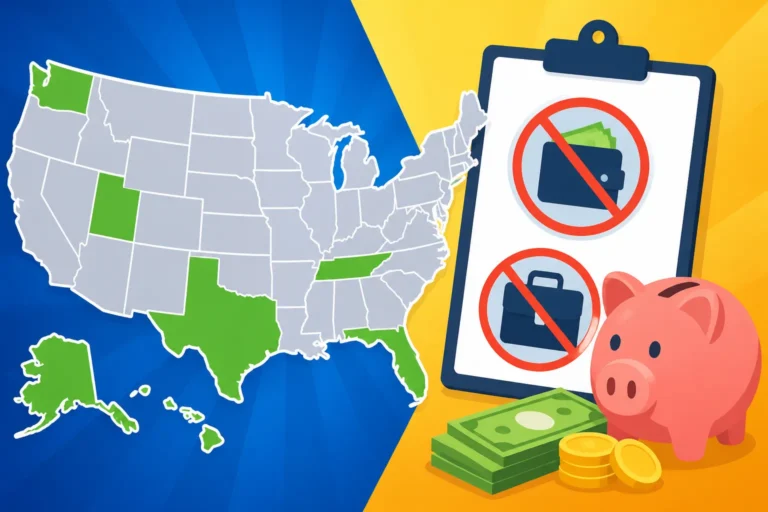
The short, sweet, and legally binding answer is no. As we head into 2026, Texas remains a titan among the States With No Income Tax (2026 Full List). This isn't just a temporary policy or a lucky streak of legislative sessions; it is actually written into the Texas Constitution. In 2019, Texas voters overwhelmingly approved Proposition 4, which made it significantly harder for any future legislature to ever impose an individual income tax. It would essentially require another massive statewide vote to change this, and in a state that prides itself on its "open for business" and "low tax" identity, that is about as likely as a blizzard in July in Laredo.
If you are looking at your paycheck in 2026 and wondering where the state withholding is, you won't find it. Whether you are a high-earning executive in the tech hubs of Austin or a dedicated teacher in the sprawling suburbs of Katy, your state income tax rate is a flat 0%. This is often the primary driver for the massive migration we see from places like California, Illinois, and New York. When you look at the California vs Texas Taxes Compared data, the immediate savings on the income tax side can be tens of thousands of dollars for upper-middle-class families.
However, it is important to understand that "no income tax" does not mean "no taxes." I have seen so many people pack their bags and head to the Lone Star State thinking their cost of living will drop by 40%, only to find that the state finds other ways to keep the lights on and the highways paved. The "zero bracket" is a powerful tool for wealth building, but it requires a different kind of financial discipline because the tax burden is shifted from your earnings to your consumption and your property.
How the State Funds Itself Without Income Tax Brackets
Since there are no Texas Tax Brackets 2026 to discuss in the traditional sense, we have to look at the "hidden" brackets that exist in the form of property and sales taxes. Texas has one of the highest property tax burdens in the country. This is the great trade-off. While the state doesn't touch your salary, local governments—including school districts, counties, and cities—rely heavily on the value of your home to fund their operations.
I often tell people that in Texas, you don't "pay" for your house; you "rent" it from the government. Even after your mortgage is paid off, you will still be facing a substantial annual bill. For many residents, the lack of an income tax is a wash because of the property tax rates. If you are trying to figure out the math, using a tool like SmartAsset can help you calculate your total tax liability, including these property levies, to see if the move actually saves you money.
The state also relies heavily on sales and use taxes. The base state sales tax is 6.25%, but local jurisdictions can add up to another 2%, bringing the total in most major metropolitan areas like Dallas, Houston, and San Antonio to 8.25%. This is a regressive form of taxation, meaning it hits lower-income earners harder as a percentage of their total income. When you're browsing the aisles at a H-E-B or buying a new truck, that 8.25% adds up quickly. You can read more about how this compares to other regions in our guide on Is It Cheaper to Live in a State With No Income Tax?
Property Tax Relief and the 2026 Outlook
In recent years, the Texas Legislature has felt the heat from homeowners frustrated by skyrocketing appraisals. In late 2023, a massive property tax relief bill was passed, which increased the homestead exemption and put caps on how much certain appraisals can rise. As we move forward, these protections are vital for keeping the "Texas Miracle" alive.
Without these exemptions, many seniors on fixed incomes would be priced out of their homes. This is a common pain point I hear about in my community—the fear that a booming real estate market will eventually lead to a tax bill that exceeds one's ability to pay. When people ask Does Texas Have State Income Tax? they are usually hoping for a "yes" to the savings, but they often forget to ask about the "no" regarding property tax stability.
Sales Tax and Consumption Trends
Texas also taxes a wide variety of services that other states might leave alone. While most groceries and over-the-counter medicines are exempt, almost everything else is fair game. In 2026, expect the state to continue leaning on this revenue stream. If you're a high spender, you might actually end up paying more in total taxes in Texas than you would in a state with a modest income tax and low property taxes.
SmartAsset provides excellent breakdowns of how consumption taxes affect different income brackets, which is a great resource if you're trying to budget for a move. It's all about where you are in your life cycle; if you're in your peak earning years and living modestly, Texas is a gold mine. If you're retired in a high-value home and love to shop, the math gets a bit murkier.
| Tax Type | Rate/Status | Notes |
|---|---|---|
| Personal Income Tax | 0% | Constitutionally prohibited |
| State Sales Tax | 6.25% | Base rate for the entire state |
| Local Sales Tax | Up to 2% | Added by cities, counties, and transit |
| Corporate Franchise Tax | Variable | Applies to certain business entities |
| Property Tax | ~1.6% to 2.2% | Varies wildly by county and school district |
| Gasoline Tax | $0.20 per gallon | One of the lower rates in the US |
Comparing the Texas Model to Other States
When we look at Is Texas Really Tax Free? The Full Picture, it becomes clear that Texas is essentially the opposite of states like California or New York. In those states, the government takes a percentage of your labor. In Texas, the government takes a percentage of your "stuff"—your house, your car, and your purchases.
For 2026, Texas continues to compete with Florida and Tennessee for the title of the most business-friendly state. However, each has a different flavor. Florida, for example, relies heavily on tourism taxes to offset the lack of income tax. Texas, lacking a Disney World on every corner, relies more on the energy sector and property owners.
If you're moving from a state with a progressive tax system, the lack of brackets in Texas can feel like a massive raise. In a progressive system, the more you earn, the higher your percentage. In Texas, whether you make $50,000 or $5,000,000, the state income tax is the same: zero. This makes Texas one of the best places for high-income earners to accumulate wealth quickly. SmartAsset often highlights this in their "best states for taxpayers" lists, as the "effective" tax rate for high earners in Texas is often much lower than the national average.
The Impact on Remote Workers
With the rise of the "work from anywhere" culture, many professionals are looking at Texas Residency Requirements for Taxes to see if they can establish a home base in Austin or Dallas while working for a company in a high-tax state. If you live in Texas and work remotely for a company in a state without a "convenience of the employer" rule, you generally won't owe state income tax to either state.
This is a massive loophole that many are taking advantage of today. However, you have to be careful. If you're moving from a state like New York or California, they won't let you go easily. You need to prove you have truly abandoned your old domicile. Using a resource like SmartAsset can help you calculate the potential savings of this move, but you'll also want to make sure you follow the How to Establish Residency in Texas for Taxes guidelines to avoid an audit from your previous state.
Business Taxes in 2026
While there is no personal income tax, businesses in Texas are subject to the Franchise Tax. This is often called the "margin tax." While most small businesses don't meet the revenue threshold to actually pay it, it is a factor for larger corporations. Even so, the overall business tax climate in Texas is consistently ranked among the top five in the nation. This leads to more jobs, which leads to more people moving in, which keeps the property tax engine humming along.
Managing Your Finances in a No-Tax State
One of the biggest frustrations people face in Texas is the unpredictability of property taxes compared to the stability of a flat income tax. Your income might stay the same, but if your neighborhood becomes "trendy," your tax bill could jump 10% in a single year.
To manage this, I highly recommend "tax protesting." In Texas, this is a local pastime. Every Spring, homeowners receive their appraisal notices, and every Spring, thousands of them head to the appraisal district office to argue that their house isn't worth what the city says it is. It's a bit of a dance, and while it won't zero out your bill, it can save you hundreds or thousands of dollars over time.
You should also keep an eye on the Texas Tax Deadline 2026 for property tax payments. Usually, these are due by January 31st of the following year. If you have a mortgage, your lender likely handles this through an escrow account, but you should still review your annual statement to ensure they are collecting enough. There is nothing worse than an "escrow shortage" notice that jumps your monthly mortgage payment by $500 because the taxes went up.
Retirement Planning
Texas is a popular destination for retirees because it doesn't tax Social Security or pension income. If you've spent 30 years in a state like Illinois or New Jersey, moving to Texas for your "golden years" can significantly extend your nest egg. Since you're no longer earning a high salary, the lack of income tax is less of a "perk" and more of a "protection" for your savings.
However, you must be careful about the property tax side of things. Many retirees choose to downsize or move to more rural counties where the tax rates are lower. Using tools from SmartAsset can help you model your retirement income against various Texas counties to find the "sweet spot" where your savings will last the longest.
Final Thoughts on Texas Taxes
The reality of living in Texas is that you have a lot more control over your tax bill than you do in other states. You can't control the income tax in California—if you earn the money, they take their cut. In Texas, you can control your tax bill by choosing where you live and how much you spend. If you live in a modest home in a county with lower rates and you're mindful of your spending, you can achieve a very low effective tax rate.
It’s about trade-offs, and for most people I talk to, they’d rather have the money in their paycheck today and deal with the property tax bill later. Just don't go in blind. Do your homework, use the calculators available on SmartAsset, and understand that while the "brackets" are gone, the bills still come. Texas is a land of opportunity, but it’s also a land of personal responsibility when it comes to your finances.
State Income Tax Disclaimer
This guide is for informational purposes only and does not constitute professional tax, legal, or financial advice. Tax laws, including property tax exemptions and franchise tax thresholds in Texas, are subject to change by the state legislature. Always consult with a qualified Certified Public Accountant (CPA) or tax professional regarding your specific financial situation and residency status.