New York Tax Brackets 2026
Living in the Empire State often feels like you are working two jobs: one for your employer and one to keep up with the state's complex tax code. If you have ever opened your pay stub and felt a wave of frustration at the gap between your gross and net pay, you are not alone. This guide meticulously breaks down the New York Tax Brackets 2026 to help you navigate your finances and plan for the coming tax year with total clarity.
The Reality of New York Progressive Tax Rates
New York operates under a progressive income tax system, which is a fancy way of saying the more you earn, the more the state asks for. Unlike states that use a flat percentage for everyone, New York scales its rates significantly as you climb the career ladder. For many residents, this creates a "bracket creep" sensation where a hard-earned raise or a bonus actually pushes them into a tier that eats up a larger chunk of their incremental income. Understanding how these tiers stack up is the first step toward reclaiming control over your financial planning.
When we talk about How State Tax Brackets Work: Marginal vs Effective, it is important to remember that you do not pay your highest rate on every dollar you earn. Instead, your income is like a bucket that fills up different levels. The first few thousand dollars are taxed at the lowest rate, and only the dollars that spill over into the next "bucket" are taxed at the higher percentage. This is a common point of confusion that leads many people to fear moving into a higher bracket, but in reality, only the income above the threshold is hit with the higher rate.
To get a truly accurate picture of what hits your bank account every Friday, many taxpayers turn to tools like SmartAsset to run scenarios on their specific salary and filing status. Because New York’s system is so granular, seeing the numbers laid out in a calculator can take the sting out of the mystery. It is also worth noting that New York has historically been one of the Highest Income Tax States in 2026, largely due to the extensive social programs and infrastructure projects the state maintains, which requires a robust tax base.
New York Tax Brackets 2026 for Single Filers
For those filing as single, the 2026 brackets continue to follow a multi-tier structure that begins at 4% and reaches toward the double digits for high earners. If you are a young professional starting your career in Albany or Buffalo, you might find yourself in the lower-to-middle tiers. However, as your income approaches the six-figure mark, the jump in rates becomes more noticeable. This is where the "New York tax" really starts to impact your ability to save for a home or invest for the future.
The state regularly adjusts these thresholds to account for inflation, a process known as indexing. For the 2026 tax year, single filers should pay close attention to the mid-range brackets, which often capture the bulk of the state's workforce. When you look at the New York Income Tax Brackets 2026 specifically for single individuals, you can see how quickly the rates move from the base 4% up through 4.5%, 5.25%, and beyond. It is a steep climb compared to many neighboring states, which is a frequent source of grumbling during tax season.
Managing your withholding is critical for single filers who might have side hustles or freelance income. New York is notorious for its aggressive collection and audit processes, so making sure you are in the right bracket early in the year can prevent a massive bill come April. If you are unsure about your specific situation, using a resource like SmartAsset can help you determine if you should be setting more aside each month. Being proactive is the only way to avoid the dreaded "Why Do I Owe State Taxes This Year?" realization when you sit down to file your return.
Married Filing Jointly and the Marriage Penalty
Couples in New York often face a different set of challenges. While the thresholds for married couples filing jointly are generally wider than those for single filers, the combined income can often push a household into a much higher bracket than either individual would face on their own. This is sometimes referred to as the marriage penalty, especially if both spouses are high earners. The state attempts to balance this, but the reality is that a dual-income household in New York City or Westchester can very quickly find themselves in the 6.85% or 9.65% tiers.
For the 2026 tax year, the brackets for married couples are designed to provide some relief for lower and middle-income families, but that relief thins out as you move up. Many couples find that they need to revisit their New York Tax Credits & Deductions Guide to find ways to offset the higher rates. This might include contributing more to 401(k) plans or utilizing health savings accounts to lower their taxable income base before the state even gets a look at it.
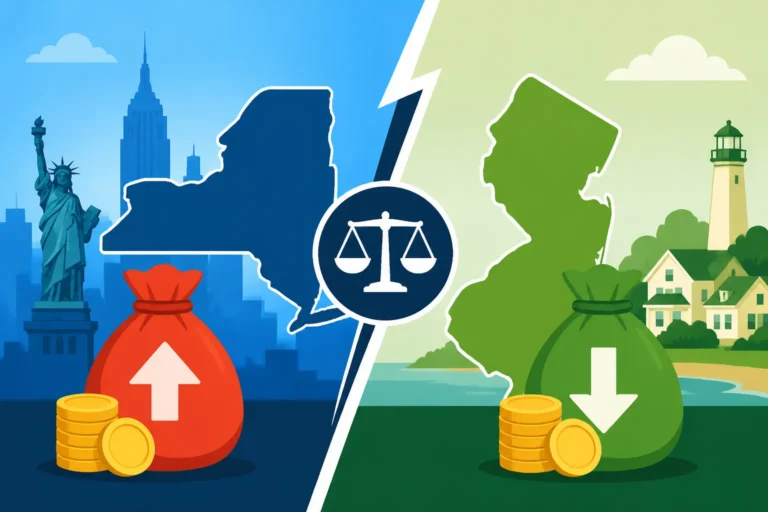
It is also helpful to compare your situation to other regions. For example, some couples consider moving across state lines to avoid these high tiers, though that brings its own set of problems. Looking at New York vs New Jersey Taxes Compared can give you a better sense of whether your current location is truly the best fit for your household's financial goals. In many cases, the high state taxes are a trade-off for the higher salaries available in the New York metropolitan area, but that math is becoming harder for many families to justify.
| Taxable Income Range (Single Filers) | 2026 Tax Rate |
|---|---|
| $0 – $8,500 | 4.00% |
| $8,501 – $11,700 | 4.50% |
| $11,701 – $13,900 | 5.25% |
| $13,901 – $21,400 | 5.90% |
| $21,401 – $80,650 | 5.85% |
| $80,651 – $215,400 | 6.25% |
| $215,401 – $1,077,550 | 6.85% |
| $1,077,551 – $5,000,000 | 9.65% |
| Over $5,000,000 | 10.90% |
The Impact of Local Income Taxes in New York City and Yonkers
One of the most frustrating aspects for residents of the five boroughs is the "double dip" of income taxes. If you live in New York City, you don't just pay the state; you also pay a dedicated New York City personal income tax. This makes the effective tax rate for city dwellers among the highest in the entire country. When you are looking at your budget, you cannot just look at the state brackets; you have to overlay the city's additional 3.078% to 3.876% on top of everything else.
The city tax is administered by the state, so it all comes out of the same paycheck, but the impact is profound. For someone earning a high salary in Manhattan, the combined state and city marginal rate can easily exceed 13%. This is why NYC Income Tax Explained is such a vital topic for anyone considering a move to the city or negotiating a salary. It is a significant "cost of doing business" for living in one of the world's most vibrant cities, but it requires a very specific type of financial discipline.
Yonkers residents face a similar, though slightly less aggressive, situation. They pay a "resident income tax surcharge," which is essentially a percentage of their state tax. If you work in the city but live elsewhere, you might also be subject to different rules. Navigating Local & City Income Taxes in the US can be a headache, but for New Yorkers, it is an essential part of the annual ritual. SmartAsset provides excellent local-level breakdowns that can help you see exactly how much of your money is staying in your community versus going to Albany.
Deductions and Credits to Lower Your Bill
The good news—if you can call it that—is that New York offers several ways to chip away at that tax bill. The New York Standard Deduction 2026 is the first line of defense. Most taxpayers take the standard deduction because it is straightforward and generally higher than what they could itemize unless they have significant mortgage interest or charitable contributions. However, New York’s standard deduction is not indexed for inflation in the same way the federal one is, which means its value can erode over time as the cost of living rises.
If you have children, the Empire State Child Credit is a major help. Unlike some federal credits, New York’s version can provide a meaningful refund even if you don't owe much in taxes. Additionally, for those looking toward the future, the New York 529 Deduction Limit allows parents to deduct up to $5,000 ($10,000 for married couples) in contributions to a 529 college savings plan. This is an "above-the-line" deduction, meaning it reduces your taxable income directly, which can sometimes be enough to keep you from sliding into a higher tax bracket.
Another area where New Yorkers can save is through various "green" incentives. The state is very aggressive about its climate goals and offers credits for everything from solar panel installations to certain energy-efficient home improvements. While these don't change your tax bracket, they act as a dollar-for-dollar reduction in what you owe. When you are calculating your potential liability, it is worth spending an afternoon looking through the New York Tax Credits & Deductions Guide to ensure you aren't leaving money on the table that the state is perfectly willing to let you keep.
Residency Rules and the 183 Day Test
With the rise of remote work, many people are questioning if they even need to be "residents" of New York for tax purposes. This is a dangerous game to play without knowing the rules. New York is one of the most aggressive states in the country when it comes to "residency audits." They use something called the "Convenience of the Employer" rule, which means if your office is in New York, the state generally considers your income taxable by New York, even if you are working from a home office in another state for your own convenience.
To truly stop paying New York taxes, you usually have to prove you have changed your "domicile"—your true, permanent home. This involves more than just spending 183 days outside the state. New York auditors will look at where your "near and dear" items are, where you are registered to vote, and even where your family spends their time. Understanding New York Residency Requirements for Taxes is essential before you make a move, as the state has been known to chase former residents for years if they don't properly sever their ties.
The 183-Day Rule for State Taxes is a common threshold, but in New York, it is just one of many tests. If you maintain a "permanent place of abode" in the state and spend more than half the year there, you are a statutory resident. This catches many people who have second homes in the Hamptons or the Catskills. If you find yourself split between states, you might want to look into How to Avoid Double Taxation Between States to ensure you are getting credit for taxes paid elsewhere, so you don't end up paying the full freight to two different governors.
Planning for Retirement in New York
If you are nearing the end of your career, you might be wondering if New York is a place where you can afford to retire. The state is surprisingly friendly to retirees in some specific ways. For starters, New York does not tax Social Security benefits, which is a massive relief compared to some other states. Furthermore, there is a significant exclusion for private pensions and retirement distributions.
For the 2026 tax year, New York allows residents aged 59 ½ and older to exclude up to $20,000 of their qualifying retirement income from their state taxable income. This applies to pensions, 401(k) withdrawals, and IRA distributions. When you combine this with the lack of tax on Social Security, many seniors find that their New York State Tax Rate If I Make $100,000 in retirement is significantly lower than it was when they were working.
However, you still have to deal with the high cost of property taxes and sales tax, which often offsets the income tax benefits. Many New Yorkers choose to "snowbird" to avoid the harshest parts of the year and the tax code. If you are considering this, make sure to read up on Snowbird & Dual-Residency Taxes to ensure you aren't accidentally triggering a residency audit while you are trying to enjoy your golden years in a warmer climate.
State Tax Disclaimer
The information provided in this guide is for educational and informational purposes only and does not constitute professional tax, legal, or financial advice. Tax laws, including brackets, credits, and deduction limits, are subject to frequent changes by state legislatures and may be updated after the publication of this article. Every individual's financial situation is unique, and factors such as local taxes, residency status, and specific income types can significantly alter your tax liability. You should consult with a qualified tax professional or certified public accountant (CPA) before making any financial decisions or filing your tax returns. The author and publisher are not responsible for any errors or omissions, or for the results obtained from the use of this information.