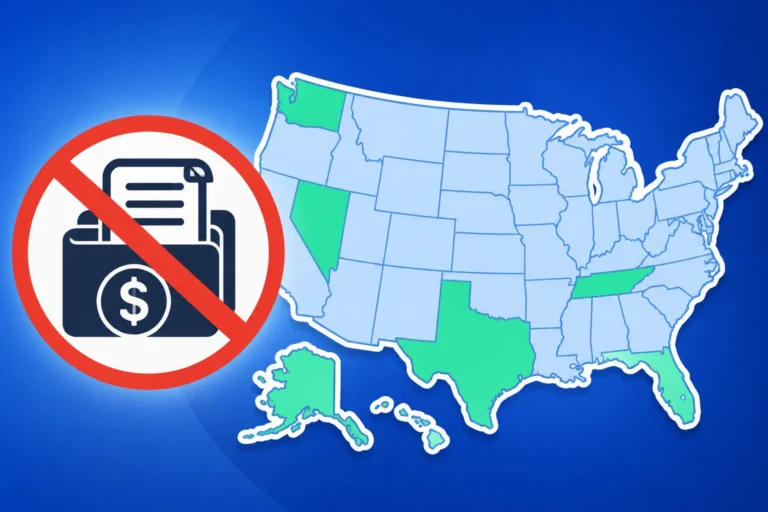
State Standard Deduction vs Itemized (2026)
Navigating state taxes can feel like a labyrinth, especially when you're trying to figure out if you should take the easy route with a standard deduction or dive into the nitty-gritty of itemizing. It's a common frustration, trying to balance simplicity with maximizing your tax savings, and it often feels like you need a crystal ball to make the right call. This comprehensive guide is here to shed light on the state standard deduction versus itemized deductions, helping you understand the differences, the state-specific rules, and how to make the best decision for your unique financial situation.
Understanding the Basics of State Tax Deductions
When it comes to filing your state income taxes, one of the first big decisions you'll face is whether to take the standard deduction or itemize your deductions. It's a choice that can significantly impact your taxable income and, ultimately, how much you pay (or get back!) from the state. Let's break down what each of these options truly means.
What is a Standard Deduction at the State Level?
Think of the state standard deduction as a fixed dollar amount that nearly every taxpayer is allowed to subtract from their adjusted gross income (AGI) before calculating their tax liability. It's essentially a no-questions-asked reduction designed to simplify the tax filing process for millions of people. You don't need to keep receipts or prove you incurred certain expenses; you just claim the set amount that your state offers based on your filing status (e.g., single, married filing jointly, head of household).
The beauty of the standard deduction is its simplicity. For many, especially those who don't own a home or have extensive medical expenses, it's often the most straightforward and beneficial option. For instance, if you're a single filer in a state like Colorado and your standard deduction is, say, $15,000 for 2026, you simply reduce your taxable income by that amount. It helps level the playing field, ensuring that everyone gets a basic deduction without needing to track every last expense. This is generally similar to how it works on your federal return, but the amounts and rules are entirely separate at the state level.
What is Itemized Deduction and When is it Used?
On the flip side, itemized deductions allow you to subtract specific, allowable expenses from your AGI. This is where things get a bit more involved, requiring you to meticulously track and document a variety of costs you've incurred throughout the year. Common categories of itemized deductions include mortgage interest, state and local taxes (property taxes, income taxes, vehicle registration fees, etc.), medical expenses exceeding a certain percentage of your AGI, and charitable contributions.
Itemizing is typically used when the sum of your eligible itemized expenses exceeds your state's standard deduction amount. If you own a home with a hefty mortgage, have significant unreimbursed medical bills, or are particularly generous with charitable donations, itemizing might be your golden ticket to a lower tax bill. For example, a couple in Maryland who pays substantial mortgage interest and property taxes might find that their combined itemized deductions far surpass Maryland's standard deduction, making itemizing the clear winner for them. It's all about adding up those individual expenses to see if they collectively beat the standard deduction offered by your state.
The Critical Choice: Standard vs. Itemized
Deciding between taking the standard deduction or itemizing can feel like a high-stakes gamble, but it doesn't have to be. It's a practical decision based on simple math and a careful look at your financial situation for the year. The key is understanding when one option clearly outweighs the other.
The Break-Even Point: When Itemizing Makes Sense
The decision to itemize really boils down to what we call the "break-even point." This is the threshold where your total eligible itemized expenses surpass the flat dollar amount of your state's standard deduction. If your itemized deductions add up to more than the standard deduction, then itemizing will result in a lower taxable income and, therefore, a lower tax bill. If they don't, the standard deduction is your simpler and more advantageous choice.
Consider a scenario: Maria, a single filer in Virginia, has a state standard deduction of $8,500 for 2026. If she owns a home and paid $6,000 in mortgage interest, $2,000 in state income taxes, and made $1,000 in charitable donations, her total itemized deductions would be $9,000. In this case, $9,000 is greater than the $8,500 standard deduction, so Maria would benefit by itemizing. However, if her mortgage interest was only $4,000, bringing her total itemized deductions to $7,000, she would be better off taking the standard deduction. It’s a simple comparison, but one that requires you to actually add up those itemized expenses.
State-Specific Nuances for Deduction Choices
Here's where things can get a little tricky: state tax laws are not a carbon copy of federal laws, and they certainly aren't uniform across all 50 states. Many people mistakenly assume that if they took the federal standard deduction, they must do the same for their state return, or vice versa. This isn't always true. Some states, like California, allow you to choose independently, meaning you could take the federal standard deduction but still itemize on your state return if it benefits you. Conversely, some states might require you to make the same choice you made on your federal return.
It's also crucial to remember that each state has its own set of rules regarding what expenses are deductible and what the limits are. For example, while the federal government has a $10,000 cap on the State and Local Tax (SALT) deduction for federal itemizing, a state might have different limitations or even additional deductions not recognized by the IRS. This makes understanding the nuances of your specific state's tax code absolutely vital. It's not enough to know how your federal taxes work; you need to understand the specifics of your state's tax laws, especially if you're trying to figure out States That Require Same Deduction as Federal. This can also be different from your federal deductions. For more detail, you might want to explore the differences between your State Standard Deduction vs Federal.
Diving Deep into State Standard Deductions
The standard deduction is a cornerstone of tax simplification for many, but its actual amount and how it's determined can vary wildly from one state to the next. Understanding these underlying mechanisms helps demystify why your state's standard deduction looks the way it does.
How States Set Their Standard Deduction Amounts
Each state's legislature and Department of Revenue play a significant role in setting its standard deduction amounts. These figures aren't pulled out of thin air; they're often the result of careful consideration of several factors. One major influence is the state's overall revenue needs – a higher standard deduction means less taxable income for residents, potentially leading to lower tax revenue for the state. Lawmakers must balance the desire to provide tax relief to citizens with the need to fund public services.
Another key factor is the cost of living within the state. States with a generally higher cost of living might offer a more generous standard deduction to offset residents' expenses, though this isn't always a direct correlation. Political decisions and legislative priorities also come into play; for example, a state government aiming to reduce tax burdens on low- and middle-income families might opt to increase the standard deduction. Some states even index their standard deductions to inflation, meaning the amount automatically adjusts each year to account for rising prices, offering a consistent form of tax relief without needing new legislation every single year.
Key States and Their 2026 Standard Deduction Figures
While providing an exhaustive list for every state is beyond the scope here, it's helpful to look at a few examples to illustrate the variations. For 2026, you'll see a broad spectrum of standard deduction amounts across the nation. For instance, a state like California generally has higher standard deduction amounts compared to some other states, reflecting its high cost of living. For single filers in California, the projected standard deduction for 2026 might be around $5,700, while married filing jointly could be $11,400. In contrast, a state like New York might see amounts around $8,500 for single filers and $17,000 for married filing jointly.
It's important to remember that these figures are dynamic and can be updated annually by state legislatures or through inflation adjustments. For the most up-to-date and comprehensive list, you'd typically refer to your state's Department of Revenue website or reliable financial planning tools. Many taxpayers rely on resources like SmartAsset to quickly look up state-specific tax details, including standard deductions. To get a broader picture of how your state compares, you can always check out a guide on State-by-State Standard Deductions 2026. For specific details, make sure to look up the California Standard Deduction 2026 or the New York Standard Deduction 2026 if those apply to you.
| State Example | Filing Status | Estimated 2026 Standard Deduction | Notes |
|---|---|---|---|
| California | Single | ~$5,700 | Often adjusted for inflation. |
| California | Married Filing Jointly | ~$11,400 | |
| New York | Single | ~$8,500 | Varies by AGI range in some cases. |
| New York | Married Filing Jointly | ~$17,000 | |
| Colorado | Single | ~$15,000 | State standard deduction significantly higher. |
| Colorado | Married Filing Jointly | ~$30,000 | |
| Illinois | All Filers | ~$2,550 per exemption | Lower flat exemption amount, not a traditional standard deduction. |
| Georgia | Single | ~$5,400 | Often adjusted annually. |
| Georgia | Married Filing Jointly | ~$7,400 |
Note: These amounts are estimated for 2026 and are subject to change. Always refer to official state tax authority publications for the most accurate and current information.
Exploring State Itemized Deductions Beyond Federal
While many state itemized deductions mirror what you see on your federal return, states often introduce their own unique twists and turns. This can lead to unexpected tax savings if you know where to look and what to track.
Common Categories of State Itemized Deductions
Most states that allow itemized deductions will recognize many of the same categories as the federal government. For homeowners, deducting mortgage interest remains a significant benefit. If you’re carrying a substantial home loan, the interest you pay each year can really add up, potentially pushing you past the standard deduction threshold. Similarly, charitable contributions made to qualified organizations are often deductible, mirroring the federal rules. This encourages generosity, allowing taxpayers to support causes they care about while also reducing their taxable income.
Medical expenses are another common itemized deduction, though states often have their own thresholds. Federally, you can typically deduct medical expenses exceeding a certain percentage of your adjusted gross income (AGI), such as 7.5% or 10%. States might adopt this same threshold, or they could have a different one, making it easier or harder to claim these deductions. And, of course, the big one is State and Local Taxes (SALT). This includes property taxes, state income taxes (if you pay them), and even some local sales taxes or vehicle registration fees. While the federal SALT deduction has a well-known $10,000 cap, states themselves don't typically have such a limitation on their own itemized deductions, allowing you to deduct the full amount paid to other localities within the state, though you still contend with the federal cap when itemizing on your federal return.
Unique State-Specific Itemized Deductions and Credits
This is where state tax codes really get interesting and diverge from federal norms. Beyond the usual suspects, many states offer unique deductions or credits tailored to their own policy goals and residents' needs. For instance, contributing to a 529 college savings plan often comes with a state income tax deduction. While contributions to 529 plans aren't federally deductible, many states want to encourage saving for higher education. Indiana, for example, offers a generous tax credit for contributions to its CollegeChoice 529 plan, while New York offers a deduction up to a certain limit. For a comprehensive look, check out 529 Plan Tax Deductions by State.
Another significant area of state-specific relief revolves around property taxes. Even in states with no income tax, property taxes can be substantial. Many states, including places like Florida, offer homestead exemptions that reduce the taxable value of your primary residence, and some offer property tax credits directly reducing your tax bill. These can be particularly beneficial for seniors or low-income homeowners. Exploring Property Tax Credits & Homestead Exemptions by State can reveal significant savings. Renters aren't always left out either; some states, such as California and Minnesota, offer renters' tax credits to help offset the cost of housing. Beyond housing, some states incentivize environmentally friendly choices. For example, some offer State Solar Tax Credits 2026 for installing solar panels or other energy-efficient home improvements, directly reducing your state tax liability. It truly pays to research your specific state's offerings, as these unique deductions and credits can add up to substantial savings.
The Impact of the SALT Cap on State Itemizing
For many years, taxpayers could deduct an unlimited amount of state and local taxes (SALT) on their federal income tax returns if they chose to itemize. This changed dramatically with the Tax Cuts and Jobs Act (TCJA) of 2017, introducing a cap that continues to significantly impact itemizing decisions for many.
Understanding the $10,000 Federal SALT Cap
The federal SALT cap limits the total amount of state and local taxes that an individual can deduct on their federal income tax return to $10,000 per household, regardless of filing status. This cap applies to property taxes, state income taxes, and sales taxes combined. Before this cap, it wasn't uncommon for high-income earners or those living in states with high property taxes and income taxes (like New York, New Jersey, or California) to deduct tens of thousands of dollars in SALT. The introduction of the $10,000 cap significantly reduced the benefit of itemizing for many, pushing more taxpayers towards taking the federal standard deduction.
Imagine a homeowner in Bergen County, New Jersey, who pays $15,000 in property taxes and another $8,000 in state income taxes. Before the cap, they could have deducted the full $23,000 on their federal return. With the $10,000 SALT cap in place, they can now only deduct $10,000, even though they paid significantly more. This means $13,000 of their state and local tax payments are no longer deductible at the federal level, effectively increasing their federal taxable income. This change often forces individuals in high-tax states to carefully re-evaluate whether itemizing still makes sense for them. While the specific figure mentioned in How the SALT Cap ($40,000) Affects State Taxes might refer to older proposals or state-specific limitations, the core federal cap remains a key consideration for many filers.
State-Level Workarounds and the PTET Election
States, particularly those with high tax burdens, were quick to recognize the adverse impact of the federal SALT cap on their residents. In response, many states have introduced workarounds, with the most prominent being the Pass-Through Entity (PTE) tax election, also known as the SALT Cap workaround. This strategy allows pass-through entities (like partnerships and S corporations) to pay income taxes at the entity level, rather than having individual owners pay them on their personal returns.
Here's why it works: the federal SALT cap applies to individual taxpayers. By having the business entity pay the state income tax, that payment becomes a deductible business expense for the entity, reducing its taxable income at the federal level before any income flows through to the owners. The owners then receive a credit for the taxes paid by the entity on their state personal income tax returns. States like California, New York, New Jersey, and Illinois have implemented some form of a PTET election. For a small business owner in California, this can mean effectively circumventing the federal $10,000 SALT cap and getting a full deduction for their state and local taxes through their business. It's a complex, but often very effective, strategy for business owners impacted by the federal SALT limitation.
Practical Tips for Maximizing Your State Tax Deductions
Whether you decide to take the standard deduction or itemize, there are proactive steps you can take throughout the year to ensure you're making the most of your state tax situation. It's not just about what you do at tax time, but how you prepare.
Record Keeping and Organization Best Practices
The golden rule of itemizing deductions is impeccable record keeping. Without proper documentation, even legitimate expenses can't be claimed. Start by creating a dedicated system for tax-related documents. This could be a physical folder for receipts and statements, or a digital folder on your computer with scans and electronic records. The key is consistency. Throughout the year, as you incur expenses that might be deductible—like medical bills, charitable donations, or home improvement costs if they lead to deductible interest—immediately save the proof of payment.
Think about common itemized expenses and how you can track them:
- Medical Expenses: Keep all receipts from doctor visits, prescriptions, dental work, and even mileage logs for trips to medical appointments.
- Charitable Contributions: Save acknowledgment letters from charities for cash donations, and detailed records for non-cash contributions.
- Mortgage Interest & Property Taxes: Your mortgage lender will send you Form 1098, which includes the interest paid. Your property tax statements are also crucial.
- State and Local Taxes: Keep records of estimated state tax payments, state income tax withheld from your paychecks, and vehicle registration fees.
An organized approach saves you immense stress during tax season and ensures you don't miss out on valuable deductions simply because you can't find the paperwork.
Using Tax Software and Professional Advice
In today's digital age, tax software has become an invaluable tool for many. Programs like TurboTax or H&R Block's TaxAct are designed to walk you through the process, prompting you for various income sources and expenses. Crucially, they can often automatically compare your potential itemized deductions against your state's standard deduction, recommending the option that yields the lowest tax liability. This automation takes a lot of the guesswork out of the equation and can be a huge time-saver. Many of these programs are also updated annually to reflect the latest state tax laws and deduction amounts.
However, tax software has its limits. If your financial situation is particularly complex—perhaps you've moved states mid-year, have income from multiple states, own a small business, or have unique investments—a professional tax advisor can be an invaluable resource. They possess in-depth knowledge of state tax codes and can identify deductions or credits you might overlook. A professional can also provide personalized advice on strategies for future tax years and help you understand how to navigate scenarios like Filing Taxes in Multiple States. While there's a cost involved, the potential savings and peace of mind can far outweigh the expense, helping you learn How to Maximize State Tax Deductions effectively. Sometimes, it’s worth the investment to ensure you’re doing everything correctly and efficiently.
Common Misconceptions About State Tax Deductions
The world of taxes is rife with myths and misunderstandings, and state tax deductions are no exception. Clearing up these common misconceptions can save you from costly mistakes and ensure you're not leaving money on the table.
Believing Federal Rules Apply Universally
One of the most widespread misconceptions is assuming that state tax laws perfectly mirror federal tax laws. This couldn't be further from the truth. While many states use federal adjusted gross income (AGI) as a starting point for their tax calculations, what happens after that can be wildly different. A deduction that is perfectly valid on your federal return might not be recognized by your state, or vice versa. For example, some states might offer deductions for certain types of income (like military retirement pay) or expenses that the federal government does not.
Consider this: Federally, you can deduct up to $3,000 in capital losses that exceed capital gains. Your state might have a different limit, or even treat capital gains and losses differently entirely. Similarly, the federal government offers a standard deduction, but your state's standard deduction amount, eligibility rules, and even the categories of itemized deductions allowed can vary significantly. Always remember that when you're filing your state return, you're operating under a separate set of rules from your federal return. This independent nature is why it's so important to consult state-specific tax guides and resources rather than making assumptions based on your federal filing experience.
Overlooking Refundable vs. Non-Refundable Credits
Another common area of confusion lies in understanding the difference between tax deductions and tax credits, and specifically, between refundable and non-refundable tax credits. A deduction reduces your taxable income, which in turn reduces your overall tax liability. A credit, on the other hand, directly reduces your tax bill dollar-for-dollar. So, a $100 deduction might save you $5 if you're in a 5% tax bracket, but a $100 credit saves you the full $100.
The distinction between refundable and non-refundable credits is even more critical. A non-refundable credit can reduce your tax liability to zero, but you won't get any money back if the credit amount exceeds your tax owed. For example, if you owe $500 in state taxes and have a $700 non-refundable credit, your tax bill will go down to $0, but you won't get a $200 refund. In contrast, a refundable credit can reduce your tax liability below zero, resulting in a refund even if you didn't owe any taxes to begin with. The Earned Income Tax Credit (EITC) at both federal and state levels is often a prime example of a refundable credit, designed to benefit low-to-moderate income working individuals and families. For instance, many states offer their own version of the EITC, and understanding Refundable vs Nonrefundable State EITC can be a game-changer for your refund. Knowing What Is a Refundable Tax Credit? can help you understand the true financial impact of various state tax benefits.
Looking Ahead: Potential Changes to State Deductions in 2026
The tax landscape is rarely static, and state tax codes are often subject to annual adjustments, legislative reforms, and evolving economic conditions. Staying informed about potential changes is key to effective tax planning.
Trends in State Tax Policy
States are constantly evaluating their tax structures, often in response to budget needs, economic development goals, or political shifts. For 2026, we might continue to see several ongoing trends impacting deductions. One notable trend is a movement towards simpler tax systems, including shifts to a flat tax rate in some states. Georgia, for instance, has been moving towards a flat tax, which could simplify the overall tax structure but also impact the relative value of deductions. Ohio also uses a flat tax system, which has implications for how deductions are applied. These shifts can alter the overall tax burden and the effectiveness of certain deductions for different income groups. If you're wondering What States Are Going to Flat Tax?, it's a dynamic area to watch.
Another trend involves states increasing their standard deductions to provide broader tax relief, especially for lower and middle-income taxpayers. This can reduce the number of people who find it beneficial to itemize, streamlining the filing process for more residents. Conversely, some states might introduce new targeted tax credits or deductions to incentivize specific behaviors, such as adopting cleaner energy, supporting local businesses, or providing care for dependents. Keeping an eye on these legislative changes is crucial because they directly affect how much you'll owe or receive from your state. For a broader overview, you can check out State Income Tax Cuts & Changes for 2026.
How to Stay Informed About Deduction Updates
With the fluidity of tax laws, being proactive in seeking information is your best defense against surprises come tax season. The most authoritative source for state tax updates is always your state's official Department of Revenue or Tax Commission website. These sites provide current tax forms, instruction booklets, and legislative updates directly from the source. Make it a habit to check their announcements toward the end of the year or early in the new year to capture any changes that might apply to the upcoming filing season.
Beyond official government sites, reputable financial news outlets, tax preparation services, and tax software providers are excellent resources. Companies like TurboTax are diligent about updating their software to reflect the latest state tax codes and rules for each tax year. Subscribing to newsletters from these sources or following their blogs can provide timely summaries of changes without you having to sift through dense legislative documents. Consulting a certified public accountant (CPA) who specializes in state tax law is another reliable way to stay informed, particularly if your tax situation is complex or you live in a state with frequently changing regulations. Don't wait until April 15th to discover a new deduction you could have claimed!
Disclaimer
This article is for general informational purposes only and does not constitute professional advice. Laws and regulations vary by location and change over time. Consult a qualified professional for guidance on your specific situation.