Does California Have a State EITC?
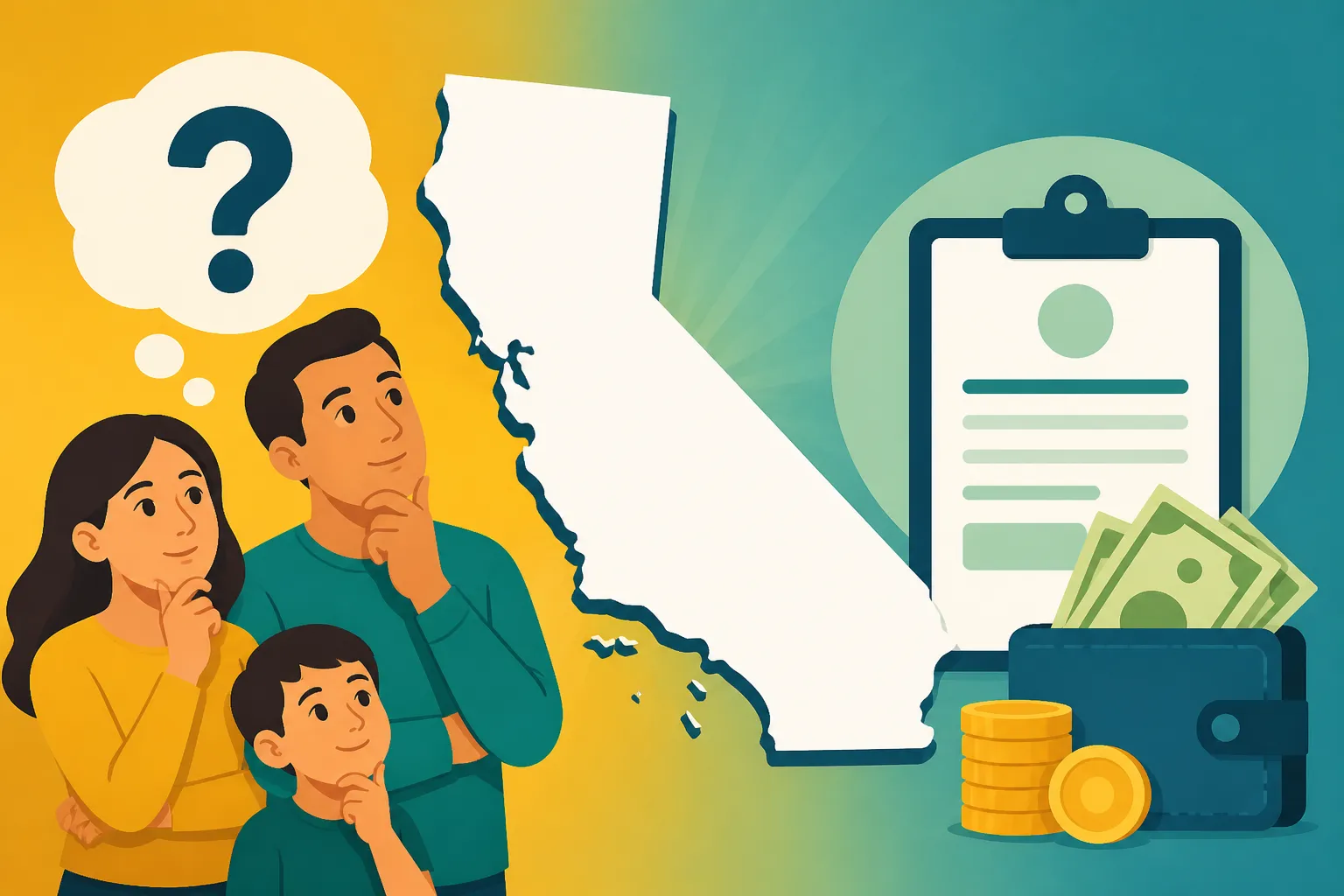
Navigating the world of state income taxes can feel like deciphering a secret code, especially when you're trying to figure out what credits might be available to help ease the burden. For many working individuals and families in California, a big question mark often hangs over whether the Golden State offers its own version of a federal credit designed to support lower and moderate incomes. This guide is here to cut through the confusion and explain everything you need to know about the California Earned Income Tax Credit (CalEITC), including who qualifies, how much you could receive, and the best way to claim it.
Yes, California Absolutely Has a State EITC!
It’s a common misconception that if you qualify for a federal tax credit, that’s where the benefits end. But thankfully, that's not the case for many Californians when it comes to the Earned Income Tax Credit. California has its very own, robust program designed to put more money back into the pockets of its working residents. This isn't just a small token; for many, it can make a real difference in their household budget, helping with everything from groceries to unexpected bills.
Understanding the California Earned Income Tax Credit (CalEITC)
The California Earned Income Tax Credit, affectionately known as CalEITC, is a refundable tax credit specifically designed for low-to-moderate income working individuals and families. What does "refundable" mean? It's a fantastic feature: even if you don't owe any state tax, you can still get money back as a refund if you qualify for the credit. This is huge because it means the credit isn't just reducing your tax liability; it's a direct payment to eligible taxpayers. The CalEITC aims to offset the tax burden for those who are working hard but earning modest wages, providing a crucial boost to financial stability. It’s administered by the California Franchise Tax Board (FTB), the same state agency that handles all your other California tax filings.
Who Qualifies for CalEITC? Eligibility Requirements
Determining your eligibility for CalEITC can feel like a checklist marathon, but it's vital to go through each item carefully to ensure you don't miss out on this valuable credit. Generally, to qualify for CalEITC, you must meet several criteria, which often mirror, but are not identical to, the federal EITC requirements.
First and foremost, you must have earned income. This typically means wages, salaries, tips, or net earnings from self-employment. Unemployment benefits or Social Security income, for example, usually don't count as earned income for EITC purposes. You also need to meet specific income limits, which are adjusted annually for inflation. These limits vary significantly based on your filing status (single, married filing jointly, head of household) and how many qualifying children you have.
Another key factor is your residency. You must be a California resident for at least half of the tax year. This means if you moved in or out of the state during the year, you might still qualify as a Part-Year Resident for Tax Purposes as long as you meet the residency duration. Additionally, both you and any qualifying children must have a valid Social Security Number (SSN) or an Individual Taxpayer Identification Number (ITIN) issued by the IRS for the tax year. This is a critical point that helps ensure broad access to the credit. You can't be claimed as a qualifying child on someone else's tax return, and you generally cannot be a dependent of another person. It's a credit for those who are truly supporting themselves or their families through their work.
Let’s think about a real-life scenario: Imagine Maria, a single mother living in San Diego, who works full-time as a retail manager and supports her two children, ages 8 and 12. Her earned income for the year is $25,000. Assuming she meets all the other requirements like having valid SSNs for herself and her children, she would very likely qualify for CalEITC. The credit helps families like Maria's cover essential costs and gives them a little more breathing room financially.
The Young Child Tax Credit (YCTC) and Foster Youth Tax Credit (FYTC)
To make things even better, California offers a couple of additional refundable credits that often go hand-in-hand with CalEITC, further boosting financial relief for eligible families and individuals. These are the Young Child Tax Credit (YCTC) and the Foster Youth Tax Credit (FYTC).
The Young Child Tax Credit (YCTC) is specifically for taxpayers who qualify for the CalEITC and have at least one child under the age of six as of the end of the tax year. This credit provides an additional amount on top of your CalEITC, and for the 2023 tax year, it could be up to $1,083 per qualifying taxpayer. This extra support is incredibly valuable for families with young children, who often face higher expenses for childcare, diapers, and other essentials. So, if Maria from our previous example had one child who was 5 years old, she would not only get her CalEITC but also potentially the YCTC.
Then there's the Foster Youth Tax Credit (FYTC), a more recent addition designed to support former foster youth. This credit is available to individuals who are between 18 and 25 years old at the end of the tax year, were in foster care at age 13 or older, and meet the CalEITC requirements. Like the YCTC, the FYTC is a refundable credit, and for the 2023 tax year, it offers up to $1,083 to eligible individuals. This credit acknowledges the unique challenges faced by former foster youth transitioning into adulthood and provides much-needed financial assistance as they establish independence. These supplementary credits demonstrate California's commitment to supporting its most vulnerable populations.
Calculating Your CalEITC: Income Thresholds and Credit Amounts
Understanding if you qualify is one thing, but knowing how much you might receive is often the next, most pressing question. The CalEITC isn't a fixed amount for everyone; it's carefully calculated based on your earned income, filing status, and the number of qualifying children you have. The state wants to ensure the credit genuinely helps those who need it most, and that means a tiered system.
Navigating the Income Brackets for CalEITC
The CalEITC income thresholds are crucial because they dictate whether you're eligible and where your income falls within the credit's phase-in or phase-out ranges. These limits change each tax year due to inflation adjustments, so it’s always important to check the most current figures from the California Franchise Tax Board (FTB). For the 2023 tax year (the taxes you file in 2024), here's a general idea of the maximum Adjusted Gross Income (AGI) thresholds you'd need to fall under to claim the CalEITC:
| Number of Qualifying Children | Single / Married Filing Separately | Married Filing Jointly |
|---|---|---|
| 0 | $17,610 | $17,610 |
| 1 | $32,602 | $32,602 |
| 2 | $38,000 | $38,000 |
| 3 or more | $38,000 | $38,000 |
(These are general AGI limits for the 2023 tax year. Always refer to the official FTB guidelines for the most precise and up-to-date figures, as other income limits may apply for earned income itself.)
As you can see, the income limits are quite specific. The credit amount starts to phase in once your earned income reaches a certain point, then it plateaus, and finally, it begins to phase out as your income rises past the peak, eventually reaching zero at the maximum limit. This design ensures the credit targets those most in need. When calculating your State Tax Burden by State 2026, these credits can significantly reduce your overall liability.
An Example: How Much Could You Get?
Let's put some numbers to it. Suppose we have a family filing jointly with two qualifying children, and their earned income for 2023 is $25,000. Based on the 2023 CalEITC rules, they would likely be eligible for a substantial credit. While I can't provide an exact calculator here (tax rules are complex!), the FTB's online resources or tax software can easily calculate this for you.
For instance, a married couple filing jointly with two qualifying children, and an AGI of $25,000 for the 2023 tax year, could be eligible for a CalEITC of around $1,500-$2,000, depending on precise calculations and other factors. If one of those children was under six, they would also qualify for the Young Child Tax Credit, potentially adding another $1,083 to their refund! This is why understanding these credits is so critical – it's real money that can help families immensely.
The Interaction with Federal EITC and Other State Credits
It’s important to remember that the CalEITC often works in tandem with its federal counterpart. In most cases, if you want to claim the CalEITC, you'll need to claim the federal Earned Income Tax Credit (EITC) first. The calculations for state EITC often rely on information from your federal return, so it's usually best practice to complete your federal taxes first.
Beyond the CalEITC, YCTC, and FYTC, California also offers other state tax credits that could potentially apply to your situation, further reducing your overall tax liability or increasing your refund. These might include various homeowner or renter credits, dependent care credits, or even specific credits for education or energy-efficient home improvements. For example, if you're exploring California Tax Credits & Deductions Guide, you'll find a range of options that could stack up. The key is to be thorough in your tax preparation and explore all available avenues.
How to Claim Your California EITC
Now that you know California has a state EITC and how it's calculated, the next logical step is figuring out how to actually claim it. It's not always as simple as checking a box, but it's far from impossible, especially with the right tools and guidance. Missing out on these credits often happens because people either don't know they exist or find the filing process intimidating.
Filing Your California Tax Return
Claiming your CalEITC usually starts with filing your federal income tax return. As mentioned, the federal EITC calculation often serves as a foundational step. Once your federal return is prepared, you then move on to your California state income tax return. The specific form you'll need to claim the CalEITC is Form 3514, California Earned Income Tax Credit.
If you're using tax preparation software like TurboTax, H&R Block, or TaxAct, the process is generally quite smooth. These programs are designed to ask you a series of questions about your income, dependents, and other relevant information. Based on your answers, they will automatically determine your eligibility for both the federal EITC and the CalEITC, fill out Form 3514, and calculate your credit amount. This can be a huge relief, especially if you find tax forms daunting. Many free online filing options are also available, often linked through the FTB website, which can help you navigate these forms without cost.
Even if you don't typically file a tax return because your income is below the filing threshold, you still need to file a tax return to claim the CalEITC. Remember, it's a refundable credit, meaning you get money back even if you don't owe taxes. So, if you meet the eligibility criteria, filing is essential to receive this benefit. Knowing How to File California State Taxes is the first step toward claiming your deserved refund.
Required Documentation and Avoiding Pitfalls
To successfully claim the CalEITC, you'll need to have certain documents handy. This usually includes:
- Proof of earned income: Your W-2 forms from employers, or 1099 forms if you're self-employed.
- Social Security Numbers (SSNs) or Individual Taxpayer Identification Numbers (ITINs): For yourself, your spouse (if filing jointly), and all qualifying children.
- Records of any other income: Even if it doesn't count as earned income for the EITC, it's good to have all your income records.
One common pitfall is incorrectly reporting earned income or claiming dependents who don't meet the strict qualifying child rules. The FTB, like the IRS, scrutinizes EITC claims to prevent errors and fraud. Double-check all your information before submitting your return. If you realize you made a mistake on a previously filed return and missed out on CalEITC, don't despair! You can file an amended state return to claim it retroactively, typically within three years from the date you filed your original return or two years from the date you paid the tax, whichever is later. This is similar to How to Amend a State Return (IL-1040-X, etc.) in other states, though the specific form and process will be California-specific.
Resources and Assistance for CalEITC Claimants
Feeling overwhelmed? You're not alone. The good news is that there's a wealth of resources available to help you understand and claim the CalEITC. You don't have to navigate this journey in the dark.
Where to Find Help: FTB and Community Resources
The primary and most authoritative source of information for the CalEITC is the California Franchise Tax Board (FTB). Their website, ftb.ca.gov, is packed with detailed guides, FAQs, and even a CalEITC calculator tool that can give you an estimate of your potential credit. Don't hesitate to explore their pages; they are designed to be helpful, even if they can feel a bit dense at times.
Beyond the official state resources, there are fantastic community programs ready to lend a hand. The Volunteer Income Tax Assistance (VITA) program and the Tax Counseling for the Elderly (TCE) program offer free tax preparation services to eligible individuals, including those with low-to-moderate incomes, people with disabilities, the elderly, and those with limited English proficiency. These programs are staffed by IRS-certified volunteers who can help you accurately prepare your federal and state returns, ensuring you claim all the credits you qualify for, including the CalEITC. Many VITA sites are hosted at local community centers, libraries, and schools during tax season.
If you're looking for broader financial planning insights, not just tax-specific help, services like SmartAsset can provide tools and articles on a variety of financial topics, including how different tax credits impact your overall financial health. They often have calculators and comparisons that help put your tax situation into a larger financial context.
Staying Informed About State Tax Changes
Tax laws, both federal and state, are not static. They change, sometimes significantly, from year to year. California, like many states, frequently reviews and adjusts its tax credits and deductions to better serve its residents or respond to economic shifts. This means that while the information here is current for the 2023 tax year (filed in 2024), future tax years might see changes to income thresholds, credit amounts, or even new credits altogether.
It's a good habit to check the FTB website annually, especially around the end of the year or the beginning of tax season, for any updates to the CalEITC or other state tax provisions. Subscribing to their newsletters or following trusted financial news sources that cover state tax changes can also keep you informed. Understanding State Income Tax Cuts & Changes for 2026 can help you plan your finances more effectively. Don't let uncertainty cost you money; a little proactive research goes a long way in ensuring you get every credit you're entitled to.
Disclaimer
This article is for general informational purposes only and does not constitute professional advice. Laws and regulations vary by location and change over time. Consult a qualified professional for guidance on your specific situation.