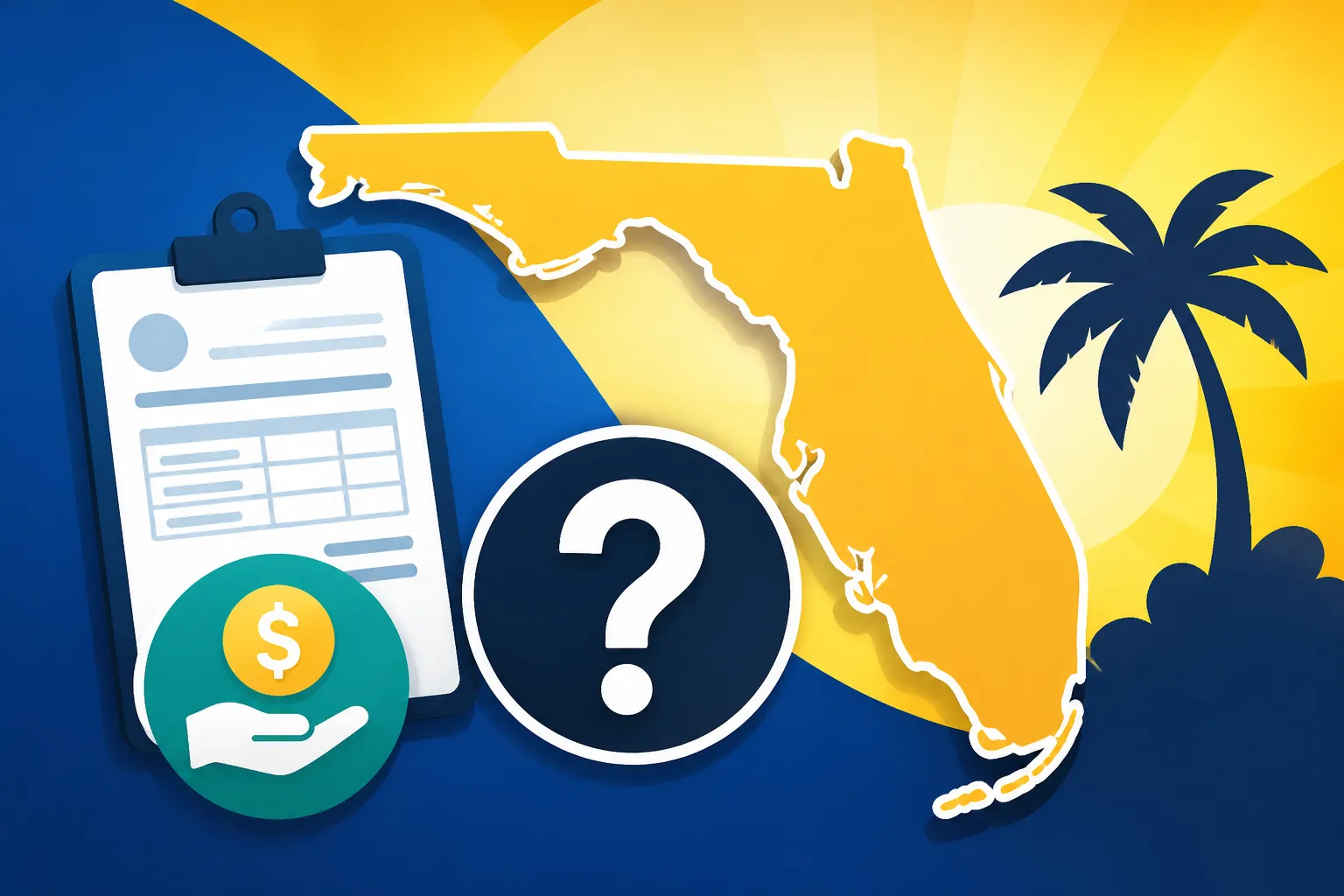
Does Florida Have a State EITC?
It’s a common question, especially for folks who are either already enjoying the sunny skies of Florida or are contemplating a move to the Sunshine State: "Does Florida have a state Earned Income Tax Credit?" Navigating the world of taxes can be a real headache, and understanding which credits might put money back in your pocket is crucial. Many people get used to the federal Earned Income Tax Credit (EITC) and assume their state will offer a similar break, but the reality can be quite different depending on where you hang your hat. This guide is here to untangle the specifics of Florida's tax system, particularly regarding the EITC, and help you understand what it means for your wallet.
Understanding the Earned Income Tax Credit (EITC)
Before we dive into Florida's specifics, it's really important to grasp what the EITC actually is. It's one of those tax breaks that can make a huge difference, especially for working individuals and families who are trying to make ends meet.
What is the Federal EITC?
The federal Earned Income Tax Credit (EITC) is a cornerstone of tax relief for millions of Americans. Simply put, it's a refundable tax credit designed to help low-to moderate-income working individuals and families. The "refundable" part is key – it means that if the credit amount is more than the tax you owe, you can actually get the difference back as a refund. It's not just about reducing your tax bill; it’s about putting money directly back into your pocket.
The main purpose of the federal EITC is twofold: to offset income taxes for those with lower earnings and to provide a financial boost to working families, encouraging work and lifting people out of poverty. Eligibility for this credit depends on several factors, including your income, your marital status, and whether you have qualifying children. The income thresholds change annually, and the credit amount increases with the number of qualifying children you have, up to a certain point. For instance, a single person with no children will receive a much smaller credit than a married couple with three children, assuming both meet the income limits. It's truly a significant benefit that can help with everything from groceries to rent, making a tangible impact on household budgets.
How State EITCs Complement Federal Benefits
While the federal EITC is incredibly impactful, many states have chosen to establish their own state-level Earned Income Tax Credits. These state EITCs often piggyback on the federal credit, meaning they're typically calculated as a percentage of the federal EITC amount. For example, a state might offer an EITC that is 20% of whatever federal EITC you qualify for. This effectively doubles down on the benefit, providing an even greater financial relief to working families in those states.
States implement their own EITCs for similar reasons as the federal government: to reduce poverty, stimulate local economies by boosting consumer spending, and support working families and individuals. These state credits can also come in two main forms: refundable or non-refundable. A refundable state EITC, just like its federal counterpart, can result in a refund even if you owe no state income tax. A non-refundable credit, on the other hand, can reduce your state tax liability to zero, but you won't get any money back beyond that. The existence and generosity of these state EITCs can significantly alter the overall tax burden for low-income residents, making a particular state much more "tax-friendly" for these groups. Many people looking to understand their overall tax picture will often ask, "Does my state have an Earned Income Credit?"
Florida's Stance on a State EITC
Now, let's get to the heart of the matter for those of you in or considering Florida. When it comes to state-level EITCs, Florida operates a bit differently from many other states.
The Direct Answer: No State EITC in Florida
Here's the straightforward truth: Florida does not have a state-level Earned Income Tax Credit. This might come as a surprise to some, especially if you're used to living in states that offer these kinds of programs. But the reason for this is quite fundamental to Florida's overall tax structure.
Florida is one of a handful of states that doesn't levy a statewide individual income tax. You read that right – zero income tax on wages and salaries. Because there's no state income tax on individuals, there's no tax liability for a state EITC to offset. A state EITC is typically designed to reduce or eliminate state income tax obligations, or to provide a refund for those who qualify, much like the federal credit does for federal income tax. Without an income tax framework at the state level, the mechanism for implementing and benefiting from a state EITC simply doesn't exist. This puts Florida on the list of States With No Income Tax (2026 Full List), a key characteristic that shapes its entire tax landscape.
What This Means for Florida Residents
For Florida residents, this means that while you might be eligible for and benefit greatly from the federal Earned Income Tax Credit, you won't receive any additional state-level boost from an EITC. Your federal EITC will still be there to help you out, provided you meet the IRS's criteria, but don't expect a second EITC credit when you're doing your state taxes – because you generally don't file state income taxes in Florida in the first place!
Consider the contrast with residents in states like California or New York. Those individuals, if eligible, could receive both the federal EITC and a state EITC, significantly increasing their total tax refund or reducing their total tax burden. For low-to-moderate income families in Florida, this absence of a state EITC means they rely solely on the federal credit for this specific type of income-based tax relief. It's a crucial point to understand when evaluating the true "tax-friendliness" of Florida for different income brackets, as what's "friendly" for a high-income earner might feel less so for someone relying on such credits. Understanding the nuances of State Income Tax vs Federal Income Tax is vital in scenarios like this.
Florida's Tax Landscape Beyond Income Tax
Just because Florida doesn't have a state income tax or a state EITC doesn't mean it's entirely tax-free. States need to generate revenue somewhere, and Florida relies on other forms of taxation to fund its public services.
Other Taxes in Florida
Florida's tax structure is often lauded for its lack of an individual income tax, which is a major draw for many residents, especially retirees and high-income earners. However, it's vital to remember that taxes don't just disappear; they simply shift to other areas. The state primarily relies on sales taxes and property taxes to fill its coffers.
The state sales tax rate in Florida is 6%. But don't forget, most counties also add their own local sales tax, which can push the combined rate higher. For instance, in Miami-Dade County, the combined sales tax rate is 7%. This means that every time you make a purchase, from a new car to a cup of coffee, you're paying into the state's revenue stream. For individuals and families who spend a larger portion of their income on consumer goods and services, this can add up significantly.
Then there are property taxes. These are levied at the local level by counties, cities, and special districts. While Florida doesn't tax your income, it certainly taxes your home or other real estate. Property tax rates vary wildly across the state, depending on where you live. A beautiful beachfront home in a desirable city like Naples or Sarasota will incur a much higher property tax bill than a modest home in a less populated area. For homeowners, especially those with valuable properties, property taxes can be a substantial annual expense, often rivaling or even exceeding what some might pay in state income tax elsewhere. Other taxes exist too, like the corporate income tax, which businesses pay, and various excise taxes on things like fuel and tobacco. So, while your paycheck won't see a state income tax deduction, your daily spending and homeownership definitely contribute to the state's finances.
Limited State-Level Credits and Deductions
Since Florida doesn't impose an individual income tax, the concept of "state-level credits and deductions" in the traditional sense is largely absent for individuals. Unlike states that offer a State Standard Deduction vs Itemized (2026) or specific breaks for things like State Child Tax Credits 2026, Florida doesn't have a personal income tax return where you would claim these.
This means you won't find things like a state deduction for 529 plan contributions or a state tax credit for energy-efficient home improvements, which are common in income-taxing states. Your focus, therefore, shifts entirely to federal deductions and credits when it comes to your income. This is why it's so important for Florida residents to maximize every federal tax break they're eligible for, from the standard deduction to various itemized deductions (if applicable) and federal tax credits. While there aren't broad income tax-related credits, Florida does offer certain property tax exemptions, most notably the homestead exemption, which can reduce the taxable value of your primary residence. There might also be specific local programs or exemptions for seniors or disabled veterans, but these are generally separate from income-based tax calculations.
Comparing Florida to States with an EITC
To really understand what Florida's no-state-EITC, no-income-tax approach means, let's look at it against a state that does have both. This table highlights some key tax differences you might encounter.
| Tax Type | Florida (No State Income Tax) | California (With State Income Tax & EITC) |
|---|---|---|
| State Individual Income Tax | 0% (None) | Progressive rates up to 13.3% |
| State Earned Income Tax Credit (EITC) | None | Yes (Refundable, percentage of federal EITC) |
| State Sales Tax (Base Rate) | 6% | 7.25% (highest in US) |
| Local Sales Tax | Yes (varies by county, up to 1.5%) | Yes (varies by city/county, up to 2.5%) |
| Property Tax | Significant, locally assessed | Significant, locally assessed (Prop 13 limits) |
| Pension/Retirement Income Tax | None | Yes (taxed as regular income) |
| Social Security Tax | None | None |
Note: Sales and property tax rates are general and can vary significantly by specific locality within each state. Income tax rates are top marginal rates and don't reflect all brackets.
As you can see, while Florida offers a clear advantage by having no state income tax, states like California offer additional relief through a state EITC, albeit within a system that also taxes income more broadly. This table really drives home why the "tax-friendly" label isn't always straightforward and often depends on your specific financial situation.
Navigating Florida's Tax System
Living in a state without an income tax, like Florida, requires a slightly different approach to tax planning than living in a state with a progressive income tax system. It's about shifting your focus and understanding where your tax liabilities truly lie.
Leveraging Federal EITC and Other Federal Benefits
Even without a state EITC, if you are a low-to-moderate income earner in Florida, the federal EITC remains a powerful tool for your financial well-being. It's absolutely crucial to determine if you're eligible and, if so, to claim it. Many eligible individuals miss out on this credit every year, often because they're unaware of it or mistakenly think they don't qualify. The rules can be a bit complex regarding earned income, adjusted gross income (AGI) limits, and qualifying children, but the payoff can be substantial.
Beyond the EITC, remember to explore all other federal tax credits and deductions for which you might be eligible. This includes widely used credits like the Child Tax Credit, the Child and Dependent Care Credit, various education credits, and credits for retirement savings. These federal benefits can significantly reduce your federal tax bill or even result in a larger refund. Don't leave money on the table! Using reputable tax software, like TurboTax, can guide you through the process step-by-step to ensure you identify and claim all applicable federal credits. Alternatively, working with a qualified tax professional can provide peace of mind and help optimize your federal return.
Financial Planning in a No-Income-Tax State
Financial planning in Florida, or any state without an individual income tax, means adjusting your perspective. Instead of budgeting for state income tax withholding from your paycheck, you need to be acutely aware of other major tax burdens: sales tax and property tax. For example, if you're planning a major purchase, like a new boat or a luxury vehicle, remember that the sales tax will be a direct, upfront cost that can add thousands to the price tag. Similarly, if you're a homeowner, your annual property tax bill will be a significant fixed expense that needs to be factored into your monthly budget, often paid through your mortgage escrow.
It's not just about avoiding income tax; it's about understanding the entire cost of living. While Does Florida Have State Income Tax? is easily answered with a "no," the full picture involves utility costs, insurance rates (which can be high in Florida due to hurricane risk), and the general cost of goods and services. What you save on income tax might be partially or fully offset by higher costs in these other areas. Tools and resources from financial planning companies like SmartAsset can be incredibly helpful here. They can provide calculators and guides to help you compare the overall tax burden and cost of living across different states, giving you a clearer picture of your actual financial situation. This comprehensive view is essential for making informed decisions about where to live and how to manage your finances effectively.
Understanding the "Tax-Friendly" Myth
The idea that states with no income tax are automatically "tax-friendly" is a common perception, but it's often more of a myth than a reality for many individuals. While it's certainly true that high-income earners who don't spend a large portion of their income on taxable goods or have significant property might find Florida very appealing, the situation changes for others.
For someone on a fixed income, a retiree with significant pension income, or a low-to-moderate income earner who spends a larger percentage of their earnings on consumer goods, the impact of sales tax can be more pronounced. What you save on income tax could easily be eaten up by higher sales taxes on everyday purchases or by substantial property tax bills. This is why discussions around Is Florida Tax Friendly for Workers? often conclude with a nuanced answer: it depends entirely on your specific circumstances. For example, a retiree might find Retirement Income Exclusions by State in other states more beneficial than Florida's no-income-tax policy if their primary income isn't from wages. It's crucial to look beyond just the income tax rate and consider the overall Cost of Living vs Taxes by State to determine if Florida's tax structure truly benefits your particular financial profile.
Disclaimer
Please remember that tax laws are complex and subject to change. The information provided in this article is for general informational purposes only and does not constitute professional tax advice. Always consult with a qualified tax advisor or financial professional for advice tailored to your specific situation.