Is California Tax Friendly? Full Breakdown
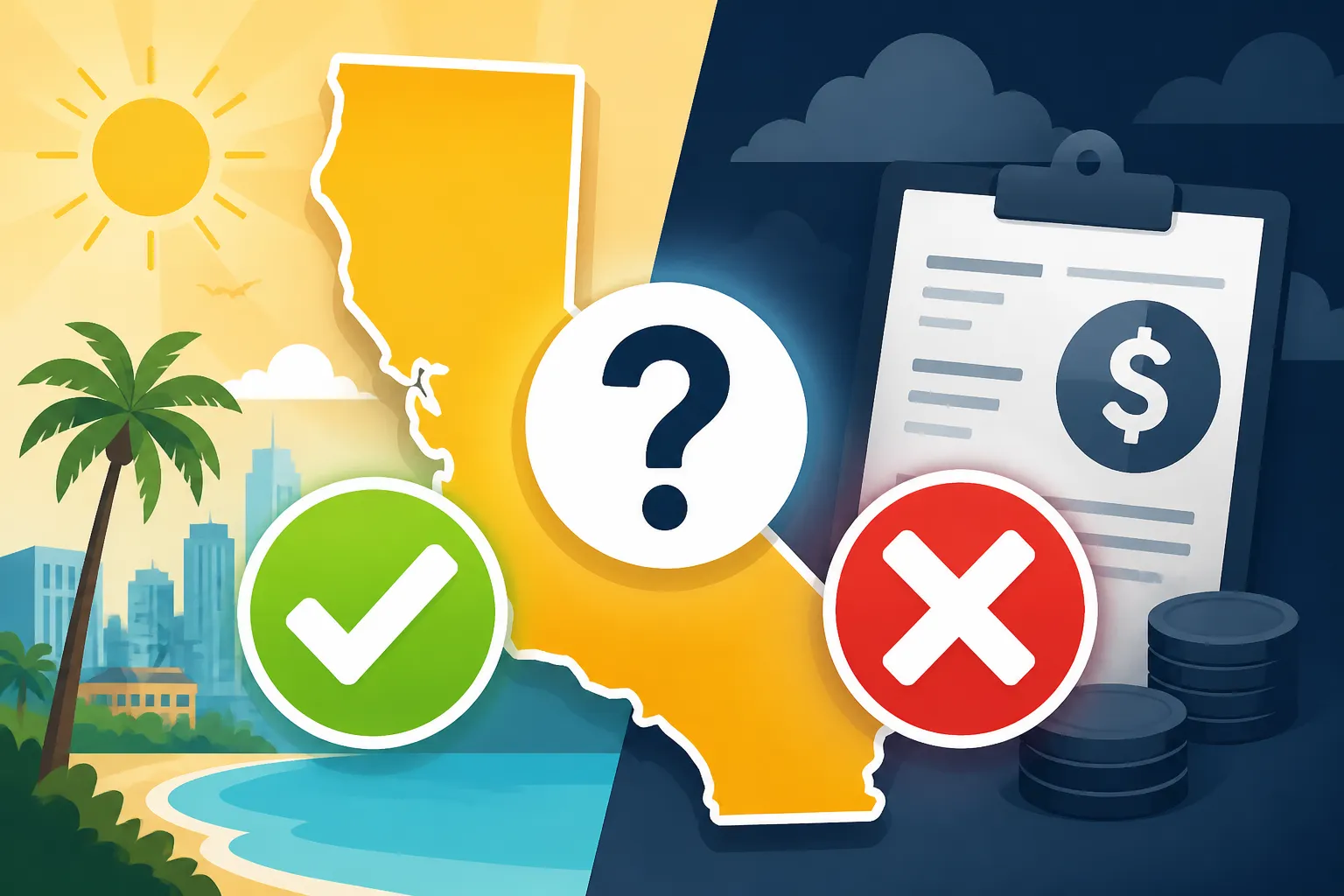
Living in California often feels like a trade-off between breathtaking Pacific sunsets and a tax bill that can make even the most seasoned professional wince. The common narrative is that the Golden State is a tax nightmare for everyone, but the reality is far more nuanced depending on your income level, whether you own a home, and where you are in your career. This guide breaks down the complex layers of the California tax system to help you determine if your personal balance sheet can thrive under the palm trees.
Understanding California’s Progressive Income Tax Structure
When people talk about the "California tax," they are usually referring to the state's highly progressive income tax system. Unlike states with a flat tax where everyone pays the same percentage, California uses a graduated system that ranges from 1% to 13.3%. This means that your first few thousand dollars are taxed at a negligible rate, while your top dollars are taxed quite aggressively. For many middle-income families, the actual amount paid is often lower than the scary headlines suggest, but for high earners, the sting is very real.
The 13.3 Percent Top Bracket Myth vs Reality
You have likely heard the figure 13.3% thrown around in political debates or news segments about wealthy residents fleeing to Florida. It is true that California has the highest top marginal income tax rate in the nation. However, it is vital to understand that this rate only applies to individuals earning over $1 million. For most workers, their California Income Tax Brackets 2026 will fall into the 6%, 8%, or 9.3% range. While 9.3% is still significant, it is a far cry from the double-digit rates that capture the most attention.
Using a tool like a SmartAsset income tax calculator can help you visualize how these brackets work in practice. You aren't paying 9.3% on every dollar you earn; you are only paying it on the portion of your income that falls within that specific bucket. This distinction is what keeps the effective tax rate—the actual percentage of your total income that goes to the state—lower than the top marginal rate. For a single filer making $100,000, the effective rate might be closer to 6% or 7% after all the math is done.
How Brackets Affect Different Income Levels
California’s tax system is designed to be a "millionaire's tax" environment. If you are a lower-income earner or just starting your career, you might find that California is surprisingly affordable from an income tax perspective. The state’s generous brackets for lower earners mean that a significant portion of your income stays in your pocket. However, as you climb the corporate ladder or grow your small business, you hit the "middle-class wall" relatively quickly compared to other states.
The frustration for many residents occurs when they realize they are considered "wealthy" by state tax standards even if their local cost of living makes them feel anything but. Earning $150,000 in a place like San Francisco or West Los Angeles provides a standard of living that feels middle-class, yet you will find yourself in some of the higher tax brackets. This disconnect between tax rates and local purchasing power is a frequent topic of debate and a major reason why people ask Why Are California Taxes So High? when looking at their end-of-year statements.
Deductions and Credits that Lighten the Load
While the rates are high, California offers several pathways to reduce your taxable income. The state does not simply mirror the federal tax code; it has its own set of rules for what you can subtract before the tax man takes his cut. Understanding these nuances is the difference between an eye-popping bill and a manageable one.
The California Standard Deduction vs Itemizing
Every filer in California has the choice between taking the standard deduction or itemizing their deductions. For the 2026 tax year, the California Standard Deduction 2026 has been adjusted for inflation, providing a baseline amount that you can subtract from your income automatically. For many renters or those with simple financial lives, this is the easiest path. It’s a "no-questions-asked" reduction in your taxable income that the state provides to everyone.
However, if you are a homeowner or have high medical expenses, itemizing might be your best friend. California still allows for many deductions that were limited at the federal level by recent tax law changes. For instance, while the federal government capped the deduction for state and local taxes (SALT) at $10,000, you can still itemize various expenses on your state return to lower that specific burden. It's often worth running the numbers through a SmartAsset tax prep guide to see if itemizing will save you more than the standard amount.
Special Credits for Renters and Families
California recognizes that the cost of housing is an enormous burden for its residents. To help offset this, the state offers the California Renters Credit 2026, a non-refundable credit for individuals who meet certain income requirements and lived in a rental property for at least half the year. While the dollar amount of this credit is relatively modest—often under $150—every bit helps in a state where a one-bedroom apartment can easily cost $3,000 a month. It’s one of those "hidden" benefits that many people forget to claim.
Families also benefit from the California Earned Income Tax Credit (CalEITC) and the Young Child Tax Credit. These credits are particularly impactful for working-class families, often resulting in a refund even if you didn't owe any state tax to begin with. The state has also been proactive in expanding these credits to include a wider range of workers, including those who are self-employed or work in the gig economy. When evaluating Is California a Tax-Friendly State?, these targeted credits for families and low-income workers play a massive role in the calculation.
Beyond Income Tax: Property and Sales Taxes
If we only looked at income tax, California would look like the most expensive place on earth. But taxes are a three-legged stool: income, property, and sales. To get the full picture, you have to look at how the state treats homeowners and shoppers. This is where California’s reputation starts to look a little different.
Proposition 13 and the Property Tax Shield
For homeowners, California is actually something of a tax haven, provided you stay in your home for a long time. This is thanks to Proposition 13, a landmark piece of legislation passed in 1978. Under Prop 13, your property tax is capped at 1% of the purchase price, and the assessed value of your home can only increase by a maximum of 2% per year, regardless of how much the actual market value skyrockets. This provides incredible stability for long-term residents.
Imagine you bought a home in Palo Alto twenty years ago for $500,000. Today, that home might be worth $3 million. In many other states, your property taxes would be based on that $3 million value, potentially costing you $60,000 a year or more. In California, your taxes are still based on that original $500,000 purchase price (plus the small 2% annual adjustments), meaning you might only be paying $7,000 or $8,000 in taxes. This "lock-in" effect is a primary reason why many retirees choose to stay in California rather than moving to "cheaper" states.
Sales Tax Variances in Major Cities
Where California hits your wallet hard on a daily basis is at the cash register. The state has a high base sales tax rate, and local jurisdictions often add their own "district taxes" on top of that. If you are shopping in Santa Monica or San Francisco, you might see a total sales tax rate exceeding 10%. This makes big-ticket purchases like cars, appliances, or high-end electronics significantly more expensive than in neighboring states like Oregon, which has no sales tax at all.
However, California does not tax most "necessities." Grocery store food (excluding hot, prepared meals) and prescription medicines are generally exempt from sales tax. This is a progressive move intended to ensure that the sales tax doesn't disproportionately hurt those who spend a large percentage of their income on basic survival. Still, when you add up the cost of gasoline—which carries some of the highest taxes in the country—and the sales tax on everything else, the "cost of existing" in California remains high.
Taxation on Retirement and Investment Income
For those looking toward the golden years, the question of tax friendliness shifts toward how the state treats passive income and retirement distributions. California is a mixed bag here, offering great news for Social Security recipients but a much harsher reality for those living off capital gains or large 401(k) withdrawals.
Is Social Security Taxed in California?
One of the biggest wins for California residents is that the state does not tax Social Security benefits. If you are a senior living primarily on your Social Security check, you will find California to be quite friendly in this regard. You can check the specifics in our guide on Does California Tax Social Security?, but the short answer is that the state allows you to keep every penny of that federal benefit without taking a cut for the state treasury.
This exemption is a major factor for seniors who are weighing the pros and cons of staying in-state. When you combine the lack of tax on Social Security with the property tax protections of Prop 13, a retiree who has lived in their home for decades might actually face a lower total tax burden in California than they would in a state like Texas, which has no income tax but very high property taxes. It’s all about which "bucket" of money the state decides to tap into.
Capital Gains Treatment and the Mental Health Services Act Tax
The news is less rosy for investors. Unlike the federal government, which offers lower tax rates for long-term capital gains, California treats investment income exactly like regular wages. If you sell a stock or a piece of real estate for a profit, that gain is added to your total income and taxed at your top marginal rate. This can be a massive shock for people who are used to the 15% or 20% federal capital gains rates. In California, you could easily pay an additional 9.3% or more on those profits.
Additionally, high earners must contend with the Mental Health Services Act tax. This is a 1% surtax on all personal income over $1 million. So, if you have a "liquidity event"—like selling a business or exercising a large amount of stock options—you aren't just paying the top 12.3% rate; you are paying 13.3%. This is a major reason why high-net-worth individuals often use SmartAsset wealth management services to time their sales or consider residency changes before cashing out significant investments. Because California is aggressive about Which States Tax Capital Gains?, planning is essential.
Comparing California to Other States
To really answer if California is tax-friendly, we have to look at the alternatives. Most people moving out of California head to states like Texas, Nevada, or Arizona. While the headline "Zero Income Tax" is attractive, the total tax burden can sometimes be surprising when you dig into the details of property and sales taxes.
| Feature | California | Texas | Nevada |
|---|---|---|---|
| Top Income Tax Rate | 13.3% | 0% | 0% |
| Average Property Tax Rate | ~0.75% (Prop 13) | ~1.81% | ~0.55% |
| Social Security Taxed? | No | No | No |
| Capital Gains Taxed? | Yes (as income) | No | No |
| Sales Tax (State + Local) | 7.25% – 10.75% | 6.25% – 8.25% | 6.85% – 8.38% |
The California vs Texas Debate
The most common comparison is California vs Texas Taxes Compared. On the surface, Texas wins because there is no state income tax. If you earn $200,000 a year, moving to Texas could instantly put an extra $15,000 or more back into your bank account. However, Texas has some of the highest property tax rates in the country. Because Texas relies on property taxes to fund its schools and infrastructure, a $1 million home in Austin might cost you $20,000 a year in taxes, whereas a similar home in California might only cost $8,000 if you've owned it for a while.
The "winner" of this comparison depends entirely on your lifestyle. If you are a high-income renter who doesn't own much property, Texas is a massive tax win. If you are a retiree who owns a home with a lot of equity and lives on a fixed income, California’s tax structure might actually be more protective of your cash flow. It’s a classic case of looking past the "sticker price" of the income tax and looking at the "total cost of ownership" for your life.
Why High Earners Stay or Leave
We often hear stories of billionaires moving to Nevada or Florida, and for them, the math is undeniable. When you are earning $10 million a year, paying 13.3% to California is a $1.3 million annual expense. Moving to a state with no income tax is like giving yourself a million-dollar raise every single year. For the ultra-wealthy, California is definitively not tax-friendly.
However, for the upper-middle class—the doctors, engineers, and mid-level executives—the decision is harder. These individuals often stay because of the "opportunity cost." California's economy is massive, and the salaries in sectors like tech, biotech, and entertainment often far outpace what is available in lower-tax states. If you can earn $300,000 in San Jose but only $180,000 in a no-tax state, you might actually come out ahead in California even after the high taxes are paid. This "Sunshine Tax" is a price many are willing to pay for the career growth and lifestyle the state offers.
Practical Strategies for Managing Your California Tax Bill
If you decide that the California lifestyle is worth the tax burden, you don't have to just roll over and pay the maximum amount. There are legitimate, strategic ways to lower your bill and ensure you aren't paying a penny more than the law requires.
Establishing Domicile and Residency Rules
If you spend time in multiple states, the California Franchise Tax Board (FTB) will be very interested in where you call home. California is notorious for its aggressive residency audits. To be considered a non-resident, you generally need to prove that your "domicile"—your true, permanent home—is elsewhere. This involves more than just spending 183 days outside the state. You need to show that your "closest connections" are in another state, such as where you are registered to vote, where your cars are registered, and where your primary doctor is located.
Reviewing the California Residency Requirements for Taxes is essential if you are planning a move or working remotely. The FTB has a "long arm," and if they determine you are still a resident, they will tax your worldwide income, regardless of where it was earned. Many people get caught in "part-year resident" traps where they move mid-year and fail to properly document the transition. Using a professional to help establish a clean break is often worth the cost to avoid a multi-year audit down the road.
Leveraging 529 Plans and Other Savings
While California does not offer a state tax deduction for contributions to a 529 college savings plan, the earnings in the plan still grow tax-free for both federal and state purposes. This is a crucial tool for parents looking to offset the future costs of education while keeping their current investment gains out of the 9.3% tax bracket. Additionally, if you are self-employed, maximizing contributions to a SEP-IRA or Solo 401(k) can significantly lower your Adjusted Gross Income, potentially dropping you into a lower tax bracket altogether.
Finally, stay informed about the California State Income Tax Calculator Guide and other local resources. Tax laws in California are constantly shifting, with new credits and deductions appearing in response to economic changes. For example, during times of budget surpluses, the state has been known to issue "middle-class tax refunds" or one-time rebates. Being proactive and working with a professional who understands the specific quirks of the Golden State can help turn a complex tax situation into a manageable part of your financial plan.
State Income Tax Disclaimer
The information provided in this guide is for educational and informational purposes only and does not constitute professional tax, legal, or financial advice. Tax laws, brackets, and regulations are subject to frequent changes by state legislatures and taxing authorities. You should consult with a qualified tax professional or CPA to discuss your specific financial situation before making any decisions based on this content. Individual results and tax liabilities will vary based on residency status, income sources, and filing specifics.