How Is Social Security Taxed at the State Level?
It's incredibly frustrating when you're trying to plan for retirement, picturing those golden years, only to realize that even your Social Security benefits might be subject to taxes. Just when you think you've got a handle on federal taxes, states throw another curveball, making it tough to figure out where your money really stands. This guide is here to untangle that messy web, explaining exactly how Social Security income is handled at the state level across the country.
Understanding the Federal Baseline for Social Security Taxation
Before we even dive into state-specific rules, it’s crucial to understand how your Social Security benefits are taxed at the federal level. This is the foundation upon which many state tax laws are built, and frankly, it often catches people off guard. Many retirees assume their Social Security is entirely tax-free, but that's rarely the case once your income reaches certain thresholds.
The Provisional Income Calculation
The IRS uses something called "provisional income" to determine if your Social Security benefits are taxable. This isn't just your Social Security; it's a blend of your modified adjusted gross income (MAGI) plus half of your Social Security benefits. Your MAGI generally includes your pensions, dividends, interest, capital gains, and any other taxable income you might have. It's a calculation that takes into account pretty much all your income streams, making it harder for many retirees to avoid some federal taxation on their benefits.
For single filers in 2026, if your provisional income is between $25,000 and $34,000, up to 50% of your Social Security benefits might be taxable. If it exceeds $34,000, then up to 85% of your benefits could be subject to federal income tax. For those filing jointly, the thresholds are $32,000 and $44,000, respectively. These numbers can feel like a moving target, especially when you're trying to budget for a fixed income, but they are absolutely essential to grasp before looking at state taxes. This federal calculation sets the stage, meaning that if your Social Security isn't federally taxable, it's far less likely to be taxable by your state, though exceptions do exist.
Why Federal Taxation Matters for States
Many states that do tax Social Security benefits often tie their taxation rules directly to the federal guidelines. This means if your benefits aren't taxable at the federal level, they likely won't be taxable at the state level either. However, some states have their own unique twists, thresholds, or exemptions that can either mitigate or amplify the tax burden. For instance, some states might use a similar provisional income calculation but apply higher exemption amounts, effectively shielding more of your benefits from taxation.
It's a complex dance, and this federal starting point is why it's so important to have a clear picture of your total retirement income. If you're receiving income from a mix of sources like pensions, 401(k) withdrawals, and part-time work, these all factor into your provisional income, pushing you closer to those federal and potentially state tax thresholds. Understanding this interplay can help you plan your withdrawals and income streams more strategically, possibly reducing your overall tax liability.
The States That Do Tax Social Security Benefits
Navigating state taxation of Social Security benefits can feel like trying to solve a Rubik's Cube blindfolded. While the majority of states offer a complete exemption, a handful of states still choose to tax these benefits, often with their own unique rules that can add another layer of complexity. It's not just a simple "yes" or "no" in these places; there are often income thresholds, deductions, or specific exclusions that come into play.
The Remaining Taxing States and Their Nuances
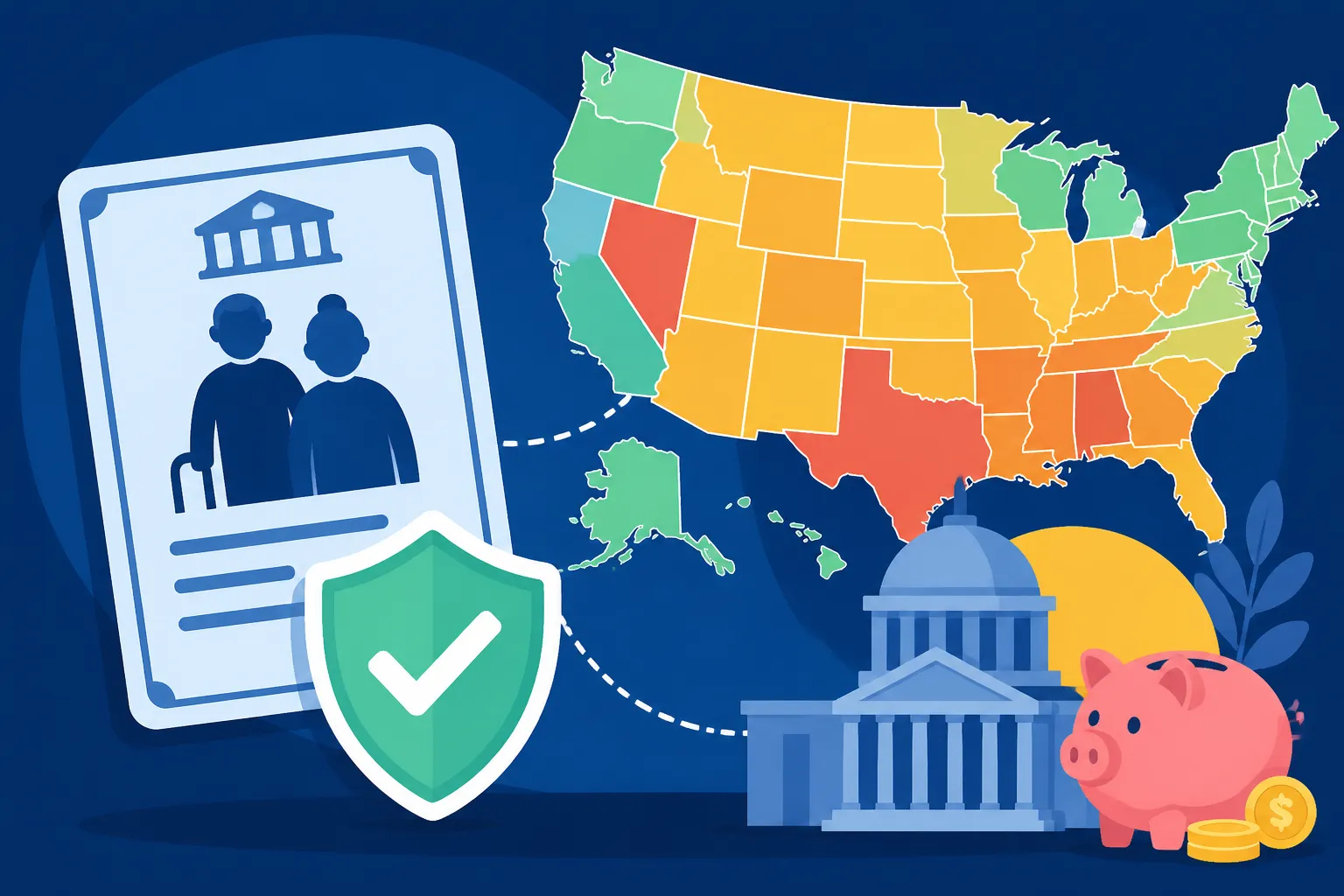
As of 2026, there are 8 states that still tax Social Security benefits in some form. These are Colorado, Connecticut, Kansas, Minnesota, Montana, New Mexico, Rhode Island, and Utah. However, it's crucial to understand that "tax" doesn't mean they'll tax all your benefits, nor do they all follow the federal rules exactly. For example, some states, like Minnesota and Connecticut, largely align their taxation with federal rules but offer significant deductions or credits that can substantially reduce or even eliminate the state tax for many residents, especially those with lower to moderate incomes. This means that while they technically tax Social Security, the practical impact on many retirees is often minimal due to these mitigating factors.
Other states like Montana and New Mexico might have their own income thresholds before benefits become taxable, or they might offer specific exemptions for certain age groups or income levels. It's not a one-size-fits-all situation, and this is where many people get tripped up. You might hear "Montana taxes Social Security," and panic, but a deeper dive might reveal that your income level or age qualifies you for an exemption. This patchwork of rules makes it essential to look up the specifics for your state, rather than relying on broad statements. A helpful resource like SmartAsset can often provide state-specific breakdowns of these complex rules, allowing you to quickly compare how your benefits might be impacted.
Recent Shifts and Ongoing Changes
The good news is that the trend over recent years has been towards states reducing or eliminating their tax on Social Security. We've seen several states, like Missouri, Nebraska, and Kansas (though Kansas still taxes some benefits, it has made changes), either phase out or completely repeal their Social Security income tax in recent years. For example, in 2024, Nebraska fully exempted Social Security income, and Missouri implemented a similar full exemption. Kansas, while still on the list, has also made moves to exempt Social Security for those with an adjusted gross income below $75,000, reflecting a broader movement to make states more retirement-friendly. This means that lists of taxing states can change year to year, so keeping up-to-date with legislative changes, perhaps by checking resources like those covering State Income Tax Cuts & Changes for 2026, is key.
This continuous evolution is why annual planning is so vital. What might have been true for your benefits last year could be different this year or next. If you're considering a move in retirement, understanding these state-specific changes, particularly if you're looking at Moving From California to Avoid State Tax, could be a major factor in your decision. It's not just about the upfront tax but the ongoing impact on your fixed income.
Here's a quick overview of the states that tax Social Security in 2026 and their general approach:
State Taxes Social Security? General Approach / Exemption Notes How often have you seen how the specific state rules match up to the national framework? This is where an online tool like SmartAsset's retirement planning options can really help shed some light on your specific situation.
States That Do Not Tax Social Security Benefits
The good news for many retirees, or those planning their retirement, is that the vast majority of states in the U.S. do not impose any state income tax on Social Security benefits. This can be a huge relief, especially when every dollar counts in your retirement years. For many, this makes certain states significantly more attractive for long-term residency.
The Majority Offers an Exemption
Currently, there are 42 states that do not tax Social Security benefits at the state level. This includes the 9 states that have no state income tax whatsoever – Alaska, Florida, Nevada, New Hampshire (only taxes interest and dividends, not earned income), South Dakota, Tennessee, Texas, Washington, and Wyoming. If you live in one of these states, you don't have to worry about state income tax on your Social Security, or often, on other forms of retirement income like pensions or 401(k) withdrawals. For example, individuals exploring Does Florida Tax Retirement Income?, often find it to be a favorable state due to its no-income-tax policy. This makes states like Florida, Texas, and Washington very appealing for retirees seeking to maximize their income.
Beyond the no-income-tax states, many other states with an income tax actively choose to exempt Social Security benefits entirely. This is a deliberate policy decision aimed at making these states more friendly to their senior populations and attracting retirees. States like Arizona, California, Illinois, and Pennsylvania are examples of places with income taxes that nonetheless provide a full exemption for Social Security income. This allows retirees to keep more of their benefits, alleviating some of the financial pressure that can come with fixed incomes. When people ask, "Do Retirees Pay State Income Tax?", the answer is often nuanced, but generally, Social Security benefits are protected in most places.
Why This Exemption Matters for Retirees
The full exemption of Social Security benefits in most states can have a significant impact on a retiree's financial well-being. Imagine you're on a fixed income, and a substantial portion of that comes from Social Security. If your state doesn't tax it, that's more money in your pocket for living expenses, healthcare, or even enjoying your retirement hobbies. This is a major factor many people consider when deciding where to settle down for their later years, influencing decisions like whether Moving to Florida From New York: Taxes.
For someone trying to stretch their retirement savings, choosing a state with no Social Security tax can be a strategic move. It can significantly lower your overall tax burden, especially when combined with other tax-friendly policies, such as exemptions for pension income or low property taxes. When evaluating your options, consider not just if a state taxes Social Security, but how it treats other forms of retirement income, such as those discussed in States That Don't Tax Pensions (2027) or States That Don't Tax 401(k) & IRA Withdrawals. Many financial planning tools, including those offered by SmartAsset, can help you compare these factors across different states, giving you a clearer picture of your potential tax obligations. This holistic view is crucial for smart retirement planning.
Planning Your Retirement with State Taxes in Mind
Understanding how Social Security is taxed at the state level isn't just an academic exercise; it's a critical component of effective retirement planning. The decisions you make now, or even during retirement, about where you live and how you structure your income can have long-lasting financial implications. It's about being proactive, not reactive, to the tax landscape.
Considering a Move for Tax Benefits
For many people, the desire to reduce their tax burden in retirement is a major motivator for relocating. If you're currently living in one of the states that taxes Social Security, or even if your current state has high income taxes overall, exploring options in more tax-friendly environments can lead to significant savings. Moving to one of the States With No Income Tax (2026 Full List) could mean keeping a larger portion of your entire retirement income, not just Social Security. However, it's not just about income tax; you also need to weigh property taxes, sales taxes, and the overall cost of living. A state might not tax Social Security, but if its property taxes are sky-high, it might not be the financial haven you envisioned. Resources discussing the Cost of Living vs Taxes by State, are invaluable for making these comparisons.
It's a complex equation that requires careful consideration of all financial aspects. Beyond just the tax implications, you also need to think about proximity to family, climate, healthcare access, and social networks. While tax savings are a powerful incentive, a fulfilling retirement is about more than just money. However, if you are seriously considering a move, understanding nuances such as How to Change Your State Residency for Taxes, becomes paramount to ensure you properly establish domicile and reap the intended tax benefits.
Strategic Income Planning
Regardless of where you live, strategically managing your retirement income can help minimize your tax exposure. If your Social Security benefits are subject to federal and/or state taxes, consider how your other income sources – like IRA distributions, 401(k) withdrawals, or part-time work – might push you over those crucial provisional income thresholds. For example, if you can control the timing or amount of your withdrawals, you might be able to keep your provisional income below a certain level, thus reducing the taxable portion of your Social Security benefits. This is particularly relevant when you're also thinking about how RMDs and State Taxes, might affect your overall income.
Working with a financial advisor or utilizing online tools can help you model different scenarios. They can help you understand the Marginal vs Effective Tax Rate Calculator Guide, and how various income streams interact. This foresight can lead to smart decisions, such as delaying Social Security benefits until age 70 (if that makes financial sense for you), or strategically converting traditional IRAs to Roth IRAs in lower-income years to reduce future taxable distributions. It's all about playing the long game and making informed choices that align with your overall retirement goals.
The Most Tax-Friendly States for Retirement
If you're on the hunt for a retirement haven where your Social Security check can go further, you're not alone. Many people spend their later working years dreaming of a place where taxes don't eat into their hard-earned benefits quite so much. The good news is, there are some truly fantastic options out there, offering a blend of no Social Security tax and often, favorable treatment for other forms of retirement income.
States Leading the Way in Retirement Tax-Friendliness
When we talk about the most tax-friendly states for retirees, we're generally looking for places that don't tax Social Security, often exempt other retirement income like pensions and 401(k)s, and have reasonable property and sales taxes. States like Florida, Texas, and Nevada frequently top these lists because they have no state income tax at all, automatically exempting Social Security, pensions, and IRA distributions. This makes them incredibly attractive for those who prioritize maximizing their take-home income in retirement. For example, if you've been working hard in a state with a high income tax, perhaps checking out Is Texas Really Tax Free? The Full Picture, could offer some pleasant surprises about potential savings.
Beyond these no-income-tax states, you'll find other strong contenders that, despite having a state income tax, offer full exemptions for Social Security and significant breaks on other retirement income. Illinois, Pennsylvania, and Mississippi are often cited for their tax-friendly policies towards retirees, including not taxing Social Security and providing broad exemptions for pension and 401(k) income. Each state has its own unique combination of taxes, so it’s never just about one factor; it's about the entire picture. SmartAsset, for example, frequently updates its rankings of the Most Tax-Friendly States for Retirees 2027, which can be an excellent starting point for your research.
What to Look for Beyond Social Security Taxes
While Social Security tax is a big piece of the puzzle, don't forget to look at the entire tax burden. High sales taxes, property taxes, or even local income taxes can quickly erode any savings you might get from a Social Security exemption. For instance, some states with no income tax might have higher property taxes to compensate, so what you save on one front, you might pay on another. Understanding things like Local & City Income Taxes in the US, can prevent unpleasant surprises down the road. It's essential to consider your own spending habits: if you plan to buy a lot of goods, a state with a high sales tax could be more expensive. If you own a large home, property taxes will be a major consideration.
Also, think about how other forms of retirement income are treated. If a significant portion of your income comes from a private pension or an IRA, you'll want to investigate states that offer generous exclusions or don't tax these sources either. Some states might fully exempt government or military pensions but tax private pensions, as detailed in guides like Military Retirement Tax by State (Full List). It's about finding the best overall fit for your specific financial situation and lifestyle.
Disclaimer
Please remember that tax laws are complex and can change frequently. The information provided in this article is for general informational purposes only and does not constitute tax advice. We strongly recommend consulting with a qualified tax professional or financial advisor for personalized advice regarding your specific tax situation.