Idaho Income Tax Rate 2026
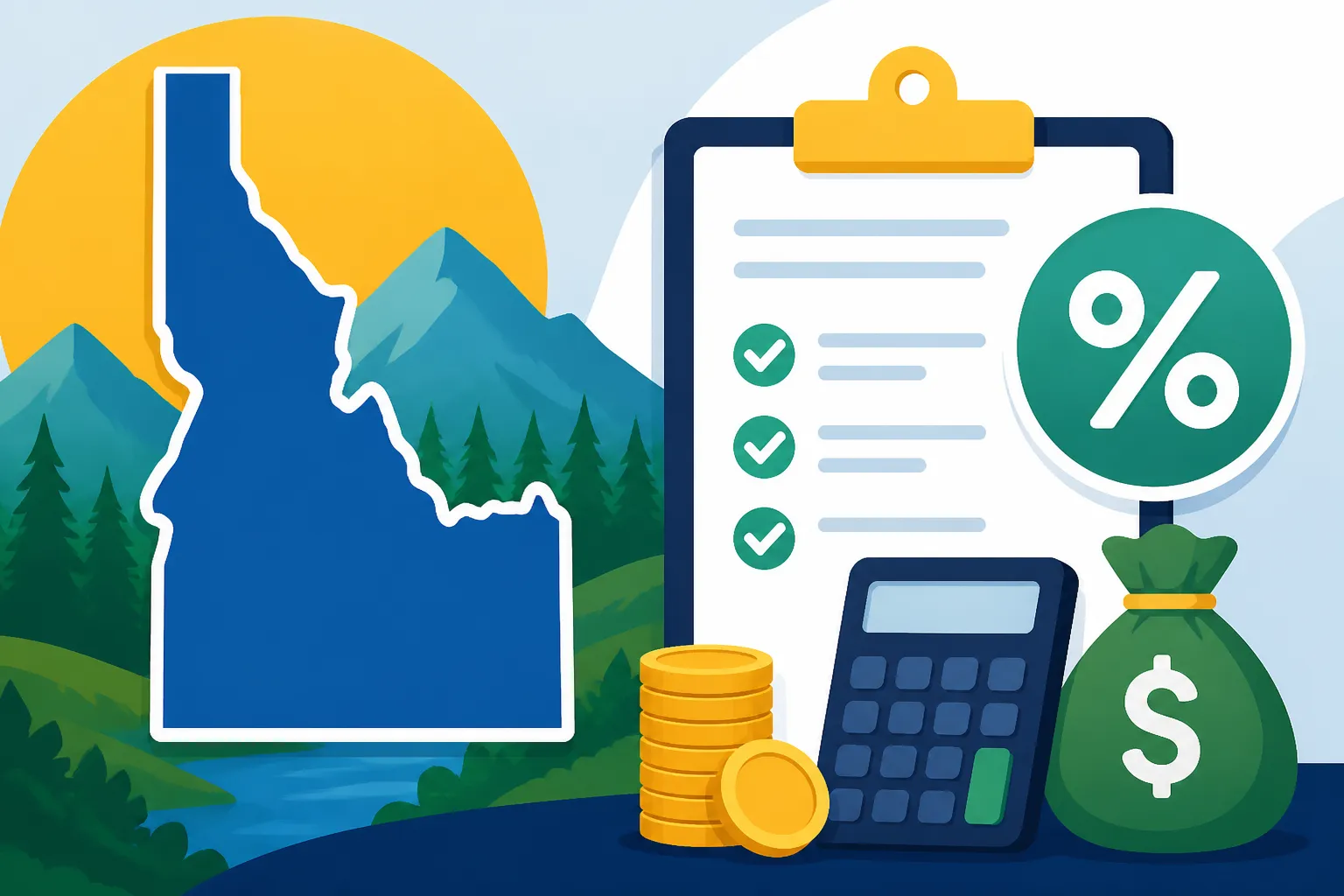
Moving to or living in the Gem State often feels like a breath of fresh air, but the recent overhaul of the tax code has left many residents scratching their heads. If you’re staring at your 2026 budget wondering how much the state will actually take from your hard-earned wages, this guide breaks down Idaho's specific rates, credits, and filing requirements.
Understanding Idaho’s Shift to a Flat Income Tax Rate
For years, Idaho operated on a progressive tax system that felt like a maze. You would climb from one bracket to the next, paying a higher percentage as your career progressed in cities like Boise or Coeur d'Alene. However, the legislative landscape shifted significantly, moving the state toward a more simplified structure. By the time we reach 2026, the primary focus for every Idahoan is the flat tax rate.
A flat tax sounds simple on paper—everyone pays the same percentage regardless of whether they are a barista in Moscow or a tech executive in Meridian. In 2026, Idaho’s individual income tax rate is set at a flat 5.8%. While this is a reduction from the historical highs that used to peak above 6%, the transition has caused some anxiety for middle-income families who worry about losing the "buffer" of lower initial brackets. It is a stark contrast to the Graduated vs Flat State Income Tax Explained model found in many eastern states.
When you sit down to look at your paycheck, that 5.8% is applied to your Idaho taxable income. This is not your total gross salary, but rather what remains after you have accounted for various adjustments. If you are trying to visualize how this impacts your monthly take-home pay, using a tool like SmartAsset can help you run the numbers against your specific salary. It is important to remember that while the rate is flat, the amount you actually owe is heavily influenced by how Idaho mirrors federal tax law.
The frustration many locals feel stems from the fact that a flat rate doesn't necessarily mean a lower tax bill for everyone. If you were previously hovering in a lower progressive bracket, a move to a 5.8% flat rate might actually feel like a slight nudge upward if not for the state’s generous standard deductions. Understanding How State Tax Brackets Work: Marginal vs Effective is crucial here; even with a flat rate, your effective rate—the actual percentage of your total income that goes to the state—will usually be lower than 5.8% once you factor in the basic exemptions and credits.
Idaho Standard Deductions and the Federal Link
Idaho is what tax professionals call a "conformity state." This means that Idaho’s tax code generally follows the federal Internal Revenue Code. For 2026, Idaho continues to align its standard deduction amounts with the federal government. This is a massive relief for those of us who hate doing double the math. If you take the standard deduction on your federal 1040, you are almost certainly going to do the same on your Idaho Form 40.
For a single filer or a married person filing separately in 2026, the standard deduction provides a significant shield for your initial earnings. Married couples filing jointly see that shield double. This alignment simplifies the process, but it also means that any major changes at the federal level—like those often discussed regarding the sunsetting of certain Tax Cuts and Jobs Act provisions—will ripple directly into your Idaho tax return. You can stay ahead of these shifts by checking the State Income Tax Cuts & Changes for 2026 to see if any local decoupling has occurred.
Beyond the standard deduction, Idaho residents often find themselves navigating the nuances of "add-backs" and "subtractions." For instance, if you are a teacher in the Boise School District and spent your own money on classroom supplies, Idaho allows you to subtract those expenses from your income, just like the federal government does. Conversely, if you earned interest on bonds from another state, Idaho might want its share of that. This interplay is why many people use resources like SmartAsset to ensure they aren't missing these smaller, yet impactful, adjustments.
The real headache for many comes when comparing their local burden to the State Income Tax vs Federal Income Tax. While the federal government has seven brackets, Idaho's singular 5.8% rate makes the state portion of the filing process relatively straightforward once you have your federal Adjusted Gross Income (AGI) in hand. The frustration isn't usually in the math, but in the realization of how much of your total compensation is spoken for before you even pay your mortgage in Nampa.
The Idaho Grocery Tax Credit
If there is one thing that uniquely identifies the Idaho tax experience, it is the Grocery Tax Credit. Most states choose to either tax groceries at the register or exempt them entirely. Idaho takes a middle path: it taxes your eggs and milk at the standard 6% sales tax rate but then offers a "refund" of sorts through the income tax system.
For 2026, the Grocery Tax Credit remains a vital part of the tax-saving strategy for Idaho families. Most residents are eligible for a credit of around $120 per person. If you are a family of four living in Twin Falls, that’s a $480 reduction in your total tax bill. It’s designed to offset the sales tax you paid at the grocery store throughout the year. For seniors over the age of 65, this credit is often slightly higher, acknowledging the fixed-income challenges many retirees face.
To claim this, you must be an Idaho resident. Even if you don't earn enough money to technically owe any income tax, you should still file a return. Why? Because the Grocery Tax Credit is refundable. This means if you owe $0 in taxes but are eligible for $480 in grocery credits, the state will send you a check for that amount. It is one of the few times the Idaho state income tax calculator guide results in a “win” for the taxpayer.
However, the paperwork can be a nuisance. You have to ensure every dependent is listed correctly and that you meet the residency requirements. If you moved to the state mid-year, you'll need to look at the Idaho Part-Year Resident Tax Guide to see how to prorate this credit. It’s a small consolation for paying sales tax on food, but in a year where inflation has squeezed grocery budgets from Sandpoint to Pocatello, every hundred dollars counts.
Comparison: Idaho vs. Neighboring States
It is a common hobby for Idahoans to look across the border at Washington or Oregon and wonder who has it better. The grass often looks greener—or at least more tax-efficient—depending on which side of the state line you reside. Idaho’s 5.8% flat tax puts it in a unique middle ground.
To the west, Washington is famous for having no state income tax. This makes it a haven for high earners, which is why Does Washington Have State Income Tax? is such a popular query for those considering a move to the Pacific Northwest. However, Washington makes up for that lack of income tax with higher sales taxes and a capital gains tax on high-value assets. If you live in Post Falls but work in Spokane, you might think you’re getting the best of both worlds, but residency rules are strict.
To the south and west, Oregon has no sales tax, which feels like a dream when shopping in Ontario or Portland. But Oregon’s income tax is progressive and can climb as high as 9.9%. For a middle-income earner, Idaho’s 5.8% flat rate is often much more attractive than Oregon’s brackets. When you look at the States With a Flat Income Tax (2026), Idaho is increasingly joined by other states like Arizona and Utah that are trying to lure businesses and workers with the promise of simplicity.
| Feature | Idaho | Washington | Oregon |
|---|---|---|---|
| Income Tax Rate | 5.8% (Flat) | 0% | 4.7% to 9.9% |
| Sales Tax Rate | 6% | 6.5% (Base) | 0% |
| Grocery Tax | Taxed (w/ Credit) | Exempt | Exempt |
| Capital Gains Tax | Treated as Income | 7% (on certain gains) | Treated as Income |
As you can see, the "best" state depends entirely on your spending habits and income level. High spenders might prefer Oregon’s 0% sales tax, while high earners often flee to Washington. Idaho’s 5.8% rate is a play for the middle, attempting to remain competitive without gutting state services. Many people use SmartAsset to compare these regional differences when they are offered a job that requires a relocation across state lines.
Filing Requirements and Residency Rules
Knowing the rate is only half the battle; the other half is knowing if you actually have to pay it. Idaho has specific thresholds for who must file a return. Generally, if you are an Idaho resident and your gross income exceeds the standard deduction for your filing status, the State Tax Commission expects to hear from you. For 2026, these thresholds are roughly $15,000 for single filers and $30,000 for those married filing jointly, though you should check Do I Need to File State Taxes? (Thresholds) for the exact inflation-adjusted numbers.
Residency is where things get tricky, especially with the rise of remote work. If you spent more than 270 days in Idaho, or if you maintained a "permanent place of abode" here and spent more than 60 days in the state, Idaho considers you a resident for tax purposes. This is the State Tax Residency Rules Explained in its simplest form. If you are a "digital nomad" working from a cabin in McCall but your company is based in California, Idaho still wants its 5.8% on the income you earned while sitting on that porch.
For those who are just moving to the state, you fall under the category of a part-year resident. You will only pay Idaho tax on the income you earned while living in the state. This requires filing a specific form and can be a logistical nightmare if you didn't keep good records of your moving dates. Similarly, if you live in Idaho but work for an employer in a state with a reciprocity agreement (though Idaho's reciprocity is limited), you'll need to navigate the Idaho Nonresident Income Tax Rules carefully.
One common frustration for new residents is the "Statutory Resident" rule. Even if you don't consider Idaho your "home" (domicile), the state can still tax you as a resident if you meet the day-count requirements. It’s always a good idea to keep a log of your travel if you split time between Idaho and a place like Arizona or Florida. If you’re unsure, SmartAsset provides excellent breakdowns of how dual residency can impact your total tax burden.
Paying and Filing Your Idaho Taxes
When April 2026 rolls around, you have several options for settling your bill. The Idaho State Tax Commission has worked hard to move most of its systems online. If you are a full-year resident with a relatively simple return, you might even qualify for free filing through the state's partner programs. You can find more details on How to File Idaho State Taxes Online to see if you meet the income requirements for these free services.
If you find that you owe more than you expected—perhaps because your employer didn't adjust your withholdings for the 5.8% flat rate correctly—don't panic. Idaho offers payment plans, though they do come with interest. The key is to file on time, even if you can't pay the full amount immediately. The penalties for failing to file are much steeper than the interest on a late payment.
For the small business owners in the Sun Valley area or the freelancers in Coeur d'Alene, estimated taxes are a way of life. Because Idaho has a flat tax, calculating your quarterly payments is actually easier than it used to be. You simply take your expected taxable income for the quarter and multiply it by 0.058. It’s a predictable number, which helps with cash flow management throughout the year.
Finally, keep an eye on your mailbox for your refund. Idaho is generally efficient with processing, but if you filed a paper return, expect a wait. Most people who e-file see their money back within a few weeks. If you’re curious about the status of your check, most residents use the state's "Where's My Refund" portal to track their grocery credits and overpayments.
State Income Tax Disclaimer
The information provided in this guide is for educational and informational purposes only and does not constitute professional tax, legal, or financial advice. Tax laws, including Idaho's flat tax rate and standard deduction amounts, are subject to change by legislative action and may be adjusted for inflation annually. Always consult with a qualified tax professional or CPA regarding your specific financial situation to ensure compliance with all state and federal regulations for the 2026 tax year.