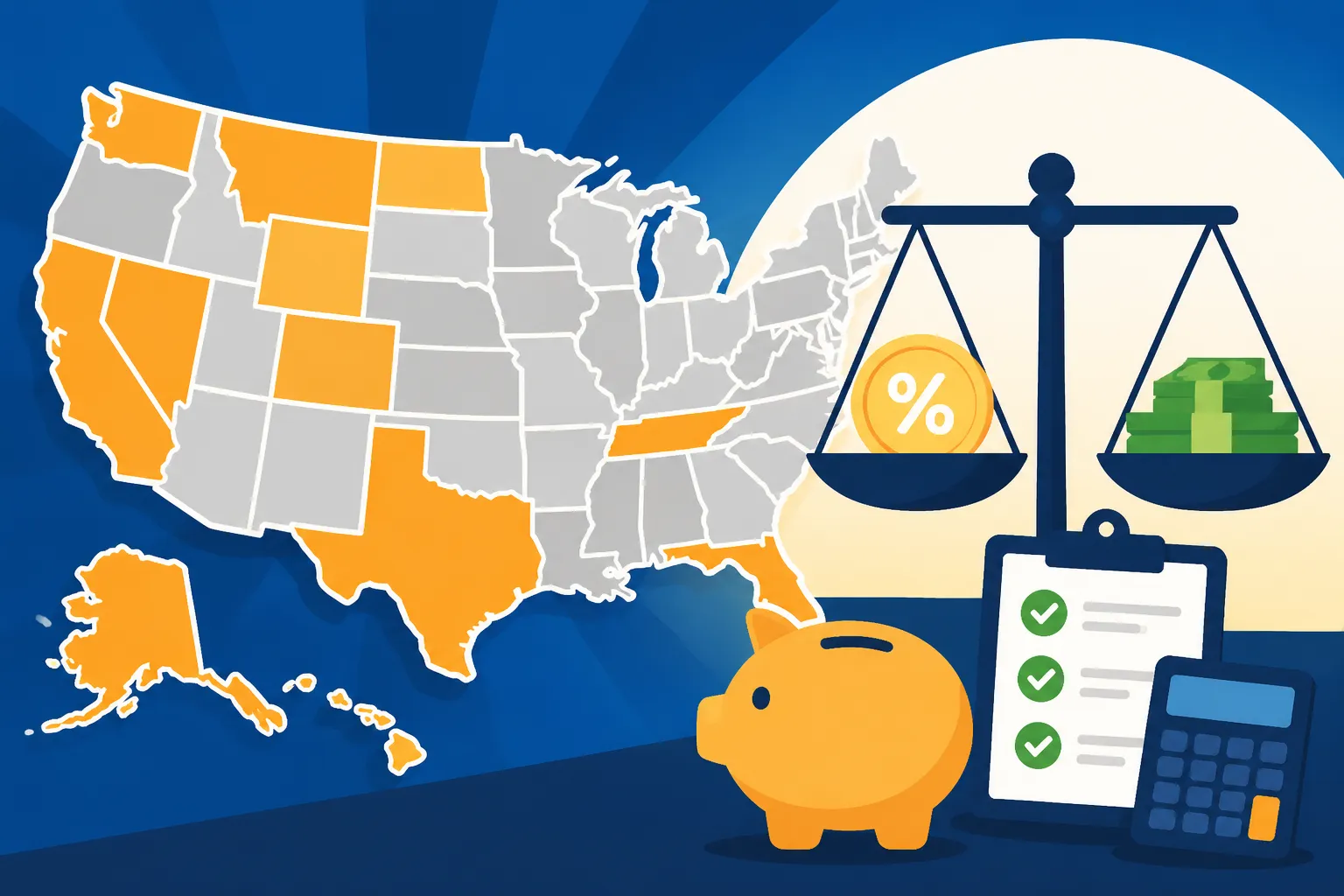
How Many States Have a Flat Tax?
Navigating the labyrinth of state income taxes can feel like a full-time job, especially when you’re trying to understand how different systems might impact your earnings. Many people are accustomed to federal taxes with their tiered brackets, so the idea of a flat tax can be quite a change, leading to confusion about which states actually implement this simpler approach. This guide will thoroughly break down the concept of a flat income tax, identify the states that currently employ it, and explore what this structure means for your personal finances.
Understanding the Flat Income Tax System
Let's cut through the jargon and get straight to what a flat income tax really means. Unlike the federal income tax system, which uses a progressive structure where different portions of your income are taxed at increasing rates (think of it like climbing a ladder, where each rung has a higher tax percentage), a flat tax system is much more straightforward.
How a Flat Tax Works
In a state with a flat income tax, virtually all taxable income is subject to a single, fixed percentage rate, regardless of how much you earn. There's no complex system of brackets where your first $10,000 is taxed at one rate, your next $20,000 at another, and so on. Instead, once your deductions and exemptions are applied, whatever remaining taxable income you have is taxed at that one, consistent rate. It's often touted for its simplicity, both for taxpayers trying to calculate their burden and for state governments managing the collection process. For more on the fundamental differences, you might want to read our article on Graduated vs Flat State Income Tax Explained.
Imagine two neighbors, Sarah and John, living in a flat tax state with a 3% income tax rate. Sarah earns $50,000 in taxable income, and John earns $150,000. Under a flat tax system, both Sarah and John would pay 3% of their taxable income in state taxes. Sarah pays $1,500 ($50,000 x 0.03), and John pays $4,500 ($150,000 x 0.03). The percentage is the same; only the total amount paid changes based on their income. This stands in stark contrast to a progressive system, where John's higher income might push a significant portion of his earnings into a higher tax bracket, resulting in a much larger effective tax rate than Sarah's.
Advantages and Disadvantages of a Flat Tax
The appeal of a flat tax system often lies in its transparency and simplicity. People appreciate knowing exactly what percentage of their income will go towards state taxes without needing to navigate complex tables or calculations. This predictability can be a significant plus, especially for small business owners or those with fluctuating incomes. From an economic perspective, proponents argue that a flat tax can encourage economic growth by simplifying the tax code and potentially incentivizing higher earnings, as individuals aren't penalized with higher rates as their income grows. It can also make a state more attractive for businesses looking to relocate, as the tax burden on employees is easier to predict.
However, a flat tax also has its drawbacks, particularly from an equity standpoint. Critics often point out that a flat tax is regressive, meaning it disproportionately affects lower-income earners. While everyone pays the same percentage, that percentage represents a much larger portion of a lower earner's disposable income than it does for a high earner. For someone earning $30,000, a 3% tax means $900, which can be a substantial amount when covering basic living expenses. For someone earning $300,000, that same 3% ($9,000) is a smaller percentage of their overall wealth and less impactful on their ability to meet essential needs. So, while the rate is numerically flat, its economic impact isn't evenly distributed. Understanding these nuances is crucial when you consider the overall State Tax Burden by State 2026.
The States That Embrace a Flat Income Tax
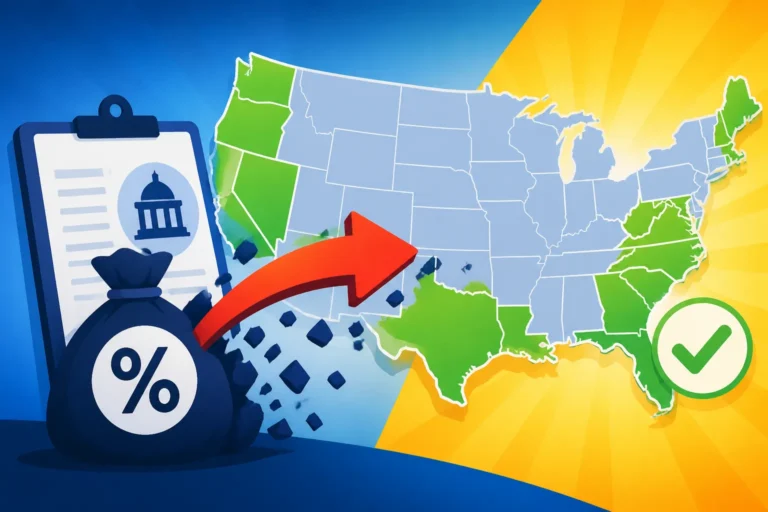
A number of states have chosen to implement a flat income tax rate, standing apart from the majority that utilize progressive systems or have no state income tax at all. This approach often reflects a state's unique economic philosophy and its approach to revenue generation. When planning your finances or considering a move, knowing which states fall into this category can be incredibly helpful.
Current Flat Tax States
Currently, there are several states that operate with a flat income tax rate. It's important to note that while the rate itself is flat, each state still has its own set of deductions, exemptions, and credits that can influence your final taxable income, just like in any other tax system. Therefore, a flat rate doesn't necessarily mean a simpler return for everyone, but the calculation of the tax itself is straightforward.
Here’s a look at some of the key states that have a flat income tax for 2026:
- Colorado: This state has a straightforward 4.40% flat tax rate on individual income. It's known for its relatively low tax burden compared to some other states, which makes it attractive for many.
- Illinois: Illinois imposes a flat income tax rate of 4.95% on individuals. Despite its major metropolitan areas, the state has maintained this single-rate structure.
- Indiana: Known as the "Crossroads of America," Indiana also keeps things simple with a 3.23% flat income tax rate. Don't forget, however, that Indiana has various Indiana County Income Taxes Explained on top of the state rate.
- Kentucky: The Bluegrass State has transitioned to a flat individual income tax rate, settling at 4.5% as of 2024, with a further reduction to 4% planned for 2026. This reflects a broader trend of some states moving towards flatter tax structures.
- Massachusetts: The Bay State implements a 5.0% flat income tax rate. However, it's worth noting that Massachusetts has an additional 4% surtax on income over $1 million, which effectively creates a two-tiered system for high earners, making it a hybrid in some ways.
- Michigan: The Wolverine State has a flat income tax rate of 4.25%. Similar to Indiana, residents of certain cities in Michigan may also be subject to Michigan City Income Taxes.
- North Carolina: This state has been a leader in tax reform, gradually reducing its income tax rate over the years. For 2026, North Carolina's flat income tax rate is set at 4.25%.
- Pennsylvania: The Keystone State has a unique flat income tax rate of 3.07%. What makes Pennsylvania's system stand out is how broadly "income" is defined for tax purposes, often including types of income other states might exempt. Additionally, many cities, including Philadelphia, levy a Philadelphia Wage Tax 2026 that is separate from the state income tax.
- Utah: Utah taxes individual income at a flat rate of 4.65%. It's one of the Mountain West states that has adopted this simplified approach.
- Washington: While Washington state does not have a traditional individual income tax, it does impose a 7% capital gains tax on profits over $250,000 from the sale or exchange of long-term capital assets. This is an important distinction to make, as it means while your wages aren't taxed, certain investments might be. You can learn more about this in Washington Capital Gains Tax Explained (7% / 9.9%) .
- New Hampshire: Similar to Washington, New Hampshire traditionally did not tax wages, but it did tax interest and dividend income. However, the state has been phasing out this tax, with a full repeal expected by 2027. So, for practical purposes, it's often listed among states with no broad income tax. For a deeper dive, check out New Hampshire Interest & Dividends Tax Repeal.
This list, while comprehensive, can be fluid as states regularly evaluate and adjust their tax policies. Keeping an eye on State Income Tax Cuts & Changes for 2026 is always a good idea.
States Transitioning to or Considering a Flat Tax
The trend towards flatter tax rates has gained momentum in recent years, with several states either recently converting to a flat tax or actively considering such a change. The appeal often lies in making a state more competitive for residents and businesses. For example, states like Arizona and Mississippi have recently moved from progressive tax systems to a flat tax, citing simplification and economic development as primary drivers.
This movement isn't without debate, of course. Policy makers weigh the potential economic benefits against concerns about fairness and the impact on state revenue stability. For individuals, knowing if your state is among those making these shifts is important for long-term financial planning. Resources like SmartAsset often publish analyses on states exploring these changes, offering valuable insights into potential future tax landscapes. If you’re curious about which states are on the move, our guide on What States Are Going to Flat Tax? provides a detailed overview.
Here’s a table summarizing the current flat tax states and their approximate rates for 2026:
| State | 2026 Flat Income Tax Rate | Key Nuances/Considerations |
|---|---|---|
| Colorado | 4.40% | Simple, generally low tax burden. |
| Illinois | 4.95% | No local income taxes at state level. |
| Indiana | 3.23% | Subject to additional county income taxes. |
| Kentucky | 4.0% (expected) | Recently converted from progressive; further rate reductions possible. |
| Massachusetts | 5.0% | Additional 4% surtax on income over $1 million. |
| Michigan | 4.25% | Some cities levy their own income taxes. |
| North Carolina | 4.25% | Rate has been consistently decreasing. |
| Pennsylvania | 3.07% | Broad definition of taxable income; local wage taxes common. |
| Utah | 4.65% | Consistent rate. |
| Washington | 7% (capital gains) | No broad income tax on wages; taxes capital gains. |
| New Hampshire | 0% (interest/dividends) | Phasing out interest and dividends tax; no wage tax. |
Note: Tax rates and policies can change. Always verify with official state tax resources.
Flat Tax vs. Other State Tax Systems: What It Means for Your Wallet
When you're trying to figure out your total tax liability, it's not enough to just look at a state's income tax rate. You have to consider the whole picture: sales taxes, property taxes, and any other local taxes. A state with a low or flat income tax might have higher property or sales taxes to make up for the revenue. Tools from financial analysis sites like SmartAsset are incredibly useful for comparing the overall tax burden in different locations, providing a more holistic view.
Comparing Flat Tax States to Progressive Tax States
The most common alternative to a flat tax is a progressive income tax system, like the one used by the federal government and many states, such as California or New York. In these states, tax rates increase as your income rises.
For instance, consider two states: Flat Tax State A with a 4% income tax rate, and Progressive Tax State B, which has brackets ranging from 1% to 6%.
- Low-income earner ($30,000 taxable income): In Flat Tax State A, they pay $1,200 (4% of $30,000). In Progressive Tax State B, their income might fall entirely within the 1% or 2% bracket, meaning they pay less in state income tax, perhaps $300-$600. For these individuals, a progressive system can be more advantageous.
- Mid-income earner ($70,000 taxable income): In Flat Tax State A, they pay $2,800 (4% of $70,000). In Progressive Tax State B, a portion of their income might be taxed at 1-2%, another portion at 3-4%, and maybe a small part at 5%. Their effective rate might be around 3.5%, meaning they pay a bit less than in the flat tax state.
- High-income earner ($200,000 taxable income): In Flat Tax State A, they pay $8,000 (4% of $200,000). In Progressive Tax State B, a significant portion of their income would likely be in the higher brackets (e.g., 5-6%). Their effective rate could easily reach 4.5% or 5%, meaning they pay more than in the flat tax state.
This comparison highlights why flat tax states are often considered more attractive to high-income earners. If you are a high-income earner, you might find more value in exploring Best States for High Earners (Tax). Conversely, lower-income individuals might find themselves paying a relatively higher share of their income in a flat tax state compared to a progressive one, unless the flat tax rate is extremely low or offset by generous deductions. You might be interested in our guide on How State Tax Brackets Work: Marginal vs Effective for a more in-depth understanding of these concepts.
Considering States With No Income Tax
Of course, the ultimate "flat tax" could be considered a 0% income tax. There are several states that do not impose a state-level income tax on wages. These states include Alaska, Florida, Nevada, South Dakota, Tennessee, Texas, Washington, and Wyoming. While this sounds incredibly appealing, it's crucial to remember that these states still need to generate revenue. They typically do so through other means, often higher sales taxes, property taxes, or unique excise taxes.
For example, while Florida boasts no state income tax, its property taxes can be significant, and sales taxes are also a key revenue driver. Similarly, Texas, with no income tax, relies heavily on property taxes. So, while your paycheck might look larger initially in these states, the overall cost of living and tax burden might not be as low as you assume once all taxes are factored in. The question of Is It Cheaper to Live in a State With No Income Tax? is far more complex than it appears on the surface. When making a decision about where to live based on taxes, it’s always wise to look at the full picture and use a comprehensive resource, like those offered by SmartAsset, to compare the total tax burden. Our detailed guide on States With No Income Tax (2026 Full List) can give you a clearer perspective on these alternatives.
Ultimately, whether a flat tax state is "better" for you depends entirely on your individual financial situation, including your income level, spending habits (which impact sales tax), and homeownership status (which impacts property tax). What works for one person might not work for another.
Final Thoughts on Flat Tax Systems
Deciding where to live or work, especially when taxes are a major consideration, is a deeply personal choice with significant financial implications. A state's adoption of a flat income tax is just one piece of a much larger puzzle. It offers a promise of simplicity and predictability, which can be very appealing, especially to those who feel burdened by complex tax codes. However, as we've explored, simplicity in rate doesn't always translate to equitable impact or an overall lower tax burden once property, sales, and local taxes are factored in.
When you're comparing states, whether it's looking at the specifics of Illinois Flat Tax 2026 or considering a move to a state with no income tax, it's essential to do your homework. Look beyond just the income tax rate to understand the broader tax ecosystem. Consider your own financial profile: Are you a high-income earner who might benefit from a flat rate, or someone with a more modest income where a progressive system might offer more relief? Do you own property, or are you primarily a consumer who will feel sales tax more acutely? Using reliable financial tools and staying informed about legislative changes are your best allies in navigating the diverse world of state taxation.
Disclaimer
Please remember that tax laws are intricate and subject to frequent changes. The information provided in this article is intended for general informational purposes only and does not constitute financial, tax, or legal advice. Always consult with a qualified tax professional or financial advisor for personalized advice regarding your specific tax situation.