Which States Have No Income Tax in 2026?
The thought of keeping more of your hard-earned money instead of sending it off to the state tax authorities is a powerful one, isn't it? For many Americans, the annual state income tax filing is a painful reminder of just how much a percentage point here or there can impact their bottom line. It's a common dream to find a place where that particular burden simply doesn't exist. This comprehensive guide is here to shed light on which states have no state income tax, helping you understand the real financial landscape beyond just that one tax.
The Full List of States With No Income Tax
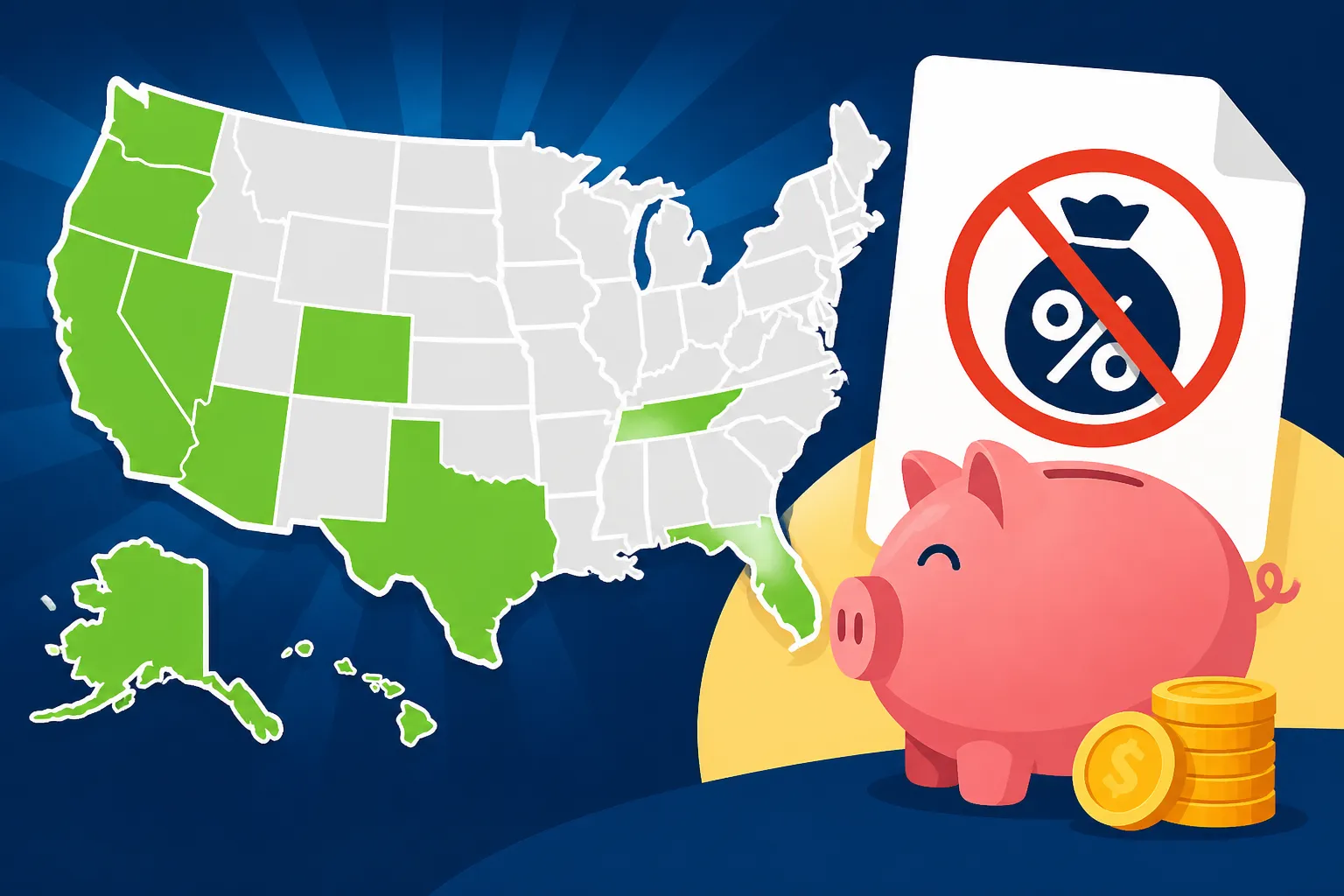
The appeal of a state with no income tax is undeniable. Imagine not having to worry about state withholdings from your paycheck or navigating complex state tax brackets. For 2026, there will be nine states that do not impose a broad-based income tax on wages and salaries. These states have found other ways to fund their government services, which we'll dive into shortly.
Here's the definitive list:
- Alaska
- Florida
- Nevada
- South Dakota
- Tennessee
- Texas
- Washington
- Wyoming
- New Hampshire (As of 2026, New Hampshire will no longer tax interest and dividends, effectively becoming a no-income-tax state in the traditional sense.)
It’s crucial to understand that "no income tax" doesn't mean "no taxes at all." These states still need revenue to operate, and they collect it through other means.
A Closer Look at Each No-Income-Tax State
Let's break down what makes each of these states unique, especially concerning how they generate revenue in the absence of a state income tax. It's never as simple as just eliminating one tax; the burden usually shifts elsewhere.
- Alaska: This vast, resource-rich state famously doesn't levy an income tax or a statewide sales tax. Sounds like a dream, right? Well, Alaska largely funds its government through oil revenues. Residents even receive an annual dividend from the Alaska Permanent Fund. However, don't forget about property taxes, which can be significant depending on the municipality, and local sales taxes are also possible. Living costs, especially for goods that need to be shipped long distances, can also be quite high.
- Florida: Known as a haven for retirees and sun-seekers, Florida thrives on tourism and real estate. The state generates substantial revenue through its relatively high statewide sales tax (6% with local additions pushing it higher in many areas) and property taxes. If you're wondering, "Does Florida Have State Income Tax?", the answer is definitively no. While it's excellent for those with high incomes or substantial retirement savings, property taxes, homeowner's insurance (especially in coastal areas prone to hurricanes), and sales taxes will be your primary considerations.
- Nevada: The Silver State, famous for its bustling cities like Las Vegas and Reno, also relies heavily on tourism, gaming, and sales tax. Nevada has no state income tax and no corporate income tax. Instead, the state has a relatively high sales tax and taxes on gaming revenue. Property taxes can vary widely by county but are generally moderate compared to states with income tax. For those looking to establish residency, the warm climate and vibrant entertainment scene are strong draws.
- South Dakota: This Great Plains state leans on sales and property taxes to fund its services. It's a popular choice for those seeking a tranquil, rural lifestyle without the burden of state income tax. Property taxes here are moderate, and there's a statewide sales tax. It's also known for being business-friendly, drawing in some financial institutions.
- Tennessee: The Volunteer State, a hub for music and manufacturing, has also shed its income tax burden. Historically, Tennessee only taxed income from investments and dividends (known as the Hall Tax), which was fully phased out in 2021. So, for 2026 and beyond, there is no state income tax. The state makes up for this primarily through a high state sales tax, which at 7% is one of the highest in the nation, and local sales taxes can push the combined rate even higher. Property taxes are generally reasonable.
- Texas: Everything's bigger in Texas, including the debate over its tax structure. If you're asking, "Does Texas Have State Income Tax?", the answer is no. Texas famously has no state income tax, making it attractive to many, including those moving from high-tax states like California. However, this absence of income tax is largely offset by some of the highest property taxes in the nation. Sales taxes are also a significant revenue source for the state. If you own a home, be prepared for substantial property tax bills. The overall tax burden is highly dependent on whether you rent or own.
- Washington: The Evergreen State, home to major tech companies and beautiful natural landscapes, also boasts no state income tax. While it has recently implemented a 7% capital gains tax on high-income individuals, this is not a broad-based income tax on wages. Washington relies heavily on sales taxes, which are among the highest in the country when state and local rates are combined, and property taxes. For more on the capital gains tax, you might want to read our article on Washington Capital Gains Tax Explained (7% / 9.9%).
- Wyoming: The Cowboy State, known for its wide-open spaces and natural beauty, relies on mineral severance taxes, sales taxes, and property taxes. It has no state income tax, corporate income tax, or inheritance tax. This makes it particularly attractive for those with substantial assets or those looking for a very low-tax environment. Property taxes are generally low.
- New Hampshire: Historically, New Hampshire has been unique, having no earned income tax but levying a 5% tax on interest and dividends (the "Interest and Dividends Tax"). However, thanks to recent legislative changes, this tax is being phased out and will be fully repealed for tax years beginning January 1, 2026. This officially places New Hampshire among the full no-income-tax states. You can learn more about this change in our article about the New Hampshire Interest & Dividends Tax Repeal. The state relies on property taxes (which are among the highest nationally) and excise taxes for revenue.
Understanding How No-Income-Tax States Fund Themselves
It’s easy to get excited about the idea of no state income tax, but it's important to be realistic about how state governments operate. They have roads to maintain, schools to fund, public safety services to provide, and countless other responsibilities. If they aren't collecting income tax, they must be getting that money from somewhere else.
The Trade-offs: Higher Sales or Property Taxes
The most common way states without income tax make up the difference is through higher sales taxes and/or property taxes. This isn't a hidden secret; it's a fundamental shift in how the tax burden is distributed among residents.
For example, in a state like Texas, while you won't pay state income tax on your wages, your property tax bill could be substantially higher than what you might expect in a state like California, which has a high income tax but lower property tax rates. Similarly, states such as Washington and Tennessee have some of the highest combined state and local sales tax rates in the nation. This means every time you make a purchase, from groceries to a new car, a significant chunk goes to the state and local governments.
This approach often leads to specific groups bearing a larger share of the tax burden:
- Homeowners: Those who own significant property in high-property-tax states will feel the pinch.
- Consumers: Everyone pays sales tax, but those with lower incomes tend to spend a larger proportion of their income on taxable goods and services, making sales taxes potentially regressive.
- Tourists: States like Florida and Nevada heavily rely on sales tax and tourism-related taxes, effectively having visitors contribute significantly to their state's coffers.
Our article on States With No Income Tax but High Other Taxes delves deeper into this dynamic, showing how states with no income tax often compensate with higher taxes elsewhere.
Other Revenue Streams
Beyond sales and property taxes, these states utilize various other mechanisms to fund public services.
- Excise Taxes: Taxes on specific goods and services like gasoline, tobacco, alcohol, and hotel stays are common. These are often used to fund specific programs or infrastructure projects.
- Corporate Taxes & Fees: Some states without individual income tax might still have corporate income taxes or various business fees and licenses. Nevada, for instance, has a Commerce Tax on gross revenue exceeding a certain threshold.
- Natural Resources: States like Alaska and Wyoming greatly benefit from severance taxes on oil, natural gas, and mineral extraction. This revenue source can significantly reduce the need for other taxes on residents.
- Gaming Revenue: Nevada, in particular, generates a substantial portion of its state budget from taxes and fees on its robust gaming industry.
Understanding these diverse revenue streams is key to evaluating the true "tax-friendliness" of any state. Just because your paycheck isn't hit by state income tax doesn't mean your wallet isn't impacted by other forms of taxation.
Who Benefits Most from No-Income-Tax States?
The allure of a no-income-tax state is strong, but the financial benefits aren't equally distributed among all residents. Certain groups tend to see the most significant advantages, while others might find the overall cost of living and other taxes negate some of the savings.
High Earners and Retirees
These two demographics often stand to gain the most from living in a state with no income tax.
For high earners, a significant portion of their income would typically be subject to state income tax in other states, especially those with progressive tax structures like California or New York. By eliminating this tax, they can dramatically increase their disposable income. Imagine earning a $200,000 salary; in a high-income-tax state, a substantial percentage of that could go to state taxes. In a no-income-tax state, that money stays in your pocket. Of course, they still need to consider property taxes if they own an expensive home, but the sheer volume of income often makes the income tax savings outweigh other tax increases. This is a big reason why you see discussions around topics like Moving From California to Avoid State Tax.
Retirees also find these states incredibly attractive. Many retirees live on fixed incomes, drawing from pensions, 401(k)s, IRAs, and Social Security. If a state doesn't tax these income sources, or has no income tax at all, it can significantly stretch their retirement savings. For instance, while some states tax Social Security benefits, none of these nine no-income-tax states do. Moreover, 401(k) and IRA withdrawals, which are considered income, are also typically untaxed at the state level. This makes states like Florida, Texas, and Nevada perennial favorites for those looking to maximize their retirement income. Our guide on the Best States to Retire With No Income Tax offers a deeper look at which states offer the best tax environments for seniors.
Remote Workers and Digital Nomads
The rise of remote work has added another layer of complexity and opportunity when it comes to state taxes. If you're a remote worker living in a no-income-tax state but your employer is based in a state with income tax, the situation can get tricky. Generally, where you physically perform your work determines your state income tax obligation. So, if you live and work remotely from your home in, say, Florida, you typically wouldn't owe state income tax to Florida or the state where your employer is located (unless that employer's state has a "convenience of the employer" rule, like New York).
This setup makes no-income-tax states particularly appealing for digital nomads and those with location-independent jobs. However, establishing genuine residency is crucial. States with income tax are increasingly scrutinizing remote workers to ensure they truly live and work outside the state, especially if they spend significant time there. It’s not just about spending 183 days in a state, but demonstrating domicile. For more on this, our articles on Remote Work State Taxes & Convenience of the Employer and Domicile vs Statutory Residency offer critical insights into the nuances of multi-state taxation for remote professionals. Using tools and guides, perhaps from financial resources like SmartAsset, can help individuals navigate these complex situations and understand the potential tax implications of their remote work setup.
Things to Consider Beyond Income Tax
Choosing a state based solely on its income tax policy can be a costly mistake. The overall financial picture is far more complex, encompassing a variety of factors that influence your budget and quality of life. Thinking comprehensively is key to making a truly informed decision.
Cost of Living and Overall Tax Burden
It's a common misconception that "no income tax" automatically means "cheap living." That's simply not always the case. States without income tax often have higher sales taxes, property taxes, or excise taxes, which can significantly impact your overall expenses.
Consider Florida: while it has no income tax, its property insurance costs have soared in recent years, especially in coastal areas. Likewise, Texas has no income tax, but its property tax rates are some of the highest in the country, which can easily eat into any income tax savings, particularly for homeowners. Washington has high sales taxes.
To get a true sense of the financial impact, you need to look at the overall tax burden, which considers all taxes paid relative to income. A tool like SmartAsset's tax burden calculator can be incredibly helpful here. You might find that some states with moderate income taxes actually have a lower overall tax burden than some "no income tax" states when all is said and done. Our guide on State Tax Burden by State 2026 provides a great starting point for understanding how different taxes contribute to the total picture. Also, comparing the Cost of Living vs Taxes by State can reveal that a state with no income tax might have a higher cost of living that negates the tax savings. For example, while there's no income tax in Washington, cities like Seattle are notoriously expensive in terms of housing and general expenses.
It's about finding the balance that works for your specific financial situation and lifestyle, not just chasing the "no income tax" label.
Residency Requirements and Potential Pitfalls
If you're considering moving to a no-income-tax state specifically for tax benefits, understanding and properly establishing domicile is paramount. Domicile is your true, fixed, and permanent home—the place where you intend to return whenever you are absent. It's not just about spending 183 days in a state; it's about proving your genuine intent to make that state your primary residence.
States with income tax, especially those like California and New York, are very vigilant about residents attempting to claim non-residency to avoid taxes. They may audit individuals who move but maintain significant ties to their previous state. Common indicators that a state tax authority looks at include:
- Where you spend most of your time.
- Where your spouse and dependents live.
- Where you register your vehicles and vote.
- The location of your bank accounts and professional licenses.
- Your social and community ties.
Failing to properly establish domicile can lead to being audited and potentially owing back taxes, penalties, and interest to your former state. It's a complex legal area where intent is often as important as physical presence. You'll want to review resources like What Is Tax Domicile vs Residency? and How to Prove You Changed Your Domicile to fully grasp the distinction and the actions you need to take. Don't underestimate the state's ability to track your movements and financial activities.
Here's a quick overview of the sales and estimated average property tax rates in the nine no-income-tax states for 2026:
| State | State Sales Tax Rate | Average Local Sales Tax | Median Property Tax Rate (effective) |
|---|---|---|---|
| Alaska | 0% | 1.76% | 1.18% |
| Florida | 6% | 1.05% | 0.98% |
| Nevada | 6.85% | 1.37% | 0.53% |
| New Hampshire | 0% | 0% | 1.89% |
| South Dakota | 4.5% | 1.90% | 1.25% |
| Tennessee | 7% | 2.55% | 0.67% |
| Texas | 6.25% | 1.94% | 1.69% |
| Washington | 6.5% | 3.23% | 0.93% |
| Wyoming | 4% | 1.60% | 0.55% |
Note: Sales tax rates often have local additions, so the 'average local sales tax' reflects a typical combined rate. Property tax rates are median effective rates and can vary significantly by county and specific property value.
Disclaimer
Please note that tax laws are complex and subject to change. This information is intended for general guidance only and should not be considered professional tax advice. Always consult with a qualified tax professional for advice tailored to your specific situation.