Arizona Income Tax Rate 2026
Trying to figure out your take-home pay in the Grand Canyon State can feel like navigating a desert without a map, especially with recent legislative shifts. This guide simplifies the 2026 Arizona income tax landscape, covering the flat tax transition, deductions, and local filing nuances to ensure you aren't overpaying or getting hit with surprise penalties next April.
Understanding the Arizona Flat Tax Rate for 2026
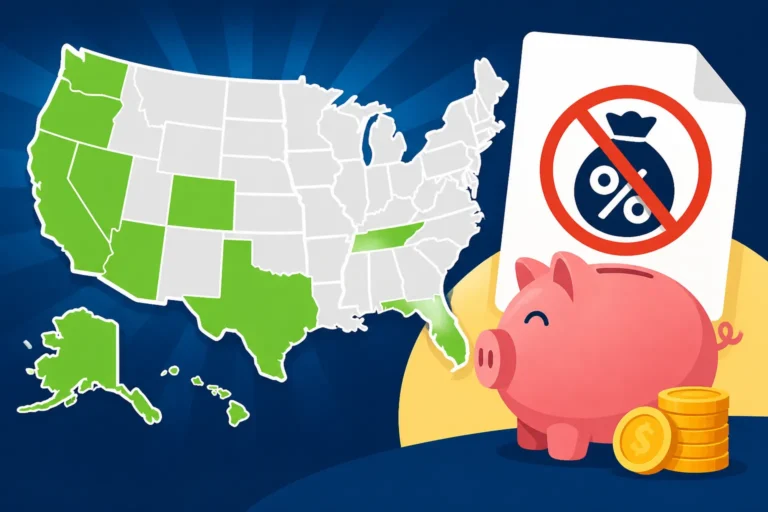
For a long time, Arizona operated under a progressive tax system, much like the federal government. You would start at a low rate and, as you earned more, you would "climb" into higher brackets. However, things have changed significantly. As we move through 2026, Arizona has firmly established itself as one of the States With a Flat Income Tax (2026). This means that whether you are a barista in Flagstaff or a high-powered tech executive in Scottsdale, the state takes the same percentage of your taxable income.
The flat tax rate for 2026 is 2.5%. This shift was designed to simplify the filing process and make the state more competitive with its neighbors. When you compare this to the State Income Tax Rates 2026: All 50 States Ranked, you will notice that Arizona’s 2.5% rate is one of the lowest in the nation among states that actually collect income tax. It is a major draw for people moving from high-tax environments like California or New York.
One thing that confuses people about a flat tax is how it interacts with their paycheck. You might hear people talk about How State Tax Brackets Work: Marginal vs Effective, but in Arizona, these two numbers are essentially the same for your state liability. Your marginal rate—the rate on your last dollar earned—is 2.5%, and your effective rate—the total percentage of your income paid in taxes—will also hover right around that 2.5% mark, minus any credits or deductions you claim. To get a better sense of how this impacts your specific salary, I highly recommend using an Arizona State Income Tax Calculator Guide to see the math in action.
Deductions and Credits That Lower Your Bill
Even though the rate is a flat 2.5%, you aren't necessarily paying that percentage on every single dollar you earn. Arizona allows for several deductions and credits that can significantly lower your taxable income. First, there is the standard deduction. Arizona generally mirrors the federal standard deduction amounts, adjusted for inflation. This means a large chunk of your income is protected before the state even starts looking at your wallet.
If you are someone who likes to give back, Arizona is incredibly unique because of its tax credit programs. Unlike a deduction, which just lowers the amount of income you are taxed on, a tax credit is a dollar-for-dollar reduction of your actual tax bill. For instance, if you owe $1,000 in state taxes but you gave $400 to a qualifying foster care organization, your tax bill drops to $600. Many taxpayers use tools like SmartAsset to see how these credits might change their overall financial picture. SmartAsset provides a clear breakdown of how various financial decisions, like charitable giving, can impact your year-end results.
Let’s look at some of the most common ways to save:
- The Family Tax Credit: This helps lower-income families by providing a credit based on the number of dependents in the household.
- Education Credits: Arizona allows you to claim credits for contributions made to public schools (for extracurricular activities) or School Tuition Organizations (STOs).
- Charitable Credits: You can receive credits for donating to qualifying charitable organizations that help the working poor.
I often tell my readers that Arizona is arguably the best state for people who want "agency" over where their tax dollars go. Instead of sending all your money to Phoenix to be spent by the legislature, you can effectively "direct" your tax dollars to your local school or a favorite local charity through these credits.
| Tax Category | Arizona Rate / Rule for 2026 |
|---|---|
| Individual Income Tax Rate | 2.5% (Flat Tax) |
| Standard Deduction (Single) | ~$14,600 (Inflation Adjusted) |
| Standard Deduction (Married Filing Jointly) | ~$29,200 (Inflation Adjusted) |
| Social Security Taxation | Not Taxed |
| Military Retirement Pay | Fully Exempt |
| 529 Plan Deduction | Up to $2,000 (Single) / $4,000 (Married) |
Residency Rules and Living in the Grand Canyon State
If you just moved to Mesa or are planning a move to Tucson, you need to understand when Arizona considers you a resident for tax purposes. This is a common pain point for "snowbirds"—those who live in Arizona during the beautiful winters but head back to cooler climates like Chicago or Seattle in the summer. Generally, Arizona considers you a resident if you spend more than nine months of the year in the state. However, the intent matters too. If you have an Arizona driver’s license, are registered to vote here, and call it home, the Department of Revenue will likely view you as a full-time resident.
For those who are moving mid-year, you’ll need to look at an Arizona Part-Year Resident Tax Guide. You will only pay the 2.5% tax on the income you earned while you were physically present in Arizona or income derived from Arizona sources. This can get a bit tricky if you are a remote worker. If you work for a company in California but you are sitting at your desk in Sedona, Arizona wants its 2.5%. Navigating these multi-state issues is where SmartAsset’s data can be very helpful, as they offer comparisons on how different states treat remote work income.
If you are only here for a short-term contract, you should familiarize yourself with the Arizona Nonresident Income Tax Rules. Nonresidents only pay tax on income earned from services performed within the state or from property located in Arizona. For example, if you own a rental property in Scottsdale but live in Nevada, you still have to file an Arizona return for that rental income. If you are ever in doubt, checking SmartAsset can provide a quick overview of residency requirements across the Southwest.
Is Arizona Tax Friendly for Retirees
One of the biggest questions I get is whether Arizona is a good place to retire from a tax perspective. The answer is a resounding yes. When asking Is Arizona a Tax-Friendly State?, retirees usually find the answer in the treatment of Social Security and pensions.
Arizona does not tax Social Security benefits. This is a massive win for those living on a fixed income. If you are looking at Does Arizona Tax Social Security?, you can rest easy knowing that your federal benefits stay in your pocket. Furthermore, Arizona has made great strides in exempting military retirement pay. As of the last few years, 100% of military retirement pay is exempt from Arizona state income tax.
However, if you are pulling money from a 401(k) or a traditional IRA, that money is generally subject to the 2.5% flat tax. This is where you have to do some planning. While the rate is low, it’s not zero. You should compare this with States With No Income Tax (2026 Full List) to see if the 2.5% is a dealbreaker for you. In my experience, most retirees find that the combination of no tax on Social Security and a very low flat tax on other distributions makes Arizona much more attractive than states like Oregon or Colorado. Many people use SmartAsset to compare their retirement take-home pay between Phoenix and other popular retirement destinations like Florida or Nevada.
One other small but important detail for seniors is the Do Retirees Pay State Income Tax? question regarding property tax. While this guide focuses on income tax, it’s worth noting that Arizona has several property tax freeze programs for seniors that can further lower your cost of living. When you add up the 2.5% flat income tax, the Social Security exemption, and the potential for property tax freezes, the state becomes a very compelling choice for the 65+ crowd.
Filing Your Return and Getting Your Refund
When April rolls around, you want the process to be as painless as possible. Arizona has moved toward a more digital-friendly filing system. You can file your state return through various software providers or, if you meet certain income requirements, through the state’s free-file portals. In my years of doing this, I've found that taxpayers who use SmartAsset’s financial tools often have a better handle on their withholdings throughout the year, which leads to fewer surprises when they actually sit down to file.
If you are expecting money back, you will likely be checking the Arizona Tax Refund Status & Deadline page frequently. Usually, if you e-file, you can expect your refund in about two to three weeks. If you file a paper return—which I strongly advise against—you could be waiting months. The state has been working hard to speed up processing times, but the influx of new residents has put a strain on their systems.
Don't forget about the local level. Unlike some states like Ohio or Pennsylvania, Arizona does not have local or city income taxes. This is a huge relief for people living in big cities like Phoenix. You don't have to worry about a "Phoenix Wage Tax" or a "Tucson Earnings Tax." Your income tax responsibility stops at the state level at that 2.5% mark. This simplicity is one of the reasons the state is growing so quickly. According to SmartAsset’s cost of living analysis, the lack of local income tax is a significant factor in keeping Arizona's overall tax burden manageable compared to other metropolitan areas.
Important Arizona Tax Deadlines for 2026
Mark your calendars. The deadline to file your 2025 tax return is April 15, 2026. If that date falls on a weekend or a holiday, you might get an extra day or two, but it’s always best to aim for the 15th. If you find yourself in a bind and can't get your paperwork together in time, you can file for an extension.
An extension gives you until October 15, 2026, to file your paperwork, but—and this is the most important part—it does not give you more time to pay. If you think you owe the state of Arizona money, you must send in a payment by April 15th, even if you haven't finished your return. If you don't, the interest and penalties will start to rack up quickly. I always tell people that the state is a very patient listener but a very expensive lender. If you are unsure how much to send in, a quick check of your total earnings through a tool like SmartAsset can give you a "ballpark" figure to ensure you stay in the state’s good graces.
By staying on top of these dates and understanding the 2.5% flat rate, you can move through 2026 with confidence. Arizona has worked hard to make its tax code "taxpayer-friendly," and while no one enjoys paying taxes, the current system in the Grand Canyon State is about as straightforward as it gets in the modern era.
Disclaimer
This guide is for informational purposes only and does not constitute professional tax, legal, or financial advice. Tax laws are subject to change by the Arizona State Legislature, and individual circumstances vary. Please consult with a qualified tax professional or the Arizona Department of Revenue before making any major financial decisions or filing your tax returns.