Best States for Federal Retirees (FERS/CSRS)
Retiring from federal service, whether you're under the Federal Employees Retirement System (FERS) or the old Civil Service Retirement System (CSRS), is a huge milestone. You've dedicated years, even decades, to public service, and now you're looking forward to enjoying those well-earned benefits. But here's the kicker: the state you choose to call home in retirement can have a dramatic impact on how much of that hard-won pension and Social Security income you actually get to keep. It's frustrating to think that your monthly income could shrink just because of a state line, but it's a very real concern for many. This comprehensive guide is here to help you navigate the complex world of state taxation for federal retirees, pinpointing states that offer a more tax-friendly environment, and discussing other crucial factors to consider for a truly comfortable retirement.
Understanding FERS/CSRS and State Tax Implications
When you're a federal retiree, your income streams typically come from a few different places: your federal pension (either FERS or CSRS), your Social Security benefits, and potentially withdrawals from your Thrift Savings Plan (TSP) or other investments. Each of these components can be treated differently by various states, making the tax landscape a real puzzle.
A Quick Look at Federal Retirement Systems
Let's quickly demystify FERS and CSRS. The Civil Service Retirement System (CSRS) is the older, defined-benefit plan that was largely phased out in 1984. It offered a generous pension and generally didn't include Social Security. If you're a CSRS retiree, your pension is often your primary source of guaranteed income.
The Federal Employees Retirement System (FERS) is a three-tiered system introduced in 1987, encompassing a basic annuity (a smaller pension compared to CSRS), Social Security, and the Thrift Savings Plan (TSP). Most federal employees hired after 1983 are under FERS. This means if you're a FERS retiree, you're likely receiving income from all three components. The TSP is akin to a 401(k), allowing you to contribute to a tax-deferred retirement savings plan, with withdrawals typically taxed as ordinary income in retirement.
The important thing to remember is that while these are federal benefits, states have their own rules about how they tax them. It's not a one-size-fits-all situation, and that's where the confusion often begins for retirees.
Why State Taxes Matter for Federal Retirees
After decades of diligent work and contributions, the last thing you want is for a significant chunk of your retirement income to disappear into state tax coffers. State taxes can impact your pension, Social Security, and TSP withdrawals, significantly reducing your disposable income. This isn't just about the initial hit; it's about your long-term financial security and your ability to enjoy the retirement you've worked so hard for.
Imagine carefully budgeting for your golden years, only to find that the state you chose has an aggressive stance on taxing retirement income. That dream trip, the new hobby, or even just covering rising healthcare costs could suddenly be out of reach. Beyond income taxes, states levy property taxes, sales taxes, and sometimes even inheritance taxes. A state might look appealing because it doesn't tax pension income, but then hit you with exorbitant property taxes that wipe out any savings. It's a tricky business, and you're not alone if you feel overwhelmed by all the variables. Understanding these implications upfront is key to making an informed decision about where to settle down.
Key State Tax Factors for Retirees
Choosing a retirement haven involves looking at the full picture of state taxation, not just one piece of the puzzle. Federal retirees, particularly those on FERS/CSRS, need to consider how each state handles various forms of income and assets.
Income Tax on Pensions and Annuities
This is often the biggest concern for FERS and CSRS retirees. While some states completely exempt all retirement income from taxation, others offer partial exemptions, and a handful tax pensions just like any other income. It’s a vast spectrum, and knowing where your chosen state falls is crucial. For instance, states like Pennsylvania and Illinois are well-known for exempting most, if not all, retirement income, including federal pensions, from state income tax. This can translate into significant savings for retirees.
However, other states might offer smaller exclusions based on age or income level, meaning only a portion of your pension escapes taxation. Then there are states that tax your federal pension income fully, which can be a real shock if you're not prepared. It's important to remember that these rules can change, so what was true a few years ago might not hold for 2026. This is why keeping up-to-date with tax laws or using resources like those from SmartAsset to track changes is essential. For more detailed information, exploring specific state rules on States That Don't Tax Pensions (2026) can provide valuable insights.
Taxation of Social Security Benefits
Good news first: the vast majority of states do not tax Social Security benefits. This is a huge relief for many retirees, as Social Security often forms a foundational part of their retirement income. However, a small but notable number of states still do. These states typically have income thresholds, meaning if your adjusted gross income (AGI) exceeds a certain amount, a portion of your Social Security benefits becomes taxable at the state level.
It's easy to overlook this detail if you're focused solely on pension income, but for many federal retirees, Social Security benefits are a significant component of their overall financial picture. Understanding which states still tax these benefits is a non-negotiable step in your retirement planning. For a clear breakdown of the states that still tax Social Security benefits, you can refer to our guide on The 8 States That Still Tax Social Security.
Property Taxes and Homestead Exemptions
Even if a state doesn't tax your pension or Social Security, high property taxes can easily negate any income tax savings. Property taxes are a major source of revenue for local governments, funding schools, emergency services, and infrastructure. These taxes can vary wildly not just from state to state, but also from county to county, and even town to town.
Some states with no income tax, like Texas or New Hampshire, are known for having some of the highest property tax rates in the country. This means that while your FERS or CSRS annuity might be untouched by state income tax, a large portion could go toward keeping a roof over your head. On the flip side, many states offer homestead exemptions or other property tax relief programs specifically for seniors, veterans, or those with lower incomes. These exemptions can significantly reduce the taxable value of your primary residence. It's crucial to research the average property tax rates and available exemptions in any specific locality you're considering. Don't just look at the state average; dive into the county and city specifics!
Sales and Other Taxes
Beyond income and property taxes, don't forget about sales taxes and other less obvious levies that can impact your retirement budget. Sales taxes are applied to goods and services you purchase, and they can add up quickly, especially if you plan on doing a lot of shopping or making big-ticket purchases in retirement. States like Tennessee and Florida, which don't have a state income tax, often rely more heavily on sales tax revenue, meaning you might see higher rates at the register.
Then there are other taxes like excise taxes (on things like gasoline or tobacco), vehicle registration fees, and even inheritance or estate taxes in some states. While these might not seem as impactful as income or property taxes, they contribute to your overall tax burden. For instance, if you plan to leave a substantial estate, living in a state with an estate tax could be a significant consideration. A holistic view, as often highlighted by financial resources like SmartAsset, is essential to truly understand the overall tax burden in different states, not just the income tax component.
Top States for Federal Retirees No Income Tax States
It's no secret that states with no income tax often top the list for retirees. The allure of keeping 100% of your pension, Social Security, and TSP withdrawals is powerful. But it's vital to look beyond just the "no income tax" label and understand the full tax picture.
The "No Income Tax" Advantage
The biggest draw of these states is undeniably the absence of a statewide personal income tax. For federal retirees, this means your FERS or CSRS pension, Social Security benefits, and withdrawals from your Thrift Savings Plan are not subject to state income tax. This can provide a substantial boost to your monthly cash flow, allowing you to save more, spend more on leisure, or simply have a larger safety net. Many individuals find that eliminating this tax burden simplifies their financial planning and provides a clearer understanding of their net income.
However, a crucial point that often gets missed in the excitement is that states need revenue somehow. If they're not collecting it through income tax, they often make up the difference through higher property taxes, sales taxes, or other fees. So, while your income might be untouched, your cost of living due to these other taxes could still be significant. It's a trade-off that requires careful consideration. For a complete overview of these states, check out our guide on States With No Income Tax (2026 Full List).
Diving Deeper into Specific No-Tax States
Let's unpack a few of the most popular no-income-tax states and what they mean for federal retirees:
-
Florida: A perennial favorite for retirees, Florida boasts no state income tax, meaning your FERS/CSRS pension, Social Security, and TSP withdrawals are safe. It also has no inheritance or estate tax. However, property taxes can be substantial, especially in popular coastal areas. While Florida offers a homestead exemption that can reduce your taxable property value, it's crucial to research local rates. Sales tax is 6% statewide, with some counties adding local surcharges, bringing the effective rate higher. Many federal retirees choose Florida not just for the tax benefits but also for the warm climate and active lifestyle. If you're considering making the Sunshine State your domicile, our guide on How to Establish Florida Domicile offers essential steps.
-
Texas: Another state with no state income tax, Texas also keeps your federal pension, Social Security, and TSP distributions free from state income tax. But, and this is a big "but," Texas is known for having some of the highest property taxes in the nation. While it offers a homestead exemption, the overall property tax burden can be a significant factor. Sales tax is 6.25% statewide, with local taxes pushing it up to 8.25% in many areas. For federal retirees, understanding the property tax implications is paramount, even with no income tax. You might find our article Does Texas Tax Retirement Income? helpful for a deeper dive.
-
Washington: While it has no state income tax on wages or pensions, Washington introduced a 7% capital gains tax on high earners for 2022 and beyond. This specific tax typically wouldn't affect your FERS/CSRS pension, but it's a consideration if you have significant investment income outside of qualified retirement accounts. Property taxes are moderate compared to Texas, but sales tax is quite high, with a statewide rate of 6.5% and local rates often bringing it over 9%.
-
Nevada: Living in Nevada means no state income tax, no Social Security tax, and no inheritance or estate tax. Property taxes are generally lower than in Florida or Texas, making it an attractive option for some. However, like other income-tax-free states, sales tax is a factor, with a statewide rate of 6.85% and local additions pushing it higher in many areas, particularly tourist hotspots like Las Vegas.
-
South Dakota, Wyoming, Alaska, and Tennessee: These are other states that don't levy a state income tax. Each has its own unique tax structure. For example, Tennessee has no income tax but does have a relatively high sales tax. Alaska, while income-tax-free, has higher costs of living for many goods due to transportation, though it does offer a Permanent Fund Dividend to residents. Wyoming generally has low property taxes and no income tax, making it a dark horse for some, though it's less populated. South Dakota also has no income tax and relatively low property taxes, offering a quiet, affordable retirement option.
States with Favorable Tax Treatment for Retirement Income
While no-income-tax states are popular, don't overlook states that do have income tax but offer incredibly generous exemptions or exclusions for retirement income, especially for federal pensions. These can sometimes be more advantageous overall, especially if property taxes are lower.
States with Generous Pension Exclusions
Some states understand the value of attracting retirees and have structured their tax laws to be very friendly to pension income, including FERS and CSRS annuities. These states might have an income tax, but they provide specific provisions that allow a significant portion, or even all, of your pension to be exempt.
Take Pennsylvania, for example. It’s widely considered one of the most tax-friendly states for retirees because it generally exempts all qualified retirement income, including Social Security, federal pensions (FERS/CSRS), private pensions, and IRA/401(k) distributions, from state income tax. This is a huge advantage, as you can live in a state with vibrant cities and natural beauty without worrying about state income tax eroding your pension.
Illinois is another gem. It exempts all retirement income, including federal and private pensions, Social Security benefits, and income from IRAs and 401(k)s, from state income tax. This makes it a very appealing option for those receiving FERS or CSRS annuities, as your core retirement income streams are untouched.
Mississippi also offers a full exemption for qualified retirement income, including public and private pensions and IRA withdrawals, once you reach retirement age. Similarly, New Jersey has a generous pension and annuity exclusion, allowing certain income thresholds to be excluded, which can be particularly beneficial for middle-income retirees. They also frequently adjust these exclusions upwards.
These states demonstrate that having a state income tax doesn't automatically make them undesirable for federal retirees. Their specific exemptions for pensions and other retirement income can often make them more financially attractive than some no-income-tax states that have higher property or sales taxes. It's about looking at the nuances of each state's tax code and how it applies to your specific income sources. Our comprehensive Retirement Income Exclusions by State guide dives into the specifics for each state.
States with Broad Social Security Exemptions
While we touched on this earlier, it's worth reiterating the significant impact of Social Security taxation. For many federal retirees, Social Security benefits are a crucial, non-negotiable part of their income. The good news is that most states recognize this and offer full exemptions for Social Security benefits.
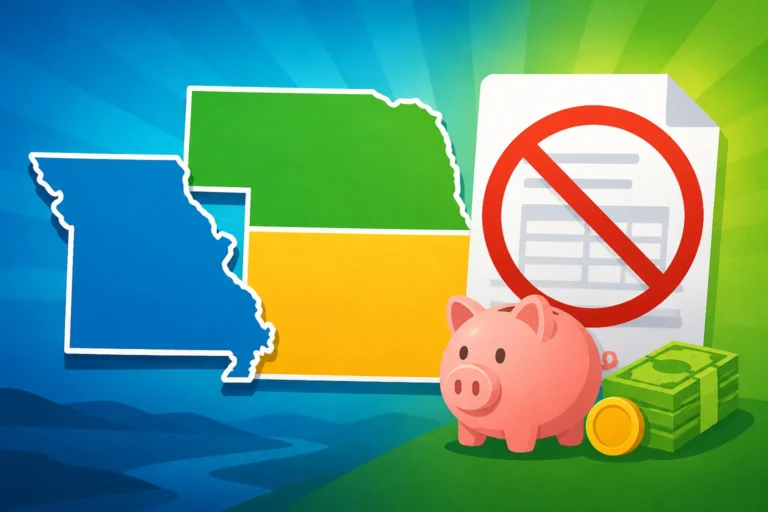
However, a handful of states historically taxed (or still tax) Social Security, though the trend is moving towards repealing these taxes. For instance, Missouri, Nebraska, and West Virginia have recently either repealed or are phasing out their taxes on Social Security benefits, making them more appealing for retirees. As of 2026, the list of states that tax Social Security is shrinking, leaving more money in retirees' pockets.
For federal retirees, especially those whose FERS annuity might be smaller and thus Social Security forms a larger portion of their guaranteed income, choosing a state that fully exempts Social Security benefits is a huge win. It ensures that a vital safety net remains intact, offering financial stability in retirement. When researching potential states, always confirm the current status of Social Security taxation – what was true even a couple of years ago might have changed due to legislative updates aimed at attracting retirees.
Here's a quick comparison of how some popular retirement states handle different income types:
| State | State Income Tax | FERS/CSRS Pension Taxed? | Social Security Taxed? | Avg. Property Tax Rate (Effective) | Statewide Sales Tax |
|---|---|---|---|---|---|
| Florida | No | No | No | 0.86% | 6.00% |
| Texas | No | No | No | 1.69% | 6.25% |
| Washington | No (wages) | No | No | 0.93% | 6.50% |
| Pennsylvania | Yes | No (Exempt) | No (Exempt) | 1.48% | 6.00% |
| Illinois | Yes | No (Exempt) | No (Exempt) | 2.08% | 6.25% |
| Colorado | Yes | Partially Exempt | No | 0.48% | 2.90% |
| Virginia | Yes | Partially Exempt | No | 0.77% | 5.30% |
Note: Property tax and sales tax rates are approximate and can vary significantly by locality.
Other Factors to Consider Beyond Taxes
While taxes are undoubtedly a major consideration, they shouldn't be the only factor in your retirement decision. A holistic approach that considers your overall quality of life is essential. After all, you're retiring to live your best life, not just to save a few bucks on taxes.
Cost of Living and Quality of Life
It's a common misconception that a low-tax state automatically translates to a low cost of living. That's simply not always the case. A state might have no income tax, but if housing costs are through the roof, utility bills are exorbitant, or groceries are significantly more expensive, any tax savings could quickly evaporate. For example, while Florida has no state income tax, housing prices in popular areas like Miami or Naples can be astronomical. Similarly, a remote, low-tax state might offer affordability but lack the amenities or services you desire.
"Quality of life" is a deeply personal metric. For some, it means access to cultural events, fine dining, and bustling city life. For others, it's about tranquil nature, outdoor activities, and a slower pace. Consider the climate you prefer, the availability of recreational activities (golf, hiking, fishing), and access to shops, restaurants, and entertainment that align with your interests. What's the public transportation like? Are there senior centers or community programs? These non-monetary factors contribute significantly to your happiness and overall well-being in retirement. Our article on Cost of Living vs Taxes by State explores this delicate balance in more detail.
Access to Healthcare and Veteran Services
For federal retirees, particularly those with FERS or CSRS, access to excellent healthcare is paramount. You've earned your benefits, and ensuring you can readily access quality medical care, whether through Tricare, Medicare, or other plans, should be a top priority. Some states are renowned for their healthcare systems, particularly for older adults. Research the quality and availability of hospitals, specialist doctors, and long-term care facilities in any potential retirement location.
Furthermore, many federal retirees are also veterans. Access to robust veteran services and facilities, such as VA hospitals and clinics, can be a major deciding factor. States with a large military presence or a strong veteran support network often have superior resources. For instance, Virginia and Florida are known for their significant military populations and associated services, which can be a huge benefit for military retirees. This aspect is crucial for ensuring a comfortable and well-supported retirement, and it’s a good idea to consider where you can access the best care for your needs. You might also be interested in our guide on Military Retirement Tax by State (Full List) for a broader perspective.
Proximity to Family and Social Networks
Let's be real, while financial considerations are important, the emotional aspects of retirement often take precedence. For many, being close to family – children, grandchildren, siblings, or lifelong friends – is a major factor in choosing where to live. Moving across the country to a tax-friendly state might save you money, but if it means sacrificing regular visits with loved ones, is it truly worth it?
A strong social network and sense of community are vital for mental and emotional well-being in retirement. Consider the proximity to your current support system, or if you're moving to a new area, the ease of building new friendships and integrating into a community. Look for areas with active senior communities, clubs, or volunteer opportunities that align with your interests. Sometimes, paying a slightly higher state tax rate to be near your family and maintain those crucial social connections is a small price to pay for genuine happiness and fulfillment in your golden years.
How to Evaluate Your Best State for Retirement
Making the decision about where to retire is deeply personal and complex. There's no single "best state" for all federal retirees because everyone's financial situation, health needs, and lifestyle preferences are unique. However, there are smart strategies you can employ to make the most informed choice for you.
Creating a Personalized Tax-Friendly Retirement Plan
The key to a successful tax-friendly retirement plan is personalization. You need to look at your entire financial picture, not just one tax rate in isolation. Start by itemizing all your sources of retirement income: your FERS or CSRS pension, Social Security benefits, TSP withdrawals, any private pensions, investment income, rental income, and so on. Then, consider your projected expenses for housing, healthcare, transportation, food, and discretionary spending.
Once you have a clear understanding of your income and expenses, you can start running scenarios for different states. How would your net income be affected by each state's tax on pensions, Social Security, and investments? How much would you realistically pay in property taxes for the type of home you want in your desired area? What about sales taxes on your typical purchases? Tools like retirement tax calculators, which you can often find on financial planning sites like SmartAsset, can be incredibly helpful for comparing the total tax burden across different states based on your specific income levels and assets. This kind of detailed analysis will reveal which states truly leave more money in your pocket, taking all taxes into account. Remember, the goal isn't just to find a low-tax state, but to find the best value for your overall lifestyle. For additional tips on optimizing your finances, see our guide on How to Minimize State Taxes in Retirement.
Seeking Professional Guidance
Let's be honest, state tax codes are complicated, and they change frequently. Trying to navigate all the nuances, exemptions, and deductions on your own can be daunting and, frankly, risky. Making a mistake could cost you thousands of dollars over the course of your retirement.
This is where professional guidance becomes invaluable. Consulting a financial advisor who specializes in retirement planning and multi-state taxation can be a game-changer. They can help you:
- Analyze your specific income streams: They'll understand the intricacies of FERS, CSRS, TSP, and how each state might tax these federal benefits.
- Project your future tax burden: A good advisor can help you forecast your overall tax liability in different states, taking into account all forms of taxation (income, property, sales, estate).
- Identify available deductions and credits: States often have unique deductions or credits for seniors or specific types of retirement income that you might not be aware of.
- Strategize on domicile changes: If you're moving, they can advise on the steps needed to legally change your domicile to ensure you qualify for the tax benefits of your new state and avoid potential residency audits.
- Consider non-tax factors: While their primary expertise is financial, a good advisor will also encourage you to think about the broader picture of your lifestyle and well-being.
Investing in expert advice can provide peace of mind and potentially save you far more in taxes than the cost of their services. Don't hesitate to seek out a certified financial planner or a tax professional with experience helping federal retirees.
Disclaimer
Please remember that tax laws are constantly evolving. The information provided in this article is for general informational purposes only and does not constitute tax, legal, or financial advice. We strongly recommend consulting with a qualified tax professional or financial advisor to discuss your specific situation and make informed decisions regarding your retirement planning.