California Tax Brackets 2026
Living in California means enjoying world-class coastlines and mountains, but the "sunshine tax" is very real when it comes to your paycheck. Many residents find themselves frustrated by the state’s multi-tiered progressive system, which can feel like a moving target due to annual inflation adjustments. This guide breaks down the California Tax Brackets 2026 to help you plan your finances and minimize surprises during tax season.
The Mechanics of Californias Progressive Tax Rates
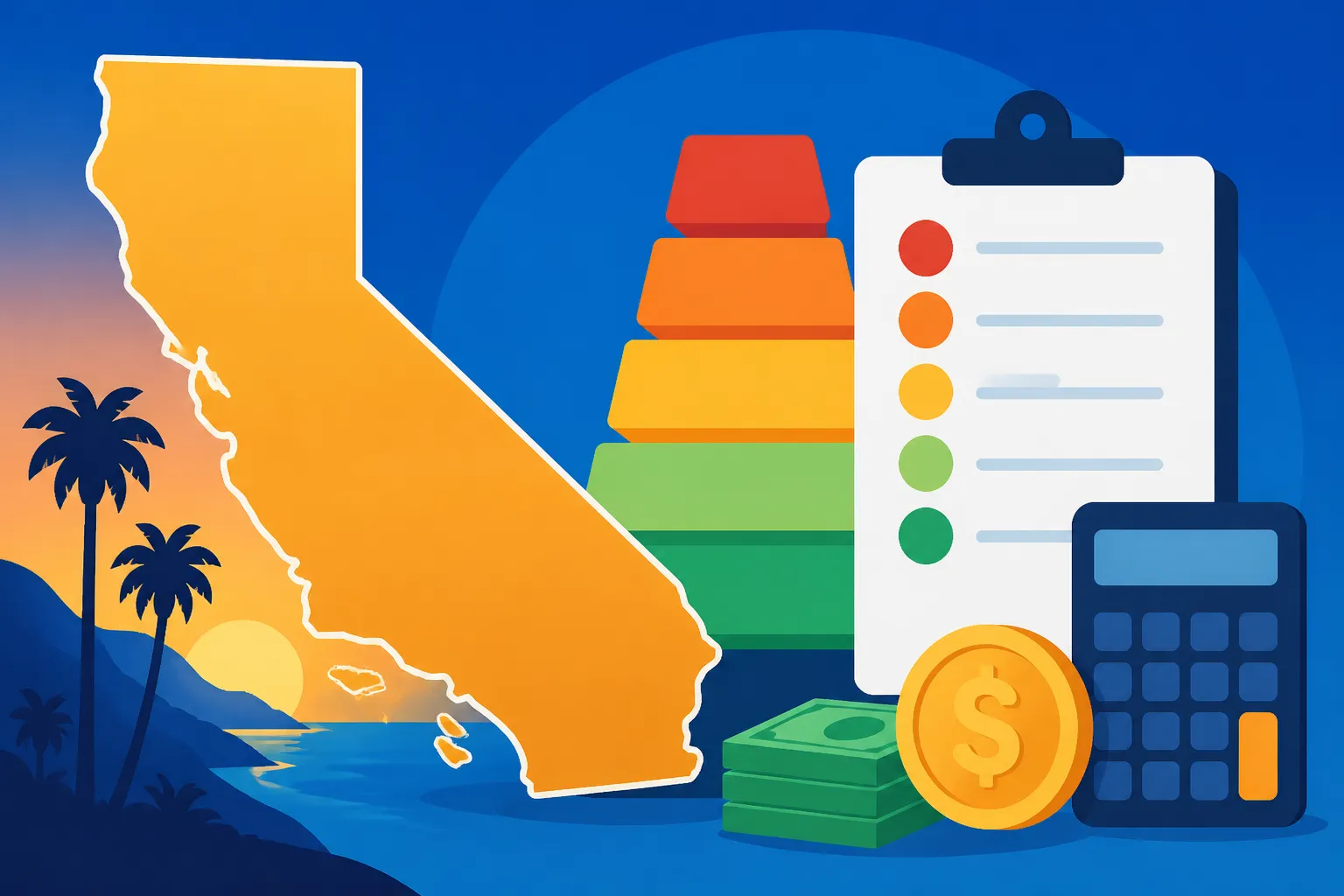
When you start looking at your tax bill in the Golden State, it is easy to get overwhelmed by the sheer number of brackets. California has one of the most complex and progressive tax structures in the United States. This means that as you earn more, the percentage of tax you pay on those additional dollars increases significantly. It is a system designed to place a heavier burden on high earners while providing relief to those in lower income tiers, but for the average professional living in expensive areas like San Francisco or Los Angeles, it often feels like you are being pushed into higher brackets far too quickly.
Understanding how these tiers function is the first step in regaining control over your financial planning. Unlike a flat tax state, California doesn't just take one percentage of your total income. Instead, your income is partitioned. Your first few thousand dollars are taxed at a very low rate, and only the money falling into the higher ranges is taxed at the higher percentages. This is why many people ask Why Are California Taxes So High? when they see their top marginal rate, even if their total "blended" rate is much lower. Using a California State Income Tax Calculator Guide can help you visualize this "bucket" system more clearly.
Breaking Down Marginal Rates
The term "marginal tax rate" is often misunderstood. Many taxpayers fear that a raise that pushes them into a higher bracket will actually result in less take-home pay. This is a myth. Only the portion of your income that exceeds the threshold of the lower bracket is taxed at the new, higher rate. For 2026, California continues to index these thresholds for inflation, which helps prevent "bracket creep"—a situation where inflation raises your salary, but because the tax brackets don't move, you end up paying a higher percentage of your income in taxes despite having no more real purchasing power.
When you look at the California Income Tax Rate 2026 tables, you will see rates ranging from 1% all the way up to 12.3%, with an additional 1% surcharge for those earning over $1 million. This progressive climb is steeper than almost any other state. If you are comparing your California burden to other states, tools like SmartAsset can provide a side-by-side look at how a similar salary is treated elsewhere. Seeing the data in black and white can be a sobering experience for those considering a move.
Why Your Effective Rate Is Lower
Your effective tax rate is the actual percentage of your total income that goes to the state after all the math is done. Because of the progressive nature of the brackets and the inclusion of the California Standard Deduction 2026, your effective rate will always be lower than your top marginal rate. For example, a single filer earning $100,000 might be in the 9.3% bracket, but they aren't paying $9,300. They are paying 1% on the first chunk, 2% on the next, and so on.
Calculating this manually is a headache, which is why many residents turn to SmartAsset to run various scenarios. By the time you factor in personal credits and deductions, the "bite" taken by the Franchise Tax Board might be more manageable than the headlines suggest. Still, for high-income earners, the effective rate climbs rapidly, especially once the Mental Health Services Act tax kicks in.
California Tax Brackets 2026 for Every Filer
The following brackets are the projected tiers for the 2026 tax year. These numbers reflect the adjustments made for the California Consumer Price Index. Whether you are a single professional in San Diego or a married couple raising a family in Sacramento, these thresholds determine exactly how much of your hard-earned money stays in your pocket.
It is important to remember that California requires you to use the same filing status as your federal return in most cases. If you are unsure which category you fall into, checking the SmartAsset tax resource center can clarify the requirements for "Head of Household" or "Qualifying Widow(er)," which offer significantly better tax treatments than filing as single.
Single and Married Filing Separately
For individuals and those who choose to file separately from their spouses, the brackets move upward quickly. In 2026, the lower tiers remain very affordable, but the jump to 8% and 9.3% happens at income levels that many would consider "middle class" in high-cost California cities.
| Tax Rate | Single / Married Filing Separately Brackets (Projected 2026) |
|---|---|
| 1% | $0 to $11,000 |
| 2% | $11,001 to $26,000 |
| 4% | $26,001 to $41,000 |
| 6% | $41,001 to $57,000 |
| 8% | $57,001 to $72,000 |
| 9.3% | $72,001 to $365,000 |
| 10.3% | $365,001 to $440,000 |
| 11.3% | $440,001 to $730,000 |
| 12.3% | $730,001 and over |
Note: These figures are projected based on inflation trends; final figures are released annually by the FTB.
Married Filing Jointly and Qualifying Widow(er)s
Couples filing together enjoy brackets that are essentially double the width of the single brackets. This "marriage penalty" protection is a core part of the California tax code. For a family in 2026, you can earn over $140,000 before hitting the 9.3% bracket, which provides a bit more breathing room for household expenses.
If you are navigating the loss of a spouse, the Qualifying Widow(er) status allows you to keep these more favorable brackets for two years following the year of death, provided you have a dependent child. It is a small but vital bit of relief during a difficult time. Many families use SmartAsset to find financial planners who specialize in these specific life transitions to ensure no credits are left on the table.
Head of Household
The Head of Household status is often the most beneficial for single parents or those supporting elderly relatives. The brackets for this status are wider than the single brackets but narrower than the joint brackets. California is notoriously strict about auditing this status, so you must ensure you meet every requirement—including paying for more than half the cost of keeping up a home for a qualifying person for more than half the year.
If you are a part-year resident, things get even more complicated. You will need to look at the California Part-Year Resident Tax Guide to understand how to prorate these brackets based on the time you actually spent in the state. California doesn't let you off the hook easily just because you moved mid-year; they will look at your total global income to determine your tax rate, then apply it only to the California-sourced portion.
Deductions and Credits that Lower Your Tax Bill
While the brackets tell you the rate, your deductions and credits determine the "taxable income" those rates apply to. In 2026, California’s standard deduction continues to be one of the more generous in the country, but it still pales in comparison to the actual cost of living in the state. For those with high mortgage interest or significant charitable contributions, itemizing might still be the way to go.
Many taxpayers find that the California Tax Credits & Deductions Guide is the most important document they read all year. Unlike a deduction, which lowers the income you are taxed on, a credit is a dollar-for-dollar reduction of the tax you actually owe. This distinction is massive. A $500 credit is worth much more than a $500 deduction.
The 2026 Standard Deduction
The standard deduction is essentially a "free pass" on a certain amount of your income. For 2026, the projected standard deduction for single filers is approximately $5,600, while married couples filing jointly can expect around $11,200. While this helps, it is much lower than the federal standard deduction. This is a common point of frustration for new residents who expect their state taxable income to mirror their federal taxable income.
To get a true sense of your liability, you should evaluate whether your itemized deductions—like high medical expenses or unreimbursed employee business expenses (which California still allows in certain cases, unlike the federal government)—exceed the standard amount. Using a SmartAsset comparison tool can help you decide which path yields the lowest bill.
Personal and Dependent Credits
California uses personal exemption credits rather than exemptions that reduce taxable income. For 2026, the personal credit for single filers and heads of household is expected to be around $150, with a similar amount for each dependent. While $150 might not seem like much when you are facing a $5,000 tax bill, these credits are subtracted directly from your tax liability.
There are also specialized credits like the California Earned Income Tax Credit (CalEITC) and the Young Child Tax Credit. These are designed to put money back into the hands of low-to-moderate-income working families. If you qualify, these credits can even result in a refund that exceeds the amount of tax you paid in. If you are moving from a state with no income tax, the Is California Tax Friendly? Full Breakdown will show you that while the rates are high, the credit system is much more robust than in "tax-free" states.
High Earners and the Mental Health Services Act
If you are fortunate enough to earn a high income in California, you need to be aware of the "Millionaire Tax." Officially known as the Mental Health Services Act, this is a 1% surcharge on all taxable income in excess of $1 million. This tax is not indexed for inflation, meaning as salaries rise, more and more people find themselves falling into this extra tier.
This tax brings the top effective marginal rate in California to a staggering 13.3%. For a high-performing professional or a business owner who just sold their company, this can lead to a massive tax bill that requires careful quarterly estimated payments. Failure to account for this surcharge can result in significant underpayment penalties.
The Millionaire Tax Impact
The 1% surcharge is calculated simply: if your taxable income is $1,200,000, you owe an additional $2,000 ($200,000 x 0.01) on top of the standard income tax. This money is earmarked specifically for mental health programs across the state's 58 counties. While the cause is noble, the financial impact on high earners often drives discussions about relocation.
Before making any drastic moves, it is wise to consult the California Residency Requirements for Taxes. California is known for its "sticky" residency rules, often pursuing former residents for taxes if they haven't truly broken ties with the state. Many high-net-worth individuals use SmartAsset to connect with tax strategists who can help them navigate the complexities of "domicile" versus "residency" to avoid being double-taxed.
Planning for the 13.3 Percent Threshold
If you are approaching the $1 million mark, timing your income becomes essential. This might involve deferring a bonus, staggering the sale of stock options, or utilizing tax-advantaged retirement accounts to keep your taxable income just below the surcharge threshold. Every dollar you can legally move out of that top tier saves you not just the 12.3% base tax, but the 1% surcharge as well.
Because the California Income Tax Brackets 2026 are so top-heavy, tax planning isn't just for the ultra-wealthy. Even those in the 9.3% bracket—which starts at a relatively modest level for a two-income household—can benefit from aggressive 401(k) or 403(b) contributions. By lowering your taxable income today, you aren't just saving for the future; you are actively lowering the percentage the state takes from your current paycheck.
Disclaimer
This guide is provided for informational purposes only and does not constitute professional tax, legal, or financial advice. Tax laws, including the California Tax Brackets 2026, are subject to change by the California State Legislature and the Franchise Tax Board. Always consult with a qualified tax professional or CPA to discuss your specific financial situation before filing your returns or making significant financial decisions.