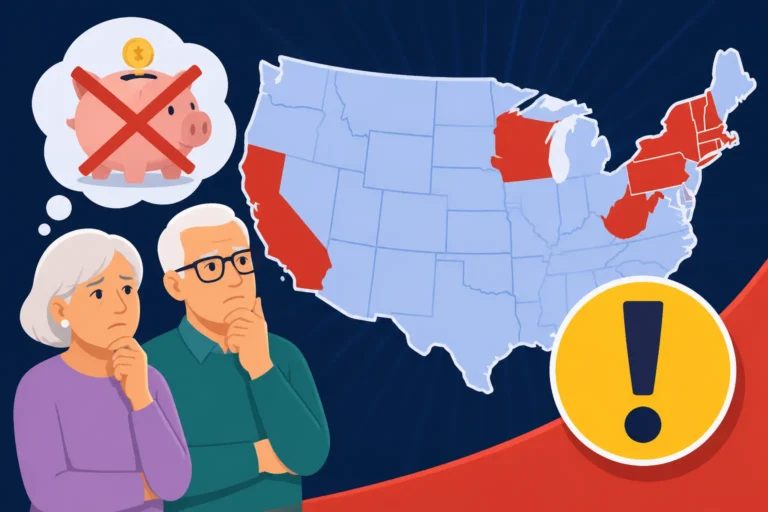
Does Montana Tax Social Security?
When you're looking forward to retirement, one of the biggest questions on your mind is often about taxes, especially when it comes to your hard-earned Social Security benefits. It's a valid concern, because the last thing anyone wants is to be surprised by a hefty tax bill when you're supposed to be enjoying your golden years. For those considering Montana as their retirement haven, or perhaps already living there, figuring out how the state handles Social Security can feel a bit like decoding a complex puzzle. This comprehensive guide will break down exactly how Montana taxes Social Security, helping you understand what to expect and how to plan effectively.
Montana's Approach to Social Security Taxation
Montana has a unique way of taxing Social Security benefits, and it's not as straightforward as a simple "yes" or "no." Many retirees are often caught off guard because, unlike some states, Montana does indeed tax Social Security benefits, but not necessarily all of them, and not for everyone. It ties directly into how the federal government views your Social Security income, making it a layered calculation.
The General Rule for Social Security Benefits in Montana
Unlike the growing list of states that have fully exempted Social Security benefits from state income tax, Montana has opted for a system that mirrors the federal approach, at least partially. This means that if a portion of your Social Security benefits is taxable at the federal level, it could also be taxable in Montana. This can be a real headache for folks who thought their retirement nest egg would be safe from state income taxes in Big Sky Country. The key here is "could," because Montana offers a specific exemption that can significantly reduce, or even eliminate, the state tax on those benefits for many retirees, especially those with lower to moderate incomes.
Let's imagine you're a retiree named Carol living in Billings. She receives $25,000 in Social Security benefits annually. If Carol has other substantial income, say from a private pension and investments, a portion of her Social Security will likely be taxable at the federal level. Because Montana generally follows the federal guidelines for determining the taxable portion of Social Security, that same portion then becomes a starting point for Montana's tax calculation. However, Montana then applies its own special exemption. This exemption aims to provide some relief, so not every dollar that's federally taxable will necessarily be taxed by Montana. It's this two-step process that often confuses people.
How Montana Calculates Taxable Social Security
This is where the nuances really come into play. While Montana starts with the federally taxable amount of your Social Security benefits, it then allows for a specific exemption to reduce that amount at the state level. For the 2023 tax year, for example, individuals could claim a maximum exemption of $5,240 per person. That's a nice chunk of change! However, this exemption isn't available to everyone, and it's definitely not a flat-rate benefit across the board.
The exemption begins to phase out once your adjusted gross income (AGI), before considering the Social Security exemption itself, exceeds certain thresholds. For a single filer, this threshold was around $34,900 in 2023. For married couples filing jointly, it was about $41,880. If your AGI crosses these lines, the $5,240 exemption is reduced by 10 cents for every dollar your AGI goes above the threshold.
So, let's go back to Carol in Billings. Let's say her federally taxable Social Security is $10,000, and her AGI before the Social Security exemption is $40,000. As a single filer, her AGI exceeds the $34,900 threshold by $5,100 ($40,000 – $34,900). This means her $5,240 exemption would be reduced by $510 (10% of $5,100). So, instead of a $5,240 exemption, she'd only get a $4,730 exemption ($5,240 – $510). This significantly reduces the state tax on her Social Security, but doesn't eliminate it entirely, showcasing why understanding these phase-out rules is critical. You can learn more about how different states handle retirement income in our guide on How Each State Taxes Retirement Income (50-State Guide).
Factors Influencing Montana Social Security Taxes
It's not just about your Social Security check. A variety of other income sources and financial situations can dramatically alter how much, if any, of your Social Security benefits are taxed by the state of Montana. It's a holistic picture, and ignoring other pieces of your financial puzzle could lead to an unexpected tax bill.
Federal Taxation Thresholds and Montana's Link
The most important thing to remember is that Montana's state taxation of Social Security is deeply intertwined with federal taxation rules. You see, the IRS has its own set of rules regarding when your Social Security benefits become taxable. This depends on your "provisional income," which is essentially the sum of your adjusted gross income (AGI), any tax-exempt interest (like from municipal bonds), and half of your Social Security benefits.
- If your provisional income is between $25,000 and $34,000 (single filers) or $32,000 and $44,000 (married filing jointly): Up to 50% of your Social Security benefits may be subject to federal income tax.
- If your provisional income exceeds $34,000 (single) or $44,000 (married filing jointly): Up to 85% of your Social Security benefits may be subject to federal income tax.
Montana essentially takes this federally taxable amount and then applies its own exemption, as we discussed. So, if your income is low enough that none of your Social Security is federally taxable, then Montana won't tax it either. This is a common scenario for many retirees who rely primarily on Social Security. However, if you have other substantial income, that federal provisional income threshold is where the clock starts ticking for both federal and potentially state taxation. It really underlines why understanding Social Security Taxation: Federal + the 8 States is so important, as federal rules set the baseline.
Other Retirement Income and Overall Tax Burden
Beyond Social Security, Montana also taxes other forms of retirement income, which can contribute to your overall tax burden and influence the phase-out of your Social Security exemption. For instance, income from private pensions, 401(k) withdrawals, and IRA distributions are generally taxable at ordinary income tax rates in Montana. This is a significant consideration, especially for retirees who have diligently saved throughout their working lives.
Let's consider Mark and Lisa, a retired couple in Missoula. They both receive Social Security benefits, and Mark also has a traditional pension from his former employer, while Lisa makes regular withdrawals from her IRA. All of these income streams combine to form their total AGI. This higher AGI means their combined income will likely push them past the Social Security exemption phase-out thresholds in Montana, resulting in a portion of their Social Security benefits being taxed at the state level. It's not just the Social Security itself, but the interplay with all other income sources that determines the final outcome. This holistic view is crucial for effective retirement tax planning. For a broader view, you might want to read about Retirement Income Exclusions by State.
Comparing Montana to Other States for Retirees
Understanding Montana's tax landscape is one thing, but it often helps to see how it stacks up against other states. This can provide valuable context, especially if you're a "snowbird" or someone considering a move in retirement. Every state has its own unique mix of taxes, and what might seem like a low-income tax state could make up for it in other areas.
States with No Social Security Tax
It's true, there are quite a few states out there that offer full exemption for Social Security benefits from state income taxes. This can be a huge draw for retirees looking to maximize their income. Some of the well-known states that completely exempt Social Security income include Florida, Texas, Washington, Nevada, and South Dakota, which are all part of the larger group of States With No Income Tax (2026 Full List). But even among states with an income tax, many choose not to tax Social Security benefits at all.
For example, states like Pennsylvania and Illinois are quite popular with retirees because they don't tax Social Security benefits, or most other retirement income for that matter. This provides a clear contrast to Montana's system, where a portion of your Social Security could still be subject to state income tax depending on your overall income level. If your primary goal is to avoid state tax on your Social Security, Montana might not be the absolute top choice if your income is higher, though it still offers a significant exemption compared to some other states that tax it fully.
States with Partial or Full Taxation (Similar to Montana)
Montana isn't alone in taxing Social Security benefits. There are still a handful of states that follow the federal lead, taxing some portion of Social Security benefits. These include states like Colorado, Connecticut, Kansas, Minnesota, Missouri, Nebraska, New Mexico, Rhode Island, Utah, Vermont, and West Virginia. However, many of these states offer their own exemptions, deductions, or credits that can reduce the tax burden, much like Montana does with its specific exemption amount and phase-out.
Take, for instance, states like Connecticut or Colorado. They also tax Social Security benefits, but often provide generous exclusions or subtractions that can lower the taxable amount, especially for those below certain income thresholds. While the specifics of their rules might differ from Montana's $5,240 exemption and AGI phase-outs, the underlying principle is similar: a recognition that Social Security should receive some level of tax relief, but perhaps not a complete exemption for all income levels. When comparing, it's not just whether they tax it, but how much and under what conditions. This is why services like SmartAsset often publish detailed state-by-state comparisons to help retirees navigate these complex tax rules. Understanding these distinctions is key to determining the Most Tax-Friendly States for Retirees 2027.
Here's a quick comparison of Social Security taxation in Montana and a few other states:
| State | Taxes Social Security? | General Approach | Key Exclusions/Notes |
|---|---|---|---|
| Montana | Yes (partial) | Follows federal rules, then applies a state-specific exemption that phases out. | Maximum $5,240 exemption per person (2023), phased out based on AGI. |
| Florida | No | No state income tax, so no tax on Social Security or other retirement income. | Considered one of the States With No Income Tax overall. |
| Colorado | Yes (partial) | Follows federal rules but offers a generous subtraction for retirement income. | Up to $24,000 for those 65+ ($20,000 for 55-64) in 2023, which includes Social Security. |
| Illinois | No | Explicitly exempts Social Security benefits from state income tax. | Also exempts most other retirement income (pensions, 401k/IRA withdrawals). |
| Minnesota | Yes (partial) | Follows federal rules but allows a subtraction based on income levels. | Subtracts a portion of federally taxable Social Security if income is below specific thresholds. |
Strategies for Managing Retirement Taxes in Montana
Navigating the tax landscape in retirement, especially with state-specific rules like Montana's, requires a thoughtful approach. You can't just cross your fingers and hope for the best; a little planning can go a long way in preserving your retirement savings.
Understanding Your Full Tax Picture
When you're retired or approaching retirement in Montana, it's absolutely crucial to look beyond just your Social Security benefits. Your full tax picture includes everything: your pensions, 401(k) and IRA withdrawals, any rental income, capital gains, interest, and dividends. All of these play a role in determining your Adjusted Gross Income (AGI), which, as we've seen, is the very factor that dictates how much of your Montana Social Security exemption you actually get to keep.
For instance, if you have substantial Roth IRA withdrawals, these are generally tax-free at both federal and state levels. This means they won't increase your AGI and won't affect the phase-out of your Social Security exemption in Montana. This can be a strategic way to manage your income without incurring additional state tax liability. On the flip side, if you're taking large distributions from a traditional IRA or 401(k), those amounts will count towards your AGI and could reduce your Social Security exemption, leading to a higher state income tax bill. It's all about balancing these different income sources. Tools and resources from financial platforms like SmartAsset can often help you model these scenarios to get a clearer picture.
Professional Tax Advice and Planning
Given the complexities of state tax laws, especially when it comes to retirement income and phased-out exemptions, trying to figure it all out on your own can be incredibly stressful and potentially costly if you make a mistake. This is precisely why seeking professional tax advice is one of the smartest moves you can make. A qualified financial planner or tax advisor who specializes in retirement planning and state taxes can help you understand all the nuances of Montana's tax code and how it specifically applies to your unique financial situation.
They can help you analyze your income streams, project your AGI, and strategize ways to minimize your overall tax burden, including the state tax on your Social Security benefits. For example, they might suggest specific withdrawal strategies from different retirement accounts (like prioritizing Roth withdrawals or strategically timing traditional IRA distributions) to keep your AGI below the Social Security exemption phase-out thresholds. They can also provide guidance on other potential deductions and credits you might be eligible for in Montana. This proactive planning can make a significant difference in your financial well-being throughout retirement. For more detailed state-specific information, it might be beneficial to review resources like Does Montana Tax Retirement Income?.
Disclaimer
Please remember that tax laws are complex and subject to change. The information provided in this article is for general informational purposes only and does not constitute tax or legal advice. It is essential to consult with a qualified tax professional or financial advisor for personalized advice regarding your specific tax situation, especially concerning state and federal tax laws.