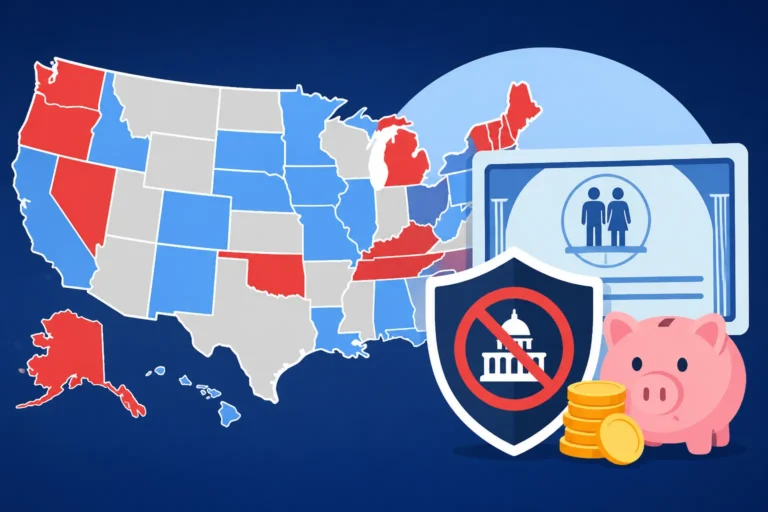
Retirement Taxes: Florida vs Other States
One of the biggest anxieties many people face as they approach retirement is figuring out how to make their hard-earned savings last. It's a question that keeps a lot of us up at night: "How much of my retirement income is Uncle Sam – and my state – going to take?" This guide dives deep into the tax implications of retirement income, specifically focusing on how Florida stacks up against other states, giving you a clearer picture of what to expect and how to plan.
Florida's Appeal for Retirees: The "No Income Tax" Advantage
Florida has long been a beacon for retirees, and it's not just the sunny beaches and warm weather drawing them in. A significant part of its allure comes down to its favorable tax policies for seniors. Many people dream of moving to a state where their retirement income isn't chipped away by state income taxes, and Florida consistently ranks high on that list. But what exactly does "no income tax" mean in practice, and are there hidden costs you need to be aware of?
Decoding Florida's Income Tax Exemption
Let's get this straight from the start: Florida is one of the states that doesn't levy a statewide income tax on individuals. This means that your wages, salaries, and crucially, your retirement income – including distributions from 401(k)s, IRAs, public and private pensions, and even Social Security benefits – are completely exempt from state income tax. This isn't just a small perk; it's a monumental difference compared to states that tax these income sources heavily.
Imagine you've spent decades diligently contributing to your 401(k) or IRA. When you finally start taking those distributions in retirement, every dollar saved from state taxes means more money in your pocket to cover living expenses, enjoy hobbies, or leave to your loved ones. For someone with a substantial pension or large IRA withdrawals, this can literally translate into thousands of dollars in savings each year. This is a huge reason why Florida is often listed among the Most Tax-Friendly States for Retirees 2027. It's not just about what you earn, but what you get to keep.
Understanding Other Tax Burdens in the Sunshine State
Now, before you pack your bags and move sight unseen, it's essential to understand that "no income tax" doesn't mean "no taxes at all." No state can operate without revenue, and Florida generates its funds through other avenues. The two biggest ones that impact retirees are property taxes and sales taxes. Florida's sales tax is currently 6%, but local counties can add their own surtaxes, bringing the combined rate up to 7.5% in some areas. This means everyday purchases, from groceries to clothes, will cost a bit more.
Property taxes can also be a significant consideration, varying widely depending on the county and the value of your home. While Florida does offer a generous homestead exemption that can reduce the taxable value of your primary residence, and there's a cap on how much your assessed value can increase each year for homesteaded properties (the "Save Our Homes" cap), those without homesteaded properties or with high-value homes might still find their property tax bills substantial. For instance, a beachfront condo in Naples or a luxury home in Palm Beach will undoubtedly come with a higher property tax bill than a modest home inland. It’s crucial to research specific county tax rates and consider the overall property tax burden. This comprehensive view helps you understand the true Cost of Living vs Taxes by State.
Targeted Tax Benefits and Considerations for Florida Retirees
Beyond the broad strokes, Florida offers specific tax benefits that can sweeten the deal for seniors. For example, some counties provide additional homestead exemptions for seniors who meet certain income requirements, further reducing their property tax burden. There are also property tax exemptions for veterans and individuals with disabilities.
While the absence of an income tax is the headline, the complete picture involves these other taxes. For many, the predictable, often lower overall tax burden (especially for those not heavily invested in real estate) makes Florida an attractive option. If you're comparing Florida to states like New York or California, where both income and property taxes can be notoriously high, Florida's total tax picture often comes out ahead for retirees, despite the sales and property tax considerations. It's about weighing your unique financial situation against the state's tax structure.
Beyond Florida: Exploring Other States with No Income Tax
Florida isn't alone in offering an income tax-free environment. There are several other states that choose not to tax wages or retirement income, and they each have their own unique pros and cons. Understanding these alternatives is crucial for any retiree looking to minimize their tax burden, as the "no income tax" label can sometimes be misleading if you don't look at the full picture.
A Comprehensive Look at the Income Tax-Free Landscape
There are a handful of states that stand alongside Florida in having no state income tax on earned income or retirement distributions. These include Alaska, Nevada, South Dakota, Tennessee, Texas, Washington, and Wyoming. Each of these states presents a potentially appealing option for retirees concerned about their taxable income.
For example, Texas, much like Florida, boasts no state income tax, making it a popular choice for those looking to stretch their retirement dollars further. Nevada offers a similar benefit, often attracting retirees with its desert landscapes and vibrant entertainment scene. Washington state, while not taxing individual income, does have a capital gains tax on high earners, which is an important distinction for those with significant investment portfolios. This highlights why it's essential to consult the most current information, perhaps even looking at our guide on States With No Income Tax (2026 Full List). Tennessee, which previously taxed interest and dividends, fully repealed that tax (the Hall Tax) in 2021, cementing its status as a no-income-tax state. These variations underscore that even among "no income tax" states, the specifics can differ, and knowing the nuances is key.
The Unseen Costs: Property and Sales Taxes in No-Income-Tax States
Just like Florida, these other income tax-free states need to fund their public services somehow, and they often do so through higher property and sales taxes. This is where the "unseen costs" can surprise retirees who only focused on the income tax aspect. For example, while Texas has no state income tax, its property taxes are among the highest in the nation. A retiree moving from a state with moderate income tax but low property taxes might find their overall tax bill surprisingly high in Texas if they own a valuable home.
Similarly, states like Washington have relatively high sales taxes. While you won't pay state income tax on your pension, you'll feel the pinch every time you make a purchase. Alaska, on the other hand, stands out by having neither a state income tax nor a statewide sales tax, but municipalities can levy local sales taxes and property taxes, which vary considerably. South Dakota and Wyoming tend to have lower property taxes overall, but their sales taxes are comparable to or slightly higher than the national average. When planning your retirement, it's incredibly helpful to use tools like the ones provided by SmartAsset to compare the total tax burden, not just one component. You need to consider how each state's unique tax mix aligns with your spending habits and assets.
Comparing Overall Tax Burdens Across Zero-Income-Tax States
To truly compare the financial impact of retiring in Florida versus another no-income-tax state, you need to conduct a holistic analysis of the entire tax burden. This means looking at income tax (or lack thereof), property tax, sales tax, and any other unique state or local taxes, such as excise taxes on specific goods.
Let's consider a hypothetical couple. If they have a large retirement income but rent their home, the absence of income tax and low property tax liability might make Florida or Texas very attractive. However, if they own a high-value home and rarely make taxable purchases, a state with lower property taxes might be more beneficial, even if it has a slightly higher sales tax.
Here's a simplified look at how property and sales taxes might compare in a few popular no-income-tax states for retirees:
| State | State Income Tax | State Sales Tax Rate | Average Effective Property Tax Rate (approx.) | Primary Revenue Source |
|---|---|---|---|---|
| Florida | None | 6% | 0.86% | Sales Tax, Property Tax |
| Texas | None | 6.25% | 1.69% | Property Tax |
| Nevada | None | 6.85% | 0.55% | Sales Tax, Gaming Tax |
| Washington | None (but 7% capital gains tax) | 6.5% | 0.93% | Sales Tax |
| Tennessee | None | 7% | 0.64% | Sales Tax |
Note: Sales and property tax rates can vary significantly by county and municipality. Capital gains tax in Washington applies to gains over $250,000 for individuals.
As you can see, while all these states forgo a state income tax, their reliance on other taxes varies considerably. Texas, for instance, has a noticeably higher average effective property tax rate compared to Florida or Nevada. This means that if you're planning to buy a home, especially a valuable one, your annual property tax bill could be significantly higher in Texas than in Florida, even though both have no income tax. This kind of detailed comparison is critical for understanding where your money will truly go in retirement.
States with Selective Retirement Income Exemptions and Their Nuances
While states with no income tax are often the first stop for retirees, many other states offer significant tax breaks on retirement income, even if they do have a general income tax. These partial exemptions can be incredibly valuable and make an otherwise high-tax state quite manageable for certain retirees. It's not always an all-or-nothing game, and understanding the specifics of these exemptions can open up more retirement location possibilities.
Navigating Pension and 401(k)/IRA Taxation
Many states that do impose an income tax offer specific exemptions or deductions for pension income, 401(k) distributions, or IRA withdrawals. The rules around these can be incredibly complex and often depend on your age, income level, and the type of retirement account. For example, Pennsylvania is known for broadly exempting all eligible retirement income from state income tax, including Social Security, pensions, and 401(k)/IRA distributions for those 59.5 or older. This makes it quite friendly for retirees, despite having a flat income tax rate.
Other states, like New Jersey, offer a significant exclusion for retirement income if your total income is below a certain threshold. In 2026, for instance, many New Jersey retirees will be able to exclude a substantial portion of their pension, annuity, and IRA income from state taxation. Similarly, states like Georgia offer a large exclusion for retirement income for those aged 62 or older, or disabled. This means that a significant chunk of your pension and 401(k) income might go untaxed by the state, even though Georgia has an income tax. Our comprehensive guide on How Each State Taxes Retirement Income (50-State Guide) goes into much more detail on these specific rules. The key takeaway here is to not immediately dismiss a state just because it has an income tax; dig a little deeper, and you might find it's more retiree-friendly than you think.
The Shifting Landscape of Social Security Taxation
Social Security benefits are another major component of retirement income, and how states tax them can be a deciding factor for many. While most states (42, as of 2026) do not tax Social Security benefits, a handful still do. These states typically follow federal guidelines, taxing a portion of your benefits if your combined income exceeds certain thresholds.
For example, states like Colorado, Connecticut, Kansas, Minnesota, Montana, New Mexico, Rhode Island, Utah, Vermont, and West Virginia have historically taxed Social Security benefits, though many offer exemptions for lower and middle-income retirees. The good news is that this landscape is constantly evolving. Some states have been phasing out their Social Security taxes, or increasing their exemption thresholds, to make themselves more attractive to seniors. Missouri, Kansas, and Nebraska, for instance, have recently enacted or are in the process of enacting full repeals or significant expansions of Social Security tax exemptions for 2024 and beyond. This dynamic nature underscores why up-to-date information is critical. You can find more specific details on States That Don't Tax Social Security (2027).
It's a common frustration that you might already pay federal taxes on your Social Security, only to have a state take another bite. Knowing which states do this, and under what conditions, is vital for managing your retirement budget.
Strategies for Maximizing Exemptions in These States
For retirees considering states with partial exemptions, strategic planning is absolutely essential. This isn't just about moving to a state; it's about understanding the specific rules and tailoring your financial approach.
- Understand Age Requirements: Many exemptions kick in at a certain age, often 60, 62, or 65. If you retire early, you might not qualify for certain benefits until you reach that age.
- Income Thresholds Matter: Pay close attention to income thresholds for exemptions. Some states offer full exemptions for lower-income retirees but begin to tax benefits as income rises. This is particularly relevant for those with substantial pensions or large IRA/401(k) withdrawals. For instance, New Jersey’s retirement income exclusion has specific income limitations.
- Type of Income: Differentiate between types of retirement income. A state might fully exempt public pensions but partially tax private pensions or IRA distributions. Knowing which is which for your specific state is paramount. Our guide on States That Don't Tax Pensions (2027) can be a great starting point for this research.
- Tax Software and Professional Advice: Utilizing tax software or working with a financial advisor familiar with state-specific retirement tax laws can help you identify and claim all eligible exemptions. Don't leave money on the table because you weren't aware of a specific credit or deduction. Services like SmartAsset offer tools that can help you understand these nuances, but always consider personalized advice.
For instance, if you're considering a state like Georgia, you'd want to understand their $65,000 retirement income exclusion per person. If you and your spouse both qualify, that's a significant amount of income potentially shielded from state tax, making Georgia a more attractive option than it might appear at first glance. The goal is to leverage every available rule to your advantage, ensuring more of your retirement funds remain yours.
High Income Tax States: What Retirees Need to Know
When planning for retirement, many people automatically rule out states with high income taxes. And while it's true that states like California or New York can present significant tax challenges for retirees, it's also important to understand the full landscape. Sometimes, other factors, like proximity to family or cultural amenities, outweigh purely tax-driven decisions. But if you're considering a high-tax state, or find yourself retiring in one, you need to be acutely aware of what you're up against.
The Impact of Progressive Income Tax Structures
States like California, New York, Hawaii, and Oregon are known for their progressive income tax structures, meaning the more you earn, the higher percentage of your income you pay in state taxes. For high-income retirees, particularly those with substantial pensions, large IRA/401(k) withdrawals, or ongoing income from investments, these rates can be quite impactful. California, for instance, has one of the highest top marginal income tax rates in the nation, exceeding 13% for the highest earners. While many retirees might not hit the very top brackets, even middle and upper-middle income retirees can find a significant portion of their retirement income subject to these progressive rates.
This directly contrasts with Florida, where none of that retirement income would be subject to state income tax. The difference can be stark. Consider a retiree in California withdrawing $100,000 from their 401(k) annually. A significant portion of that would be subject to California's state income tax, whereas in Florida, that entire $100,000 would be state income tax-free. It's not just about the overall rate; it's about how much of your total retirement income actually falls into those taxable buckets, and how much is shielded by deductions or exemptions.
Navigating High Property and Sales Taxes in States Like California or New York
Beyond income tax, many of these high-income-tax states also contend with high property and sales taxes. New York and California, for example, are infamous for their high property values, which naturally lead to higher property tax bills, even if the effective tax rate isn't the absolute highest in the country. A modest home in a desirable California or New York neighborhood can easily command an annual property tax bill that rivals a significant portion of a retiree's income.
Sales taxes can also add up. While California's statewide sales tax is one of the highest in the country, local rates can push the combined rate even higher. This means that everyday purchases, from clothing to home repairs, cost more. For a retiree on a fixed income, these recurring costs can chip away at their budget in ways that are sometimes overlooked when solely focusing on income tax rates.
However, some high-tax states do offer property tax relief programs for seniors or low-income residents, and it's essential to investigate if you qualify. For example, some jurisdictions might have "circuit breaker" programs that cap property tax as a percentage of income. It's a complex puzzle where every piece—income tax, property tax, and sales tax—needs to be considered in conjunction to get a true picture of the total tax burden.
Residency Challenges and Potential Avoidance Strategies
For retirees looking to leave a high-tax state like California or New York, merely packing up and moving isn't always enough to shed your prior state's tax obligations. These states are notoriously aggressive in auditing former residents to ensure they have truly changed their domicile. The concept of "domicile" – your true, fixed, and permanent home – is critical here, and it's much more than just where you spend the most days. For those considering a move, understanding How to Change Your State Residency for Taxes is paramount.
To successfully change your residency for tax purposes, you need to establish a clear paper trail and demonstrate a true intent to reside elsewhere. This includes:
- Changing your driver's license and vehicle registration.
- Registering to vote in your new state.
- Filing a declaration of domicile (if available in your new state, like Florida).
- Moving your primary bank accounts to your new state.
- Severing ties with your old state (e.g., selling your home, canceling club memberships, changing doctors).
States like California and New York often have a "convenience of the employer" rule for remote workers, which can complicate matters if you continue to work for a company based in your old state. Furthermore, Snowbird & Dual-Residency Taxes can become a thorny issue if you split your time between two states, potentially exposing you to tax liabilities in both. It's a delicate dance, and if you have significant assets or income, engaging with a tax professional who specializes in multi-state residency is often a wise investment to avoid costly audits and double taxation.
Beyond the Tax Bill: Other Critical Factors for Retirement Location
While taxes are a huge piece of the retirement puzzle, they are certainly not the only piece. Many retirees find that a purely tax-driven decision leads to dissatisfaction if other, equally important, lifestyle factors aren't considered. Choosing where to spend your golden years is a deeply personal decision that involves a blend of financial practicality and emotional well-being.
Cost of Living: Housing, Utilities, and Everyday Expenses
The "cost of living" encompasses far more than just taxes. It includes the price of housing (whether buying or renting), utilities, groceries, transportation, and healthcare. A state might boast low taxes, but if the average home price is exorbitant or utility bills are through the roof, your budget might not stretch as far as you hoped. For instance, while Florida has no income tax, popular coastal areas like Miami or Sarasota can have housing costs that are significantly higher than many other parts of the country.
Consider the ripple effect of housing costs. High home prices mean higher mortgage payments or higher rental costs. They also typically mean higher property taxes, even if the tax rate itself isn't the highest. On the flip side, some states with higher income taxes might have significantly lower housing costs in certain regions, potentially balancing out the tax burden. It's crucial to look at average home prices, rental rates, and even the cost of a gallon of milk or a tank of gas in your prospective retirement destinations. A high-level overview can be found in our guide on Cost of Living vs Taxes by State, but it's essential to drill down to specific cities or regions.
Healthcare Access, Quality, and Senior Services
As we age, access to quality healthcare becomes an increasingly vital consideration. This isn't just about having good hospitals nearby, but also a robust network of specialists, home healthcare services, and assisted living options if needed. A state with excellent tax benefits might fall short if its healthcare infrastructure is lacking, or if its senior support services are sparse.
Medicare covers many costs, but supplemental insurance, prescription drugs, and long-term care can still be substantial expenses. Researching the availability of highly-rated hospitals (e.g., those affiliated with major university medical centers), the ratio of doctors to residents, and the presence of senior-specific programs and community centers should be a priority. Florida, for example, has a large retiree population, which has led to a well-developed healthcare system and numerous senior communities, particularly in areas like The Villages or Boca Raton. This can be a huge draw for many, outweighing slight tax differences when health and well-being are paramount.
Lifestyle Considerations: Climate, Culture, and Community
Ultimately, retirement is about enjoying your life. The climate, cultural offerings, and sense of community in a new location can profoundly impact your happiness. Do you thrive in year-round warmth, or do you prefer the changing seasons? Are you looking for a bustling urban environment with museums and theaters, or a quiet rural setting with access to nature?
Florida's sunny climate and abundance of outdoor activities like golf, fishing, and boating are huge draws. It also has a vibrant cultural scene in many cities and a strong sense of community among its large retiree population. However, some might find the heat and humidity oppressive, or the constant influx of tourists challenging. Other states, even those with higher taxes, might offer the mountain retreats, snowy winters for skiing, or close-knit small-town vibes that truly resonate with your personal preferences. Don't underestimate the importance of finding a place where you genuinely feel comfortable and engaged. After all, what good are tax savings if you're not happy where you live?
Making an Informed Decision: Tools and Resources for Retirees
Navigating the complexities of retirement taxes and choosing the right state can feel like a daunting task. There's a lot of conflicting information out there, and what works for one person might not work for another. Thankfully, there are many tools and resources available to help you make an informed decision tailored to your unique financial situation and lifestyle preferences.
Leveraging Online Calculators and Financial Planning Resources
The digital age has brought forth an array of online calculators and resources that can demystify state taxes for retirees. Websites like SmartAsset offer comprehensive "retirement tax friendliness" calculators and state-by-state guides that allow you to input your specific income sources (Social Security, pensions, 401(k) withdrawals, etc.) and get an estimate of your state tax burden. These tools can compare states side-by-side, giving you a quick visual of how different tax structures impact your bottom line. They often break down property tax, sales tax, and income tax components, providing a more holistic view than just looking at one tax type.
Beyond simple calculators, many financial planning websites and apps offer robust tools for retirement planning that integrate tax considerations. These can help you model different scenarios, such as how moving to a no-income-tax state might affect your overall savings trajectory, or how various withdrawal strategies from your retirement accounts might impact your tax liability, especially concerning RMDs and State Taxes. While these tools are excellent starting points for research and comparison, remember they often provide estimates, and specific circumstances can vary.
The Benefits of a "Trial Run" or Seasonal Residency
One of the most practical approaches to deciding on a retirement location is to undertake a "trial run" or explore seasonal residency. Before committing to a full move and potentially complex residency changes, spend an extended period—several weeks or even a few months—in your prospective state. Renting a place for the winter in Florida or for the summer in a mountain state can give you invaluable firsthand experience with the local cost of living, healthcare access, community feel, and, yes, the everyday impact of state and local taxes.
This "snowbird" approach allows you to test the waters without fully committing. During this time, you can talk to locals, visit doctors, explore different neighborhoods, and get a real sense of whether the lifestyle matches your expectations. If you are considering spending significant time in two different states, it’s critical to understand the nuances of State Tax Residency Rules Explained to avoid accidentally triggering residency in a state you didn't intend to. For example, some states have a "183-day rule" where spending more than half the year there can establish statutory residency. This transitional period can save you from making a hasty decision that you might later regret, providing confidence that your chosen retirement haven truly fits your needs.
Why Professional Tax Advice is Indispensable
While online tools and personal research are incredibly valuable, there's no substitute for personalized, professional tax advice, especially when dealing with the complexities of multi-state taxation and retirement income. A qualified Certified Public Accountant (CPA) or a financial advisor specializing in retirement planning and state taxes can:
- Analyze your unique financial situation: They can look at all your income sources, assets, and deductions to provide an accurate picture of your current and projected tax burden in different states.
- Navigate complex state laws: State tax laws are notoriously intricate and can change frequently. A professional stays up-to-date on these changes, including new exemptions or phase-outs for retirement income, like those impacting Social Security Taxation: Federal + the 8 States or pension exclusions.
- Help with residency planning: If you're moving from a high-tax state, a tax professional can guide you through the process of establishing new domicile and minimizing the risk of residency audits, helping you avoid being seen as a "tax fugitive" by your old state.
- Optimize withdrawal strategies: They can advise on the most tax-efficient ways to draw down your retirement accounts, considering both federal and state tax implications of 401(k)s, IRAs, and other investment vehicles.
Investing in professional advice can ultimately save you a significant amount of money and stress in the long run. It's about securing your financial peace of mind in retirement, ensuring that your golden years are spent enjoying life, not worrying about tax bills.
Disclaimer
The information provided in this guide is for general informational purposes only and does not constitute financial, tax, or legal advice. Tax laws are complex and subject to change. You should consult with a qualified financial advisor or tax professional to discuss your specific situation and make informed decisions.