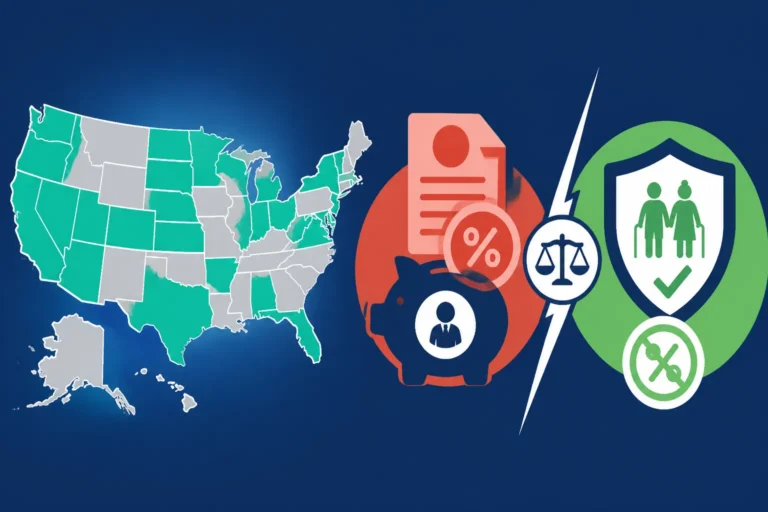
Does California Tax Pensions?
It's a common worry for anyone approaching retirement, especially if you've spent your working life in a state with a reputation for higher taxes like California: what exactly will your golden years look like from a tax perspective? Many folks are understandably anxious about their hard-earned pensions and retirement savings being significantly reduced by state income taxes. This guide is here to shed light on California's approach to taxing pensions and other retirement income, helping you understand what to expect and how to plan for a more financially secure retirement in the Golden State, or perhaps beyond.
Unpacking California's Stance on Pension Taxation
Let's get straight to the heart of the matter because this is often the first question on everyone's mind: does California tax pensions? The short answer for most people is yes, California does tax most types of pension income. Unlike some states that offer generous exemptions or even fully exempt pension income, California treats pension distributions as ordinary income. This means your pension funds are added to any other taxable income you might have for the year, and then taxed according to the state's progressive income tax brackets.
The Straight Answer: Yes, Most Pensions Are Taxable
When we talk about "pensions," we're usually referring to monthly or lump-sum payments you receive after retiring from an employer, whether it's a private company, a state or local government, or the federal government. For most of these, California sees them as just another form of income, much like your salary was when you were working.
Imagine you're Jane, a retired teacher from the California public school system, or Tom, who retired from a major tech company in Silicon Valley with a private pension plan. Both Jane and Tom will find that the regular income they receive from their pensions is subject to California's state income tax. This isn't just a small percentage; it's taxed at your regular marginal income tax rate, which can be quite significant in California. If you've been doing your research on States That Don't Tax Pensions 2026, you know this puts California in a different category than places like Pennsylvania or Mississippi, which offer broad exemptions for retirement income. It’s a crucial distinction to grasp when you're planning your retirement budget and thinking about where your money will go.
How California's Progressive Tax System Impacts Retirees
California operates on a progressive income tax system. What does "progressive" mean in this context? It means the more taxable income you have, the higher your tax rate climbs. You're not just paying a flat percentage on everything; different portions of your income are taxed at different rates, known as tax brackets. For 2026, California's highest income tax rates are among the highest in the nation.
For retirees, this can be a double-edged sword. While some lower-income retirees might fall into lower tax brackets, those with substantial pensions, 401(k) withdrawals, or other investment income can quickly find themselves in higher brackets. Your pension income doesn't exist in a vacuum; it gets added to any other income sources to determine your total taxable income. For instance, if you have a modest pension but also draw from a retirement account and maybe have some part-time consulting income, all of that combined can push you into a bracket where a larger portion of your income is taxed at a higher rate. This is why understanding California Income Tax Brackets 2026 is so vital for retirement planning. It's not just about the rate on your pension; it's about how your pension interacts with all your other income to determine your overall tax liability.
Beyond Pensions: Other Retirement Income in California
While pensions are a major piece of the retirement income puzzle, they're certainly not the only one. Many retirees rely on a mix of income sources, including distributions from 401(k)s and IRAs, Social Security benefits, and for some, military retirement pay. California has different rules for each, and it's essential to understand how each piece fits into your overall tax picture.
401(k)s and IRAs: Taxed Just Like Pensions
Just like with traditional pensions, California generally taxes distributions from traditional 401(k)s, 403(b)s, and IRAs as ordinary income in the year they are withdrawn. This is a significant point for many retirees who have spent decades diligently contributing to these pre-tax retirement accounts. When the time comes to finally tap into that nest egg, California will be there, ready to take its share.
Let's consider Sarah, who saved diligently in her company's 401(k) for 30 years, or David, who primarily used a traditional IRA for his retirement savings. When they start taking money out, whether it's for living expenses, travel, or unexpected costs, those withdrawals are considered taxable income by the state. This includes Required Minimum Distributions (RMDs) once you reach a certain age. However, there's a bright side for some: qualified distributions from Roth 401(k)s and Roth IRAs are generally tax-free in California, just as they are federally. This is because you already paid taxes on those contributions upfront. If you're thinking about moving money between accounts, understanding Roth conversions and their state tax implications is crucial. For a broader perspective, you might want to look into States That Don't Tax 401(k) & IRA Withdrawals to see how California compares.
Social Security Benefits: A Silver Lining
Now, for some genuinely good news for California retirees: California does NOT tax Social Security benefits. This is a huge relief for many and sets the Golden State apart from the few states that still choose to tax these benefits. While your federal Social Security benefits might be partially taxable depending on your overall income, California completely exempts them from state income tax.
This means that if you're receiving Social Security, that portion of your retirement income will remain untouched by the California Franchise Tax Board. It can make a noticeable difference in your monthly budget and overall financial security. For example, if you're receiving $2,500 a month in Social Security benefits, that $30,000 annually is completely safe from California's state income tax, which can be a substantial boon, especially for retirees on a fixed income. When you're comparing your overall tax picture, this exemption for Social Security can actually make California more appealing than you might initially think, especially when compared to the handful of states that still tax them, as detailed in our guide on States That Don't Tax Social Security (2026).
Military Retirement Pay: No Special State Exemption
For those who served our country, military retirement pay is a significant income stream. Many states offer special exemptions or deductions for military retirement benefits as a way to honor veterans. However, California is not one of them. In California, military retirement pay is taxed just like any other pension income. This means it's considered ordinary income and is subject to the state's progressive income tax rates.
So, if you're a retired service member receiving military pension, don't expect a special carve-out from the California state tax system. Your military pension will be combined with your other taxable income when calculating your state tax liability. This can be a point of frustration for many military retirees who might be used to more favorable tax treatment in other states. It’s definitely something to factor into your financial planning, especially if you're considering Moving From California to Avoid State Tax or if you're a military retiree evaluating different states for your retirement. This lack of exemption is a key difference to understand when comparing California to other states, some of which offer full exemptions for military retirement pay.
Navigating California's Tax Landscape in Retirement
California's tax system, especially for retirees, can feel like a complex maze. While the state doesn't offer specific exemptions for most pensions or 401(k)/IRA withdrawals, understanding the full picture, including property taxes, sales taxes, and potential deductions, is crucial. It’s not just about the income tax; it's about the entire mosaic of your financial life in retirement.
Understanding Your Overall Tax Burden
When evaluating how "tax-friendly" a state is for retirees, it’s a big mistake to look at just one type of tax in isolation. While California taxes most retirement income, it's also important to consider other factors that make up your overall tax burden. This includes property taxes, sales taxes, and even local taxes, though California doesn't have local income taxes in the same way some other states do.
For example, while you might pay income tax on your pension, California's property tax rates are generally around the national average, often capped at 1% of the assessed value plus local bonds. However, property values themselves are incredibly high, especially in desirable areas like the Bay Area or Southern California, which can lead to a significant property tax bill in dollar terms. Sales tax is also on the higher side. So, if you're living in an expensive home and enjoy shopping, these other taxes will certainly add up. Many retirees find resources like SmartAsset's tax maps incredibly helpful for comparing how their entire financial situation will be impacted across different states. They offer excellent tools to help you visualize your potential tax burden beyond just income tax. For a deep dive into the broader picture, you might want to read our guide on Is California Tax Friendly? Full Breakdown.
To give you a clearer picture, here's a quick summary of how California generally taxes common retirement income sources:
| Retirement Income Type | California State Income Tax Treatment | Notes |
|---|---|---|
| Private Pensions | Taxable as Ordinary Income | No special state exemption. Added to other income to determine your tax bracket. |
| Public/Government Pensions | Taxable as Ordinary Income | This includes state, local, and federal pensions. No special state exemption. |
| Military Retirement Pay | Taxable as Ordinary Income | Unlike many other states, California does not offer a special exemption for military pensions. |
| 401(k) / 403(b) Withdrawals | Taxable as Ordinary Income | Distributions from traditional accounts are taxed. Qualified Roth withdrawals are tax-free. |
| Traditional IRA Withdrawals | Taxable as Ordinary Income | Distributions are taxed. Qualified Roth IRA withdrawals are tax-free. |
| Social Security Benefits | NOT Taxable | California does not tax Social Security benefits, regardless of income level. |
| Annuity Payments | Taxable (portion over basis) | The portion of payments that represents earnings (above your initial investment) is typically taxed. |
Strategies for Minimizing Your California Retirement Tax Bill
Given California's approach to taxing retirement income, it's natural to wonder if there are ways to soften the blow. While you can't magically make your pension untaxed, there are strategies to consider that might help manage your overall tax liability.
Firstly, tax planning during your working years and early retirement is paramount. Understanding your withdrawal strategy can make a huge difference. For example, if you have a mix of traditional (pre-tax) and Roth (post-tax) accounts, you can strategically withdraw from Roth accounts to keep your taxable income lower in certain years. This is where personalized advice from a financial planner can be invaluable. They can help you model different scenarios and understand the long-term impact. Secondly, familiarize yourself with any state-specific deductions or credits that might apply to you. While California doesn't have many broad retirement income exemptions, there are still various credits that could reduce your overall tax bill. For instance, depending on your income, you might qualify for certain low-income credits, or if you're a homeowner, property tax deductions could play a role in your federal itemized deductions, indirectly affecting your overall tax picture. Our guide on California Tax Deductions and Credits Guide can offer more details.
Another strategy revolves around residency. If the tax burden in California truly becomes unmanageable or undesirable, some retirees consider changing their state of domicile. States like Florida, Texas, or Nevada have no state income tax at all, making them very attractive to retirees. However, changing your state residency for tax purposes isn't as simple as just packing a U-Haul; it involves demonstrating a clear intent to abandon your California domicile and establish a new one. This often requires severing ties with California, like changing your driver's license, voter registration, and even where your primary healthcare is located, as explored in our article on California Residency Requirements for Taxes. While moving is a big decision, it's an option many people weigh, and resources from financial platforms like SmartAsset often highlight these geographic differences in tax burdens. When looking at your overall financial picture, tools from SmartAsset can give you a clearer idea of how various taxes impact your retirement across different locations.
Finally, staying informed about potential legislative changes is wise. Tax laws can and do change. California, like many states, periodically reviews its tax policies. While major overhauls to retirement income taxation aren't common, smaller adjustments to brackets, deductions, or credits can occur. Keeping an eye on publications from the California Franchise Tax Board or reliable financial news sources can ensure you're always operating with the most current information. For a broader overview of how retirement income is taxed across the nation, you might find our guide on How Each State Taxes Retirement Income (50-State Guide) particularly illuminating.
Disclaimer
This article is for general informational purposes only and does not constitute professional advice. Laws and regulations vary by location and change over time. Consult a qualified professional for guidance on your specific situation.