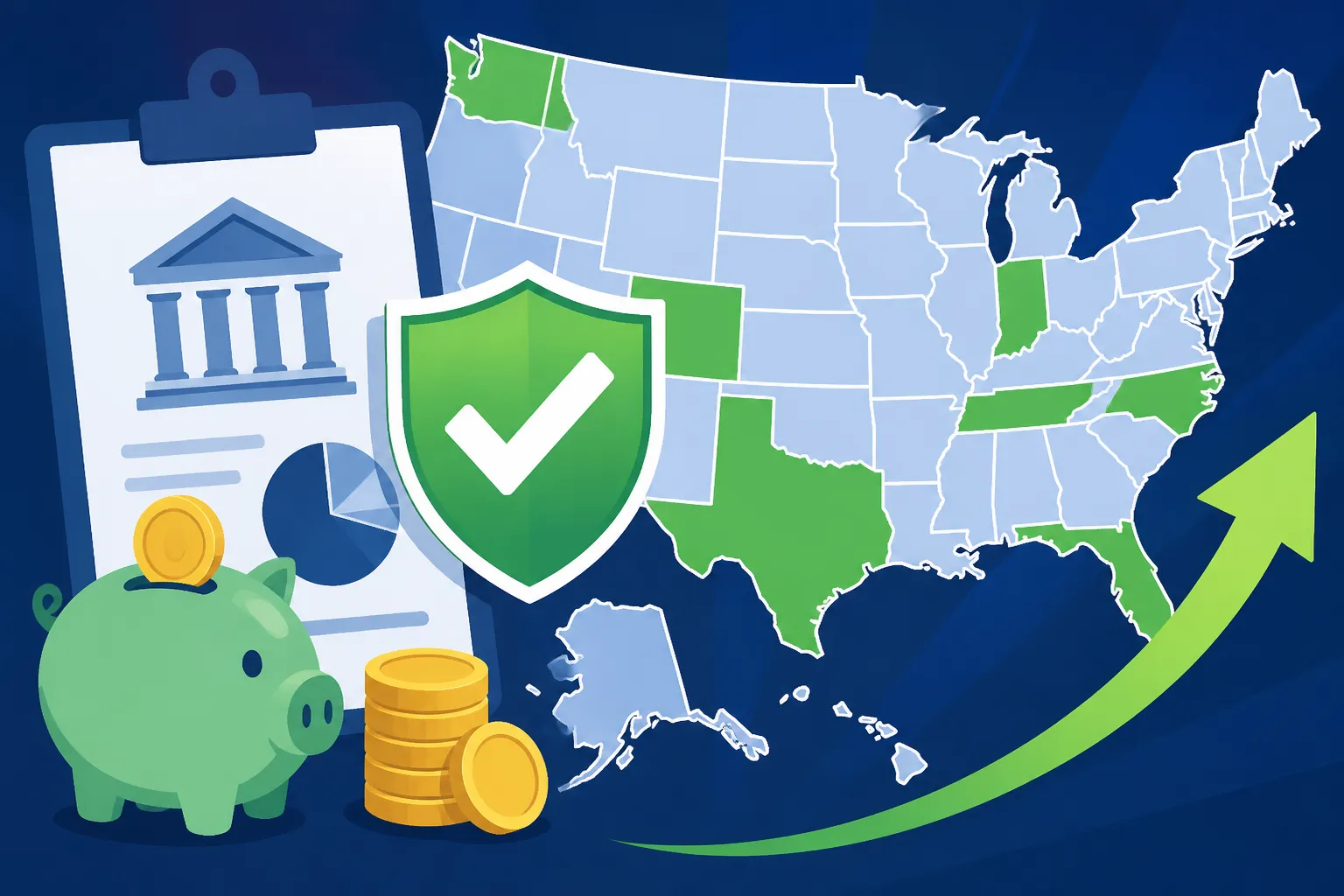
What States Are Going to Flat Tax?
It's completely understandable to feel a bit lost when it comes to state income taxes. One year you're navigating complex progressive brackets, and the next, you hear whispers of flat tax rates and wonder what that even means for your hard-earned money. It can be a real headache trying to keep up with all the legislative changes, especially when it feels like the rules are constantly shifting underfoot. This comprehensive guide is here to cut through the confusion and walk you through exactly which states are either already embracing a flat income tax for 2026 or are actively in the process of transitioning to one, helping you understand the real-world impact on your finances.
Understanding the Flat Tax Movement in the States
The concept of a flat tax isn't new, but its adoption by states is gaining momentum, especially as legislatures look for ways to simplify their tax codes, attract businesses, and potentially retain or draw new residents. For decades, many states have relied on a progressive tax system, where higher earners pay a larger percentage of their income in taxes through a series of escalating tax brackets. The shift to a flat tax, on the other hand, means everyone pays the same percentage, regardless of how much they earn, often with some standard deductions or exemptions to ease the burden on lower-income households.
This movement isn't just about simplification; it's often driven by a philosophical belief that it promotes fairness and economic growth. States considering or implementing a flat tax often point to ease of compliance for taxpayers and businesses as a major advantage. However, critics sometimes argue that flat taxes can disproportionately benefit higher earners, as a fixed percentage means lower-income individuals might pay a relatively larger share of their discretionary income compared to a progressive system. It's a complex economic debate, but for you, the taxpayer, it boils down to understanding how your state is making these moves and what it means for your wallet. If you're curious about how your current state stacks up, you might want to read our full guide on Graduated vs Flat State Income Tax Explained.
Why States Are Shifting to Flat Tax Systems
The rationale behind a state moving from a progressive or even a multi-tiered flat tax system to a single, lower rate is multifaceted. One primary driver is often the desire to enhance the state's economic competitiveness. Lawmakers hope that a simplified, lower flat tax rate will make the state more attractive to businesses looking to relocate or expand, bringing jobs and investment. This is particularly true for states bordering those with no income tax or a significantly lower tax burden. For instance, a state might observe population shifts or business departures to neighboring states with more favorable tax climates and decide to adjust its own policies.
Another significant factor is the perceived administrative simplicity. For both the state's tax department and individual taxpayers, a flat tax can drastically reduce complexity. Imagine not having to figure out which bracket your income falls into or deal with marginal rates. This can lead to fewer errors, easier tax preparation, and potentially lower administrative costs for the state. Think of how many tools, like those offered by SmartAsset, are designed to help you navigate these complexities; a flat tax aims to reduce some of that friction. Furthermore, some policymakers believe that a flat tax is inherently fairer because everyone contributes at the same rate, fostering a sense of equality in the tax burden, although this perspective is debated. They argue it removes disincentives for earning more, as additional income isn't taxed at a higher rate.
Historical Context of State Tax Reform
The idea of a flat tax isn't a new invention in the world of state revenue. Several states have long utilized a single-rate income tax. For example, states like Pennsylvania and Illinois have had flat income tax rates for decades. However, the more recent trend, which is what we're focusing on here, involves states transitioning from complex progressive systems to a flat tax. This is often part of a broader package of tax reforms that might include changes to property taxes, sales taxes, or even specific deductions and credits.
This push has intensified over the last few years, fueled by economic considerations and sometimes by political ideologies advocating for smaller government and simpler tax structures. The post-pandemic economic environment, with its shifts in remote work and migration patterns, has also put a spotlight on state tax burdens, making tax reform a hot topic in many state capitals. This continuous evolution means that keeping an eye on legislative developments is crucial, as what might be a proposal today could be law tomorrow. It directly impacts decisions like where to live, where to work, or even where to consider for retirement, underlining why understanding State Income Tax Cuts & Changes for 2026 is more important than ever.
States Actively Transitioning to a Flat Tax (2026 Onward)
It's exciting to see a growing number of states taking steps to simplify their tax codes, and the shift toward a flat tax is a significant part of that conversation. While some states have maintained a flat tax for a long time, the real buzz is around those that are moving from a multi-bracketed progressive system to a single, consistent rate. This isn't always an overnight change; often, it's a gradual process, phasing in over several years to allow taxpayers and state agencies to adjust.
When we talk about "going to a flat tax," we're specifically looking at states that have enacted legislation to move away from multiple tax brackets towards a single, uniform rate for all taxable income, typically effective for 2026 or with a clear pathway to get there. This often comes with adjustments to deductions or exemptions to make sure the system remains equitable, especially for lower-income households.
Key States Leading the Flat Tax Charge
Several states have either recently adopted or are in the process of phasing in a flat income tax. Here are some of the most prominent examples:
- Arizona: The Grand Canyon State has been a leader in this movement. Arizona officially moved to a flat tax rate of 2.5% starting in 2023, fully implemented after a gradual reduction from its previous progressive system. This was a significant shift, intended to make Arizona more competitive and attractive for businesses and individuals alike.
- Georgia: Another state making waves is Georgia. The state officially transitioned from a progressive income tax to a flat tax rate, phasing in the change from 2024 to 2029. The initial rate for 2024 was set at 5.49% and is designed to decrease incrementally to 4.5% by 2029, provided certain revenue conditions are met. This gradual approach aims to smooth the transition for taxpayers and the state budget. You can learn more about the specific changes in our guide on the Georgia Flat Tax Rate 2026.
- Mississippi: Mississippi has also been at the forefront of this trend. After a series of legislative changes, Mississippi is implementing a flat tax rate of 5% for tax years beginning in 2024, gradually reducing it to 4.7% in 2025, and then to 4.4% in 2026. This aggressive timeline indicates a strong commitment to a simpler tax structure.
- Oklahoma: The Sooner State has seen considerable debate and legislative action regarding its income tax structure. While currently using a progressive system, there have been significant pushes and proposals to move to a flat tax. Although not fully enacted for 2026 as a flat rate, discussions and efforts continue to shape its future tax landscape. Lawmakers often revisit these proposals, making Oklahoma a state to watch in the coming years for potential shifts to a flat tax model.
- Iowa: Iowa has embarked on a dramatic transformation of its tax system, aiming to move from a multi-bracket structure to a flat tax. Starting in 2023, the state began consolidating its brackets with a plan to reach a single 3.9% flat rate by 2026. This makes Iowa one of the most proactive states in enacting a full transition to a flat tax.
These states represent a clear trend, often driven by the desire to streamline tax filing and encourage economic activity. For residents, it means a clearer understanding of their state income tax liability. For example, if you're a high earner in a state like Arizona, you're now paying a much lower percentage than you might have just a few years ago.
States Currently Considering or Debating a Flat Tax
Beyond the states that have already made the leap, several others have ongoing discussions, legislative proposals, or strong political movements pushing for a flat tax. These states haven't yet passed the final legislation for 2026, but their status is worth noting for anyone planning future moves or assessing their long-term tax landscape. These proposals are often contingent on various factors, including state revenue forecasts, political consensus, and public opinion.
For instance, states like Missouri and South Carolina have seen lawmakers introduce bills advocating for a flat income tax, or further reductions to their existing progressive rates with an eventual goal of a flat structure. These efforts often reflect a broader conservative fiscal agenda, emphasizing tax cuts and simplification. The success of flat tax implementations in neighboring states can also fuel these discussions, creating a domino effect where states feel compelled to adapt to stay competitive. It's a game of fiscal chess, and taxpayers are the pieces on the board. When researching tax implications, resources like SmartAsset can be incredibly helpful in comparing current and proposed tax burdens across states.
The Impact of a Flat Tax System on Your Finances
When a state shifts to a flat tax, it’s not just an abstract legislative change; it has tangible effects on your personal finances. For some, it might mean more money in their pocket, while for others, the impact could be less favorable, depending on their income level and the specifics of the new tax structure. It’s crucial to look beyond just the single rate and understand the whole picture, including any new deductions, credits, or exemptions that might accompany the change.
Who Benefits and Who Might Pay More
The general wisdom often suggests that a flat tax disproportionately benefits higher-income earners. This is because, under a progressive system, those with higher incomes would typically pay a larger percentage of their income in taxes. With a flat tax, that percentage is uniform. If a state lowers its top marginal rate to implement a flat tax, higher earners will likely see a reduction in their overall tax bill.
Consider a hypothetical scenario in a state transitioning to a 4% flat tax from a system with brackets ranging from 2% to 6%. Someone earning $50,000 might have paid an effective rate of 3.5% under the old system, while someone earning $200,000 might have paid 5%. Under the new 4% flat tax, the lower earner might see a slight increase in their effective rate, while the higher earner sees a decrease. However, it's not always this straightforward. Many states implementing a flat tax will also introduce or expand standard deductions or personal exemptions. These measures are designed to shield a certain amount of income from taxation entirely, which can effectively lower the tax burden for low- and moderate-income individuals, sometimes even more so than under the previous progressive system. This is why a tool like a marginal vs effective tax rate calculator becomes invaluable in assessing your actual tax liability under these new rules.
Here's a simplified look at the potential impact:
| Income Level | Progressive Tax System (Hypothetical) | Flat Tax System (Hypothetical 4% with $10,000 exemption) | Potential Impact on Tax Bill |
|---|---|---|---|
| Low-Income | $30,000 income, 2% effective rate = $600 tax | $20,000 taxable income, 4% rate = $800 tax | May pay more (unless exemptions are generous) |
| Middle-Income | $70,000 income, 4% effective rate = $2,800 tax | $60,000 taxable income, 4% rate = $2,400 tax | May pay less (depending on the previous effective rate) |
| High-Income | $200,000 income, 5% effective rate = $10,000 tax | $190,000 taxable income, 4% rate = $7,600 tax | Likely to pay less |
This table is illustrative and based on a hypothetical scenario. Actual impacts vary greatly based on specific state laws, income levels, and available deductions/exemptions.
Other Economic Considerations for Residents
Beyond the direct impact on your tax bill, a state's move to a flat tax can have broader economic implications for residents.
- Economic Growth and Job Creation: Proponents argue that a lower, simpler flat tax encourages businesses to set up shop or expand within the state, leading to more jobs and a stronger economy. If successful, this could mean more opportunities and potentially higher wages for residents.
- Property Values: If a state becomes more attractive due to a lower income tax, it could see an influx of new residents and businesses, which might, in turn, drive up demand for housing and increase property values. While good for homeowners, this could pose challenges for renters or new homebuyers.
- Public Services: Critics sometimes worry that a significant reduction in income tax revenue could lead to cuts in public services like education, infrastructure, or healthcare. However, states often implement these changes with careful revenue projections and sometimes rely on other tax sources (like sales or property taxes) or economic growth to offset any potential shortfalls. It's a delicate balancing act that state legislatures must manage. This interplay is why understanding the full State Tax Burden by State 2026 is so important.
- State Budgets and Stability: A flat tax might offer more predictable revenue streams for the state budget, as it's less sensitive to the income fluctuations of specific high-earning individuals. This could lead to greater fiscal stability, which indirectly benefits all residents through consistent government services.
Navigating these potential changes requires a good understanding of your personal financial situation and the specific laws in your state. Tools provided by financial analysis companies like SmartAsset can help you model these changes and understand their specific impact on your household budget. It's not just about what rate you pay, but how that rate interacts with your income, deductions, and the broader economic landscape of your state.
Preparing for State Tax System Changes
Keeping tabs on state tax reform, especially when your state is considering a move to a flat tax, can feel like a full-time job. But proactively understanding these shifts is key to smart financial planning. The last thing anyone wants is to be surprised come tax season. Whether you're a long-time resident or considering moving, knowing the lay of the land will help you make informed decisions.
Staying Informed About Your State's Tax Laws
The first and most important step is to stay informed. State tax laws are not static; they evolve with legislative sessions, economic pressures, and changes in political leadership. Here’s how you can keep your finger on the pulse:
- Official State Revenue Websites: Your state's Department of Revenue or Treasury website is the most accurate and up-to-date source for tax law changes. They often publish legislative updates, frequently asked questions, and new tax forms that reflect any reforms. Bookmark these pages and check them periodically.
- Reputable Financial News Outlets: Many financial news organizations closely track state tax legislation. Look for sources that specialize in state-level economic policy or taxation. These can often break down complex changes into understandable terms.
- Professional Tax Advisors: If you have a complex financial situation, or if you're seriously considering a move or a major financial decision based on tax implications, consulting with a Certified Public Accountant (CPA) or a tax attorney licensed in your state is invaluable. They can offer personalized advice and clarify specific nuances of new laws.
- Community and Business Associations: Local chambers of commerce, small business associations, and community groups often provide updates on tax changes that impact their members, sometimes even hosting informational sessions.
Remember, even once a flat tax is passed, its implementation can be phased over several years, as seen in Georgia or Iowa. So, staying continuously informed is critical. Keep an eye on the official announcements regarding State Tax Deadlines 2026 and any new forms or guidelines that accompany these changes.
Financial Planning Under a New Tax Structure
A change in your state's income tax structure, especially a shift to a flat tax, necessitates a review of your financial strategy. This isn't just about how much tax you pay, but how it integrates into your overall budget and long-term goals.
- Review Your Withholding: If your state transitions to a flat tax, your employer's payroll department will eventually adjust your withholding. However, it’s a good idea to check your W-4 (or state equivalent) to ensure the proper amount of state income tax is being withheld from your paycheck. Too little and you could owe a large sum; too much and you're giving the state an interest-free loan. Use an online withholding calculator, many of which can be found on sites like SmartAsset, to confirm you’re on track.
- Evaluate Your Budget: Understand how a potentially lower or higher tax bill will affect your monthly cash flow. If you pay less, consider putting that extra money towards savings, investments, or debt repayment. If you find yourself paying more, adjust your budget accordingly.
- Assess Retirement Planning: For those nearing or in retirement, state income tax changes are a huge factor. States with no income tax or a flat tax can be very attractive. If your state is moving to a flat tax, consider how it might impact your retirement income, especially if the flat rate is lower than your previous effective rate. This ties into considering Most Tax-Friendly States for Retirees 2027.
- Consider Location Decisions: State tax rates are a significant factor for individuals and families contemplating a move. If you're a high-income earner in a state moving to a flat tax, it might make your state even more attractive. Conversely, if the flat tax erases certain benefits you received under a progressive system, you might reconsider your current state's appeal compared to others. This highlights the ongoing debate about Cost of Living vs Taxes by State.
- Tax-Advantaged Accounts: Re-evaluate your contributions to state-specific tax-advantaged accounts, such as 529 college savings plans. Some states offer deductions or credits for contributions, and how these interact with a new flat tax structure could change their overall benefit.
By taking these proactive steps, you can confidently navigate the evolving landscape of state income taxes and ensure your financial plan remains robust and optimized for the changes ahead.
Disclaimer
Please remember that tax laws are complex and subject to change. The information provided in this guide is for informational purposes only and does not constitute tax or legal advice. Always consult with a qualified tax professional or financial advisor for advice tailored to your specific situation.