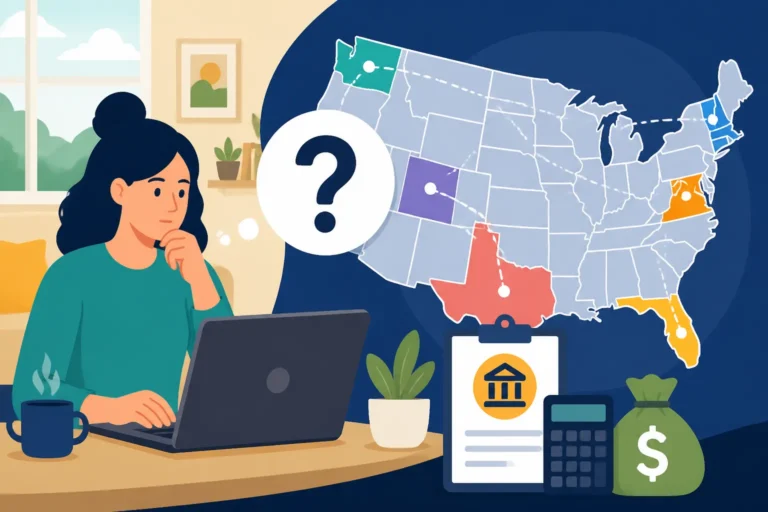
Snowbird Tax Rules: Florida & Arizona
Ah, the dream of escaping those brutal winter winds! For many, the idea of packing up and heading south for the colder months, living as a "snowbird," sounds like pure bliss. But let's be real, the fantasy of sun-drenched beaches or desert warmth often crashes head-first into the very un-fun reality of state tax rules. It’s a common frustration: you want to enjoy your seasonal migration without accidentally triggering residency in a state you only visit, or worse, paying taxes to two different states. This comprehensive guide is here to unravel the complex web of snowbird tax rules, with a special focus on two popular destinations: Florida and Arizona, helping you navigate the waters to ensure your winter haven remains a tax-friendly one.
Understanding Snowbird Residency and Domicile
The world of state income tax residency can feel like a tangled mess, especially when you’re spending significant time in more than one place. For snowbirds, it's not just about where you physically are; it's about where the state thinks you belong. This distinction is absolutely crucial and often misunderstood.
The Critical Distinction: Domicile vs. Statutory Residency
When we talk about state taxes, "residency" isn't a one-size-fits-all term. There are actually two main concepts that states use to determine if they can tax your income: domicile and statutory residency. Understanding the difference is paramount for any snowbird hoping to minimize their tax burden.
Your domicile is generally considered your true, fixed, and permanent home, the place where you intend to return whenever you are absent. It's about your intent. Think of it as your emotional and legal home base. You can only have one domicile at a time, and changing it requires clear intent and actions to prove it. This is often the toughest hurdle for snowbirds, as your "old" state might not want to let you go easily, especially if it’s a high-tax state like New York or California. Proving you've truly changed your domicile isn't just saying you have; it’s demonstrating it through a pattern of behavior and documentation. States look for a preponderance of evidence, meaning the weight of the evidence shows your intent. This is why understanding Domicile vs Statutory Residency is so important.
On the other hand, statutory residency is a more objective test. Many states have rules that say if you spend a certain number of days within their borders and maintain a permanent place of abode there, you automatically become a resident for tax purposes, regardless of your intent to make it your permanent home. The infamous "183-day rule" (spending more than half the year) is a common example. So, even if your heart is still in your original home state, if you meet the statutory residency requirements of your snowbird state, you could find yourself on the hook for taxes there. This is why snowbirds often struggle – they might change their domicile to Florida, but if they spend too much time in their former high-tax state, they could still be considered a statutory resident there. It's a tricky balancing act.
Why Florida and Arizona are Snowbird Havens
It's no secret that Florida and Arizona are top destinations for snowbirds, and a huge part of their appeal lies in their tax structure. Both states offer significant advantages that make them particularly attractive to those looking to escape the cold and keep more of their hard-earned money.
Florida is perhaps the ultimate tax haven for retirees and snowbirds because it's one of the States With No Income Tax (2026 Full List). This means your wages, pensions, 401(k) and IRA distributions, and Social Security benefits are completely free from state income tax. For someone living on a fixed income, or even working remotely, this can translate into substantial savings compared to living in a state like New York or Illinois. The sunshine and beaches are certainly a draw, but the financial benefits are often the primary motivator. Beyond income tax, Florida also doesn't have an estate tax or an inheritance tax, further solidifying its reputation as a financially savvy choice for long-term planning.
Arizona also has a strong appeal, especially for those who prefer desert landscapes and drier climates. While Arizona does have a state income tax, it’s generally considered to be quite tax-friendly, especially compared to many other states. For 2026, Arizona is moving towards a flat income tax rate, further simplifying its tax structure and making it more predictable. This can be particularly appealing for retirees with various income streams, as the rates are competitive and there are often generous exemptions for retirement income. For instance, some military retirement pay and certain pension income may be partially or fully exempt. While not entirely tax-free like Florida, Arizona still offers a much lighter tax burden than many other states, making it a very viable and attractive option for snowbirds.
The Danger Zone: When States Scrutinize Your Move
Leaving a high-tax state for a no-tax or low-tax state sounds simple enough, right? Unfortunately, it's rarely that easy. States are well aware of "tax migration" and are increasingly aggressive in auditing former residents to ensure they've truly cut ties for tax purposes. This is especially true for states like California and New York, which have robust audit departments dedicated to challenging residency claims.
The "danger zone" arises when your actions don't fully align with your stated intent to change domicile. For example, if you claim Florida as your new domicile but still maintain a fully furnished home, spend several months a year, and keep all your doctors and social ties in your former state, you're essentially painting a target on your back. States will look at a variety of factors, often referred to as "domicile factors," to determine your true intent. These can include where you register your vehicles, where you vote, where your family lives, where you bank, and even where your pets' veterinary records are kept. Any significant tie to the old state can be used as evidence that you haven't truly moved your domicile. Failing to properly establish your new domicile or spending too much time back in your old state can lead to penalties, interest, and the stressful experience of a residency audit, where you might be forced to prove your case to the state's tax authorities.
Establishing Florida Residency for Tax Purposes
If you're dreaming of making Florida your permanent tax home, simply saying "I live in Florida now!" isn't enough. Florida, like other no-income-tax states, attracts many looking to reduce their tax burden, which means other states are often keen to challenge whether a move is genuine. You need to build a strong case that your intent is to make Florida your true home.
Documenting Your Intent to Domicile in Florida
The key to establishing Florida residency for tax purposes, and convincing your former state that you've left, is to meticulously document your intent to make Florida your primary home. This isn't a single action; it's a collection of consistent behaviors and official changes that paint a clear picture.
One of the first and most foundational steps is to file a Declaration of Domicile with the county clerk's office in Florida. While not legally required for establishing domicile, it's a powerful piece of evidence demonstrating your intent. Think of it as formally announcing to the world (and to any skeptical tax auditors) that Florida is now your home. Beyond this declaration, you should actively sever ties with your old state and establish new ones in Florida. This means obtaining a Florida driver's license, registering your vehicles in Florida, and changing your voter registration to Florida. These seemingly small administrative tasks are actually critical indicators of your intent to make Florida your primary residence. When your former state investigates, they'll be looking for these tangible proofs of disengagement. For more detail on proving a change, check out How to Prove You Changed Your Domicile.
Furthermore, update your mailing address with all financial institutions, subscriptions, and important contacts to your Florida address. Ensure that you're receiving bills, bank statements, and other official correspondence at your new Florida address. It’s also wise to update your will, trusts, and other estate planning documents to reflect Florida law and your new domicile. If you own property in your former state, consider listing it for sale, renting it out, or at the very least, moving significant personal items to Florida. The less physical presence you have in your old state, the stronger your case. Many people, for instance, move their family heirlooms, important paperwork, and even their beloved pet's records to Florida, demonstrating a genuine shift in their life's center.
Practical Steps to Solidify Your Florida Residency
Beyond the official paperwork, there are many practical, everyday steps you can take to solidify your Florida residency. These actions help create a pattern of behavior that reinforces your intent to make Florida your home, making it harder for another state to dispute your claim.
First and foremost, establish social and community ties in Florida. Join local clubs, volunteer organizations, or a church. Get to know your neighbors. Change your primary healthcare providers (doctors, dentists, specialists) to Florida practitioners. When you apply for credit cards or loans, use your Florida address. Open new bank accounts in Florida and gradually shift your primary banking relationship there. The goal is to show that your daily life and significant personal connections are centered in Florida. If you spend your winters in Florida but fly back north every time you need a doctor's appointment or want to see friends, it weakens your claim that Florida is your true home.
Another critical step is minimizing your time spent in your former high-tax state, especially if that state has a statutory residency rule. For instance, New York has a very aggressive statutory residency rule, where if you maintain a permanent place of abode there and spend more than 183 days in the state, you're considered a New York resident for tax purposes, regardless of your domicile. Tracking your days is absolutely essential, and many people use apps or a simple calendar to meticulously record their presence in each state. If you must spend time in your former state, ensure it's brief and clearly for temporary purposes, like visiting family or attending to specific business. Even minor details, like where you keep your most cherished possessions or where your safe deposit box is located, can be part of the evidence states scrutinize.
Common Pitfalls and How to Avoid Them
Even with the best intentions, snowbirds can fall into common traps that jeopardize their Florida residency claim. Being aware of these pitfalls is the first step in avoiding them.
A major pitfall is failing to fully sever ties with your former state. This often manifests as keeping a primary residence fully furnished and ready for immediate occupancy, maintaining a business presence without clear termination, or simply spending too much time there. For example, if you declare Florida domicile but keep your luxury vehicle registered in New York, maintain your country club membership there, and only visit Florida for three months, an auditor might easily argue your domicile hasn't truly shifted. Another common mistake is inconsistent behavior; for instance, using your Florida address for some things (like taxes) but your old state's address for others (like a professional license or a secondary business). Consistency is key across all aspects of your life.
To avoid these issues, conduct a thorough "domicile audit" of your life. Make a checklist of all your legal, financial, and social ties and actively work to transition them to Florida. Consider selling your former home or at least renting it out on a long-term basis to demonstrate you don't intend to return permanently. If you keep a second home in your former state, ensure it's not considered a "permanent place of abode" by that state's tax authorities (often meaning it's not equipped for year-round living or isn't used for more than a set number of days). Seek professional advice from tax attorneys or CPAs who specialize in multi-state residency rules. Firms like TurboTax or even a local Florida CPA can offer tailored advice to help navigate these complexities, as specific state laws can be highly nuanced. Remember, the burden of proof is typically on you to demonstrate your change of domicile.
Establishing Arizona Residency for Tax Purposes
Arizona offers its own unique charm and a relatively tax-friendly environment that makes it a popular snowbird destination. While it does have a state income tax, its progressive shift towards a flat tax and various exemptions can still make it financially advantageous. However, establishing domicile here still requires deliberate action and documentation, much like Florida, to ensure you avoid tax headaches elsewhere.
Key Factors for Proving Arizona Domicile
Like Florida, proving your domicile in Arizona revolves around demonstrating your intent to make it your true, permanent home. The Arizona Department of Revenue (ADOR) will consider a range of factors to determine your residency status, especially if you're coming from a state with higher taxes.
At the heart of proving Arizona domicile is demonstrating your "intent to abandon" your prior domicile and establish a new one in Arizona. This includes obtaining an Arizona driver's license within a reasonable timeframe (typically 10 days of establishing residency), registering your vehicles with the Arizona Department of Transportation, and updating your voter registration. These are foundational elements that are universally recognized as strong indicators of where you consider your home. Think about all the places your name and address appear: professional licenses, passport applications, military records (if applicable), and even online profiles. Every single one should reflect your Arizona address. For those looking at How to Change Your State Residency for Taxes, these initial steps are non-negotiable.
Beyond these administrative actions, you should also establish financial ties within the state. Open bank accounts with local Arizona institutions, transfer investments to Arizona-based advisors, and update your billing address for all credit cards and financial statements. If you own property in Arizona, ensure you claim the appropriate homestead exemption, if applicable, as this often requires you to declare the property as your primary residence. Even small details, like changing your pet's veterinarian records to an Arizona clinic, or joining a local gym or golf club, add to the cumulative evidence of your intent to make Arizona your permanent home.
Actions to Take to Affirm Arizona Residency
To truly affirm your Arizona residency and leave no doubt about your intent, you need to actively integrate into the Arizona community and systematically reduce your ties to your former state.
One significant action is to establish your medical and professional relationships in Arizona. Find a primary care physician, specialists, and even an attorney or accountant in Arizona. This demonstrates that your core needs are being met in your new home state. Participating in local civic or social organizations, such as community groups, volunteer efforts, or a place of worship, helps build a genuine connection to your Arizona community. If you are retired, this also provides a strong social network that reinforces your commitment to the state. For many snowbirds, relocating their mail service through the USPS to their Arizona address is a clear and simple step to show their new permanent address.
If you maintain a second home in your former state, it's crucial to understand how that state's tax laws define a "permanent place of abode." To avoid inadvertently triggering statutory residency in your old state, consider selling that property, renting it out long-term, or ensuring it's not maintained in a way that suggests it's still your primary living space. For example, if you still keep all your winter clothes, personal papers, and cherished belongings in your northern home, it might signal to a skeptical tax auditor that your Arizona move isn't as permanent as you claim. It’s about building a consistent narrative through your actions that unequivocally points to Arizona as your fixed and permanent home.
Navigating Part-Year Resident Filings
Many snowbirds, especially in their first year of transition, will find themselves in a "part-year resident" situation, meaning they were a resident of one state for part of the year and then became a resident of Arizona for the remainder. This requires careful attention when filing taxes.
When you're a part-year resident, you'll generally file two state tax returns: one for your former state as a part-year resident and one for Arizona as a part-year resident. Each state will only tax the income you earned while you were a resident there. For example, if you moved from Ohio to Arizona on July 1st, you would file an Ohio part-year resident return for income earned from January 1st to June 30th and an Arizona part-year resident return for income earned from July 1st to December 31st. This can get complicated, especially with income sources that aren't easily divided by date, like capital gains from sales, or certain retirement distributions.
It's vital to allocate your income correctly. For instance, if you sold stocks after moving to Arizona, that capital gain would typically be taxed by Arizona (assuming you've established domicile there), not your former state. Wages are usually easy to divide by the dates you worked in each state. Retirement income can be particularly tricky, as some states have specific rules for taxing distributions based on residency at the time of withdrawal. Utilizing tax software that handles multi-state filing, such as TurboTax, can be incredibly helpful here, as it can guide you through the process of correctly allocating income. However, for complex situations, consulting with a tax professional who understands How to File a Part-Year Resident Return is always recommended to ensure accuracy and avoid potential issues.
The 183-Day Rule and Other State Scrutiny
The 183-day rule is perhaps the most well-known (and often feared) benchmark for snowbirds. While seemingly straightforward, its application and the nuances of how states monitor your physical presence can be quite complex, leading to unexpected tax liabilities if not managed carefully.
How the 183-Day Rule Impacts Snowbirds
The 183-day rule, or variations of it, is a common statutory residency test used by many states with an income tax. It generally states that if you spend more than 183 days (more than half the year) in a particular state and maintain a "permanent place of abode" there, you are considered a resident for tax purposes, regardless of where your domicile is. This is a critical distinction that often trips up snowbirds.
Imagine you've successfully established your domicile in Florida, a no-income-tax state. You own a lovely home there, have your driver's license, and vote in local elections – all the signs point to Florida as your permanent home. However, let's say your old home state, New Jersey, has an income tax and a 183-day rule. If you return to your New Jersey beach house for six months and one day out of the year, even just to visit family or enjoy the summer, and that beach house is considered a "permanent place of abode" (meaning it's suitable for year-round living, which most homes are), New Jersey could consider you a statutory resident. This would mean that New Jersey could tax all of your income, even the income earned while you were in Florida, creating an unwelcome and potentially expensive surprise. This dual residency (domicile in one state, statutory residency in another) is the nightmare scenario snowbirds try to avoid. It’s why understanding The 183-Day Rule for State Taxes is so critical.
To protect yourself, meticulous record-keeping of your travel dates is non-negotiable. Keep flight itineraries, credit card statements showing purchases in different states, toll road records, and even dated photos. Some high-net-worth individuals even carry "domicile diaries" to track their movements precisely. The burden of proof is typically on the taxpayer to demonstrate they haven't exceeded the day count in a given state.
Nexus and Income Sourcing for Non-Domiciliary States
Beyond the 183-day rule, states also have rules about "nexus" and "income sourcing," which can impact snowbirds who earn income while physically present in a state where they are not domiciled.
"Nexus" essentially means a sufficient connection between a taxpayer and a state that allows the state to impose its taxes. For individuals, this often boils down to physical presence and earning income. If you're domiciled in Florida but spend two months working remotely from a rental property in New York, New York might claim nexus over that income. Even if you're not a statutory resident of New York, the income you earned while physically present and working in New York could be sourced to New York, making it taxable there. This is known as "income sourcing." States typically tax income derived from sources within their borders, regardless of the recipient's residency. This is a particularly relevant concern for digital nomads or those who continue to work part-time or remotely while snowbirding.
For example, if you live in Florida but own a rental property in North Carolina, the rental income from that North Carolina property is sourced to North Carolina and will be taxable there, regardless of your Florida domicile. Similarly, if you work remotely for an employer based in your former high-tax state, that state might argue that your income is still sourced there, especially if they have a "convenience of the employer" rule. Understanding Working in One State, Living in Another: Tax Guide is key to navigating these complex scenarios. Even if you don't meet the 183-day threshold, earning income within a state's borders can trigger a nonresident filing requirement for that specific income.
What Triggers a State Residency Audit?
The thought of a state residency audit can be daunting, but understanding what might trigger one can help you take proactive steps to avoid it. High-tax states, particularly those with aggressive audit divisions, are constantly on the lookout for individuals who claim to have moved but haven't truly severed ties.
One of the biggest red flags for a state like New York or California is a sudden change of address combined with a significant reduction in state income tax payments. If you've been a high earner in one of these states for years and then suddenly claim Florida domicile and stop paying state income tax, it’s highly likely to catch their attention. Other triggers include maintaining significant assets (like multiple homes, businesses, or large financial accounts) in the former state while claiming new domicile elsewhere. Frequent and prolonged visits back to your former state, especially if you exceed statutory day counts, can also trigger scrutiny. States track various data points, including utility usage at former residences, credit card transactions, ATM withdrawals, and cell phone tower data, to build a picture of your physical presence.
A detailed guide on What Triggers a State Residency Audit? would highlight that even seemingly innocuous actions, like maintaining a professional license or renewing a club membership in your old state, could contribute to an auditor's case against you. It's not just one thing, but rather a pattern of conflicting behaviors that raises suspicions. Proactive tax planning, meticulous record-keeping, and genuinely severing ties are your best defenses. Ignoring these warnings or trying to "game the system" can lead to significant penalties, back taxes, and a stressful legal battle.
Tax Implications for Snowbirds: A Comparative Look
Choosing between Florida and Arizona as a snowbird destination involves weighing more than just climate and amenities. Their distinct state tax structures have significant implications for your overall financial well-being. A side-by-side comparison reveals where each state shines and where you might face different considerations.
Income Tax Differences: Florida vs. Arizona
The most striking difference between Florida and Arizona for snowbirds is their approach to income tax. This fundamental difference dictates much of the tax planning required for residents of each state.
Florida famously has no state income tax. This means that if Florida is your domicile, none of your earned income (wages, self-employment income), retirement income (pensions, 401(k)s, IRAs), or investment income (interest, dividends, capital gains) will be subject to state income tax. For many, especially retirees living on distributions from their retirement accounts, this is a massive advantage. For someone with a $100,000 annual pension, moving from a state with a 5% income tax to Florida immediately saves them $5,000 per year, not including potential savings on other types of income. This makes Florida particularly appealing for those seeking to maximize their disposable income in retirement. This lack of income tax extends to almost all forms of personal income, making it a very straightforward calculation for most residents.
Arizona, while tax-friendly, does impose a state income tax. However, it's been transitioning to a single, lower flat tax rate. For 2026, Arizona will have a flat income tax rate. This means that once you establish domicile in Arizona, your income will be subject to this rate. While this is certainly higher than Florida's 0% rate, it's considerably lower than many other states' top marginal rates. Furthermore, Arizona offers some exemptions for certain types of retirement income. For instance, some military retirement benefits are exempt, and there's often a subtraction for other qualifying pension income, which can reduce your taxable income. For snowbirds with diverse income streams, a tax planning tool like SmartAsset can help compare your effective tax burden in Arizona versus your prior state, factoring in all income types and potential deductions. This nuanced approach makes Arizona appealing, but it requires a bit more calculation than Florida's blanket income tax exemption.
Other Taxes to Consider: Property, Sales, and Estate
While income tax often gets the most attention, a smart snowbird also considers other state and local taxes, as these can significantly impact the overall cost of living.
Property Taxes: Both Florida and Arizona impose property taxes, which are assessed at the local level (county and city). These can vary widely even within each state. Florida has a "Save Our Homes" amendment, which caps the annual increase in assessed value for homesteaded properties, providing significant long-term protection for permanent residents. This means your property taxes won't skyrocket year after year. Arizona also has property taxes, which are generally considered moderate compared to the national average. Both states offer various homestead exemptions for primary residences that can reduce your taxable property value. It's crucial to research property tax rates in specific counties or cities you're considering, as a low income tax might be offset by high property taxes in certain desirable areas.
Sales Taxes: Both Florida and Arizona have statewide sales taxes. Florida's statewide sales tax is 6%, with local option taxes that can add up to an additional 2.5%, bringing the total to as high as 8.5% in some areas. Arizona has a state sales tax of 5.6%, but it also allows cities and counties to impose their own sales taxes, which can push the combined rate significantly higher, often exceeding 10% in some municipalities. While these taxes affect everyone, snowbirds who spend extensively on consumer goods, dining out, or other taxable services should factor these rates into their budget.
Estate and Inheritance Taxes: This is another area where Florida and Arizona are highly favorable. Neither state imposes an estate tax (a tax on the transfer of property after death) nor an inheritance tax (a tax on assets received by beneficiaries). This can be a huge advantage for estate planning, especially for individuals with substantial assets, as it ensures that more of their wealth can be passed on to heirs without state-level taxation. This is a significant draw for retirees looking to minimize the tax burden on their legacy.
Managing Retirement Income Across States
For many snowbirds, retirement income forms the bulk of their financial resources, making how states tax these distributions a paramount concern.
As mentioned, Florida is exceptionally retiree-friendly because it taxes no retirement income. This means distributions from your 401(k), IRA, pensions (both private and public), and Social Security benefits are completely exempt from Florida state income tax. This makes budgeting and financial planning much simpler and allows retirees to keep 100% of their distributions (after federal taxes, of course). This is a primary reason why Florida is consistently ranked among the Most Tax-Friendly States for Retirees 2027.
Arizona takes a slightly different approach but is still quite favorable. While Arizona does have a state income tax, it offers specific subtractions and exemptions for certain types of retirement income. For example, Arizona exempts Social Security benefits from state income tax. It also provides a deduction for up to $2,500 of certain public or private pension income per taxpayer. For military retirees, a significant portion (or even all) of their retirement pay can be exempt. These exemptions mean that while Arizona has an income tax, the actual amount of retirement income subject to that tax can be significantly reduced for many individuals. Therefore, a retiree in Arizona may pay some state income tax, but it's often on a much smaller portion of their total retirement income than in many other income-taxing states. Understanding Retirement Income Exclusions by State is key to maximizing your benefits in Arizona.
Practical Strategies and Tools for Snowbirds
Navigating the complex world of multi-state taxation as a snowbird requires more than just knowing the rules; it requires a proactive strategy, meticulous organization, and leveraging the right tools and professional advice.
Keeping Meticulous Records
This cannot be stressed enough: for snowbirds, especially those moving between a high-tax state and a low- or no-tax state, keeping impeccable records of your physical presence and financial activities is your absolute best defense against a residency audit.
States that audit residency claims are looking for evidence of where you actually spend your time. This means tracking your days in each state. Maintain a physical or digital logbook, noting entry and exit dates for each state. Supplement this with concrete evidence: flight and train tickets, hotel receipts (if staying in temporary lodging), credit card statements showing purchases made in different locations, toll booth records, and even cell phone tower data (though this is more for state auditors than for your personal tracking). If you have homes in two states, document when utilities were turned on or off, when mail was forwarded, or when maintenance was performed. The more evidence you have to corroborate your day count, the stronger your case. It’s not enough to say you spent less than 183 days in your former state; you need to prove it with tangible documentation. This level of detail might feel excessive, but it can literally save you thousands of dollars and immense stress if an audit comes knocking.
Beyond physical presence, maintain records of all official changes you've made to establish domicile. Keep copies of your Declaration of Domicile, new driver's license, vehicle registrations, voter registration, and updated estate planning documents. Also, keep records of correspondence with financial institutions, doctors, and other professional service providers that reflect your new address. The goal is to create an irrefutable paper trail that demonstrates a consistent pattern of intent to make your chosen snowbird state your permanent home.
Leveraging Tax Software and Professional Advice
While meticulous record-keeping is vital, translating that into a correct tax filing, especially across multiple states, can be overwhelming. This is where modern tax software and professional advice become indispensable.
For individuals with straightforward income and relatively simple multi-state scenarios (e.g., a clear mid-year move with no ongoing income from the former state), tax software like TurboTax can be a powerful tool. It guides you step-by-step through the process, helping you allocate income to different states and generating the necessary part-year or nonresident returns. Its user-friendly interface often makes complex calculations more manageable and helps ensure you don't miss any critical forms. Many of these programs also offer options for e-filing multiple state returns simultaneously, streamlining the entire process. Just be sure to double-check all inputs, especially date ranges and income allocations.
However, for more complex situations – such as significant investment income, business interests in multiple states, highly scrutinized moves from high-tax states, or ongoing remote work scenarios – professional advice from a CPA or tax attorney specializing in multi-state taxation is highly recommended. These professionals can provide tailored guidance, interpret nuanced state laws, help you strategize to minimize your tax burden, and even represent you in the event of an audit. They can help you understand specific state residency requirements like California Residency Requirements for Taxes if you're coming from there, or assist in navigating the complexities of New York Residency Audit Explained. Their expertise can be invaluable in ensuring compliance and protecting your financial interests.
Planning for a Smooth Transition
A successful snowbird tax transition isn't just about the numbers; it's about a well-thought-out plan that covers all aspects of your life. Haphazard moves can lead to legal and financial headaches.
Start planning your move well in advance. Don't wait until the last minute to change your driver's license or voter registration. Develop a comprehensive checklist of all the domicile factors discussed earlier and systematically work through them. Communicate your intent to move clearly to family members, employers, and financial advisors, as their understanding can prevent inadvertent actions that could undermine your residency claim. For instance, if your adult children continue to use your old address for certain purposes, it could create confusion.
Consider the practicalities of maintaining two residences, even if one is just a "vacation home" in your former state. This involves budgeting for ongoing costs like property taxes, insurance, and utilities in both locations. If you plan to rent out your former home, understand the landlord-tenant laws and income tax implications in that state. Moreover, remember that state tax laws are not static; they can change. For example, states might be looking at State Income Tax Cuts & Changes for 2026, which could alter the landscape. Staying informed about current tax laws in both your domicile state and any other state where you spend significant time is crucial for ongoing compliance. A smooth transition is one that is executed with foresight, diligence, and expert support, ensuring your snowbird lifestyle remains as carefree as you imagined.
Disclaimer
This article is for general informational purposes only and does not constitute professional advice. Laws and regulations vary by location and change over time. Consult a qualified professional for guidance on your specific situation.