Lowest Income Tax States in 2026
Watching your hard-earned paycheck disappear into a black hole of state withholdings is one of the most frustrating experiences for any worker or retiree. This guide breaks down the lowest income tax states in 2026, helping you identify exactly where your money goes further so you can stop feeling like you are subsidizing a state government that doesn’t give you a break.
The Landscape of State Income Taxes in 2026
The tax environment in 2026 is significantly different from what we saw just a few years ago. Many states have found themselves with budget surpluses or have recognized that in a world of remote work, they are competing for residents. This has led to a "race to the bottom" in the best possible way for your wallet. We are seeing a massive shift where states are abandoning complex, high-rate progressive systems in favor of leaner, more attractive models that let you keep more of what you earn.
Why 2026 is a pivotal year for taxpayers
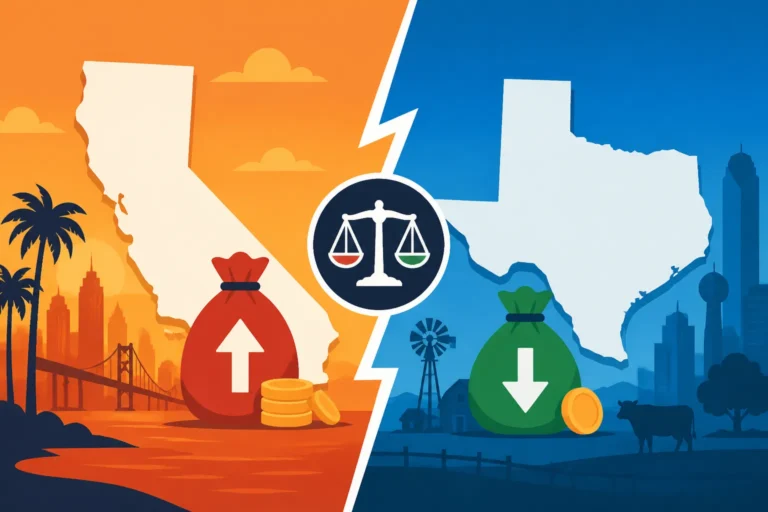
As we move through 2026, the legislative changes passed in the early 2020s are finally hitting full maturity. Many states implemented multi-year "phase-downs" of their tax rates, and 2026 represents the year where those rates hit their lowest projected targets. For someone living in a high-tax environment like New Jersey or California, looking at the tax maps can feel like looking at a completely different country. The disparity between the highest and lowest taxing jurisdictions has never been more pronounced, making it a critical time to evaluate your residency.
For instance, while some states are still clinging to double-digit top brackets, others have successfully transitioned to rates below 4% or have eliminated the tax entirely. If you use a tool like SmartAsset to run a side-by-side comparison of your take-home pay in a state like New York versus a state like Tennessee, the difference can often pay for a mortgage or a high-end car lease. It is not just about a few hundred dollars; for many middle-class families, it is a five-figure annual difference.
The pressure of inflation has also forced many state governors to realize that state-level tax relief is the most direct way to help citizens cope with rising costs of living. This has created a political climate where "tax-friendly" isn't just a buzzword—it's a survival strategy for states wanting to attract talent. We are seeing a trend where even traditionally "blue" or "purple" states are beginning to cap their rates to stay competitive with their neighbors.
Understanding the shift toward flat taxes
One of the most significant trends we are seeing is the explosion of the flat tax model. Historically, most states used a graduated system where the more you made, the higher percentage you paid. However, the complexity and the "success penalty" of these systems have driven a move toward a single, low rate for everyone. When you look at States With a Flat Income Tax (2026), you can see how this simplifies the filing process and provides a predictable cost for every resident, regardless of their income level.
The beauty of the flat tax, from a lifestyle perspective, is that it removes the fear of a promotion pushing you into a devastatingly higher tax bracket. In a flat-tax state, if you get a $10,000 raise, you know exactly how much the state is going to take, and it is usually a very small slice. This transparency is a major draw for entrepreneurs and high-performers who are tired of the "marginal rate" games played in other jurisdictions.
Moreover, the transition to flat taxes often comes with higher standard deductions. This means that while the rate is flat, the very lowest earners might still end up paying zero because their income doesn't exceed the threshold. This "best of both worlds" approach is why we are seeing states like Iowa and Georgia aggressively moving toward this model. It makes the state look attractive on paper while still protecting the most vulnerable residents.
How high taxes impact your quality of life
It is easy to talk about percentages, but let's talk about what that actually looks like in your daily life. High state income taxes are a recurring "subscription fee" that you never signed up for. When you live in a state with a 6%, 8%, or 10% income tax, you are essentially working for the government for the first month or more of every single year. That is time you aren't spending building your own wealth, saving for your children's education, or enjoying the fruits of your labor.
The frustration often stems from the lack of "return on investment." Many residents in high-tax states look around at crumbling infrastructure, struggling schools, and high crime and wonder exactly where their 9% marginal tax is going. This disconnect is what drives the "tax migration" we see today. People are no longer willing to pay a premium for a state government that feels inefficient. Using a resource like SmartAsset to calculate your State Tax Burden by State 2026 can be an eye-opening exercise that validates that nagging feeling that you're being overcharged.
Beyond the direct cost, there is the psychological burden of "tax anxiety." In high-tax states, tax season is a period of dread, involving complex forms, multiple brackets, and the fear of a massive bill. In low-tax states, the process is often an afterthought. That peace of mind is an intangible but vital part of your overall quality of life. When the state takes less, you have more agency over your life, your investments, and your future.
The Gold Standard: States With No Income Tax
The ultimate goal for many is to reach the "Zero Percent Club." In 2026, there are several states that have managed to fund their operations without ever touching your paycheck. This is the holy grail of tax planning, especially for those who are self-employed or have high investment income. However, living in a no-income-tax state isn't just about what you don't pay; it's about understanding how these states maintain their "zero" status.
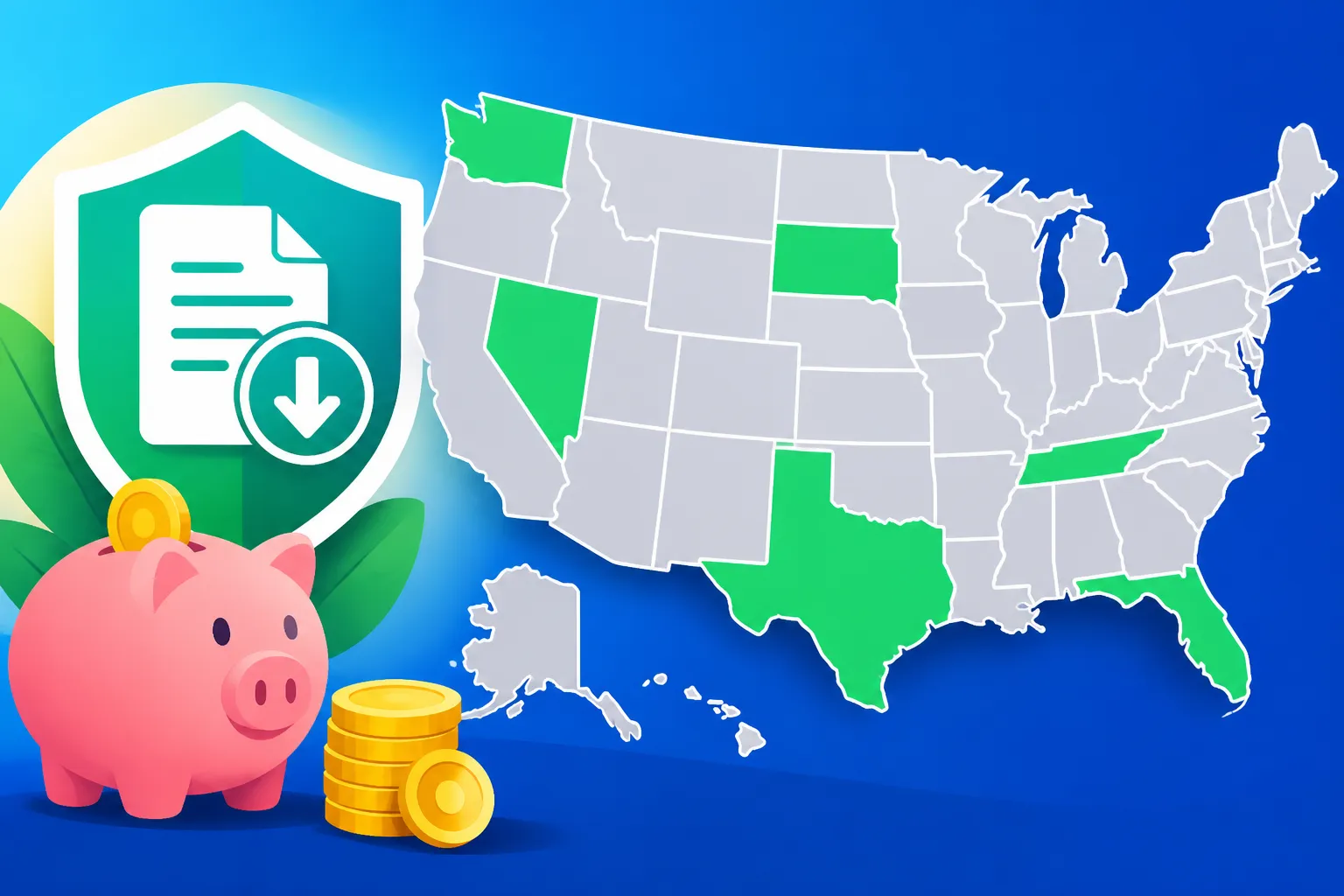
The perennial favorites: FL, TX, NV, and more
Florida and Texas continue to lead the pack as the most popular destinations for those fleeing high-tax states. Florida has mastered the art of using tourism and a robust sales tax base to keep residents' income tax-free. Whether you are living in a high-rise in Miami or a quiet suburb in Orlando, that 0% state tax rate remains a constant. It is one of the primary reasons why Is Florida Tax Friendly for Workers? is a question answered with a resounding "yes" by millions of transplants every year.
Texas offers a similar allure but with a different economic engine. The Lone Star State uses its vast energy resources and a business-friendly environment to offset the lack of income tax. However, it is a common mistake to think that "no income tax" means "no taxes at all." You have to look at the whole picture. For example, when asking Is Texas Really Tax Free? The Full Picture, you’ll find that property taxes are often the trade-off. Still, for high earners, the lack of an income tax usually results in a significant net gain.
Nevada is another heavy hitter in this category, particularly for those in the western U.S. By leveraging the gaming and entertainment industry in Las Vegas and Reno, the state keeps its residents' paychecks whole. This makes it an incredibly attractive home base for digital nomads and remote workers who want to be near the West Coast without the California tax bill. Washington State also remains on this list for general income, though it has introduced specific taxes on high-value capital gains that some residents need to watch out for.
The hidden costs of zero-tax living
While the 0% income tax rate is a dream, it's important to be a savvy consumer of state services. States have to get their money from somewhere. If they aren't taking it from your paycheck, they might be taking it at the cash register or through your property tax bill. This is where the "lifestyle" part of lifestyle blogging really comes in. You have to match your spending habits to the state's taxing strategy.
For instance, Tennessee is a fantastic zero-income-tax state, but it historically has had some of the highest sales taxes in the country. If you are a high-spender who loves buying luxury goods, cars, and electronics, you might find that you are paying back a portion of your tax savings every time you go to the mall. Understanding States With No Income Tax but High Other Taxes is vital so you don't get blindsided by the cost of a gallon of milk or a new pair of shoes.
Then there is the issue of public services. Some states with no income tax have world-class infrastructure, while others may have more modest public offerings. You might find yourself paying more for private school tuition or higher tolls on the roads. It is a trade-off that most people are happy to make because they prefer to choose where their money goes rather than having the state choose for them, but it is a factor you must weigh before packing the moving truck.
New additions and phasing-out states
One of the most exciting things about 2026 is the list of States Phasing Out Income Tax. We are seeing a new wave of states that have looked at the success of Florida and Texas and decided they want a piece of that growth. States like Mississippi have been aggressively cutting their rates with the stated goal of reaching zero over the next decade. If you are looking for a "ground floor" opportunity in a state that is becoming more tax-friendly by the year, these are the places to watch.
New Hampshire is also an interesting case. While it has long been known as a "no income tax" state, it actually used to tax interest and dividends. However, that tax has been under a multi-year repeal process. By 2026, many of these "partial" taxes are gone or negligible, making the state an even better haven for retirees and investors. It’s a reminder that the tax code is never static; it is always moving toward either more or less freedom.
Even West Virginia has joined the conversation, implementing massive triggers for tax reductions based on state revenue. This means that as the state’s economy grows, the tax rate automatically drops. It is a modern approach to governance that rewards the taxpayer for the state's success. Keeping an eye on these State Income Tax Cuts & Changes for 2026 can help you spot the next big "tax haven" before everyone else catches on and drives up the real estate prices.
The Rise of the Flat Tax: States with the Lowest Flat Rates
If a state isn't at 0%, the next best thing in 2026 is a low, flat tax. These states have abandoned the "progressive" model that punishes success and have instead opted for a "one rate fits all" approach that is often remarkably low. This move toward simplicity is a breath of fresh air for anyone who has ever spent hours trying to figure out which of eight different tax brackets they fall into.
Georgia and the transition to simplicity
Georgia has made massive strides in recent years. For a long time, the state had a standard progressive system, but a series of legislative wins has moved it toward a flat tax that is becoming one of the lowest in the Southeast. By 2026, the Georgia Flat Tax Rate 2026 is a major selling point for the state’s booming film and tech industries. It provides a level of certainty that high-income earners in Atlanta and Savannah truly appreciate.
What makes Georgia's approach special is the way they've paired the flat tax with generous exemptions. For a family of four, the amount of income that is actually "taxable" is often quite low, and once you hit that threshold, the rate is a gentle, flat percentage. It is a model of how a state can be "business-friendly" while still being "people-friendly." When you compare this to the neighboring states, Georgia is positioning itself as the rational middle ground for those who want good services and low taxes.
The impact on the local economy is visible. You see it in the cranes over Midtown Atlanta and the growth in suburban areas like Alpharetta. People are moving there not just for the peaches and the weather, but because they know they won't be penalized for working hard and earning more. It’s a "pro-growth" environment that makes the annual tax filing feel like a minor errand rather than a major financial event.
Ohio’s aggressive rate reductions
Ohio is a state that might surprise you. Historically seen as a high-tax industrial state, Ohio has been on a tear, slashing rates and consolidating brackets. In 2026, the Ohio Flat Tax 2026 (2.75%) Explained is a reality that many people still haven't caught on to. Moving the state toward a rate below 3% is a radical shift that makes Ohio more competitive than almost any other state in the Midwest.
This aggressive reduction is part of a larger strategy to stop the "brain drain" and attract new residents. For a remote worker currently living in Chicago or Minneapolis, Ohio's tax rate looks like a massive pay raise. And because the cost of living in cities like Columbus or Cincinnati remains relatively low, that tax savings goes even further. You can buy a lot of house in Ohio for what you’d spend on a tiny apartment in a high-tax coastal city, and you’ll keep more of your paycheck to pay for it.
However, Ohio does have a quirk that you need to be aware of: local taxes. Many cities in Ohio have their own income taxes, which can add a couple of percentage points back onto your total bill. This is why looking at Which Ohio Cities Have Income Tax? is an essential step in your research. Even with those local taxes, the combined rate is often still lower than the state-only rate in places like California or Oregon, but it is a "hyper-local" detail that matters to your bottom line.
Why flat rates are becoming the regional standard
The success of states like Indiana and North Carolina has proven that the flat tax is a winning formula. Indiana has maintained one of the lowest flat rates in the country for years, often hovering around the 3% mark. This has made it a magnet for businesses and families from neighboring high-tax states like Illinois. When people see that their neighbors in Indianapolis are keeping thousands more of their salary than they are in Chicago, they start looking for real estate agents.
This regional competition is forcing other states to adapt. No state wants to be the "tax island" where everyone is leaving for the low-tax neighbor. We are seeing a "cluster" effect where entire regions of the country are moving toward these low, flat rates to keep their populations stable. It’s great news for the consumer. You no longer have to move across the country to find a low-tax environment; chances are, there is a state within a few hundred miles of you that has simplified its code.
Using a tool like SmartAsset to compare these flat rates can help you see the subtle differences. Is a 3.07% rate in Pennsylvania better than a 3.23% rate in Indiana? It might depend on how they treat retirement income or what the local property taxes look like. But the fact that we are even having a debate between 3.07% and 3.23%—rather than 3% and 13%—shows how far the "flat tax revolution" has come by 2026.
Progressive States with Low Starting Brackets
Not everyone is a fan of the flat tax, and some states still use a graduated, or progressive, system. However, "progressive" doesn't always mean "expensive." There are several states in 2026 that have designed their brackets so that the vast majority of people—even high earners—stay in very low percentage tiers. These states are often the "unsung heroes" of tax planning.
Small states with surprising affordability
Take a state like North Dakota. While it technically has multiple brackets, the rates are incredibly low across the board. For many residents, the effective tax rate they pay is actually lower than the flat rates in other states. It is a "quiet" tax haven that doesn't get as much press as Florida or Texas but offers a similar level of financial freedom. The state’s energy wealth allows it to keep the burden on individual citizens at a minimum.
Then there’s Oklahoma, which has been consistently lowering its top rate. By 2026, the "top" bracket in Oklahoma is lower than the "bottom" bracket in some high-tax states. If you are looking for a place where you can live a comfortable, middle-class life without the state taking a big bite out of your budget, these heartland states are incredible options. They offer a high quality of life, friendly communities, and a tax code that actually respects your work.
Another surprising entry is Arizona. For years, Arizona had a complex progressive system, but it has moved toward a much simpler, lower model. It’s become a top destination for "tax refugees" from California. When you look at Is Arizona a Tax-Friendly State?, you see that the combination of low income tax and reasonable property taxes makes it a winner for both working families and retirees.
The low-income earner's advantage
In progressive states with low rates, the benefit is often tilted toward those who are just starting their careers or who are living on a fixed income. Because the first several thousand dollars of income are often taxed at 1% or 2%, or not at all, your "effective" tax rate can be remarkably low. This is a crucial distinction to understand: your "marginal" rate is what you pay on your last dollar of income, but your "effective" rate is what you pay on your total income.
For example, if a state has a 2% bracket and a 4% bracket, and you earn just enough to tip into the 4% range, you aren't paying 4% on everything. You’re only paying 4% on that little bit at the top. When you calculate What Is an Effective Tax Rate?, you often realize that a progressive state with low tiers might actually be cheaper for you than a flat-tax state with a higher single rate.
This makes these states excellent for young professionals or those in the service industry. You get the benefits of state services without a heavy tax lift. It allows people to build their savings accounts faster in the early stages of their careers. By the time they become high earners, they might be in a higher bracket, but by then, the low rates have already given them a "head start" on wealth building that they wouldn't have had in a state with a high flat tax or a punishing progressive system.
Comparing Tax Burdens: It’s Not Just Income Tax
I cannot emphasize this enough: you have to look at the total tax burden. A low income tax rate is a great headline, but if the state makes up for it by taxing your home into oblivion or charging you 10% every time you buy a sandwich, you haven't really saved any money. You've just shifted the cost from one bucket to another. The most successful tax planners are those who look at the "Big Three": Income, Sales, and Property tax.
Sales tax vs. Income tax trade-offs
This is the classic "Choose Your Poison" scenario. Some states, like Oregon, have no sales tax but a relatively high income tax. Others, like New Hampshire, have neither (mostly). And then you have the Tennessee/Florida model: 0% income tax but higher-than-average sales tax. The "best" one for you depends entirely on your lifestyle.
If you are a "saver"—someone who lives frugally, invests most of their income, and doesn't buy much "stuff"—the no-income-tax/high-sales-tax model is perfect for you. You keep all your money upfront and only pay tax on the small amount you choose to spend. However, if you are a "spender"—someone who loves to shop, eat out, and buy the latest tech—you might actually be better off in a state with a modest income tax but no sales tax.
This is why comparing Is It Cheaper to Live in a State With No Income Tax? is such a personal calculation. There is no one-size-fits-all answer. You have to look at your bank statements from the last year. How much did you spend at retail stores? How much was your total gross income? A quick session with a calculator (or a site like SmartAsset) can reveal which "tax flavor" saves you more money in the long run.
Property tax pitfalls in "low tax" states
This is where many people get "got." You move to a state like Texas or New Jersey (though NJ is high on everything), and you are thrilled by the income tax situation. Then, your first property tax bill arrives, and you nearly faint. Property taxes are usually set at the local or county level, but the state's overall tax structure often dictates how much "help" local governments get from the state.
In states with no income tax, the burden of funding schools and police often falls squarely on property owners. This can lead to property tax rates that feel like a second mortgage. For retirees on a fixed income, this is particularly dangerous because while your income might stay the same, your property tax can go up every year as the value of your home increases. It’s a "hidden" tax that you can’t easily avoid without moving.
Before you move, always check the Highest vs Lowest Property Tax… wait State Income Comparison for your specific target zip code. Look at the "millage rates" and the "assessment ratios." A $500,000 house in one state might cost you $2,000 a year in taxes, while in another, it could cost you $12,000. That $10,000 difference is effectively an "income tax" that you’re paying through your mortgage company.
Summary Table: 2026 Tax Comparison for Top Low-Tax States
| State | Income Tax Type | Top Rate (2026) | Sales Tax (Avg) | Property Tax Rank |
|---|---|---|---|---|
| Florida | None | 0% | 7.02% | Mid-Range |
| Texas | None | 0% | 8.20% | High |
| Nevada | None | 0% | 8.23% | Low |
| Tennessee | None | 0% | 9.55% | Very Low |
| Wyoming | None | 0% | 5.44% | Very Low |
| Ohio | Flat (Modified) | 2.75% | 7.24% | Mid-High |
| Indiana | Flat | 2.90% | 7.00% | Low |
| Arizona | Flat | 2.50% | 8.37% | Low |
| North Dakota | Progressive | 2.90% | 6.96% | Mid-Range |
| Georgia | Flat | 5.39%* | 7.35% | Low |
*Note: Georgia is in the process of further reductions; check current 2026 triggers.
Strategic Planning: Moving to a Low-Tax State
So, you’ve looked at the numbers and decided that you are done paying high state taxes. Congratulations! But before you start packing, you need to understand that the "high tax" states don't let you go easily. They like your money, and they have developed sophisticated ways to try and keep taxing you even after you’ve left. This is where strategic planning becomes vital.
Establishing residency for tax purposes
Moving is more than just changing your address on Amazon. If you want to stop paying taxes to a state like New York or California, you have to prove that you have truly "abandoned" your residency there and established a new "domicile" in your low-tax state. If you don't do this correctly, you could end up in a "residency audit," where the old state tries to claim you still owe them money.
Establishing a new domicile requires a "paper trail" of your life. You need to get a new driver's license, register your cars, and register to vote in your new state. But it goes deeper than that. You should move your "near and dear" items—your family photos, your heirlooms, your pets. If you keep a house in your old state and spend significant time there, you need to be aware of The 183-Day Rule for State Taxes, which many states use to "catch" people who are trying to live in two places at once.
The key is to make a clean break. If you’re moving to Florida, become a Floridian. Join a local gym, find a local doctor, and move your bank accounts to a local branch. These small details are what tax auditors look for when they are trying to decide if your move was "real" or just a tax dodge. Understanding How to Prove You Changed Your Domicile is the best insurance policy against a future tax bill from a state you no longer live in.
Remote work and state tax withholding
The rise of remote work has made it easier to move, but it has made tax withholding more complicated. Just because you live in a no-tax state doesn't automatically mean you won't owe taxes if your company is based in a high-tax state. Some states, like New York, have a "Convenience of the Employer" rule, which says that if you are working remotely for a NY company for your own convenience (rather than because the company requires you to be out of state), they can still tax your income.
This is a huge trap for the unwary. You could move to Florida, thinking you’re paying 0%, only to find out that New York is still taking 6% out of every paycheck. Before you move, you need to have a serious conversation with your HR department. You need to know if they are set up to withhold taxes for your new state and if they have a "nexus" in that state. If they don't, you might need to look at Remote Work State Taxes & Convenience of the Employer rules to see if you're actually going to save the money you think you are.
For many, the solution is to work for companies based in no-tax states or companies that have truly decentralized offices. Alternatively, some people choose to work as 1099 contractors, which gives them more control over where their income is "sourced." It’s a complex area of law that is still evolving in 2026, so using a platform like SmartAsset to find a tax pro who understands multi-state filing is a very smart move.
Making the Final Decision: Is a Low-Tax State Right for You?
At the end of the day, taxes are just one part of the "Great Life Equation." While saving $5,000 or $10,000 a year is incredible, it’s not worth it if you are miserable in your new location. You have to balance the financial gains with the reality of where you want to spend your time.
Balancing tax savings with career opportunities
For some industries, being in a high-tax "hub" like San Francisco or New York City is still a career necessity. The "proximity to power" and the networking opportunities can sometimes result in salary bumps that far outweigh the tax costs. If being in a high-tax city gets you a $200,000 job, and being in a low-tax rural area only gets you a $120,000 job, you are better off paying the taxes in the city.
However, those "hubs" are decentralizing. Austin, Miami, and Nashville have become massive power players in tech, finance, and entertainment. You can now have the "big city" career with the "no income tax" lifestyle. The key is to do a "net-net" calculation. What is your take-home pay after taxes and after the cost of living (rent, groceries, transit)? Sometimes, Cost of Living vs Taxes by State reveals that the "expensive" tax state is actually cheaper because the housing market is more reasonable, or vice versa.
Think about your long-term career arc. If you are in your peak earning years, moving to a low-tax state is a massive win. If you are just starting out and need to "climb the ladder," you might prioritize the job market over the tax rate for a few years. But always keep that low-tax exit strategy in your back pocket for when you’re ready to start wealth-building in earnest.
Quality of life and public services
Finally, consider the "vibe" of the state. Taxes fund the things we see every day: the smoothness of the asphalt, the quality of the parks, and the resources in the local library. Some people love the "rugged individualism" and lower service levels of a state like Wyoming. Others prefer the high-service, high-amenity (and high-tax) environment of a place like Massachusetts.
Ask yourself what you value. Do you want the best public schools for your kids, or are you planning to homeschool or use private schools anyway? Do you want a robust public transit system, or are you happy to drive your own car on toll roads? There is no wrong answer, but you should be honest about your expectations. Moving to a low-tax state and then complaining that there aren't enough public hiking trails is a recipe for regret.
The best approach is to visit. Spend a few weeks in your target state during the "worst" season (the humidity of a Florida summer or the gray of an Ohio winter). Talk to the locals. Look at the local news. If the lifestyle fits and the tax savings are there, then you’ve found your new home. The options for low-tax living are better than ever, and with a little bit of planning, you can make sure that your hard-earned money stays where it belongs: in your pocket.
State Income Tax Disclaimer
The information provided in this guide is for informational and educational purposes only and does not constitute professional tax, legal, or financial advice. Tax laws, rates, and residency rules are subject to frequent changes by state legislatures and may vary significantly based on your individual financial situation. Always consult with a qualified Certified Public Accountant (CPA) or tax attorney before making significant financial decisions or moving to a new state for tax purposes. No brand mentioned, including SmartAsset, has reviewed or endorsed this content.