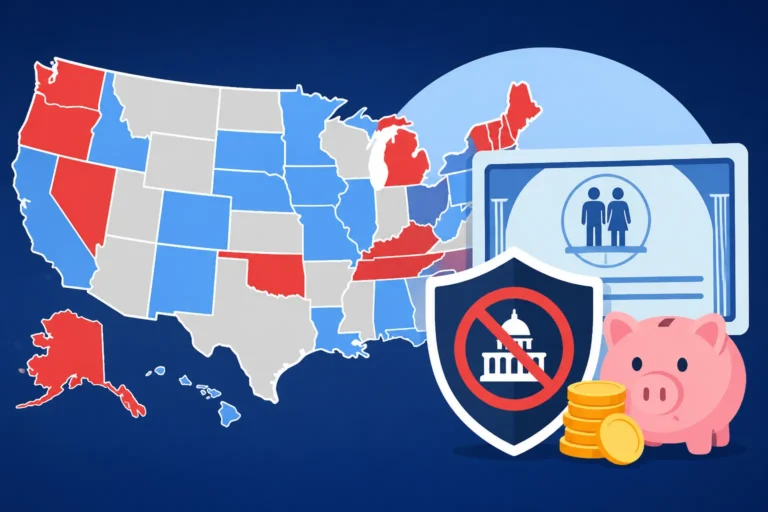
How Each State Taxes Retirement Income (50-State Guide)
Navigating the labyrinth of state income taxes during retirement can feel like trying to solve a Rubik's Cube blindfolded. Many folks dream of retiring to a state where their hard-earned savings and Social Security benefits aren't chipped away by unexpected taxes, only to discover the reality is far more complex than a simple "no income tax" label. This comprehensive guide is here to shed light on how each state approaches taxing retirement income, helping you understand the nuances so you can make informed decisions about where to spend your golden years.
Understanding State-Level Retirement Taxation: Why it Matters
When you're working, you're usually pretty aware of your state's income tax situation, especially if it's taken directly from your paycheck. But once you transition into retirement, your income streams diversify, often coming from Social Security, pensions, 401(k)s, IRAs, and other investments. Suddenly, that state income tax picture looks a lot different, and what might have been a good state to work in might not be the best to retire in.
The Patchwork Quilt of State Tax Laws
It's truly a mixed bag out there when it comes to state tax laws for retirees. Unlike the federal system, which has a relatively uniform set of rules for taxing retirement income (though even that can be complicated!), each state has its own unique approach. Some states are incredibly generous, fully exempting almost all forms of retirement income. Others are quite aggressive, taxing everything from your Social Security benefits to your pension payouts. And then there are those in between, offering partial exemptions based on age, income level, or the type of retirement income. It's not just a matter of whether a state has an income tax; it's how that income tax applies to your specific retirement earnings.
Beyond Federal Taxes: What States Take
Most people are familiar with federal income tax, and they might even know that a portion of their Social Security benefits could be taxable at the federal level. But many retirees are caught off guard by state taxes. Imagine you've diligently saved in your 401(k) for decades, expecting those withdrawals to be taxable only once. While that's largely true for federal purposes, your state might have its own set of rules. For instance, some states that do have income tax will exempt most pension income but fully tax your IRA withdrawals. Others might tax all of it. Understanding these distinctions is critical because overlooking them can lead to a significant chunk of your retirement income going to state coffers instead of your own pocket.
The Impact on Your Retirement Budget
Let's be real, retirement usually means living on a fixed income, and every dollar counts. A seemingly small percentage point in state income tax can translate to thousands of dollars over the years. If you're on a budget, knowing whether your state will tax your Social Security, or if there are generous exemptions for your pension, can make or break your financial planning. Think about it: an additional $5,000 in state taxes each year means $5,000 less for travel, hobbies, or simply covering your daily expenses. This isn't just about high-earners; it affects everyone. Financial planning tools from reputable sites like SmartAsset often highlight these differences, helping retirees understand the real impact on their bottom line before they make a big move.
States That Don't Tax Any Retirement Income: The "Tax-Friendly" Havens
The idea of living in a state where your retirement income isn't subject to state income tax is incredibly appealing. It’s often the first thing people look for when considering a move in retirement. However, it's essential to understand that "no income tax" doesn't necessarily mean "no taxes at all." States need revenue, and if they're not getting it from income, they'll often make it up elsewhere.
The Nine No-Income-Tax States
Currently, there are nine states that don't levy a general state income tax on wages or retirement income. These states are often touted as the ultimate tax havens for retirees, and in many ways, they are.
For example, if you're considering a move to one of the States With No Income Tax (2026 Full List), you'll find that your Social Security benefits, pension payouts, and withdrawals from 401(k)s and IRAs typically escape state income taxation entirely. This list includes Alaska, Florida, Nevada, New Hampshire, South Dakota, Tennessee, Texas, Washington, and Wyoming. For many, this offers significant relief, allowing them to keep more of their hard-earned retirement savings. Imagine relocating from a high-tax state like New York or California to Florida, where you wouldn't have to worry about state income tax on your pension or IRA distributions.
States Exempting Pensions and IRA/401(k) Withdrawals
While the nine states mentioned above have no general income tax, two of them, New Hampshire and Tennessee, have historically taxed interest and dividend income, which could impact some retirees with significant investment portfolios. However, New Hampshire is in the process of phasing out its interest and dividends tax, with a full repeal expected by 2027. Tennessee also fully repealed its "Hall Tax" on interest and dividends in 2021. So, for practical purposes, these nine are considered very favorable for retirement income.
When we talk about states that don't tax any retirement income, we're really talking about those nine states primarily. They offer the most straightforward tax situation for most retirees, as they don't differentiate between Social Security, traditional pensions, or distributions from your personal retirement accounts like 401(k)s and IRAs – none of it is subject to state income tax. This broad exemption is a major draw for many looking to maximize their retirement funds.
Common Misconceptions About "Tax-Free" States
It's crucial to burst the bubble of the "tax-free" myth. While these states might not have an income tax, they absolutely have other taxes. Florida, for instance, has no state income tax, making it a popular destination for retirees, but it does have a significant sales tax (6% statewide, plus local options) and property taxes that can vary wildly depending on the county and home value. Similarly, Texas also has no state income tax, which can save retirees a lot, but it is known for having some of the highest property taxes in the nation. So, while you might not pay income tax on your retirement distributions, you could still end up paying a substantial amount in other taxes. Always look at the full tax picture, including sales tax, property tax, and even gas taxes, before deciding if a "no income tax" state is truly the best financial fit for your retirement lifestyle.
States That Partially Exempt Retirement Income: A Nuanced Approach
Most states that have an income tax don't just tax all retirement income equally. They often take a more nuanced approach, offering various exemptions, deductions, or credits for specific types of retirement income or based on a retiree's age and income level. This means it's not a simple yes or no; you really have to dig into the details to understand your potential tax liability.
Income Thresholds and Age-Based Exemptions
Many states provide relief to retirees by exempting a certain portion of their retirement income, particularly for older taxpayers or those below a certain income level. For example, some states might allow you to exclude a certain amount of your pension income from taxation if you are over 65. States like Illinois, for instance, are known for being quite generous in this regard. Illinois exempts all income from qualified retirement plans, including Social Security, public and private pensions, and IRA/401(k) withdrawals. This makes it surprisingly tax-friendly for many retirees, despite having a flat income tax rate.
Other states, such as New Jersey, offer a significant exclusion for retirement income, but it's often dependent on your total income not exceeding a certain threshold. For 2026, New Jersey continues to increase its pension and retirement income exclusion, which is a big deal for many Garden State retirees. This means if your total income is below a certain amount, you could exclude a substantial portion of your pension or other retirement income from state tax. It’s a bit of a balancing act, and these thresholds can change, so it's always worth checking the latest regulations or consulting a financial expert who specializes in retirement planning.
Taxing Only Certain Types of Retirement Income
Another common strategy for states is to pick and choose which types of retirement income they tax. Perhaps the most prominent example of this selective taxation relates to Social Security benefits. While the vast majority of states that levy an income tax do not tax Social Security, there are still a few that do. These are the States That Don't Tax Social Security (2027). As of 2026, there are only eight states that still tax Social Security benefits, though some offer significant exemptions based on income.
Beyond Social Security, some states might exempt public pensions (like those for state or local government employees) but tax private pensions. Or they might exempt a portion of all pension income but fully tax withdrawals from IRAs and 401(k)s. This variability can be incredibly confusing. For instance, Pennsylvania largely exempts most qualified retirement income, including Social Security, pensions, and 401(k)/IRA withdrawals, for those who are "retired" (meaning they've met the plan's retirement age criteria). This makes Pennsylvania a very attractive option for many retirees, a fact often highlighted in analyses by experts like SmartAsset. Conversely, a state might have a general income tax, but specifically exclude military retirement pay, which is a huge benefit for veterans.
Credits for Taxes Paid to Other States
If you're one of those individuals who might have retirement income from multiple states, perhaps from working in one state and then moving to another, you might be worried about paying taxes twice on the same income. Thankfully, many states offer a "credit for taxes paid to another state." This mechanism is designed to prevent double taxation.
Let's say you retired from a company in Ohio, but then moved to Kentucky. If Ohio taxes a portion of your pension income from that company, and Kentucky also taxes it because you're now a resident there, Kentucky would likely offer you a credit for the taxes you paid to Ohio. This reduces your Kentucky tax liability by the amount you already paid to Ohio on that specific income. Understanding these credits is vital, especially for those with complex retirement income situations or who have lived and worked in several states over their careers. It helps to simplify what could otherwise be a very complicated tax filing process across multiple jurisdictions.
States That Fully Tax Retirement Income: What to Expect
On the other end of the spectrum, some states with income taxes offer very few or no specific exemptions for retirement income. In these states, your Social Security benefits, pensions, and distributions from retirement accounts are generally treated like any other form of income and are subject to the state's standard income tax rates and rules. This doesn't necessarily make them "bad" states for retirement, but it means you need to be acutely aware of the potential tax burden.
The High-Tax States for Retirees
States like California and Oregon are often cited as examples of places where retirement income can face a significant tax bite. California, for instance, fully taxes all retirement income, including public and private pensions, 401(k) and IRA distributions, just like regular income. While Social Security benefits are not taxed by the state, the high progressive income tax rates in California mean that other substantial retirement income can lead to a considerable state tax bill. Similarly, Oregon also taxes most retirement income at its progressive rates, though it does offer a limited subtraction for federal pension income for those over age 62 who meet certain criteria.
It's not just the existence of a tax, but the rate that matters. States with high progressive income tax rates, like New York or Hawaii, can significantly impact your retirement finances if your income is substantial and not covered by any specific exemptions. For individuals with considerable retirement assets, these states might demand a larger portion of their annual income compared to more tax-friendly alternatives. This is why thorough research on Highest Income Tax States in 2026 is so crucial before settling down for good.
Understanding Progressive Tax Brackets
In states that fully tax retirement income, you'll generally be subject to their progressive income tax brackets, much like when you were working. A progressive tax system means that as your income increases, the higher portions of your income are taxed at higher rates. For example, in a state like New York, there are multiple tax brackets, with rates ranging from low single digits up to over 10% for the highest earners. If your retirement income places you in one of the higher brackets, a significant portion of your income could be subject to those elevated state tax rates.
This is a stark contrast to states with a flat tax rate, like Pennsylvania (for most income, though not necessarily all retirement income as noted previously) or Illinois (which broadly exempts retirement income despite its flat rate). In a flat tax state, everyone pays the same percentage, regardless of income level. When looking at your overall tax burden, it's not just the top rate but how your total retirement income falls into those brackets, and whether any exemptions apply, that truly determines your effective tax rate. The concept of Marginal vs Effective Tax Rate Calculator Guide becomes particularly relevant here.
Navigating State-Specific Deductions and Credits
Even in states that fully tax retirement income, there might still be opportunities to reduce your tax burden through various deductions and credits. These aren't always specific to retirement income but can lower your overall taxable income. For instance, many states offer a standard deduction or allow you to itemize deductions, similar to federal taxes. If you have significant medical expenses in retirement, or make charitable contributions, these might be deductible at the state level.
Some states also offer specific credits for seniors or low-income retirees. For example, some may have a property tax credit or a circuit breaker program to help alleviate the burden of property taxes for eligible seniors. While these might not directly exempt your retirement income, they can still put more money back in your pocket. It's essential to meticulously review the state's tax forms and guidelines or consult a tax professional to ensure you're taking advantage of every possible deduction and credit, because every little bit helps keep your retirement funds working for you.
Specific Types of Retirement Income and How States Treat Them
The way states tax retirement income isn't a one-size-fits-all approach. Different types of income – Social Security, pensions, 401(k)s, IRAs, and military retirement – are often treated very differently across the country. This distinction is crucial for understanding your personal tax landscape.
Social Security Benefits: The Eight Taxing States
One of the most common questions retirees have is about Social Security taxation. On the federal level, up to 85% of your benefits can be taxable depending on your "provisional income." However, at the state level, most states offer a full exemption. As mentioned earlier, as of 2026, only eight states continue to tax Social Security benefits. These states are Colorado, Connecticut, Kansas, Minnesota, Montana, New Mexico, Rhode Island, and Utah.
Even within these eight, the rules vary significantly. Some states, like Colorado, offer generous income thresholds or age-based subtractions, meaning only higher-income retirees will see a tax on their benefits. For instance, Colorado allows a significant subtraction for retirement income, which can largely or fully exempt Social Security for many. Others, like Minnesota, can tax a larger portion. If you're planning to retire to one of these states, it's imperative to understand their specific rules for Social Security Taxation: Federal + the 8 States to avoid any unwelcome surprises.
Pensions and Annuities: Public vs. Private
Pensions and annuities are another major source of retirement income, and their state tax treatment is quite varied. Many states provide significant exemptions for public pensions, such as those received by retired teachers, police officers, firefighters, or state employees. This is often seen as a way to retain and reward public service workers. For example, Illinois fully exempts all pension income, whether public or private. Similarly, New York provides a substantial exclusion for pension and annuity income for those aged 59 1/2 or older.
However, private pensions and annuities might not receive the same favorable treatment. Some states, while exempting public pensions, will tax private pensions. Other states tax all pension income but offer a universal exemption amount for retirees, regardless of the source. For a detailed breakdown, the guide on States That Don't Tax Pensions (2027) can be incredibly helpful. It’s vital to distinguish between public and private, and to check for age-based exemptions or income limits that might apply to your specific situation.
401(k)s and IRAs: Distribution Rules
Distributions from 401(k)s, IRAs, and other qualified retirement plans like 403(b)s and 457s are generally taxable as ordinary income for federal purposes, once you start taking them in retirement. At the state level, the treatment can mirror this federal approach, or it can be completely different. Many of the "no income tax" states obviously don't tax these distributions.
In states that do have an income tax, some treat 401(k) and IRA withdrawals just like any other taxable income, applying their regular income tax rates. Others, however, offer full or partial exemptions. For instance, Pennsylvania, as mentioned, broadly exempts distributions from qualified retirement plans if you are retired. Conversely, states like California and Oregon tax these distributions fully. It's not uncommon for states to have different rules for traditional IRAs/401(k)s (where contributions were pre-tax) versus Roth IRAs/401(k)s (where contributions were after-tax). Generally, qualified Roth withdrawals are tax-free at both federal and state levels, but it's always wise to confirm this with your state's tax authority.
Military Retirement Pay: Special Exemptions
For military retirees, the tax landscape presents another layer of complexity and potential benefits. Many states recognize the service of military members by offering full or partial exemptions for military retirement pay. This can be a huge factor for veterans choosing where to settle down. As of 2026, a significant number of states fully exempt military retirement pay from state income tax. This includes states like Alabama, Arizona, Colorado, Florida, Georgia, Illinois, Indiana, Iowa, Kansas, Louisiana, Massachusetts, Michigan, Mississippi, Missouri, New Jersey, New York, North Carolina, Ohio, Oklahoma, Pennsylvania, South Carolina, Utah, Virginia, West Virginia, and Wisconsin, among others.
Some states that don't offer a full exemption might provide a partial one, often based on age or a certain income threshold. For example, Arkansas offers a partial exemption for military retirement income. This means a portion of your military pension might be subject to state income tax, while another portion is exempt. Checking the detailed Military Retirement Tax by State (Full List) is a must for any veteran considering a retirement move, as these exemptions can result in substantial savings over the years.
How Residency Affects Your Retirement Tax Bill
This is where things can get incredibly tricky, especially for retirees who split their time between states or move mid-year. The state where you are considered a "resident" for tax purposes has a profound impact on what income they can tax. It's not always as simple as where you spend the most time.
Establishing Domicile: More Than Just a Mailing Address
The concept of "domicile" is paramount in state tax residency rules. Your domicile is essentially your true, fixed, and permanent home, the place where you intend to return whenever you are absent. You can only have one domicile at a time, and it's a critical legal distinction from mere residency. For example, you might spend six months a year in Florida and six months in New York, but if your intention is for New York to be your permanent home, New York remains your domicile. States, especially high-tax ones like California and New York, are very aggressive in pursuing former residents they believe still maintain domicile within their borders, even if those individuals spend significant time elsewhere. They look for "indicia of domicile" like voter registration, driver's license, where your car is registered, where your doctors are, banking relationships, location of cherished possessions, and even burial plots. To truly establish a new domicile, say if you're looking for How to Establish Florida Domicile, you need to sever ties with your old state and build strong ties with your new one.
Part-Year Residency and Mid-Year Moves
What if you decide to move in the middle of your retirement year? This creates a "part-year resident" situation, which means you'll typically file two state tax returns: one for your old state as a part-year resident, and one for your new state as a part-year resident. Each state will tax the income you earned while you were a resident there. So, if you moved from, say, Massachusetts to Nevada on July 1st, Massachusetts would tax the income you earned from January 1st to June 30th, and Nevada (being a no-income-tax state) wouldn't tax any income earned after July 1st.
This can be more complicated if you have income sources that continue after you move, such as a pension from your old state or capital gains from investments. Generally, your old state will only tax income earned while you were a resident, and potentially income from sources within that state even after you leave (e.g., rental income from a property there). Your new state, if it has an income tax, will tax all your income once you establish residency there. Understanding How to File a Part-Year Resident Return is essential for a smooth transition.
Avoiding Dual State Residency Taxation
The fear of paying taxes in two states on the same income is a real one. However, most state tax systems are designed to prevent this through mechanisms like the "credit for taxes paid to another state" that we discussed earlier. If you genuinely establish a new domicile, your old state generally loses the right to tax your worldwide income, only taxing income derived from sources within its borders. Your new state, if it has an income tax, will tax all your income as a resident.
The real challenge arises when states dispute your change of domicile, leading to potential audits, especially from states like California or New York, which are notorious for their aggressive residency audits. This is where meticulous record-keeping of your intent and actions to establish a new domicile is critical. For those splitting time, understanding rules like The 183-Day Rule for State Taxes is important, as exceeding this physical presence threshold can often trigger statutory residency in a state, even if your domicile is elsewhere. The key is to fully understand the residency rules of both your old and new states and take concrete steps to document your move and intent.
Planning Your Retirement Move: Beyond Just Income Tax
While state income tax on retirement income is a major factor, it's really just one piece of the puzzle when deciding where to retire. Focusing solely on income tax can lead to overlooking other significant financial burdens and quality-of-life considerations that could impact your retirement happiness and solvency.
Sales and Property Taxes: Hidden Costs
Imagine moving to a state with no income tax, thinking you've struck gold, only to find your property tax bill is astronomically high, or sales taxes are levied on nearly everything you buy. This is a common reality. As noted by resources like SmartAsset, states need revenue, and if they're not getting it from income tax, they'll often make it up through sales tax and property tax.
- Sales Tax: States like Florida, while having no income tax, have a 6% statewide sales tax, with local jurisdictions able to add more, easily pushing it to 7% or higher. When you add up all your daily purchases, groceries (sometimes exempt, sometimes not), clothing, and bigger purchases, this can accumulate significantly.
- Property Tax: States like Texas and New Hampshire, both without state income taxes, are known for their high property taxes. If you own a home, this becomes an annual recurring cost that can quickly outweigh any income tax savings. A $300,000 home could have an annual property tax bill ranging from under $1,000 in a state like Hawaii to over $7,000 in a state like Texas. Checking out Homestead Exemption by State can be useful here, as many states offer breaks for seniors or veterans. It’s crucial to research the average property tax rates in the specific counties or cities you’re considering, not just the state average.
Estate and Inheritance Taxes: A Look Ahead
While none of us like to think about it, planning for what happens after you're gone is an important part of comprehensive retirement planning. A handful of states levy their own estate taxes or inheritance taxes, separate from the federal estate tax. An estate tax is a tax on the transfer of property at death, paid by the deceased's estate before distribution to heirs. An inheritance tax is paid by the recipient of the inheritance.
States like New York, Massachusetts, and Oregon have estate taxes, while states like Pennsylvania and New Jersey have inheritance taxes. Maryland has both. The thresholds for these taxes can be much lower than the federal exemption, meaning even moderately wealthy individuals could be impacted. While this might not affect your day-to-day retirement budget, it's a significant consideration for your legacy and your heirs, making it an important aspect of your long-term financial planning.
Healthcare Costs and Quality of Life
Beyond taxes, your overall quality of life and healthcare expenses in retirement should be a major consideration. Healthcare costs, especially as we age, can be substantial. Some states have lower healthcare costs or better access to quality medical facilities than others. What's the cost of a typical doctor's visit, or specialist care? How much are health insurance premiums in the state you're considering?
Furthermore, think about the non-financial aspects:
- Climate and Environment: Do you prefer warm weather year-round, or do you enjoy all four seasons? Is proximity to nature important?
- Proximity to Family and Friends: For many, being near loved ones is paramount.
- Community and Activities: What kind of social opportunities are available? Are there clubs, volunteer opportunities, or educational programs that align with your interests?
- Cost of Living (Beyond Taxes): How much does housing, transportation, and groceries generally cost? A state might have low taxes but a very high cost of living overall. The discussion around Cost of Living vs Taxes by State is highly relevant here.
Ultimately, the "best" state for retirement isn't just about the lowest tax bill; it's about finding the place where your finances, lifestyle preferences, and healthcare needs align perfectly, giving you the peace of mind to truly enjoy your golden years.
Key Considerations for Military Retirees and Government Pensions
For those who have served in the military or spent their careers in public service, retirement brings unique considerations regarding pension taxation. Many states offer specific tax breaks that can significantly impact your financial outlook, making certain states far more attractive than others.
Full Exemption States for Military Retirement
A substantial number of states now fully exempt military retirement pay from state income tax. This is a tremendous benefit for veterans, as it means their entire military pension is free from state-level taxation. This can translate to thousands of dollars in annual savings, allowing military retirees to retain more of their income. For example, states like Georgia, Illinois, and New York, despite having income taxes, offer full exemptions for military retirement. This proactive approach by states acknowledges the unique service of military members.
This trend toward full exemption is growing, as states recognize the economic benefits of attracting military retirees who often bring stable incomes and contribute to local economies. If you are a military retiree, researching States That Don't Tax Military Retirement is paramount. This single tax break can often be the deciding factor when comparing two otherwise similar states for retirement.
Partial Exemptions and Age Requirements
While many states offer full exemptions for military retirement pay, some states provide partial exemptions or have specific conditions that must be met. These conditions often include age requirements or income limitations. For instance, a state might allow a subtraction of up to a certain dollar amount of military retirement income from your taxable income, rather than a full exemption of the entire amount. Or, the full exemption might only apply once the retiree reaches a certain age, such as 65.
It’s crucial to delve into the specifics of each state's laws. A partial exemption, while not as generous as a full one, can still offer significant tax savings. Understanding these nuances can prevent you from making assumptions that could lead to unexpected tax liabilities down the road. For example, a veteran considering a move might find that a partial exemption in one state, combined with lower property taxes, actually yields greater overall savings than a full exemption in another state with higher living costs.
Federal Government Pensions (FERS/CSRS)
Beyond military retirement, federal government retirees receiving pensions from systems like the Federal Employees Retirement System (FERS) or the Civil Service Retirement System (CSRS) also need to pay close attention to state tax laws. The treatment of these pensions varies greatly. Many states, recognizing these as public pensions, offer full or partial exemptions. For example, states like Pennsylvania and Illinois generally exempt all qualified pension income, which would include FERS and CSRS. Similarly, New Jersey offers a significant exclusion for all pension income, including federal ones, up to a certain income threshold for eligible seniors.
However, other states tax these federal pensions like any other retirement income. It's a landscape that requires careful review. Just because a state is friendly to military pensions doesn't automatically mean it's friendly to federal civilian pensions. This distinction is often critical for career federal employees deciding where to settle after years of service. Tools and analyses from financial services like SmartAsset often break down these categories, offering clarity on how states handle different types of government and teacher pensions, which is incredibly useful for comprehensive retirement planning.
The 50-State Retirement Income Tax Landscape (2026 Snapshot)
To give you a clearer picture, here's a general overview of how states typically treat various types of retirement income. Keep in mind that specific rules, thresholds, and exemptions can change annually, so always confirm with the latest state tax guidelines.
| State Tax System | Social Security | Private Pensions & 401(k)/IRA Withdrawals | Public Pensions (State/Local) | Military Retirement |
|---|---|---|---|---|
| No State Income Tax (AK, FL, NV, SD, TN, TX, WA, WY, NH*) | Not Taxed | Not Taxed | Not Taxed | Not Taxed |
| Tax-Friendly (Broad Exemptions) (e.g., IL, PA, MS) | Not Taxed | Generally Not Taxed (with conditions) | Generally Not Taxed | Generally Not Taxed |
| Mixed/Partial Exemptions (e.g., CO, GA, KY, MD, MI, NJ, NY, OH, VA) | Not Taxed (often with high thresholds) | Partially Taxed (exemptions/subtractions) | Partially/Fully Exempt | Often Exempt/Partially Exempt |
| Full Taxation (e.g., CA, OR, MN, CT) | Taxed in 8 states (CO, CT, KS, MN, MT, NM, RI, UT) | Fully Taxed | Fully Taxed | Often Fully Taxed (some exemptions may apply for military) |
Note: New Hampshire taxes interest and dividends but is phasing out this tax. Tennessee repealed its interest and dividends tax.
Disclaimer: This article is intended for informational purposes only and does not constitute tax advice. State tax laws are complex and subject to change. Please consult with a qualified tax professional or financial advisor for personalized advice regarding your specific situation.