States With No Income Tax but High Other Taxes
Moving to a state with no income tax feels like winning the financial lottery until you receive your first property tax bill or realize how much you are spending at the grocery store. This guide uncovers the hidden costs of "tax-free" living, helping you determine if these states actually save you money or simply shift your tax burden elsewhere.
The Illusion of Tax Free Living and Revenue Neutrality
Every state needs money to function. Even if a state does not take a cut of your paycheck, it still has to pay for road repairs in places like Nashville, fund public schools in the suburbs of Dallas, and maintain the breathtaking parks across Washington state. If the money isn't coming from a States With No Income Tax (2026 Full List) arrangement, it has to come from somewhere else. This is the concept of revenue neutrality or tax shifting. State governments are incredibly creative at finding alternative revenue streams that don't involve a traditional income tax form.
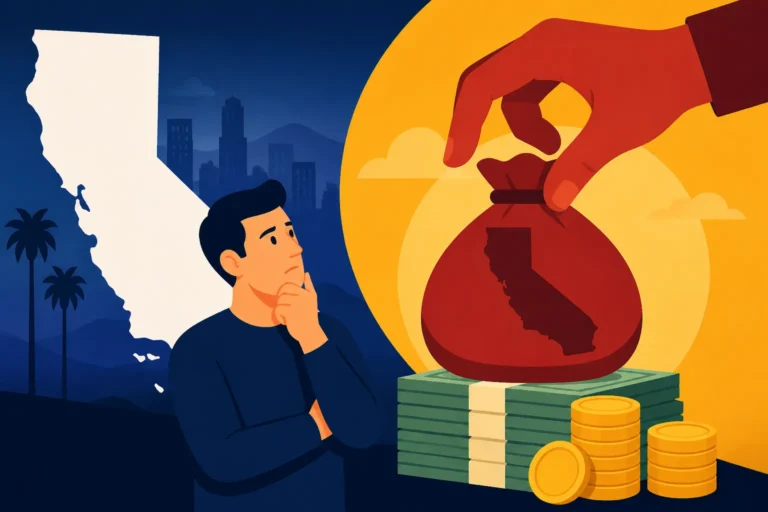
When you look at a state that advertises a zero-percent income tax rate, you are often looking at a state that has decided to tax consumption or assets rather than productivity. For a high-earning professional, this is usually a fantastic deal. However, for a middle-class family or a retiree living on a fixed budget, the shift can be jarring. You might save $5,000 a year in state income taxes only to find that your property taxes are $6,000 higher than they were in your previous home. It is a shell game where the shells are different types of taxes, and the pea is your hard-earned money.
Understanding this shift requires looking at the "Big Three" of state revenue: income tax, sales tax, and property tax. Most states rely on a balanced stool of all three. When you saw away one of those legs—the income tax—the other two must become much larger and sturdier to keep the stool from toppling. This is why you see such high sales or property tax rates in states that lack an income tax. It isn't just about the rate on paper; it is about the total tax burden on your specific lifestyle.
How States Balance the Books Without Income
States without income tax often lean heavily on "tourism taxes" or "sin taxes." In Nevada, for example, the massive revenue generated by the gaming and hospitality industry in Las Vegas helps keep the tax burden off the average resident's paycheck. Similarly, Florida uses its status as a global vacation destination to collect billions in sales tax from visitors who don't live there year-round. This is great for residents until the tourism industry takes a hit, at which point the state may have to look for other ways to fill the gap.
In other states, the reliance is on natural resources. Alaska has famously funded its government (and even paid residents a dividend) through oil revenues. However, when oil prices fluctuate, the state's budget becomes incredibly volatile. For most other no-income-tax states, the burden falls directly back onto the residents through the things they buy and the homes they live in. If you are planning a move, using a tool like SmartAsset to compare the total tax liability between your current city and your destination is essential to avoid a nasty surprise.
The Hidden Costs of No Income Tax
Beyond the obvious taxes, there are "quiet" costs associated with living in a state that doesn't collect income tax. You might notice higher fees for vehicle registration, more expensive tolls on highways, or higher costs for government services like trash collection and water. In some states, the lack of income tax revenue leads to less funding for public universities, meaning your children might face higher in-state tuition rates than they would elsewhere.
It is also worth noting that states with no income tax often have more regressive tax systems. A regressive tax is one where lower-income earners pay a higher percentage of their income in taxes than higher-income earners. This happens because everyone has to buy basic goods like clothes and household supplies, regardless of how much they make. When sales taxes are high, they take a larger bite out of a small paycheck than a large one. This is a critical factor to consider when asking Is It Cheaper to Live in a State With No Income Tax? for your specific financial situation.
Property Taxes The Giant in the Room
For many homeowners, property tax is the most significant "hidden" cost of living in an income-tax-free state. Since local governments and school districts cannot rely on a slice of the state's income tax revenue, they must fund their operations almost entirely through levies on real estate. This creates a situation where you might own your home outright but still feel like you are "renting" it from the government. In states like Texas and New Hampshire, the property tax rates are among the highest in the country, often catching newcomers off guard.
When you are house hunting in a new state, it is easy to get caught up in the lower sticker price of a home or the lack of income tax. But you must do the math on the annual tax bill. In some high-tax jurisdictions, the property tax on a modest $400,000 home can exceed $10,000 per year. This is a recurring, mandatory expense that doesn't care if you had a bad year at work or if your investment portfolio is down. It is a fixed cost of living that can significantly impact your monthly cash flow.
Texas The Land of High Property Tax Bills
Texas is the poster child for the income-tax-for-property-tax trade-off. While the state constitution forbids a personal income tax, the local property taxes are legendary. In counties like Travis (Austin), Harris (Houston), or Dallas, homeowners often pay effective property tax rates well above 2%. When you consider the rapid appreciation of home values in these metropolitan areas, the tax bill can become a major financial hurdle.
Residents often find themselves in a constant battle with the local appraisal district to keep their home valuations—and thus their tax bills—down. Is Texas Really Tax Free? The Full Picture reveals that for many middle-class families, the total tax burden in Texas is actually higher than in states with a moderate income tax. If you are moving from a state like California, you might be trading a 9% income tax for a 2.5% property tax. If your income is high and your home value is modest, you win. If your income is modest and you buy an expensive home, you might end up paying more to the government than you did before.
New Hampshire and the Reliance on Real Estate
New Hampshire takes a unique approach: it has no broad-based income tax and no general sales tax. This sounds like a libertarian paradise, but the state has to fund its schools and roads somehow. The result is one of the highest property tax burdens in the nation. In towns across the Granite State, property taxes are the primary engine of the local economy.
For a retiree moving from a neighboring state like Massachusetts, the lack of income tax on a pension is a huge draw. However, if they buy a beautiful lakefront property in the Lakes Region, they might find that their annual property tax bill is equivalent to several months of their retirement income. This is why it is so important to look at Which States Have No Income Tax in 2026? through the lens of total cost. New Hampshire is a great example of how a state can be "tax-free" on the surface while still maintaining a high cost of living through a single, heavy-hitting tax.
Sales Taxes Paying at the Pump and the Counter
If property taxes don't get you, the sales tax might. States like Washington and Tennessee rely heavily on consumption taxes to keep their budgets balanced. This means that every time you buy a car, a new television, or even a pair of shoes, you are paying a premium that residents in other states might avoid. In some parts of these states, the combined state and local sales tax can approach or even exceed 10%.
High sales taxes are particularly noticeable because you pay them every single day. They are "micro-taxes" that add up over the course of a year. If you spend $50,000 a year on taxable goods and services in a state with a 10% sales tax, you are effectively paying $5,000 in "income tax" at the cash register. The frustration often stems from the fact that these taxes apply to almost everything, sometimes even including services like haircuts or gym memberships that are tax-exempt in other jurisdictions.
Washington State and the Sales Tax Squeeze
Washington is famous for having no state income tax, but it has some of the highest sales and excise taxes in the country. In Seattle, the combined sales tax rate is significantly higher than the national average. When you add in the high cost of gas—partly due to state environmental fees and fuel taxes—the daily cost of living begins to climb.
Interestingly, Washington also has a unique tax on high-earners through its Washington Capital Gains Tax Explained (7% / 9.9%), which shows that even "no income tax" states are beginning to look for ways to tax wealth. For the average worker, however, the main concern remains the sales tax. When you buy a $40,000 truck in Spokane, you could be looking at nearly $4,000 in sales tax alone. This is a massive upfront cost that can make major purchases much more painful than they would be in a state with a lower sales tax but a moderate income tax. You should always check Does Washington Have State Income Tax? updates to see how the state is evolving its revenue model.
Tennessee and Nevada Tourism Funding the Gap
Tennessee and Nevada are masters of the "tax the tourists" strategy. Both states have no income tax and relatively high sales taxes. In Tennessee, the sales tax on groceries was a long-standing point of contention, though the state has made efforts to reduce or provide holidays for it recently. Still, the high rate on general goods is how the state keeps its lights on.
In Nevada, the sales tax is bolstered by the millions of visitors who spend money on the Strip. This allows the state to keep property taxes relatively low compared to Texas or New Hampshire, making it a very attractive destination for retirees. However, if you live in a non-tourist area like Reno or Carson City, you are still paying those high sales tax rates without necessarily benefiting from the tourism infrastructure. Before making the move, consulting an analysis from SmartAsset can help you see how these sales tax rates compare to your current spending habits. People often ask Does Tennessee Have State Income Tax? and are delighted by the answer, but they should also look at the receipt after their first shopping trip in Nashville.
Evaluating the Total Tax Burden
The biggest mistake you can make when moving for tax reasons is looking at a single tax in isolation. You have to look at your "Total Tax Burden," which is the percentage of your total income that goes toward state and local taxes of all kinds. This includes income tax, sales tax, property tax, and even those pesky "hidden" fees like car registration and tolls.
For some people, a state with a moderate income tax but very low property and sales taxes might actually be cheaper than a "tax-free" state. It all depends on how much you earn, how much you spend, and how much your home is worth. This is the "Tax Triangle," and every state sits somewhere inside it. If one corner of the triangle is at zero, the other two corners must be pulled further out to maintain the same area.
Why Your Income Level Matters
Your income level is the biggest variable in this equation. If you are a high-income earner—say, making $500,000 a year—a state with no income tax is almost certainly going to save you money. Even if property and sales taxes are high, they are unlikely to exceed the $40,000 or $50,000 you would pay in a state like California or New York. For you, the "tax-free" dream is a reality. You can see this clearly when comparing Is California Tax Friendly? Full Breakdown to the situation in Nevada or Texas.
However, if you earn $50,000 a year, the math changes completely. In a state with no income tax but a 10% sales tax, you might be paying more in total taxes than you would in a state with a 3% income tax and a 5% sales tax. This is because a much larger portion of your income goes toward buying basic necessities. When evaluating your move, consider your "effective tax rate," which is the actual percentage of your income that goes to the government after all is said and done.
Comparing No Tax States to Progressive States
It is also helpful to compare no-income-tax states to those with a Graduated vs Flat State Income Tax Explained system. In a progressive state, your tax rate increases as you earn more. In a no-income-tax state, the "tax" (via sales and property) is often much more flat or even regressive.
| State | State Income Tax | Avg. Property Tax Rate | State Sales Tax Rate |
|---|---|---|---|
| Texas | 0% | 1.60% – 2.20% | 6.25% (up to 8.25%) |
| Florida | 0% | 0.80% – 1.10% | 6.00% (up to 7.50%) |
| Washington | 0%* | 0.90% – 1.05% | 6.50% (up to 10.4%) |
| Nevada | 0% | 0.50% – 0.70% | 6.85% (up to 8.38%) |
| New Hampshire | 0% | 1.80% – 2.10% | 0% |
| Tennessee | 0% | 0.60% – 0.75% | 7.00% (up to 9.75%) |
Note: Washington has a capital gains tax for very high earners.
As you can see from the table, there is no such thing as a truly "low-tax" state across the board; there are only states that choose different ways to collect their revenue. Florida, for example, is often cited as a very tax-friendly state because it manages to keep both property and income taxes relatively low, largely due to its massive tourism industry. You can learn more about this in our guide on Is Florida Tax Friendly for Workers? and how it compares to its peers.
Strategic Moving Is It Actually Cheaper?
The decision to move should never be based on a single line in a tax code. You have to look at the Cost of Living vs Taxes by State as a whole. A state might have no income tax, but if the cost of housing, groceries, and insurance is 20% higher than where you currently live, the tax savings will be wiped out in a matter of months.
I have seen many people move from the Midwest to Florida thinking they would save thousands, only to realize that their home insurance and car insurance premiums doubled, and their sales tax bill at the grocery store made their weekly shopping trip much more expensive. The "savings" they expected never actually hit their bank account because they were spent on other necessities.
Lifestyle Factors vs Tax Savings
Your lifestyle dictates your tax burden more than you might realize. If you are a minimalist who rents a small apartment and doesn't buy many "things," a state with a high sales and property tax but no income tax is a huge win for you. You are avoiding the taxes that the state relies on. However, if you love big houses, luxury cars, and shopping, you are the primary target for a state that funds itself through property and sales taxes.
Consider the "State Tax Burden by State 2026" rankings. These rankings take the average resident's total tax bill into account. Often, states like South Dakota or Wyoming rank as the truly lowest because they have low costs across the board, not just a zero-percent income tax. Using a comprehensive calculator, like those provided by SmartAsset, can help you input your specific spending habits to see which state actually leaves more money in your pocket at the end of the year.
The Impact of Local and City Taxes
Finally, don't forget that the state isn't the only one with its hand in your pocket. Local & City Income Taxes in the US can add another layer of complexity. While a state might not have an income tax, certain cities within that state might have their own local taxes or extremely high "user fees" for everything from parking to business licenses.
For example, while Tennessee doesn't have a state income tax, some of its cities have high local sales tax add-ons. In Washington, local municipalities often have significant levies for transit or schools that appear on your property tax bill. Always look at the specific city or county you are moving to, not just the state-level data. The reality of State Income Tax vs Federal Income Tax is that while federal rates are uniform, the local experience varies wildly from one street corner to the next.
Summary of the Tax Shift
When you move to a state without an income tax, you are making a trade. You are trading a tax on what you earn for a tax on what you own and what you spend. For some, this trade is the key to financial freedom. For others, it is a frustrating shift that makes it harder to save for the future. The key is to go in with your eyes open, armed with data and a clear understanding of your own financial habits.
Before you pack the moving truck, do a "mock" tax return for your destination state. Look up the property tax for a house in the neighborhood you like. Look up the sales tax in that county. Estimate your annual spending on taxable goods. If the total is lower than what you pay now, congratulations—you've found a way to lower your tax burden. If not, you might find that you’re better off staying put or looking for a state with a more balanced approach to taxation.
Disclaimer
This guide is for informational purposes only and does not constitute professional tax, legal, or financial advice. Tax laws and rates are subject to frequent changes by state and local legislatures. Always consult with a qualified tax professional or CPA regarding your specific financial situation before making major life decisions or moves based on tax considerations.